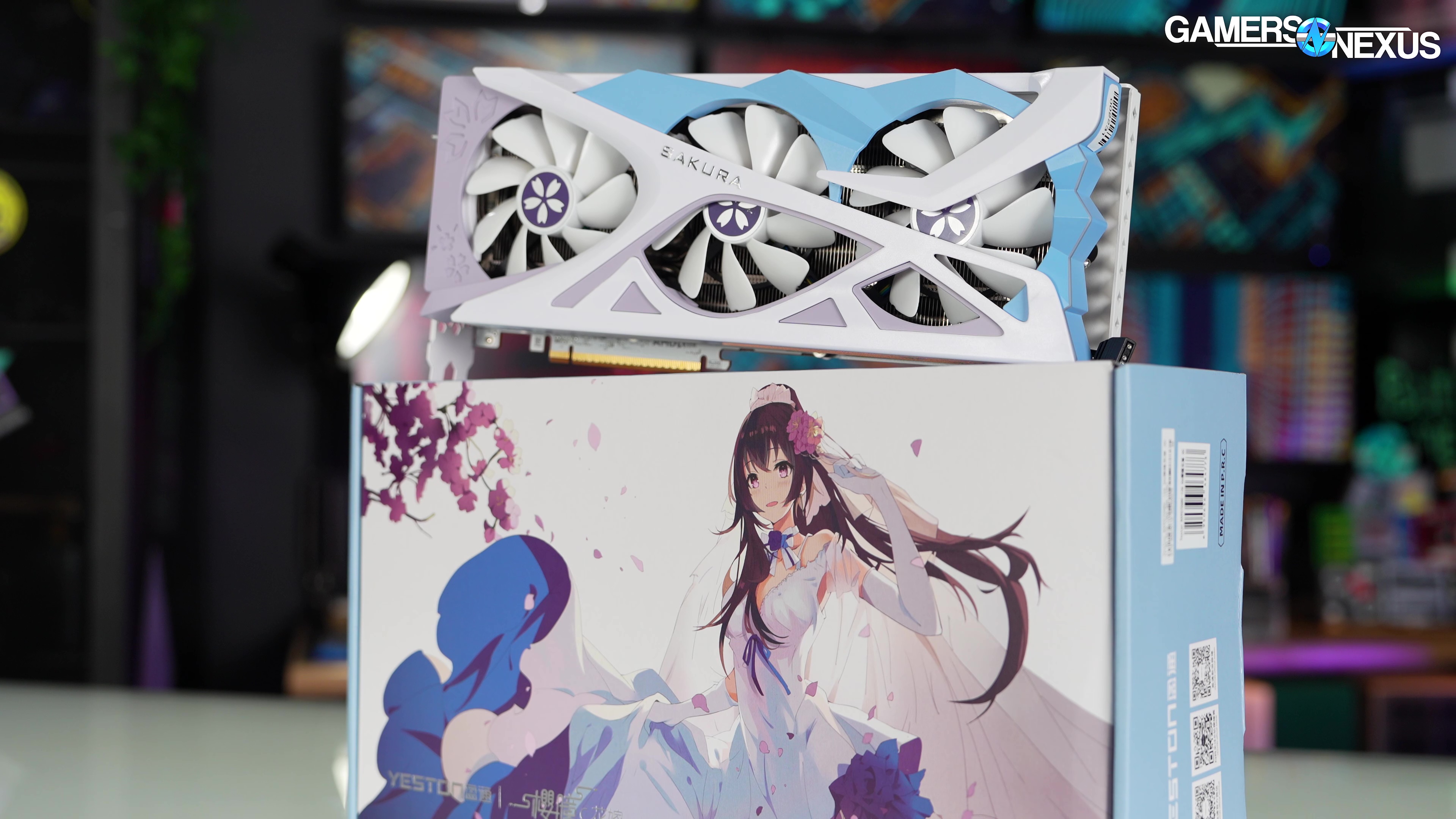
We benchmark Yeston's 9070 GRE against around 30 GPUs including the 9070, 9070 XT, 5070, 5070 Ti, 5060 Ti, 5080, and more
The Highlights
- Yeston’s RX 9070 GRE launched in China
- Older cards are performing better for a similar price
- The card offers unique Waifu visuals and didn’t have any major issues
- Original MSRP: $535 - $650
- Release Date: May 8, 2025
Table of Contents
- AutoTOC
Intro
The AMD RX 9070 GRE, or the Golden Rabbit Edition, was never released to the US market. We initially found it when we visited Shenzhen and, although we could have bought one right there for $535 to $650, we wanted the ultimate version of the 9070 GRE.
Editor's note: This was originally published on February 22, 2026 as a video. This content has been adapted to written format for this article and is unchanged from the original publication.
Credits
Test Lead, Host, Writing
Steve Burke
Testing
Mike Gaglione
Camera, Video Editing
Vitalii Makhnovets
Testing
Tannen Williams
Writing, Web Editing
Jimmy Thang
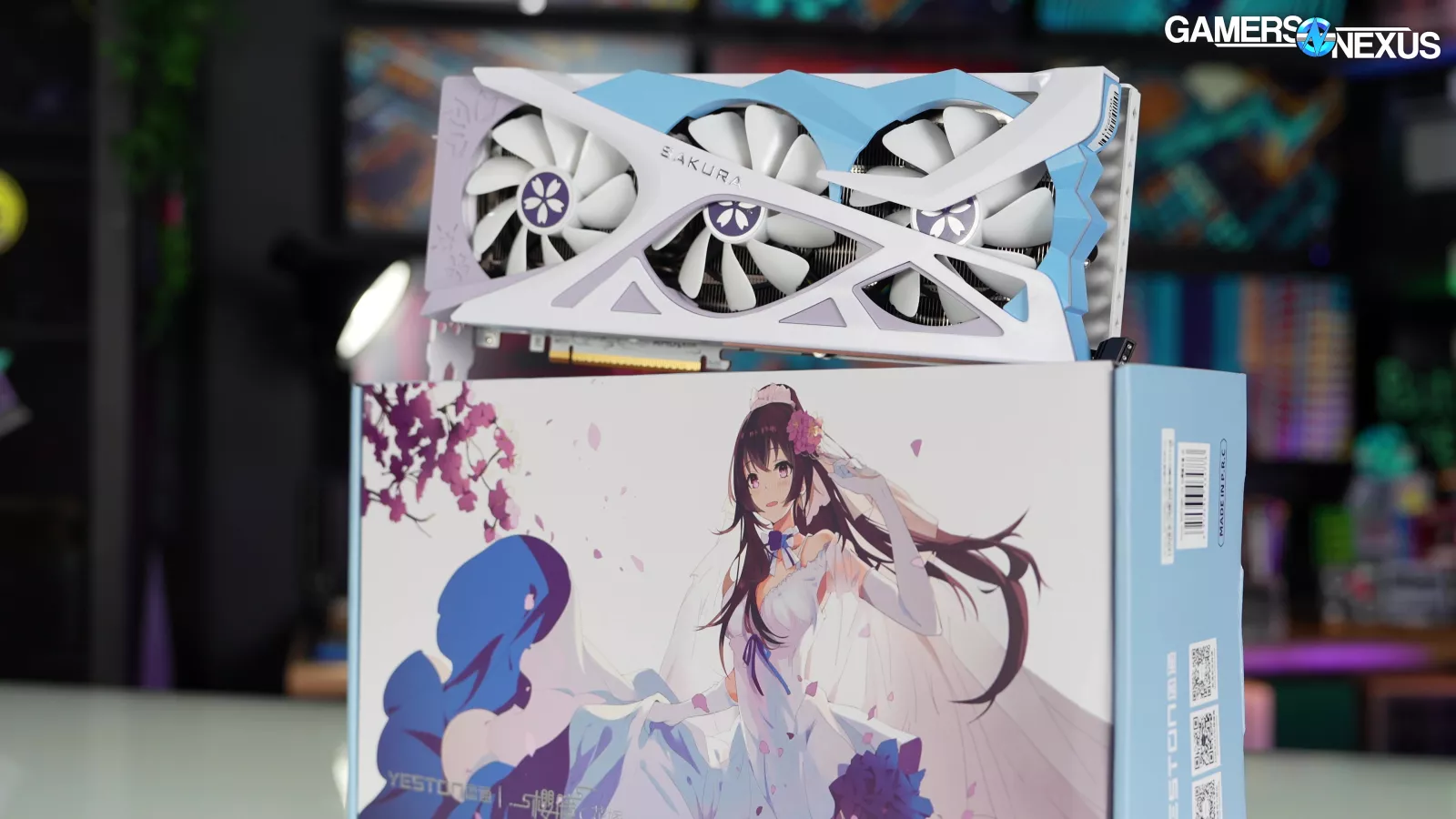
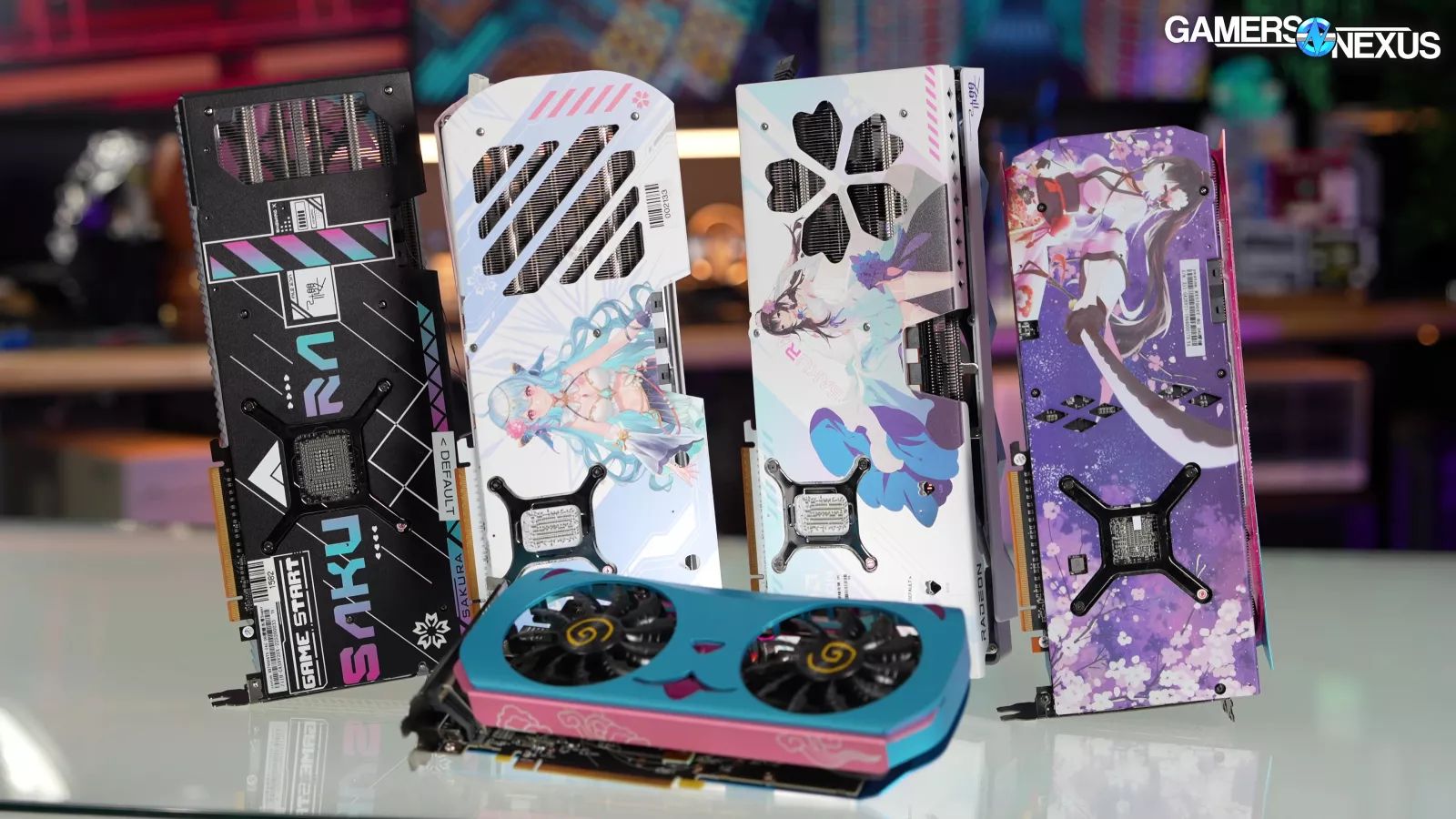
This is the Yeston RX 9070 GRE Sakura Waifu edition. It doesn’t have the scent module that the Sugar Atlantis 9070 XT (read our review) has, sadly, but it does have all the style of the previous Sakura models.
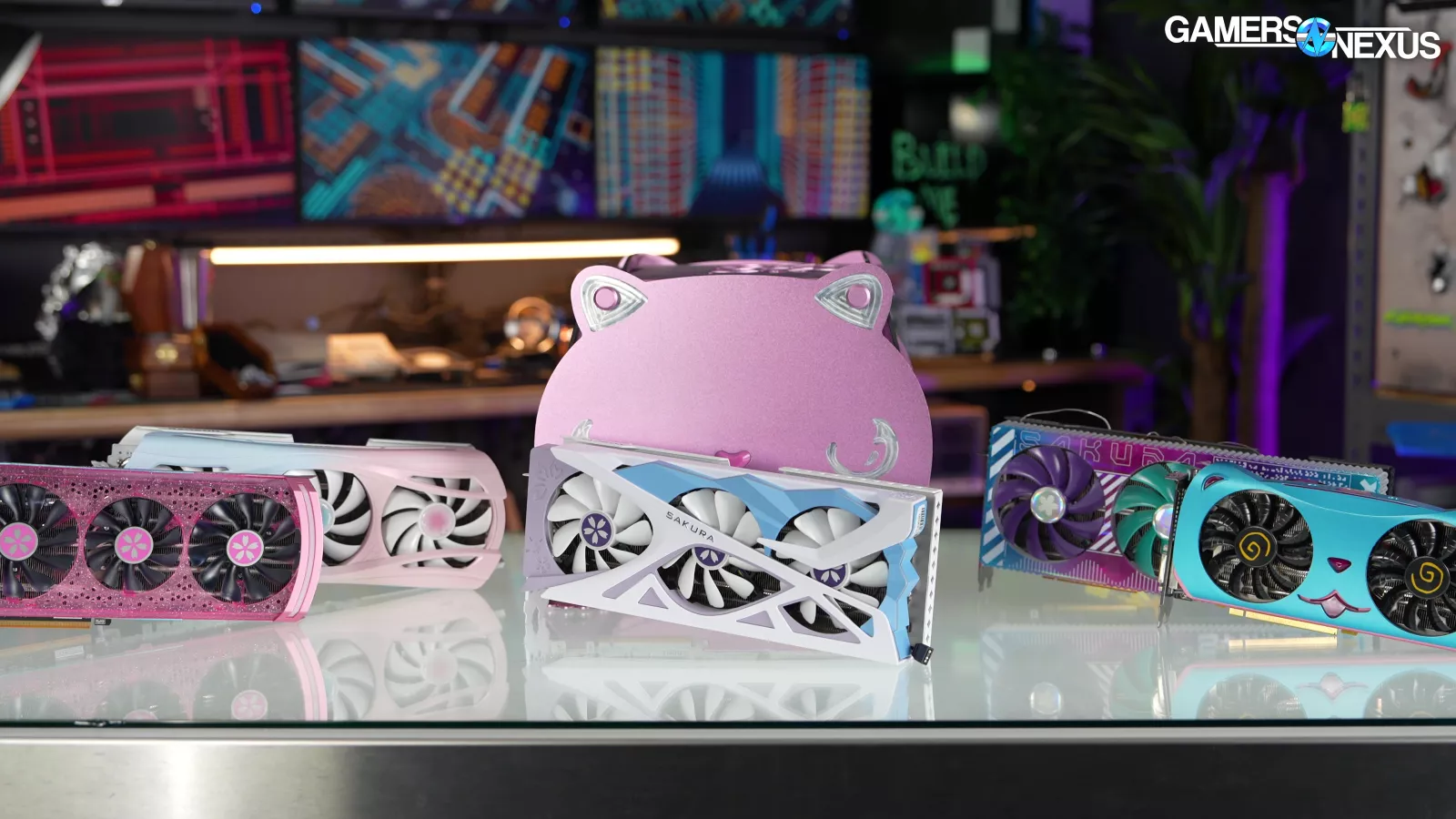
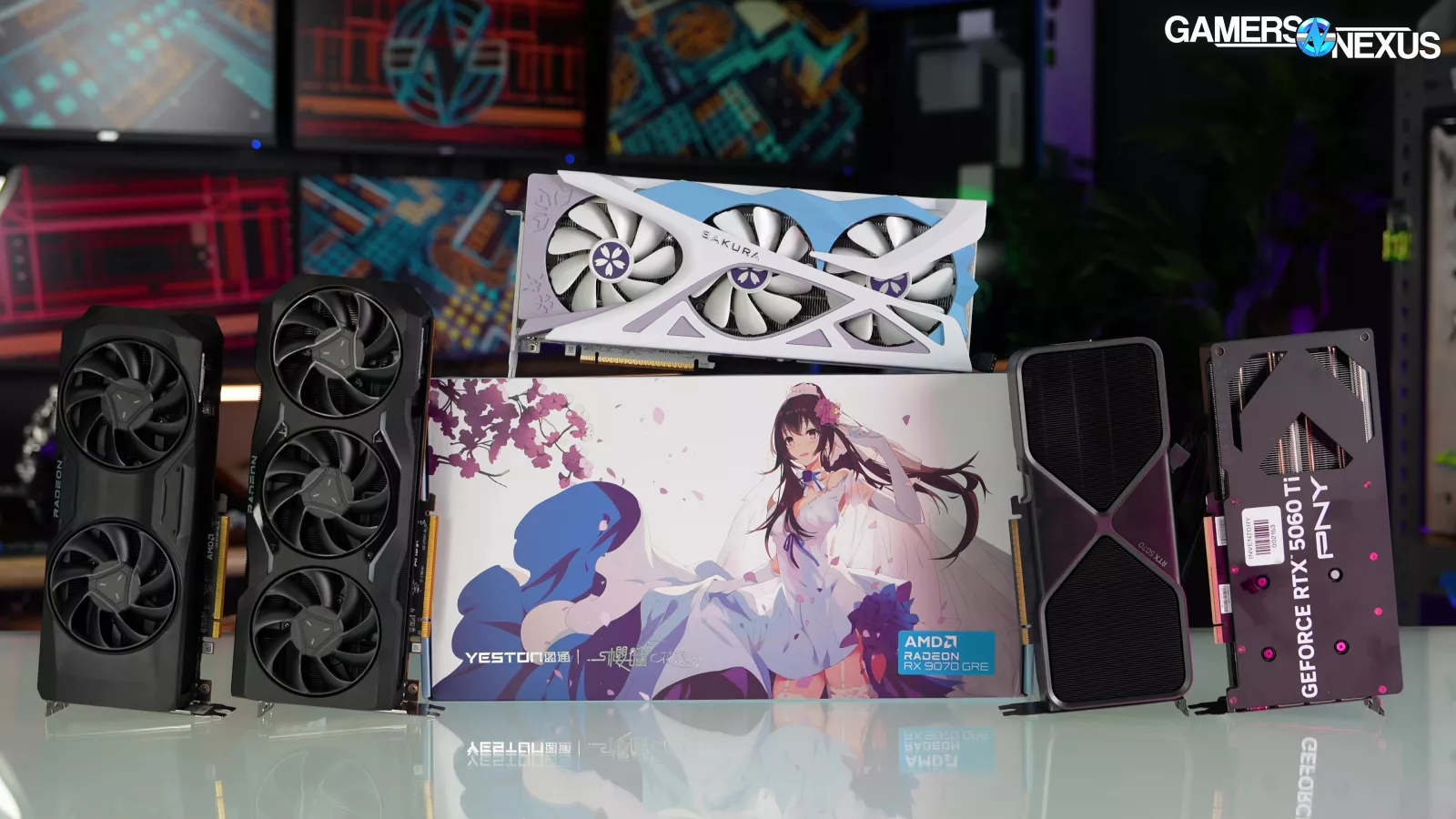
As always, it’s just cool to see something different in the market. We needed something fun to review to get a break from the active destruction caused by the entire rest of the world at this point.
And there’s nothing better for a fun review than Yeston’s GPUs.
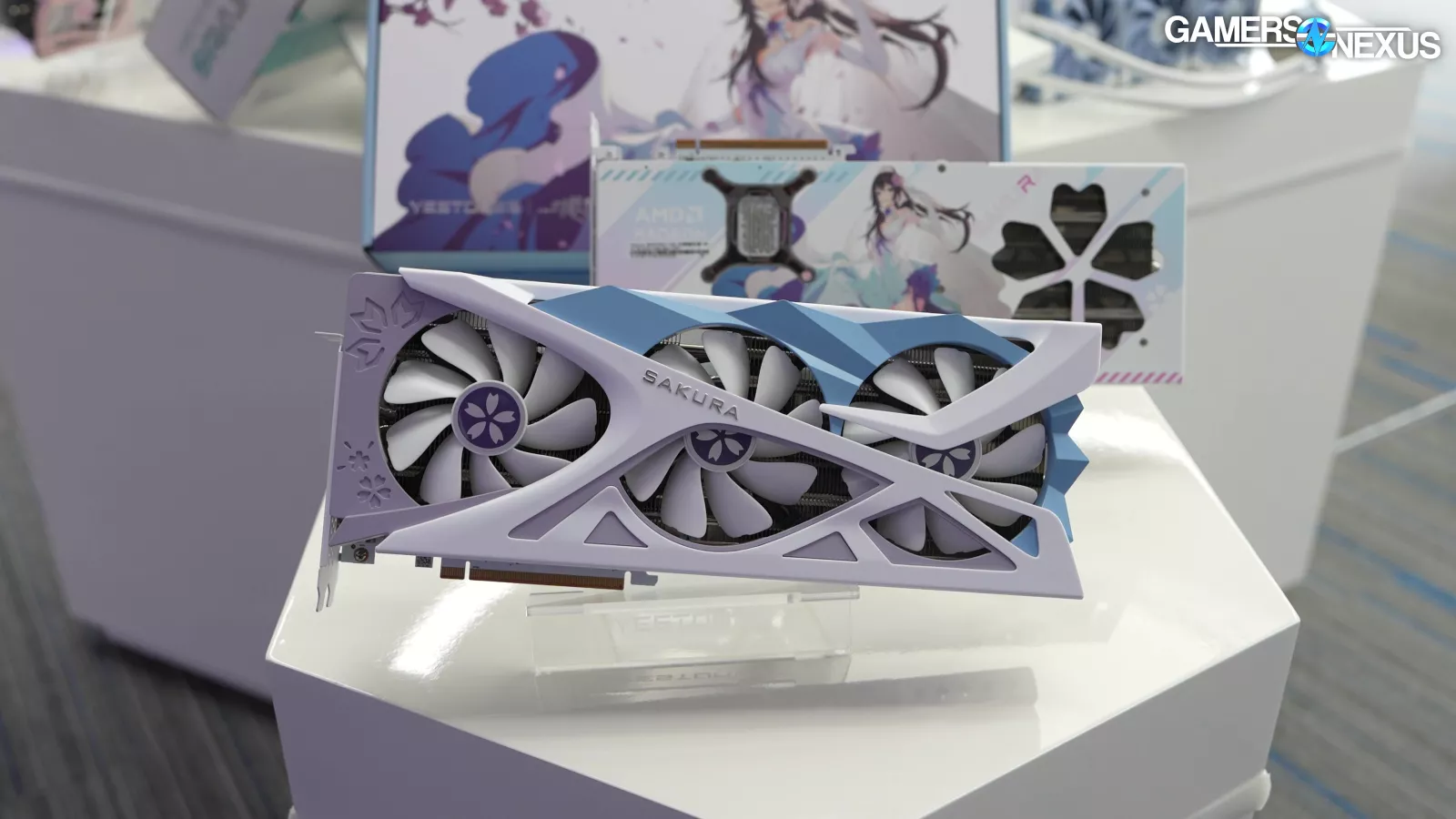

The 9070 GRE is a unique China-only GPU that slots between the 9070 non-XT and the 9060 XT. They can be found for $535 to $650 on Taobao somewhat regularly.
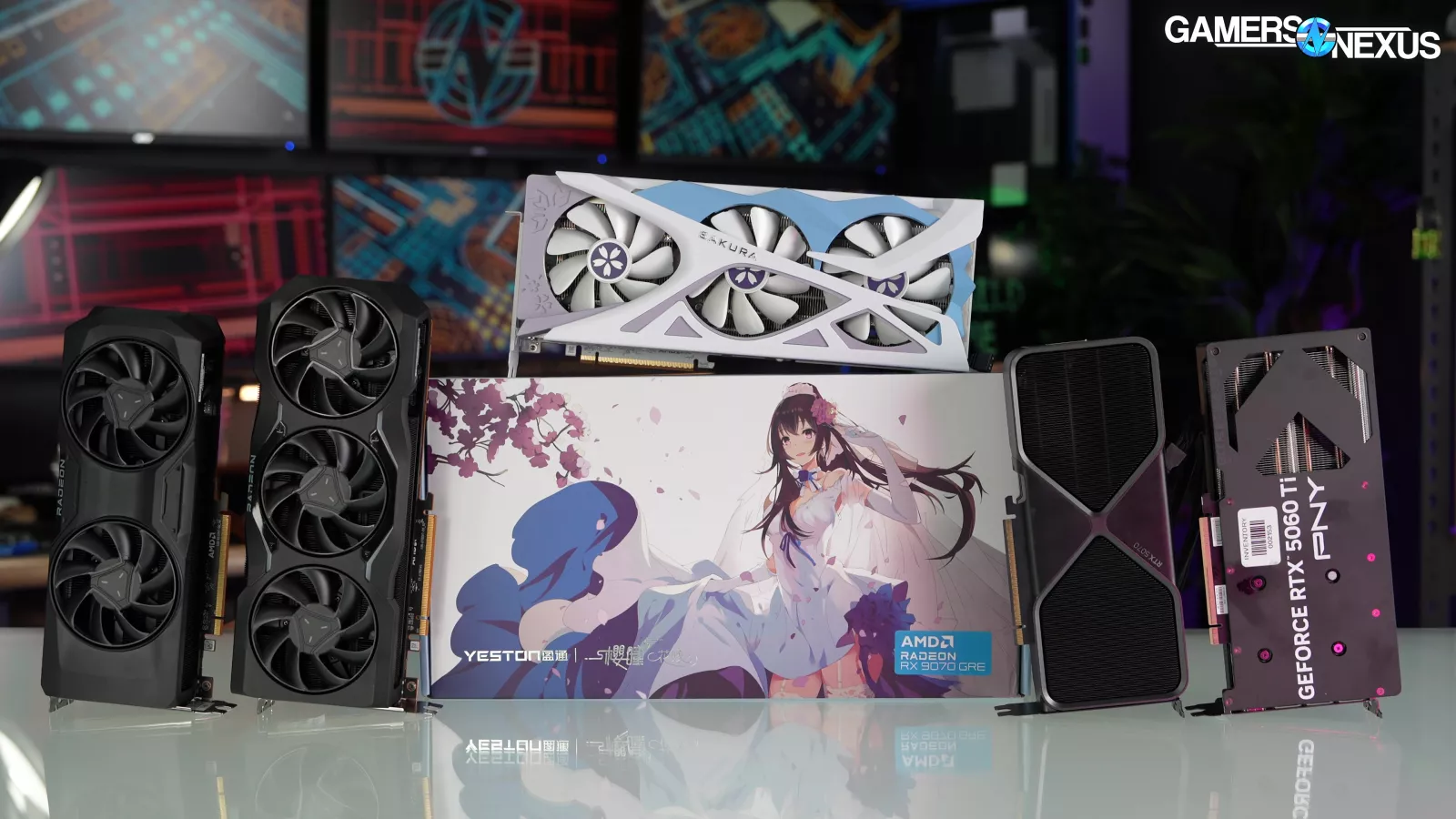
Let’s keep this one simple and fun today. We’ll get right into it.
Overview & Specs
First, since this card is unfamiliar to the Western market, here are the specs:
The RX 9070 GRE has 3072 Stream Processors spread across 48 Compute Units (or CUs), 96 ROPS -- all of which are actually present, and a 12GB VRAM capacity using GDDR6 on a 192-bit memory bus, yielding 432 GB/s memory bandwidth. The advertised clocks are 2790 MHz boost and 2220 so-called “game clock.” TDP is listed at 220W and all 16 lanes of PCIe Gen5 are available.
The RX 9070’s specs, by comparison, runs 3584 Stream Processors across 56 CUs, carries 128 ROPs, and has a 16GB framebuffer. GDDR6 remains, but it moves to a 256-bit memory bus at 644.6 GB/s bandwidth. TDP is still 220W for the 9070 (read our review), but clocks are lower than TPU states for the GRE version.
These are big differences. The memory bandwidth increase is huge, there’s 4GB more capacity, and the core configuration runs about 17% more CUs than the GRE version. The TDP on the non-GRE means its clocks will run lower as it’s spreading that power over more hardware, but otherwise, the 9070 non-GRE should be notably better in all the tests.
Just to wrap-up the 70-class line, the 9070 XT (read our review) is a 64 CU part and the 9060 XT (read our review) is a 32 CU part. The 9070 GRE is between the 9060 XT and 9070 non-XT.
Tear-down
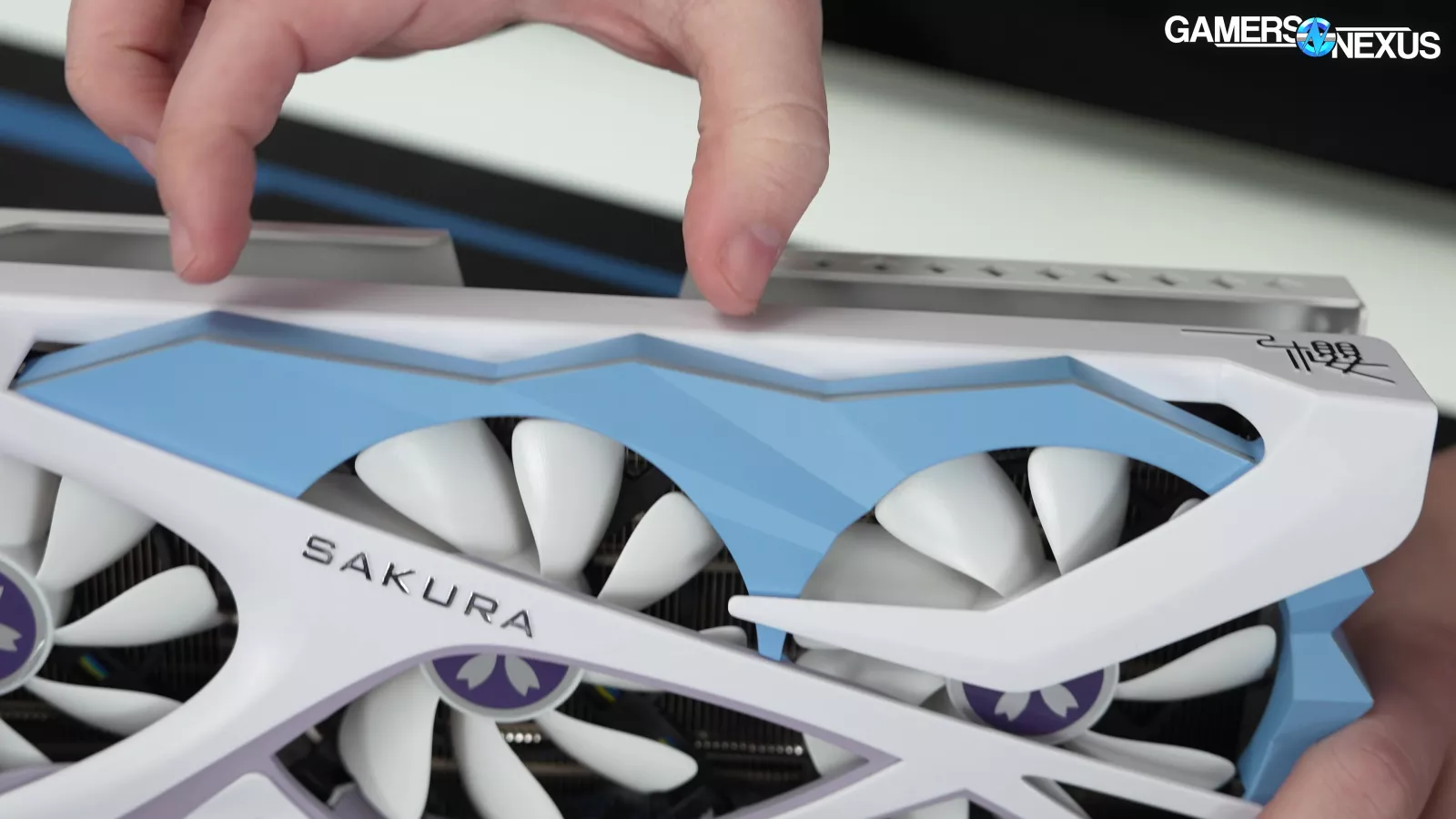
This blue part, which houses the LEDs, was the most difficult aspect for Yeston to manufacture, from what it told us.
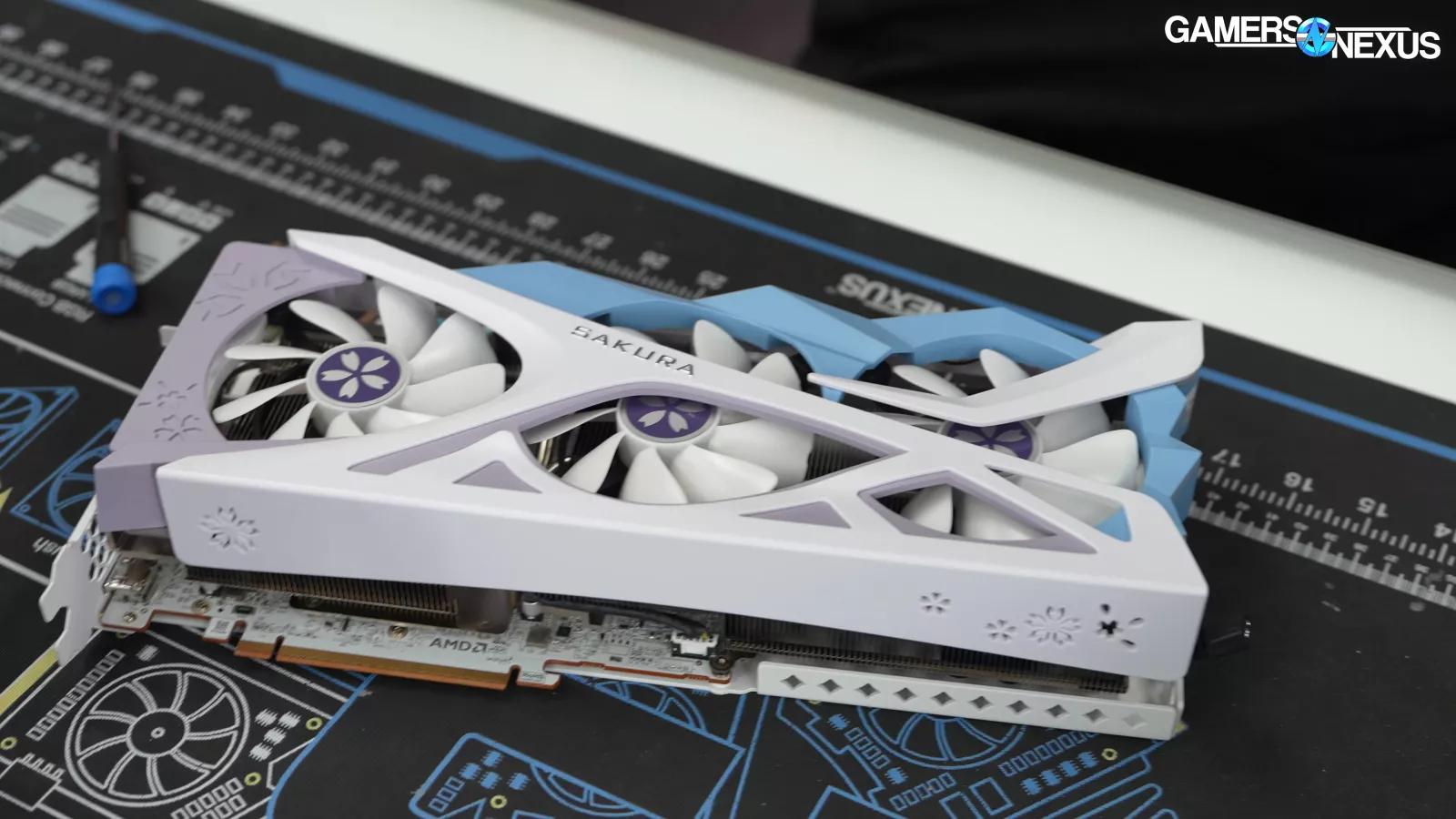
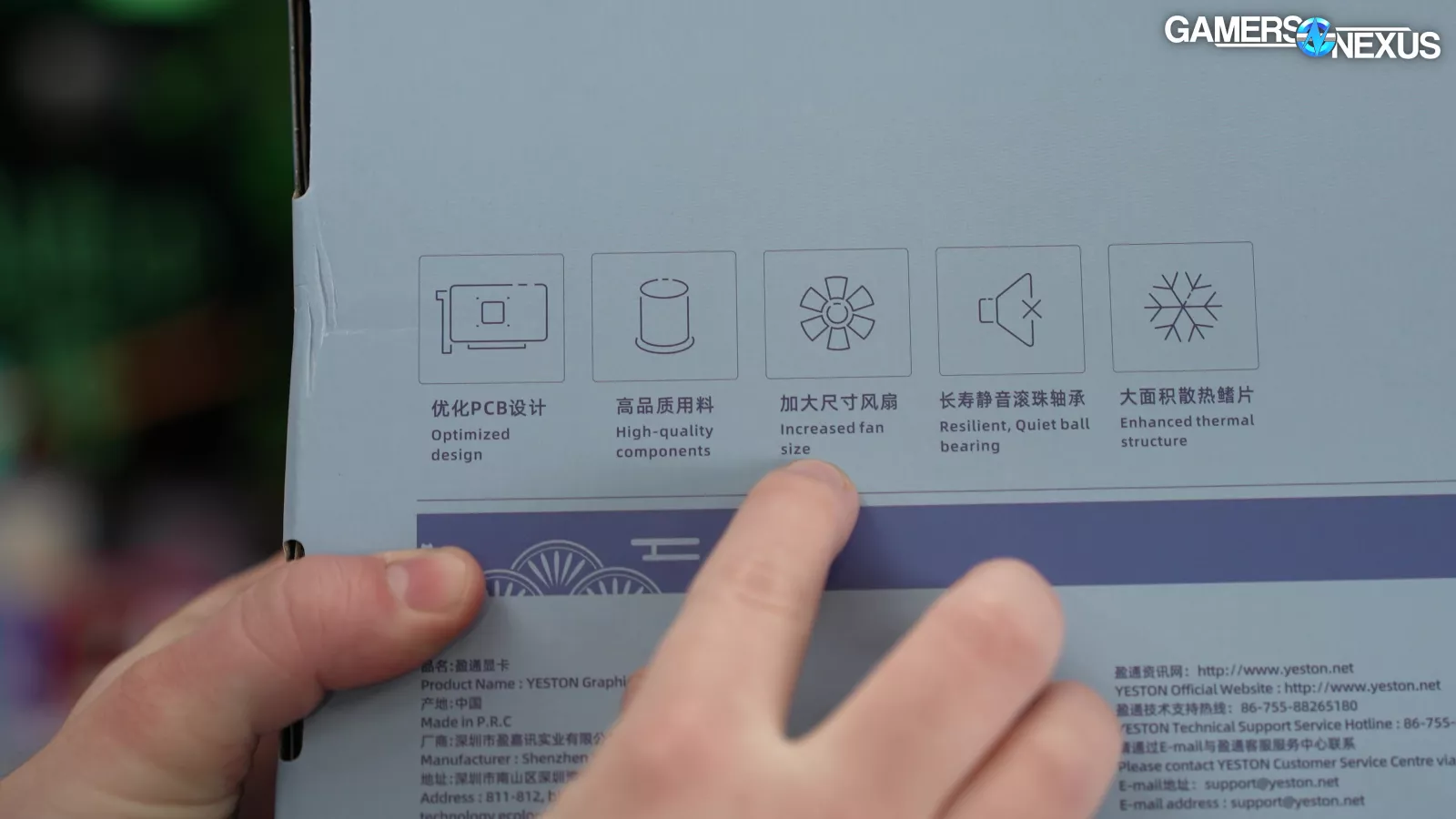
The card’s fans are relatively open. The GPU’s box says that it features “increased fan size.” Increased from what? We don’t know.
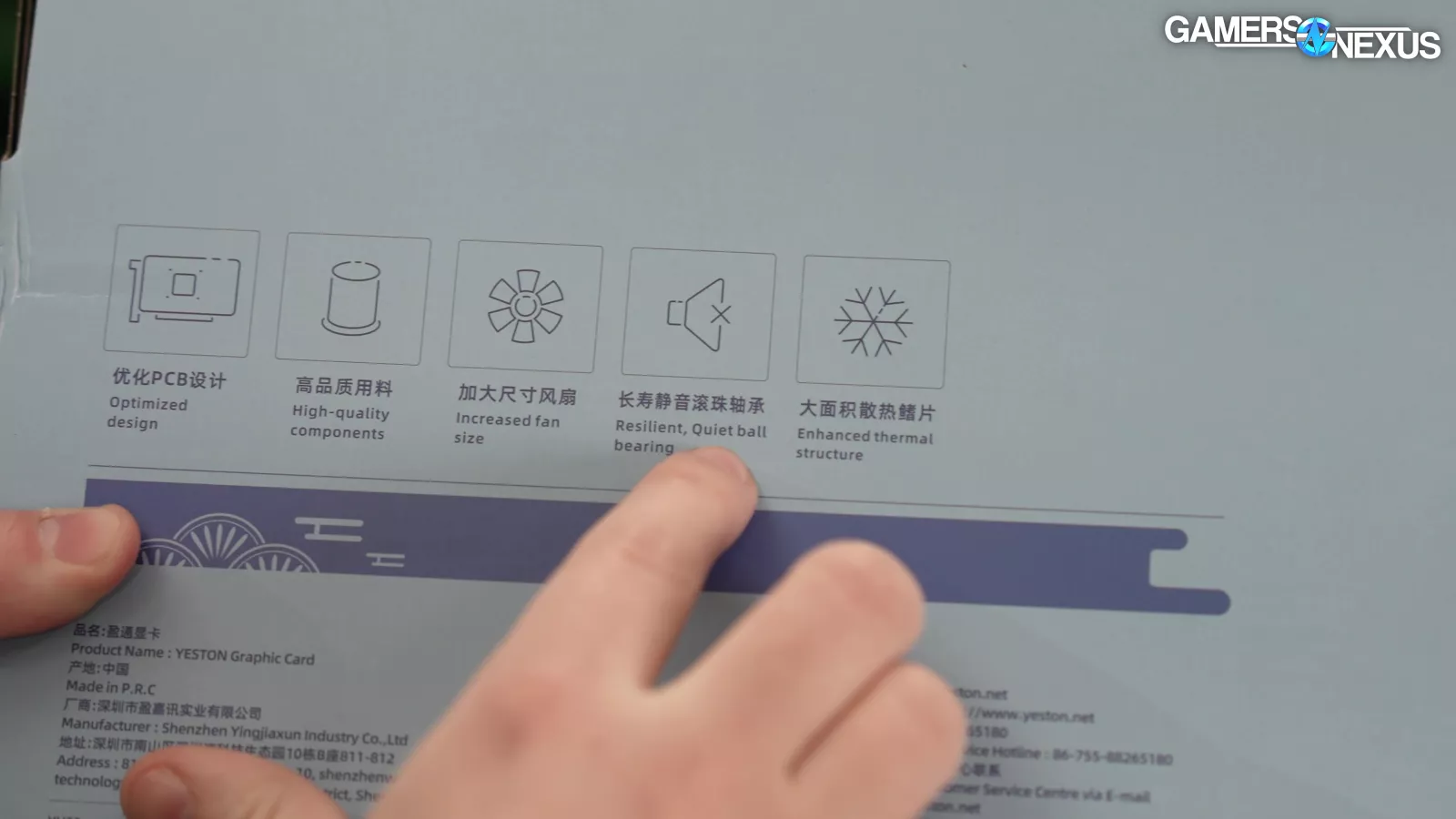
The back of the box also says that it has “quiet balls.” That’s good because you don’t want loud balls…
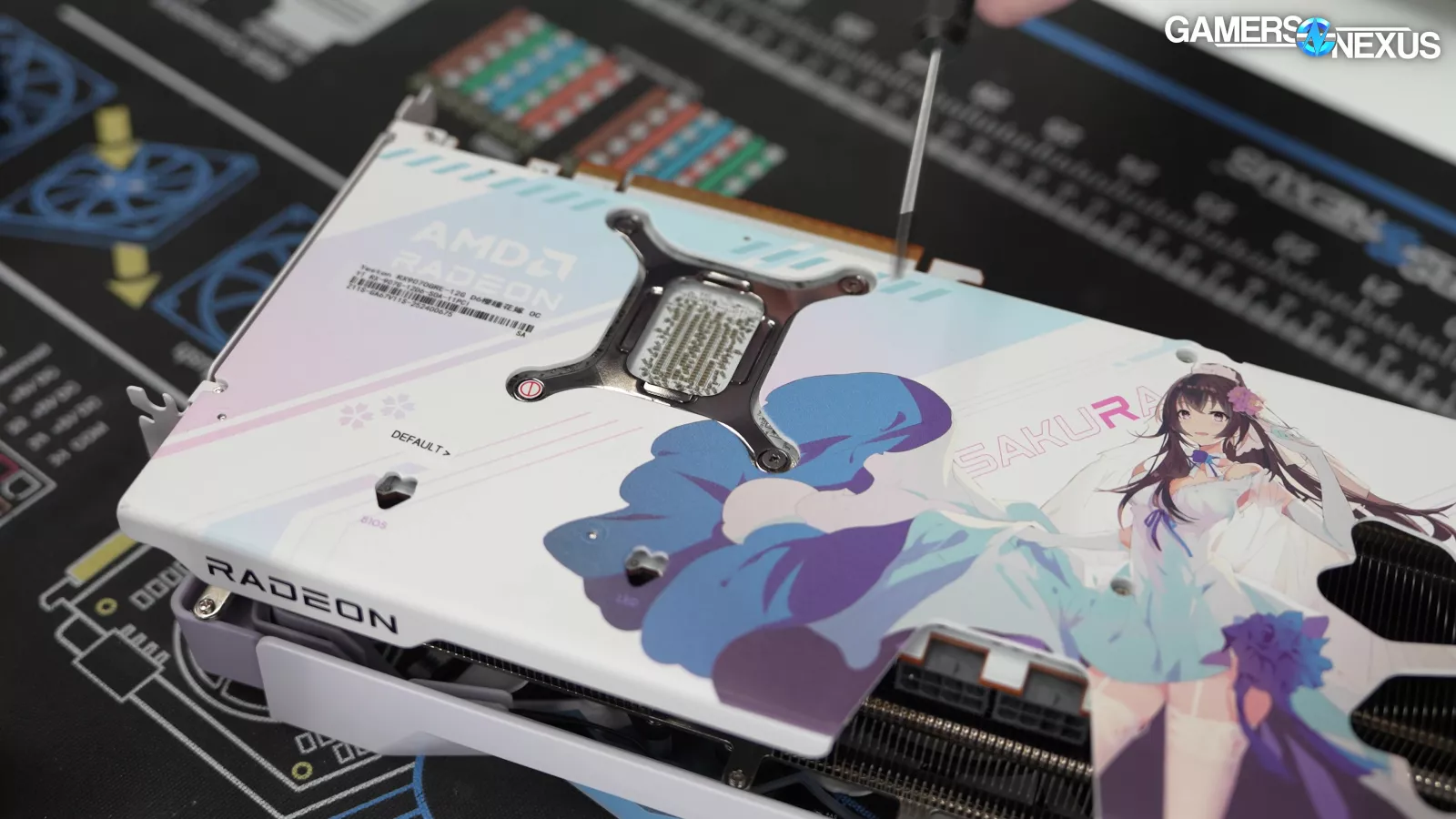
These 4 screws here mount the coldplate to the GPU.
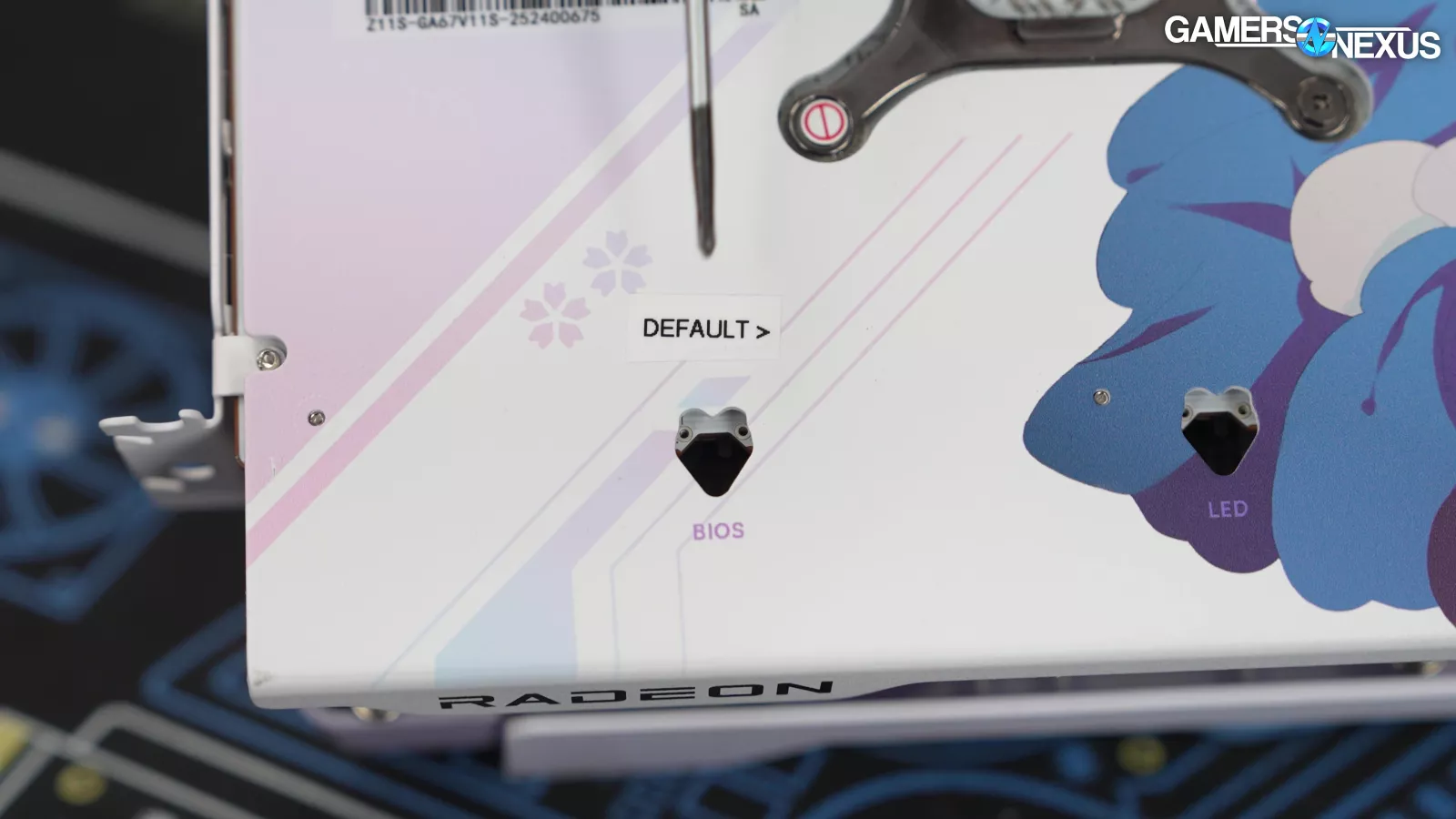
The card has a BIOS switch here.
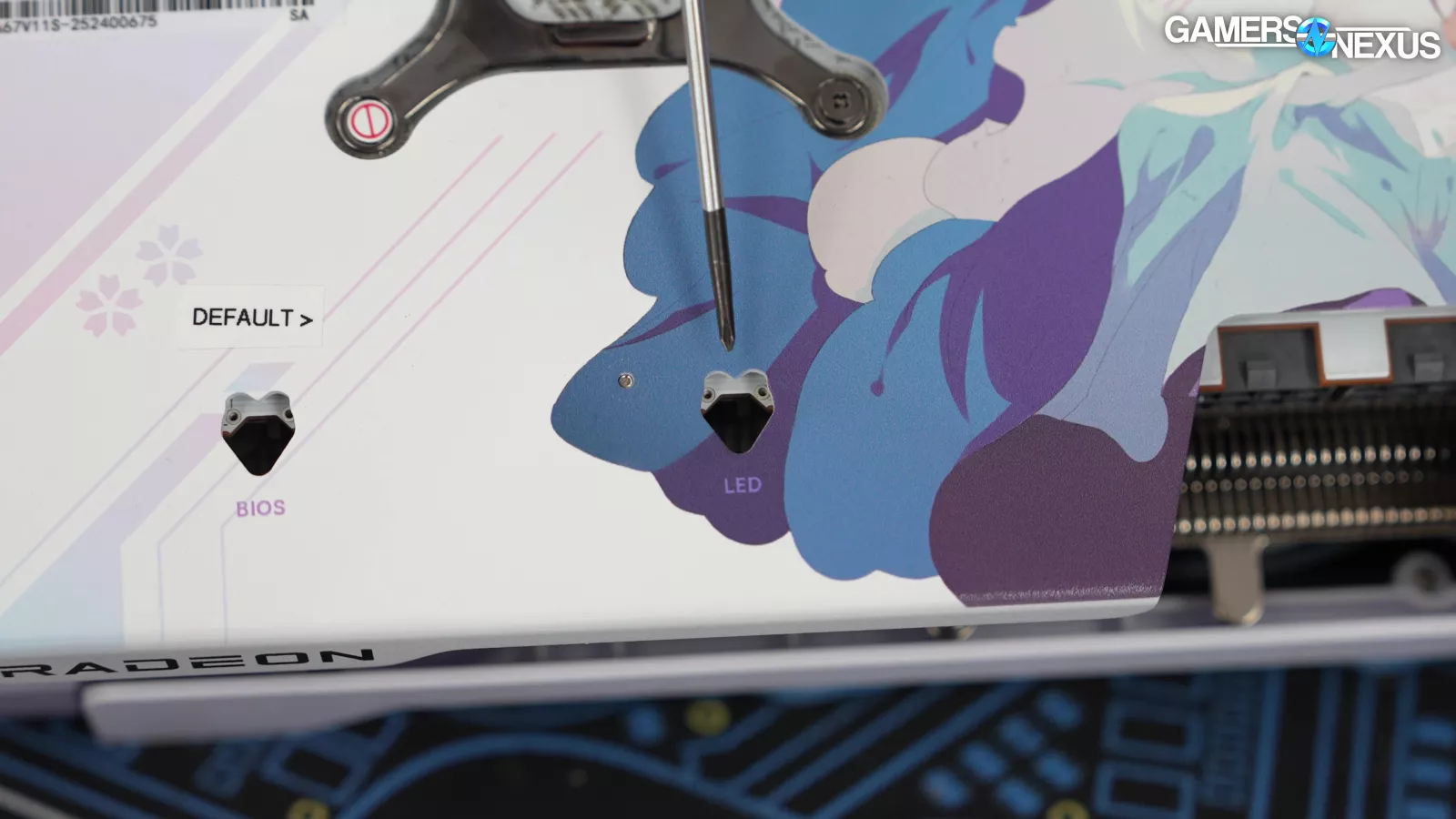
It also has an LED switch here.
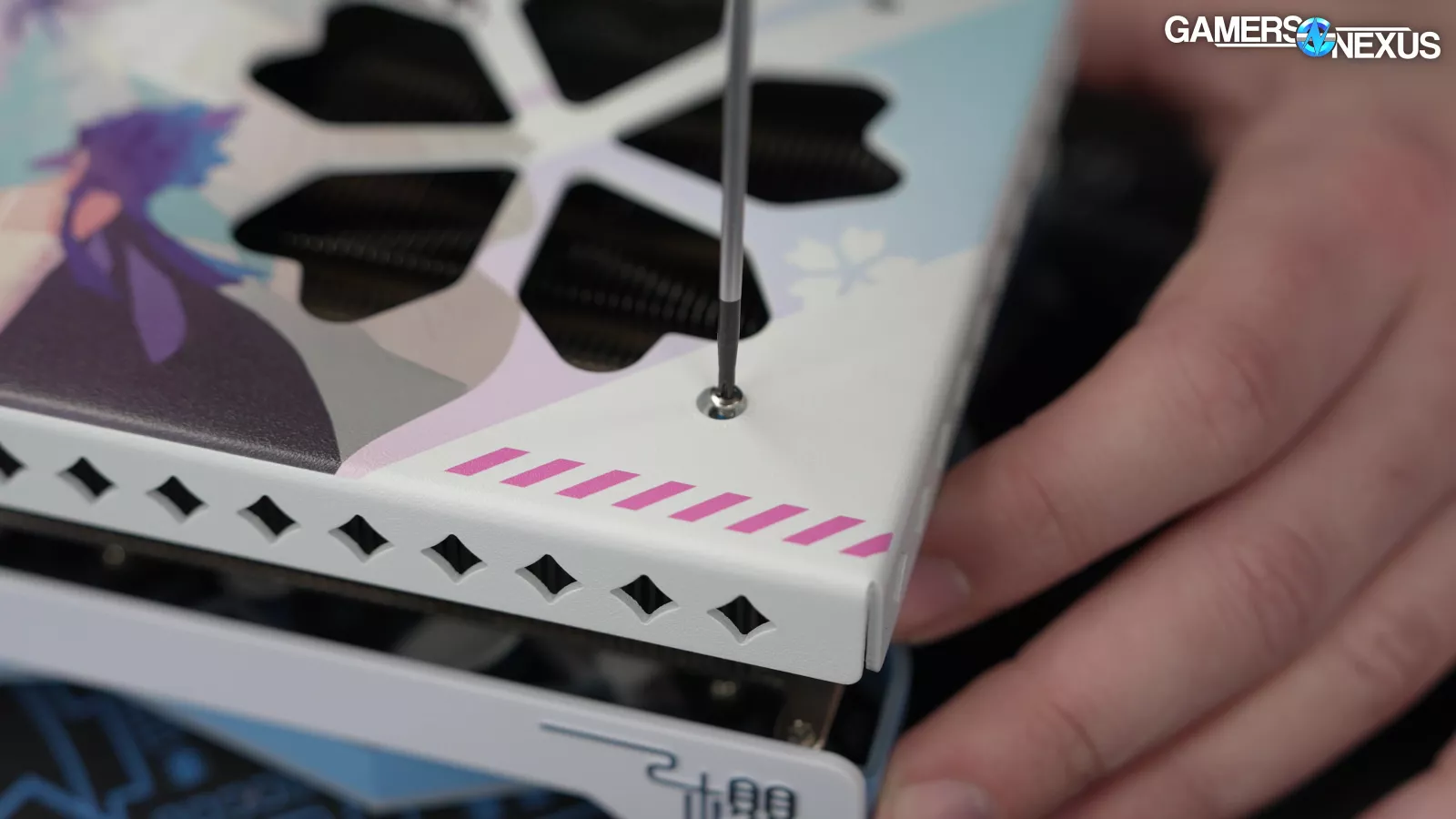
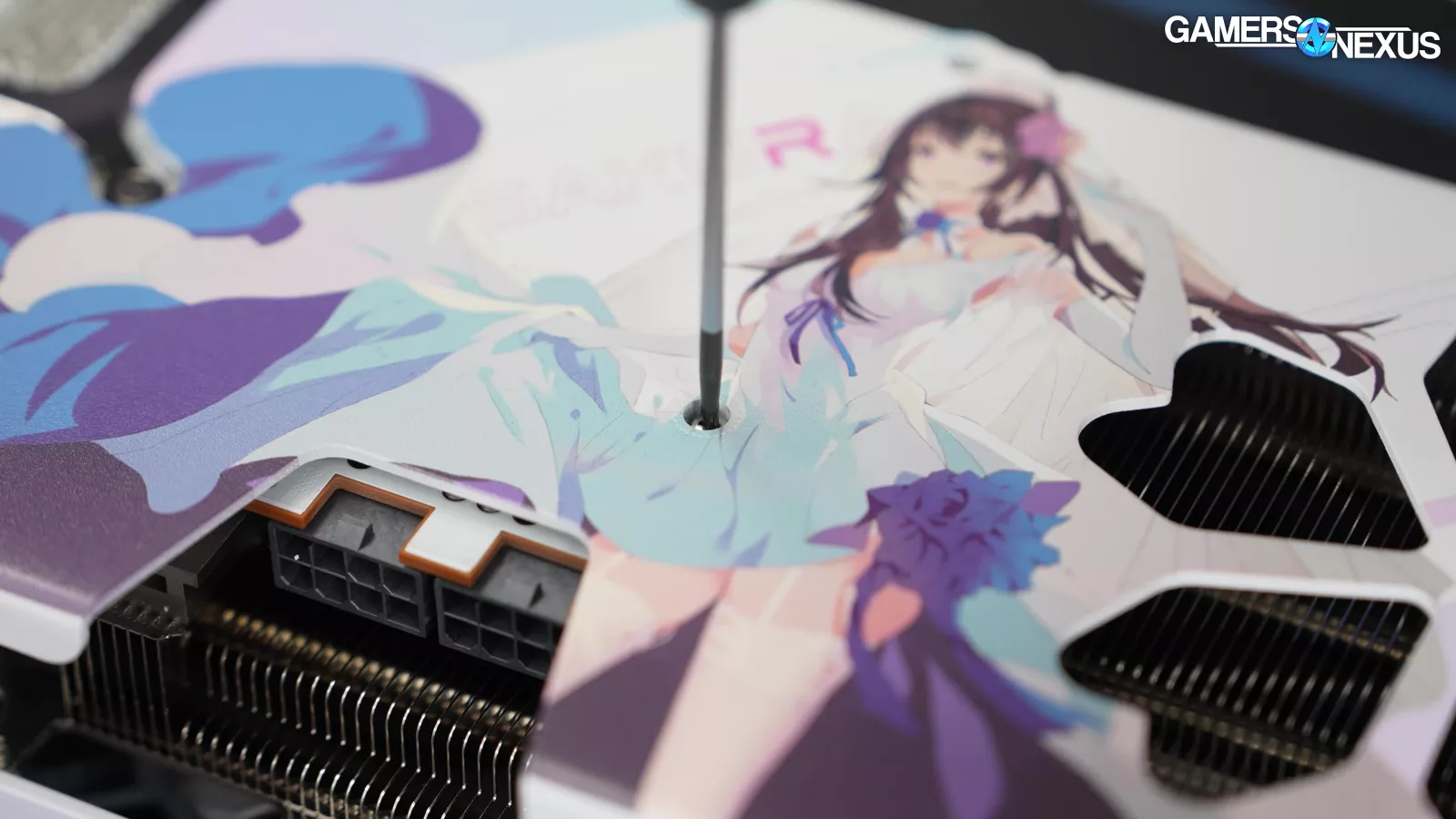
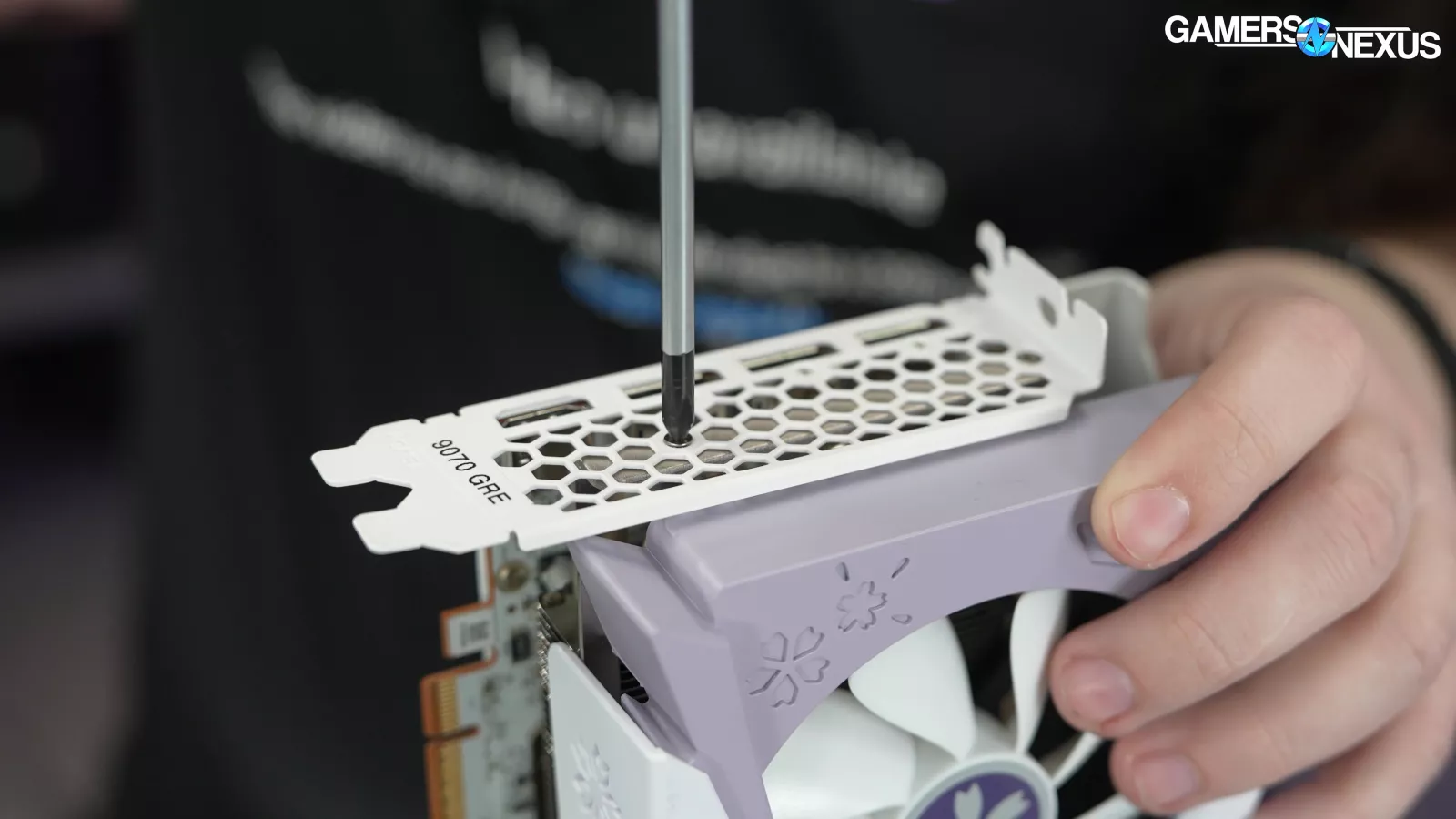
We started our tear-down removing all of its external screws on our modmat.
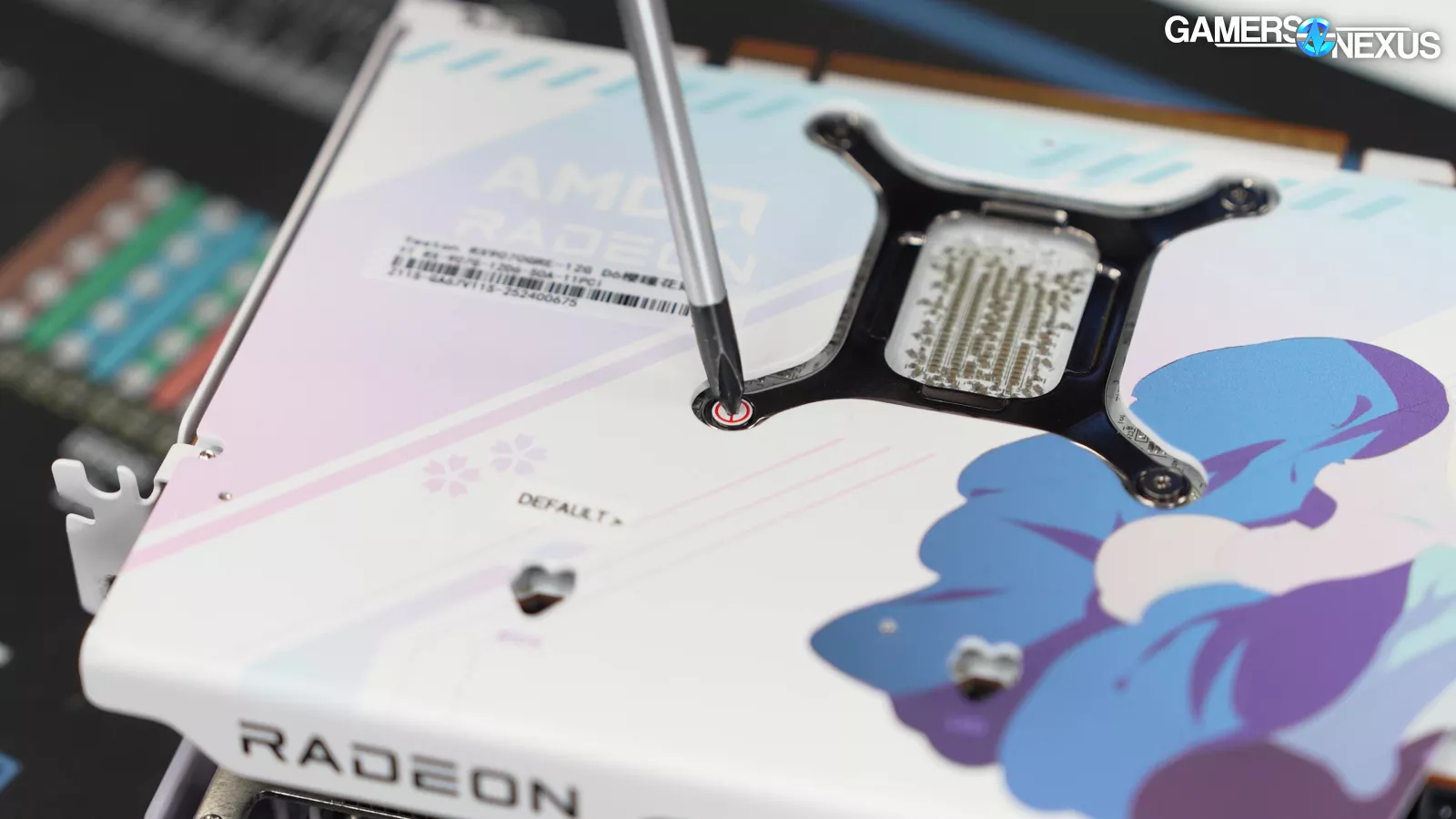
The card does have a tamper seal, but it doesn’t say “warranty void if removed,” which is good as those stickers are unenforceable in the US.
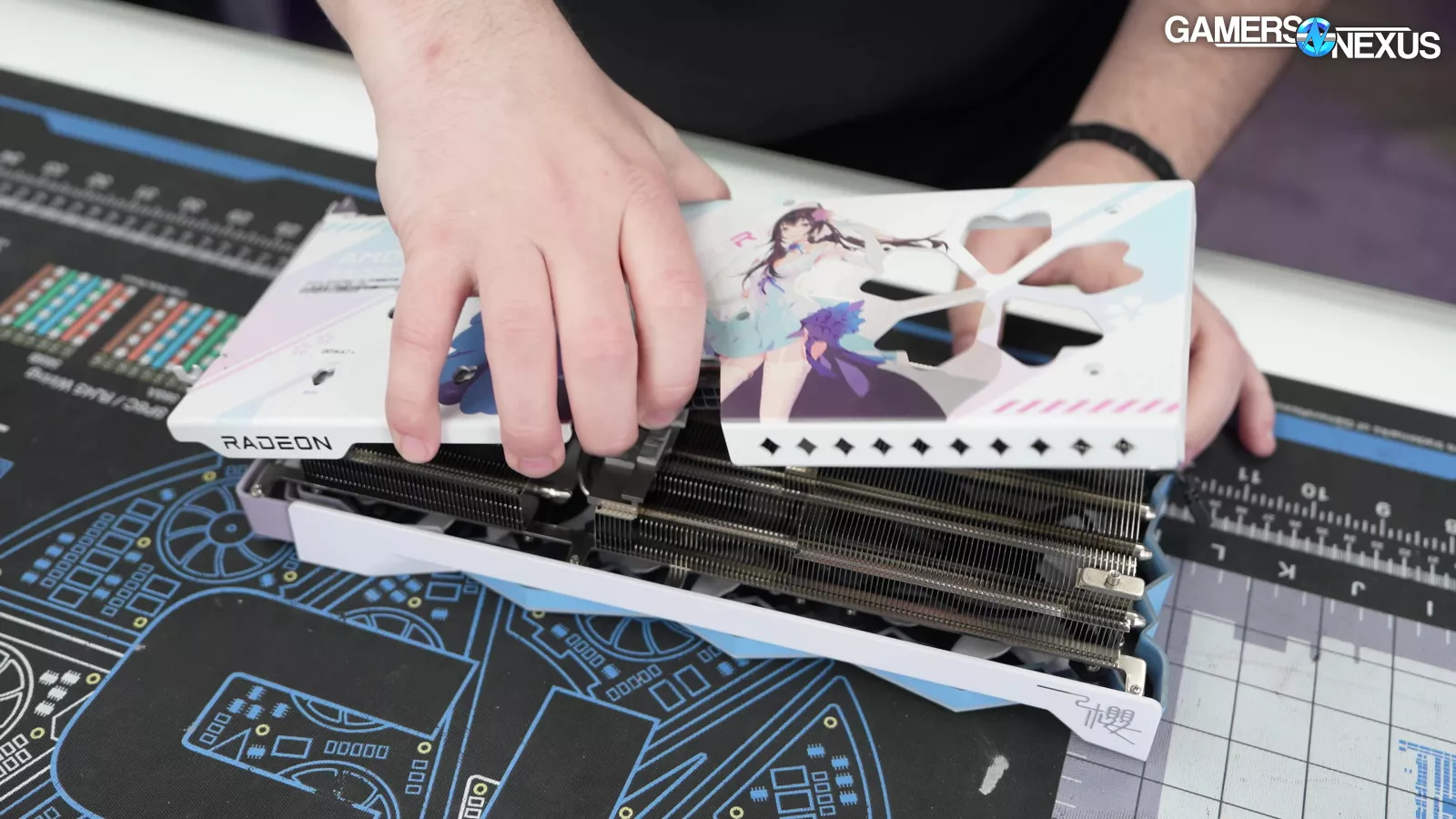
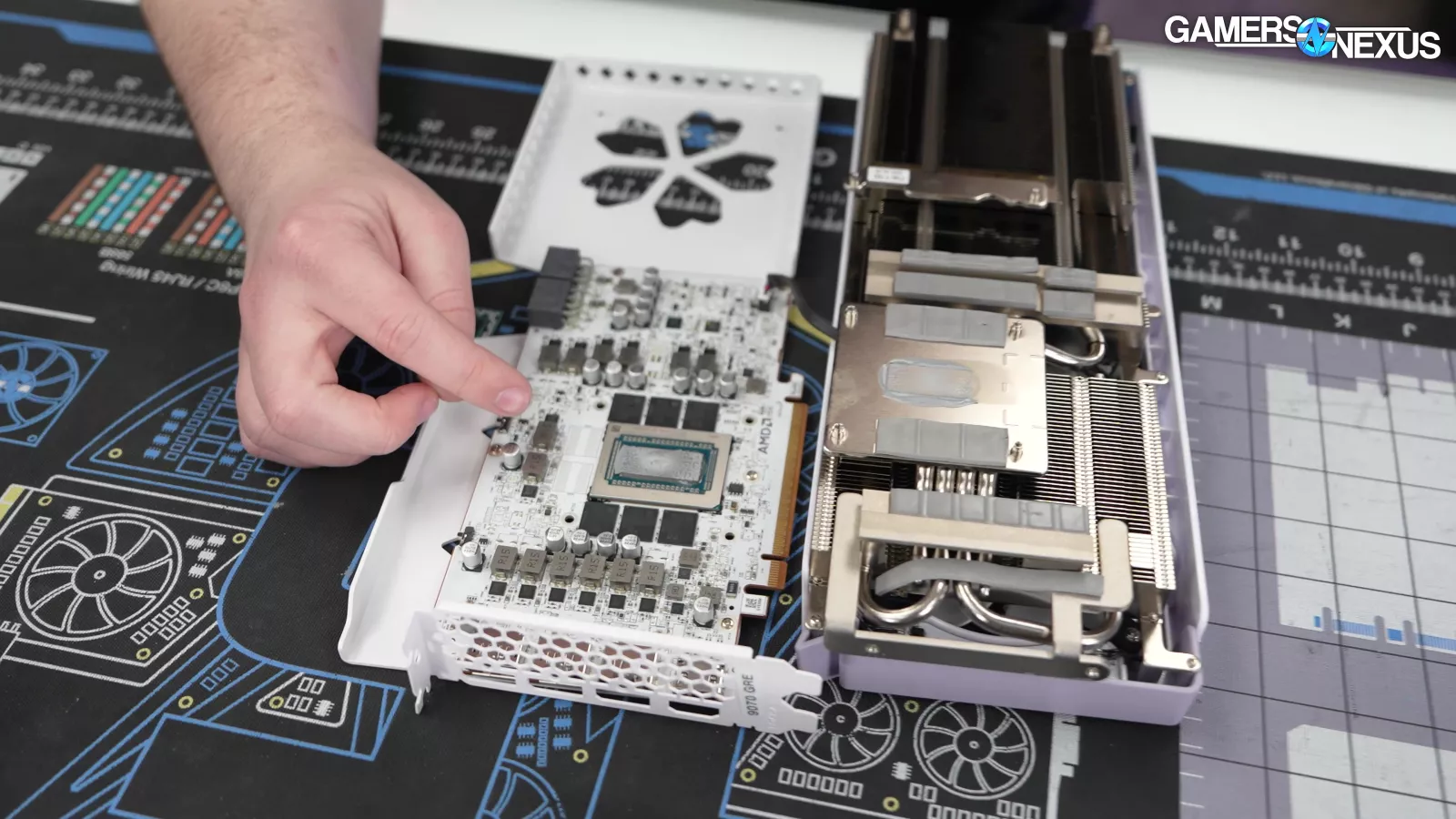
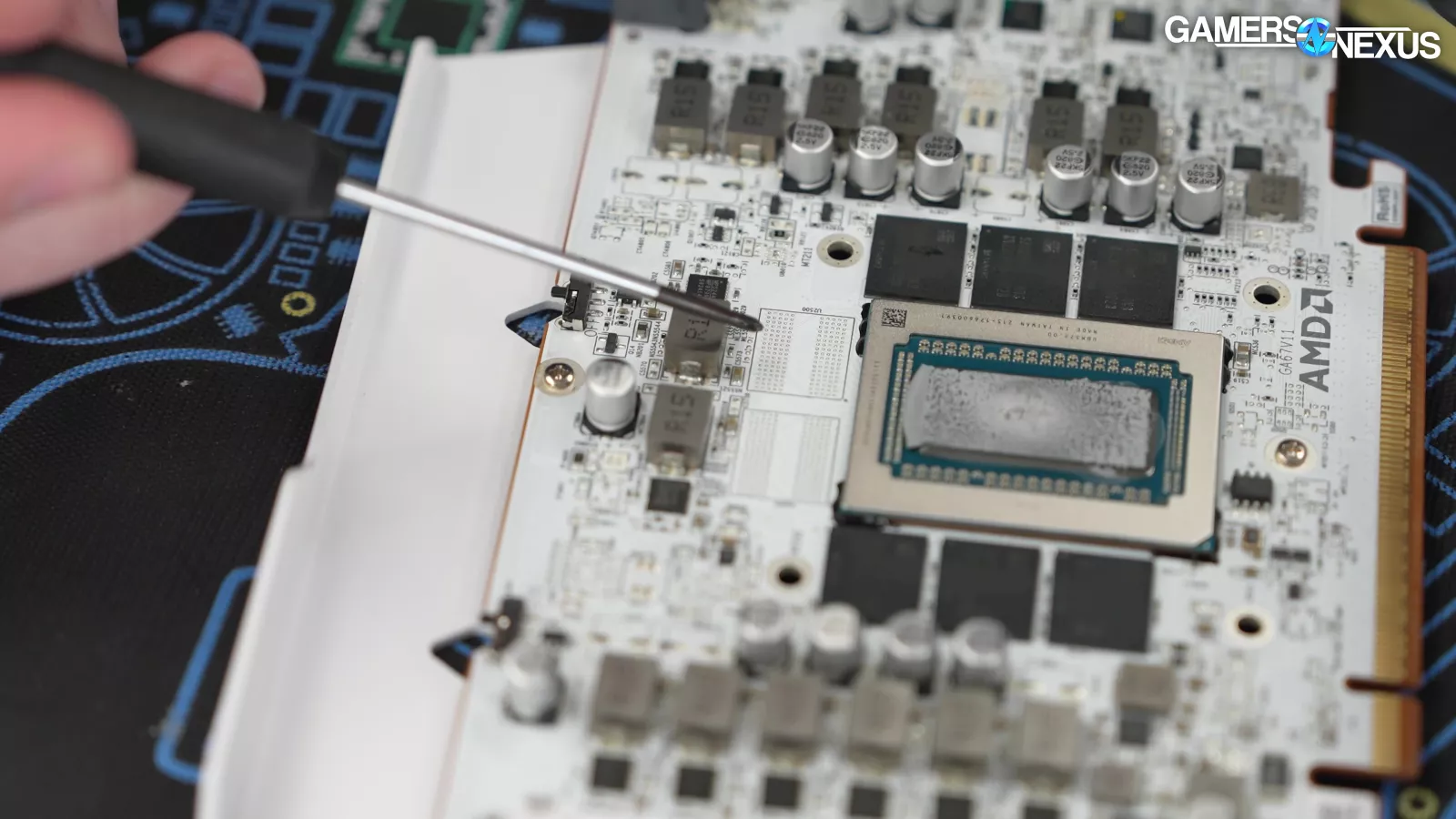
Looking at the card’s PCB, we see 2 blank pads for memory. This card can’t accept more memory, but it’s also configured for XT variants. This allows them to add more for a higher SKU using the same cooler.
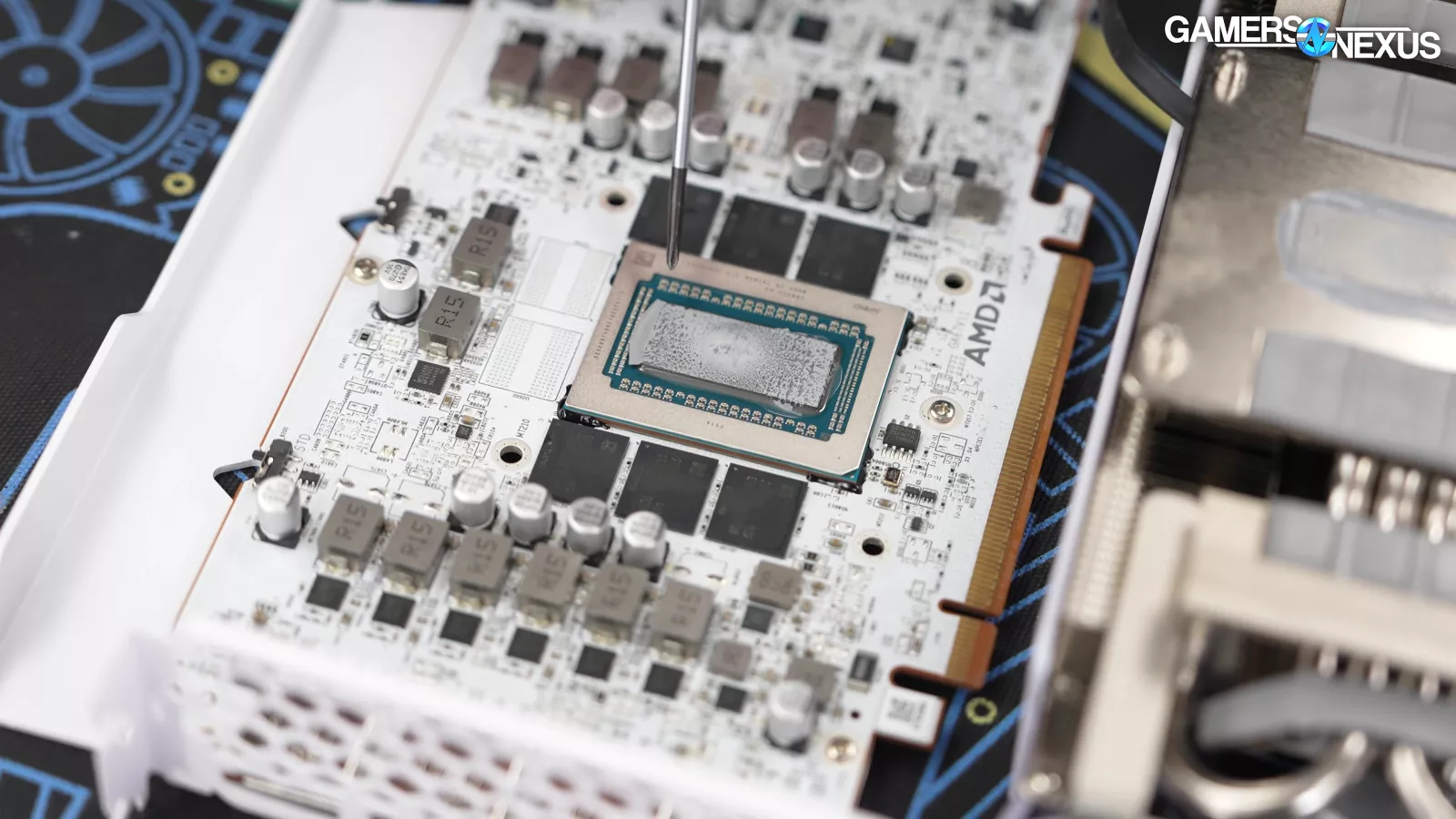
Removing the cooler exposes the elongated 90 series GPU.
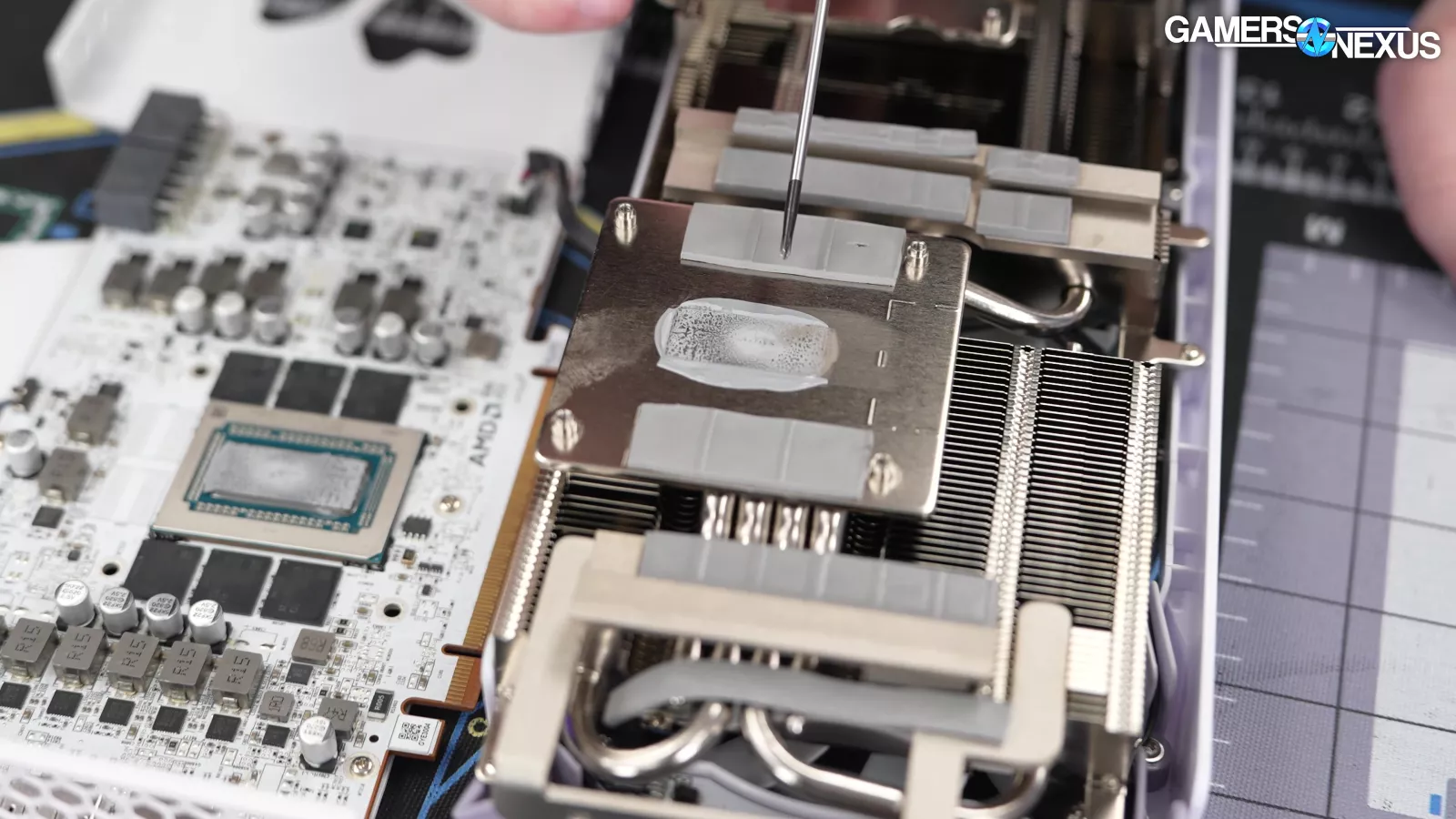
And looking at the cold plate, it looks like Yeston uses a phase-change pad that has pretty even paste distribution with the exception of the center, where we’re seeing a stronger contact force.
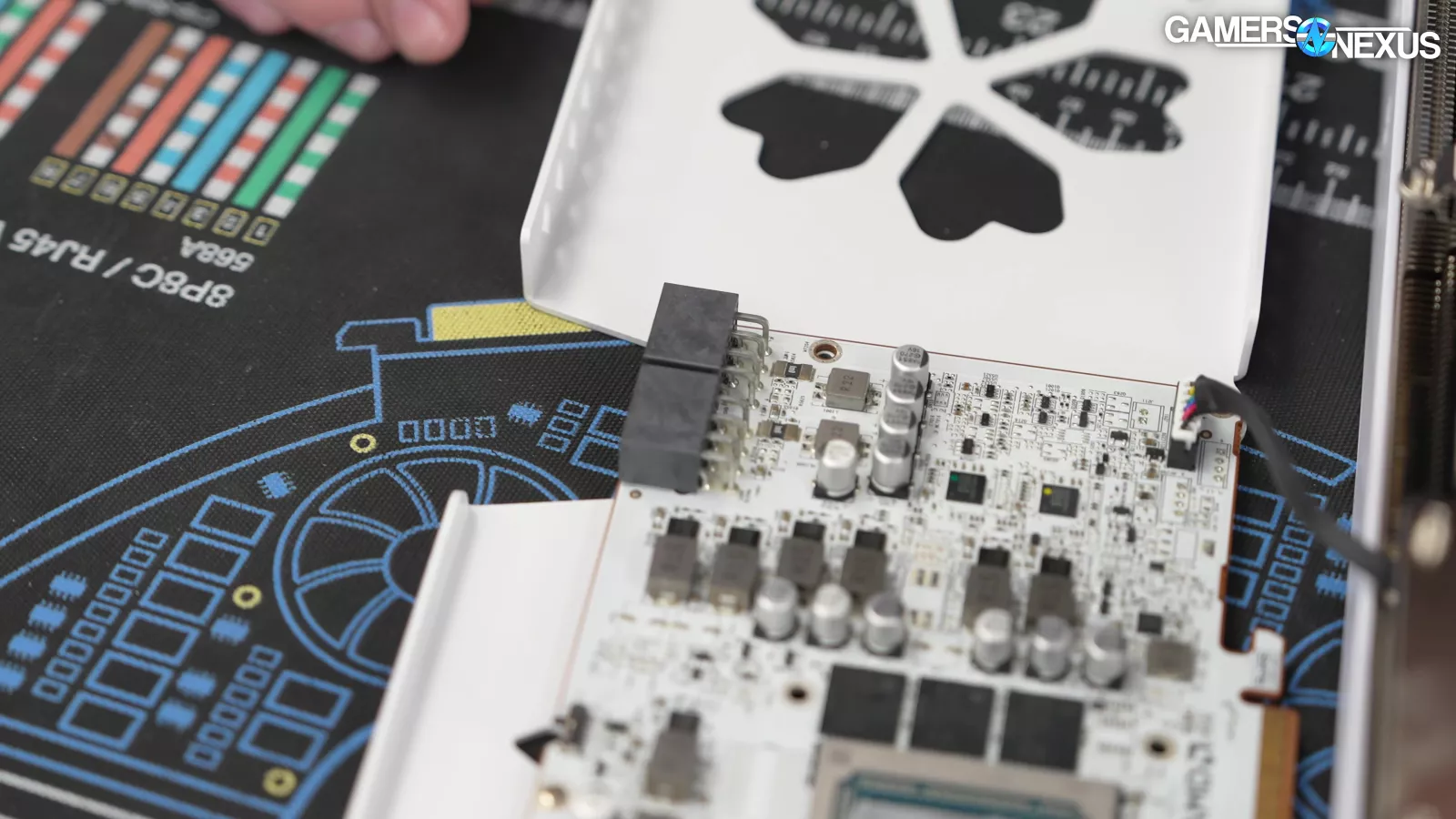
The card has 2 8-pin connectors, which isn’t surprising.
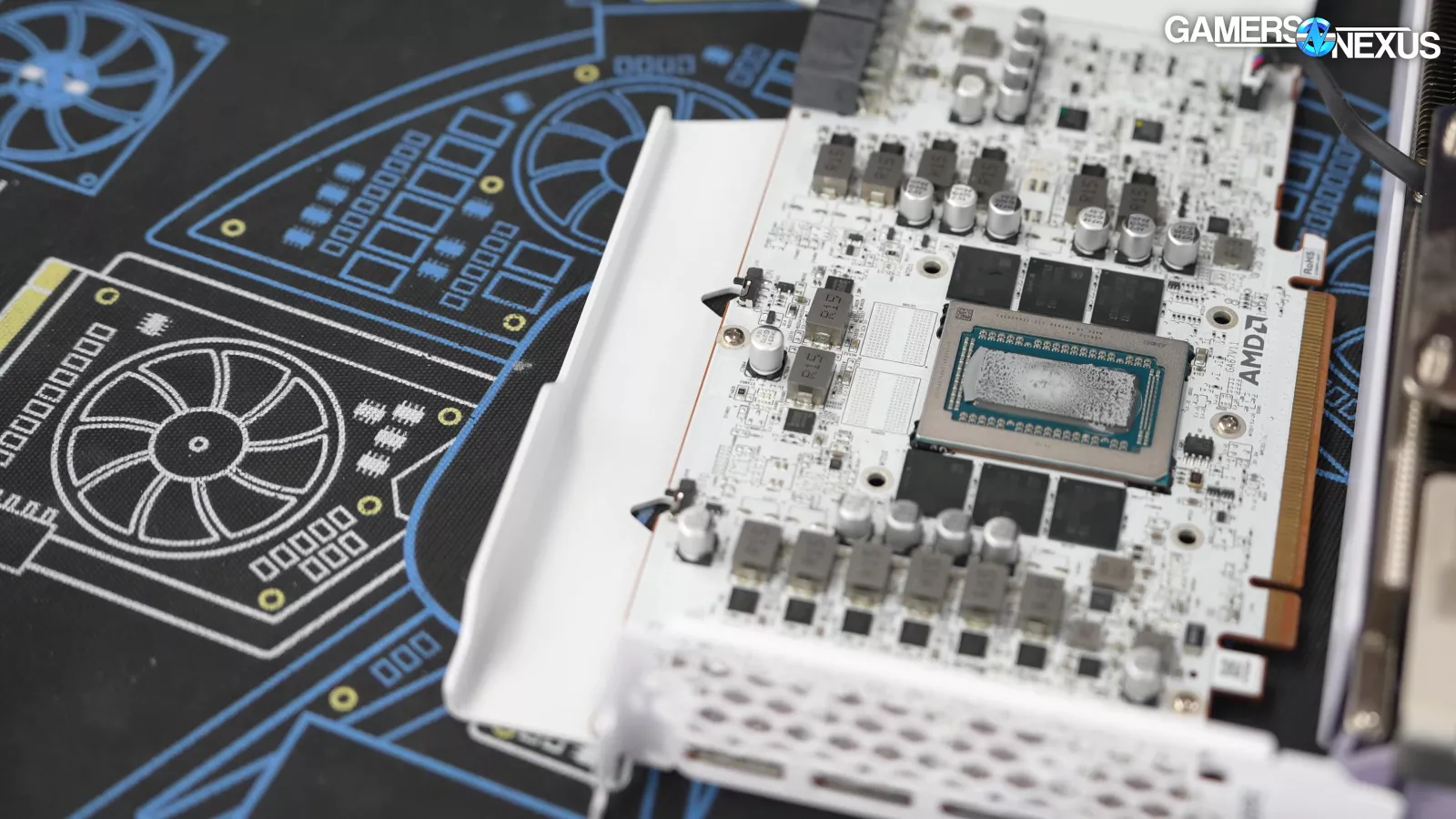
The extra V BIOS is great as it gives users something they can flash, if they want to experiment.
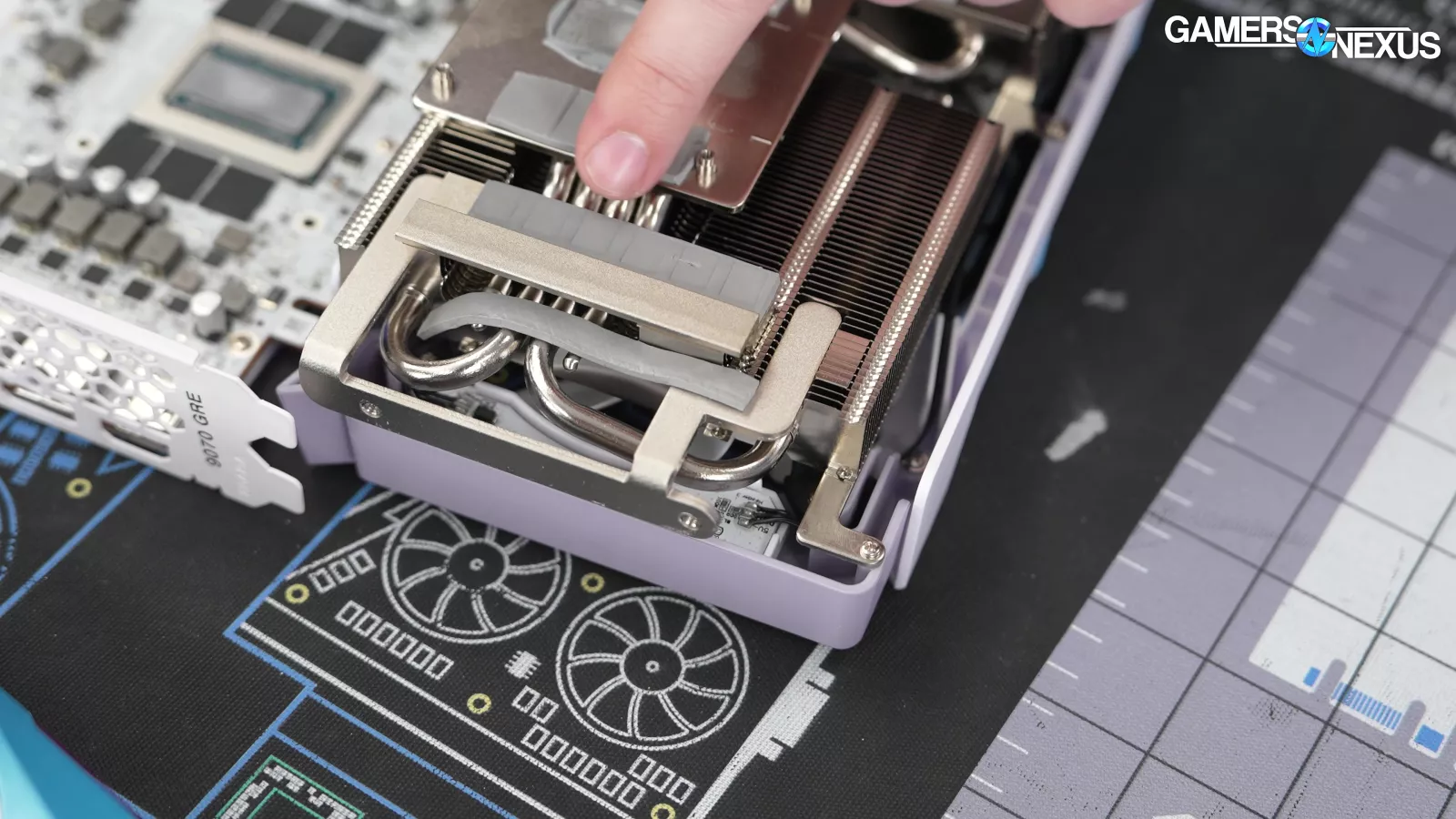
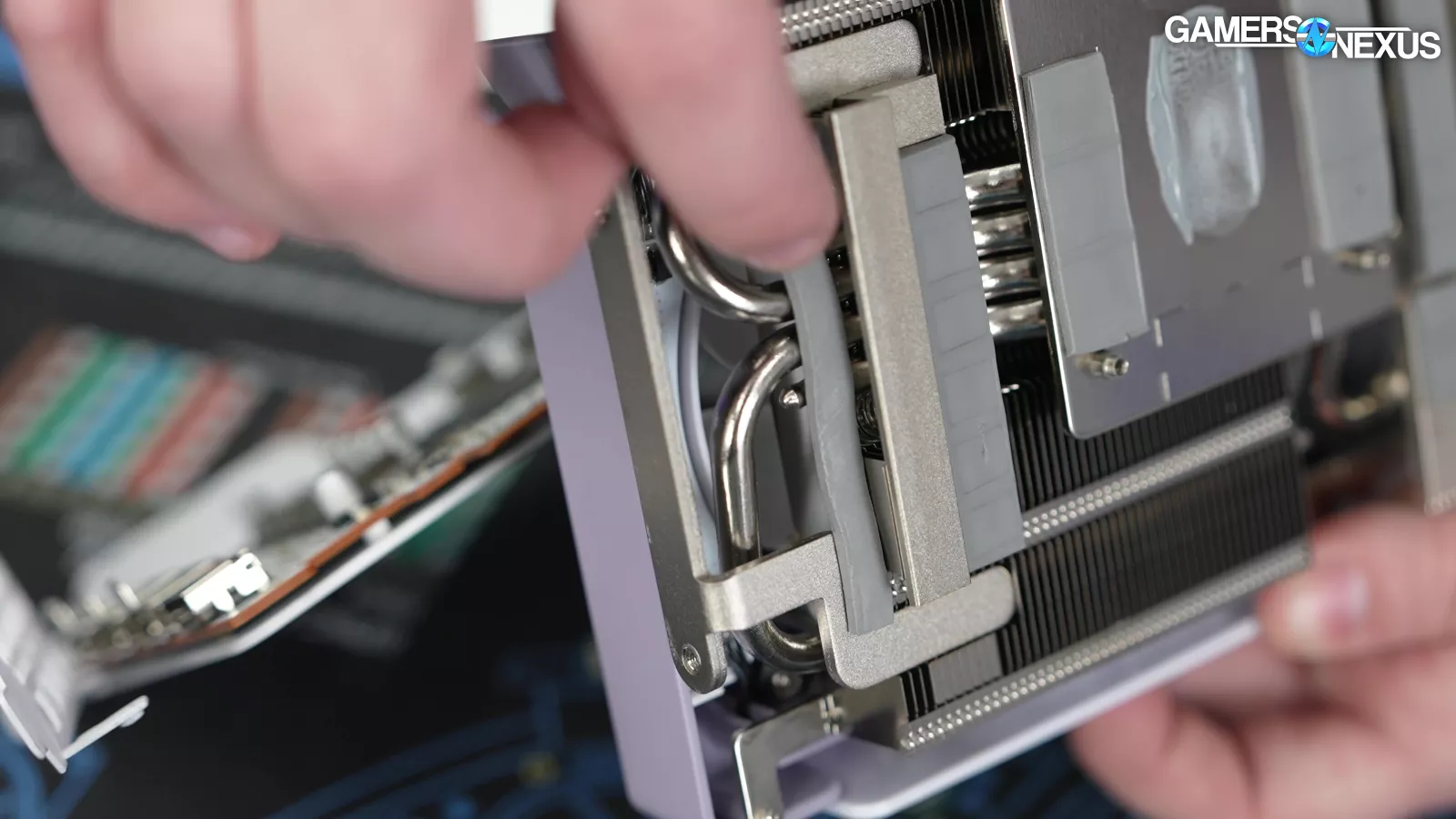
The thermal pad placement is good. They’re all making good contact. One of the thermal pads is oversized, but we’re not seeing any noteworthy faults overall. It’s a pretty straightforward card.
Thermal Benchmarks
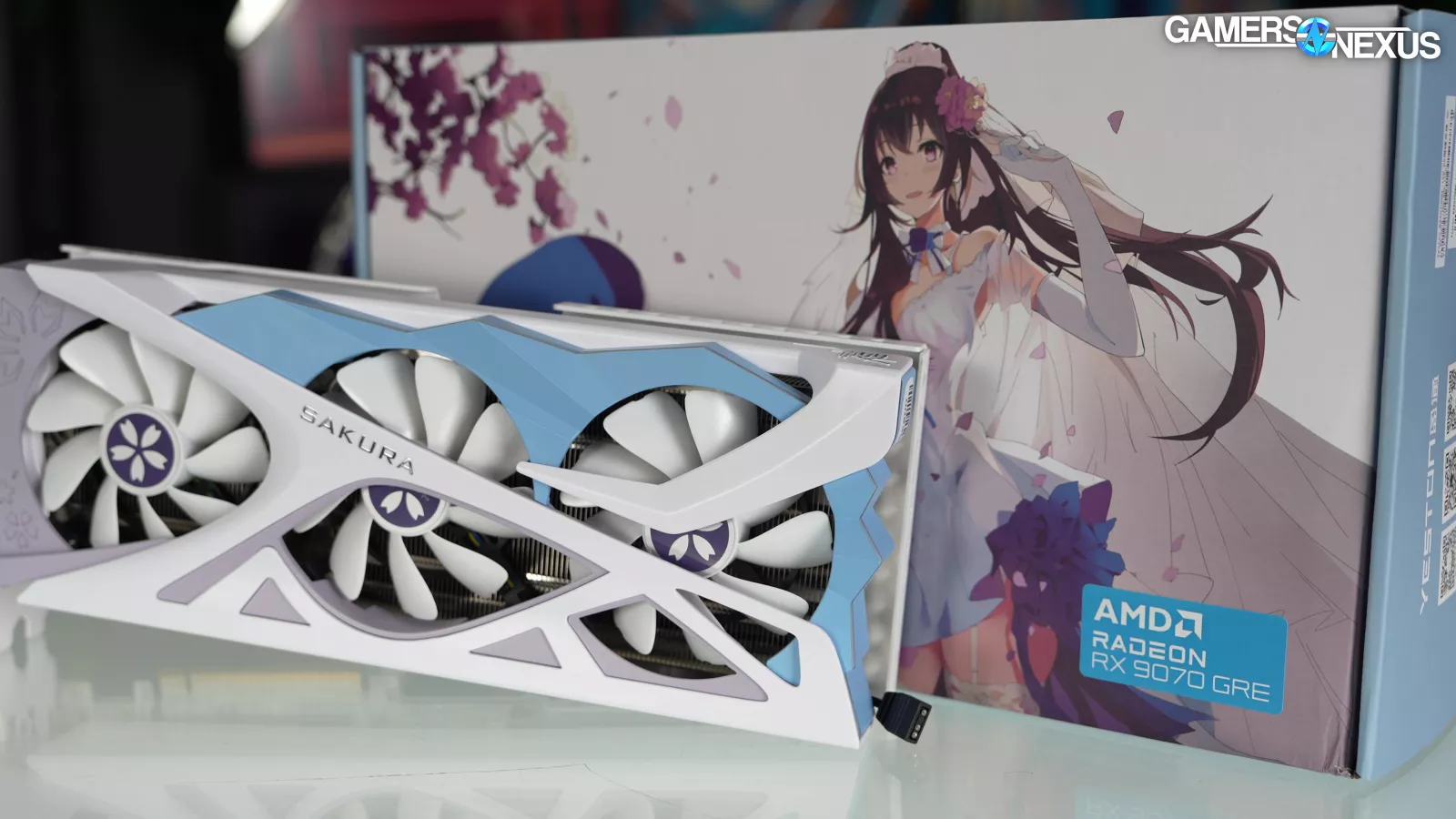
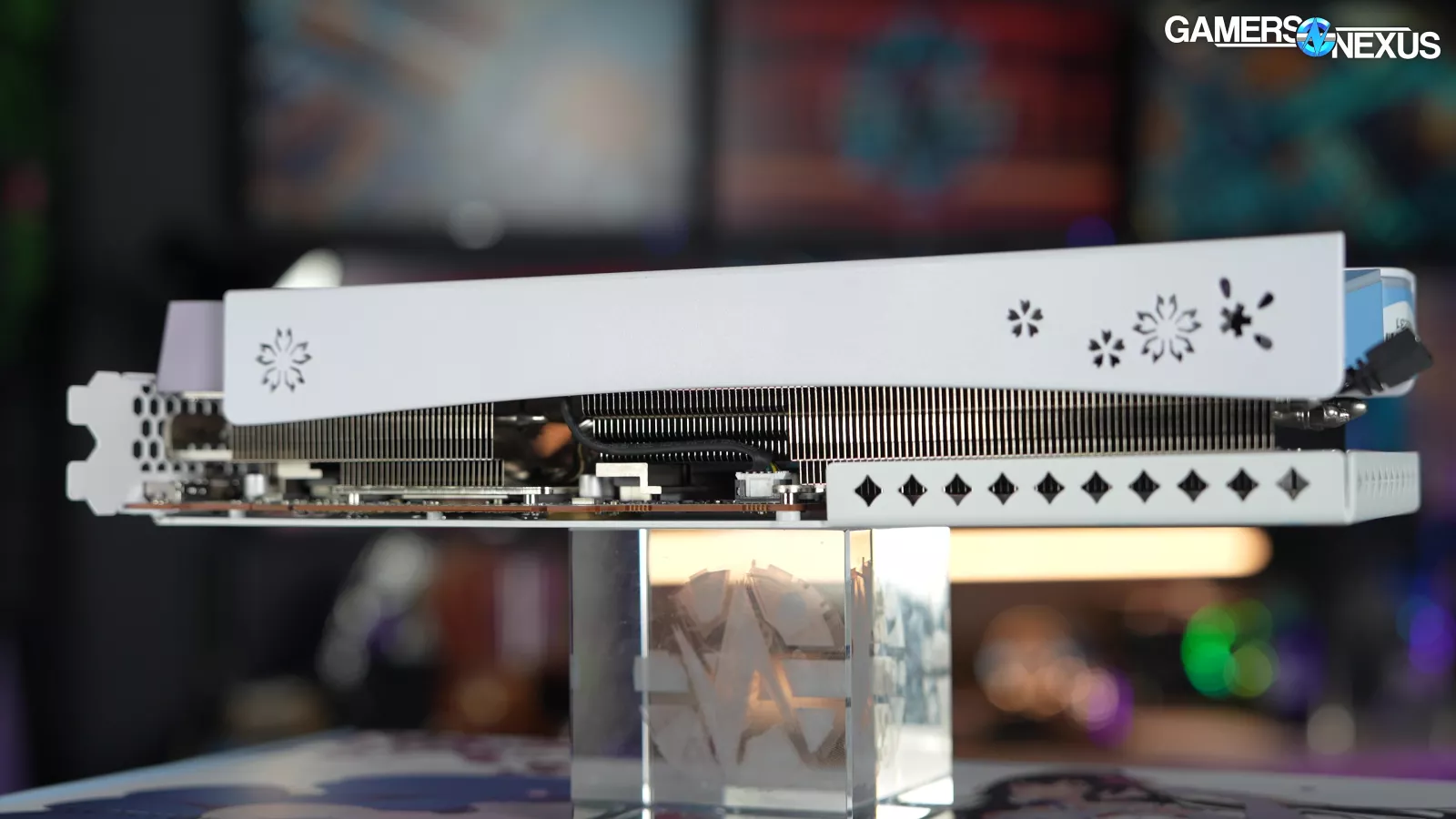
We’ll start with thermals under load, seeing as the main differentiating factor for partner models is the cooler design and VBIOS temperature target setting. Thus far, the Yeston Waifus haven’t run hot -- the Yeston Waifus tend to be colder.
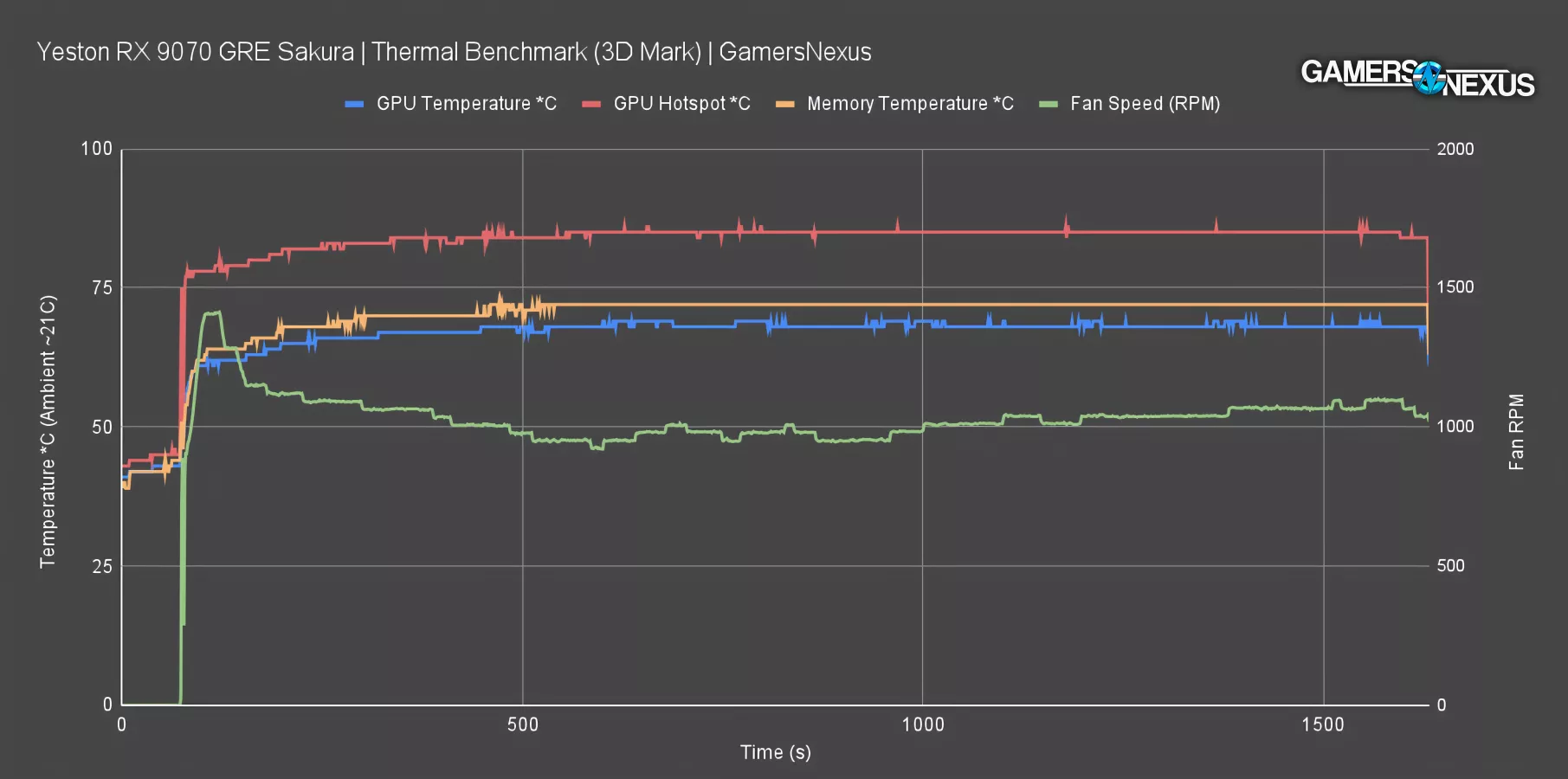
The 9070 GRE ran a GPU temperature of about 68 degrees Celsius in an ambient of 21 degrees. Yeston is aggressively targeting a low GPU temperature here, although it’s benefitted by the TDP of the card being just 220W. GPU temperature is good, but the hotspot temperature delta is problematic at about 16-17 degrees Celsius for a hotspot of 85 degrees. 85 is fine for the hotspot, but the high delta between the average GPU temperature and the peak shows that Yeston could improve in its cooler. Typically in further testing, we find that this is in either the mechanical mounting solution for pressure distribution or in the coldplate contact and flatness. Our tear-down will find more detail to explore here.
Memory temperature rests at 72 degrees Celsius, which is more than acceptable for the GDDR6 on this board. That’s a good result.
The fan response, plotted on the right axis, spikes to 1400 RPM initially, then falls over the next 6 minutes to about 900 RPM, then climbs again and stabilizes at around 1000-1100 RPM. The ambient temperature was not the cause of this, so Yeston has some tuning on the fan curve and hysteresis they could do to make this less erratic. Overall though, it’s running a low fan speed to maintain what are actually great temperatures. The only concern is the delta to the hotspot, but all the numbers are well within spec.
Frequency
Next, we have to validate the frequency of the Waifu.
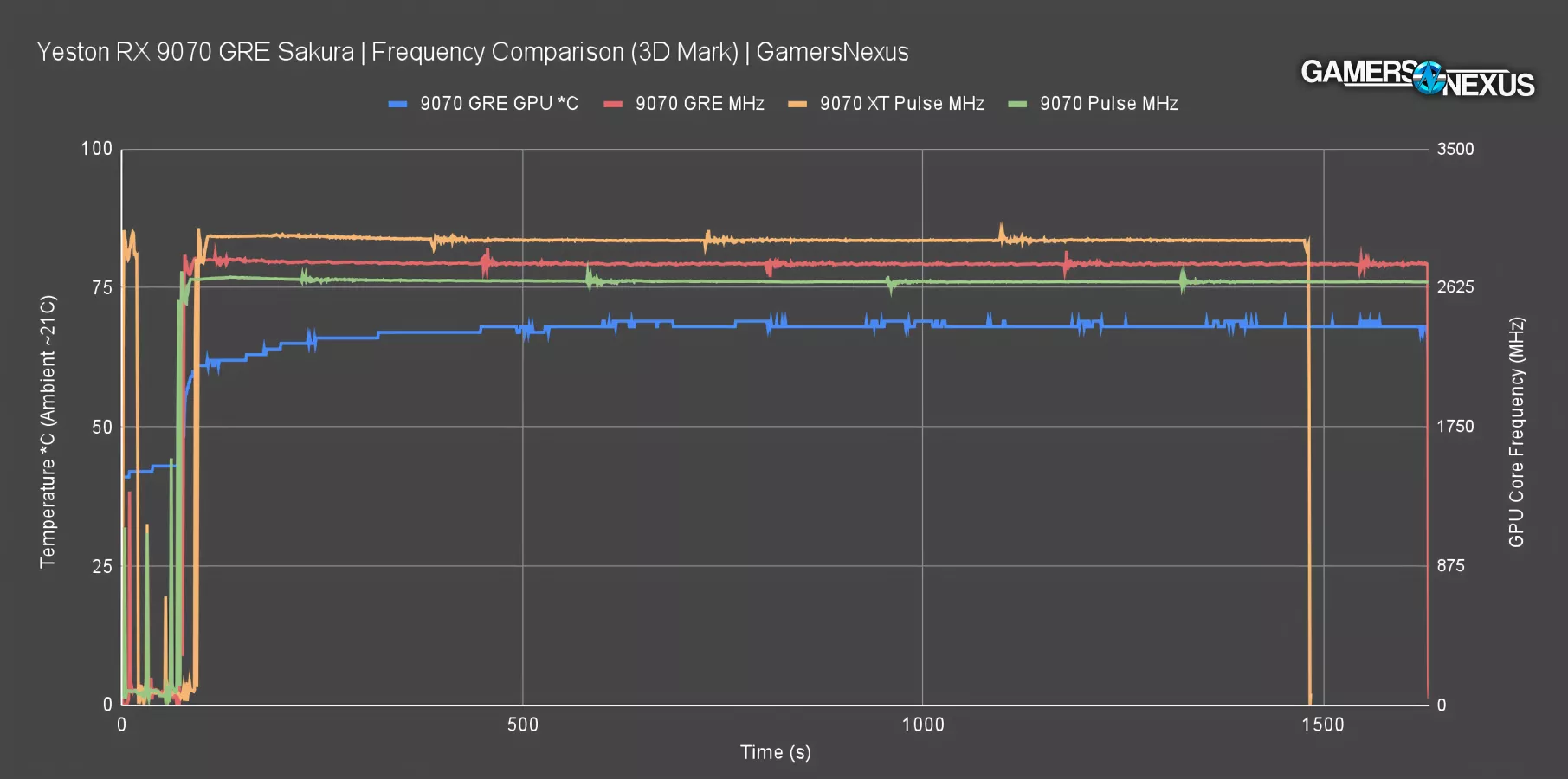
The RX 9070 GRE initially ran at about 2830 MHz, then fell as temperature climbed. The GRE eventually stabilized at about 2775 MHz once at steady state thermals. The RX 9070 XT has a much higher power budget, and so it boosts higher: The XT stabilizes at about 2920 MHz when at steady-state.
The 9070 non-XT, non-GRE holds a 2660 MHz clock. This also makes sense, as it’s spreading a similar power budget over more CUs.
Acoustics
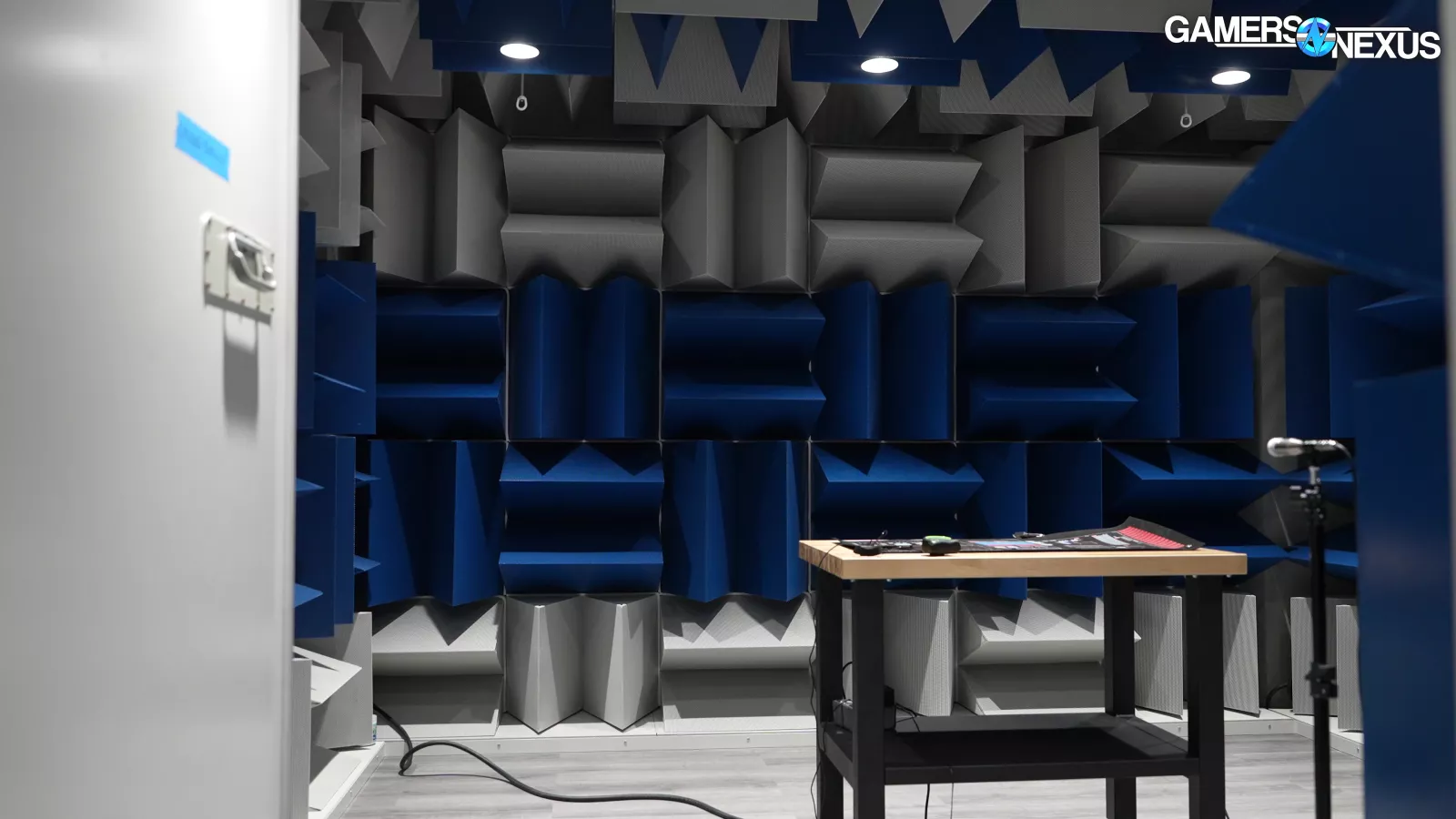
We also ran a quick acoustic test with the Yeston RX 9070 GRE Sakura in our hemi-anechoic chamber that we built for controlled noise testing. In this testing, we put the Waifu in our sound chamber and test it for the acoustic frequency and noise levels of the Waifu when under strenuous load.
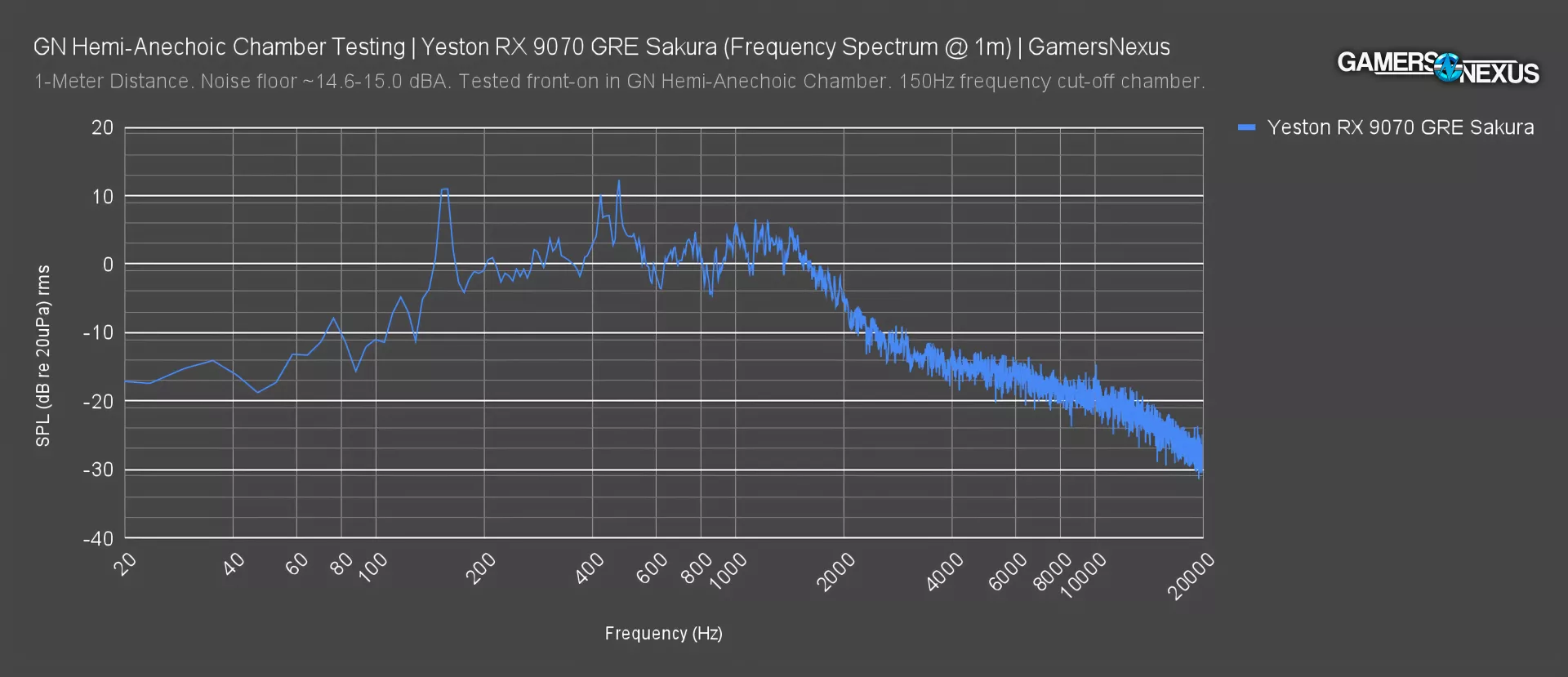
This testing is run with the 9070 GRE at the auto fan speed that it leveled-out at during the earlier thermal testing, so around 1030-1070 RPM.
The Yeston RX 9070 GRE has a frequency spike just above the chamber cutoff, at around 158-162 Hz. This is a relatively low frequency. We see another spike in the range of 400 Hz to 500 Hz, a bump around 1200 Hz, and the remainder as usual. Overall, this frequency distribution matches what we’ve seen in past Yeston cards.
The total noise level is low, at under 26 dBA when measured at 1-meter distance. Yeston is able to maintain a low noise profile as a result of the low TDP and overbuilt cooler, so all of this looks good for Yeston’s Waifu.
Power
Finally, before testing the Waifu’s gaming performance, we also tested the RX 9070 GRE for how powerful the Waifu is.
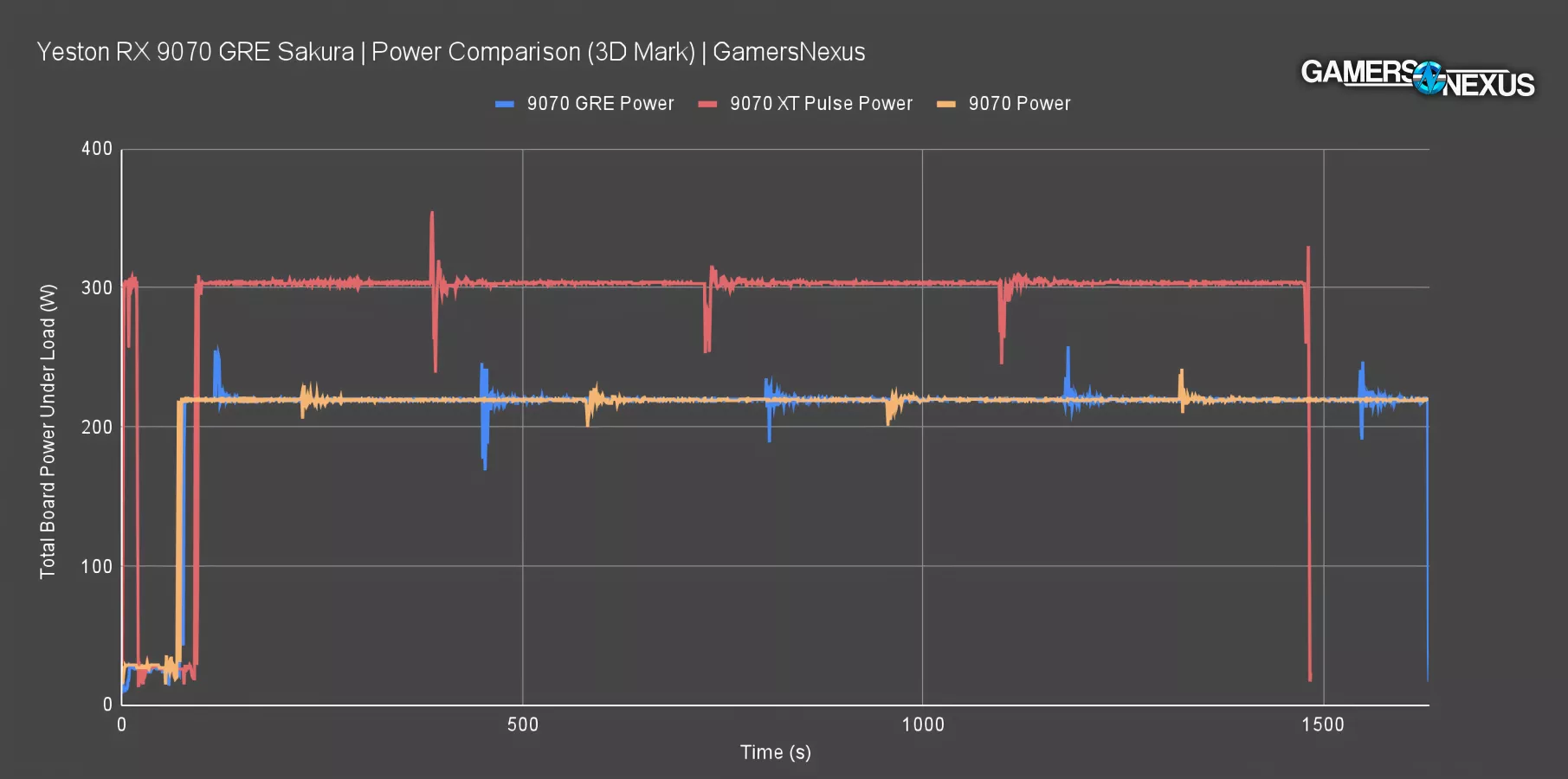
This chart shows the board power of the RX 9070 GRE during our earlier workload. The RX 9070 GRE ran at about 220W during the entire test when using the default VBIOS for the Waifu, showing that the Waifu is reserved and modestly powerful. The 9070 XT pulled about 80W more, with the non-XT, non-GRE at equivalent power to the Waifu.
Gaming Benchmarks

Dragon’s Dogma 2 - 4K
Dragon’s Dogma 2 rasterized is next. This test is load-intensive on the GPUs, especially at 4K, and establishes a wide range of results.
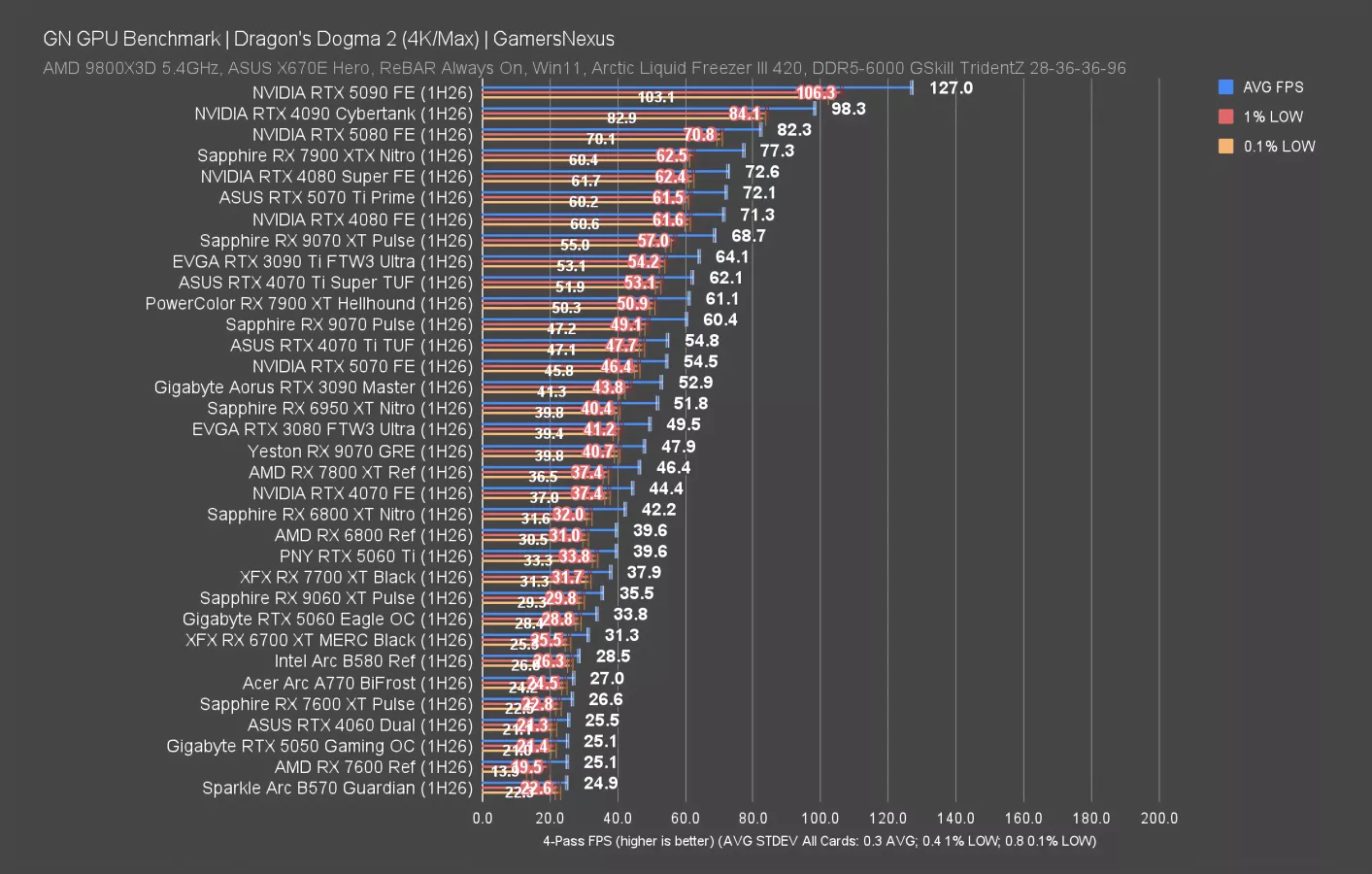
The 5090 (read our review) sets the ceiling at nearly 130 FPS AVG. AMD’s RX 9070 GRE ran at 48 FPS AVG and had lows spaced proportional to the average, right alongside behavior of neighboring cards. The 7800 XT (read our review) and RTX 3080 (read our review) have roughly identical performance to the new RX 9070 GRE. Even at the low-end of RX 9070 GRE prices, this is a worse deal than the RX 7800 XT was previously. And definitely if you consider its post-launch prices when they were close to $400 for some time.
Against modern cards, the RX 9070 non-XT, non-GRE (read our review) ran at 60 FPS AVG, leading the GRE by 26%. The XT is 43% ahead. The GRE beats the 9060 XT though, in this case, by 35% against its 36 FPS AVG. NVIDIA’s closest modern comparison to the 9070 GRE is the 5070 at 54.5 FPS AVG, a lead of 14%. The 5070 is supposed to be about $550, but the cheapest one (sold and shipped first-party at the time we’re writing this) is $650.
As for other notables: The 9070 GRE is just below the 6950 XT (watch our review) and is just ahead of the 4070 (watch our review) and 6800 XT (watch our review).
Dragon’s Dogma 2 - 1440p
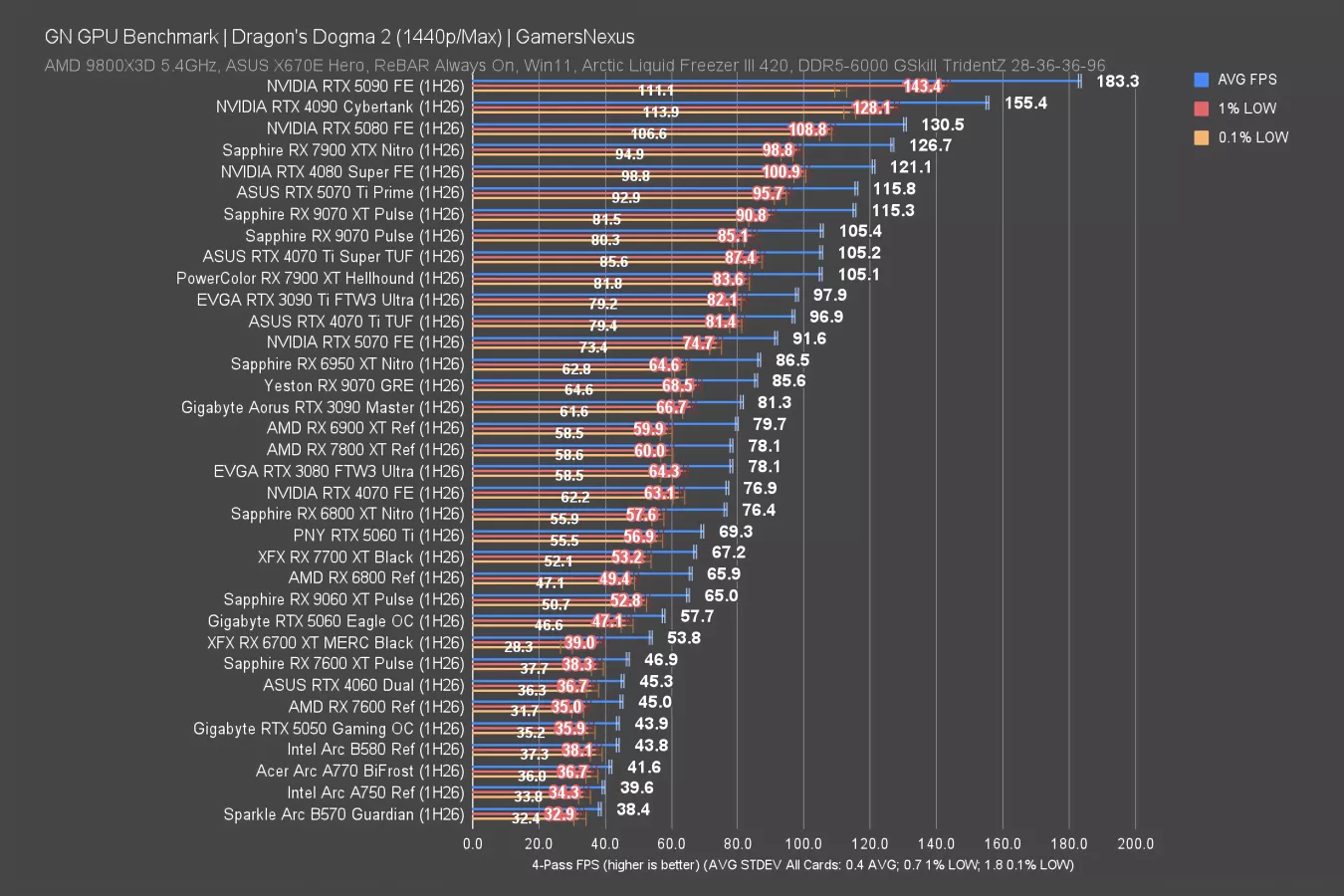
At 1440p, the 9070 GRE ran at 86 FPS AVG with lows well-positioned behind. The 6950 XT and RTX 3090 (watch our review) are about equal. The 7800 XT falls behind slightly, with the 9070 GRE leading it by 10%. The 5070’s 92 FPS AVG has it 7% ahead of the 9070 GRE, although its price is over $100 higher right now than our source in China could sell us a 9070 GRE for.
The 9070 non-XT has a 105 FPS AVG that leads the 9070 GRE by 23%, outpaced by the 9070 XT at 115 FPS AVG for a lead of 35%. The 9060 XT ran at 65 FPS AVG, establishing a 32% lead for the 9070 GRE.
At 1440p, the gap versus the 9060 XT has been slightly reduced, with the lead of the 9070 and 9070 XT versus the GRE also coming down from previously.
Based on our recent GPU price trend recap, the 5060 Ti (watch our review) 16GB is the closest in price to the 9070 GRE. Our 5060 Ti 16GB ran at 69 FPS AVG, giving the 9070 GRE an advantage of 24%.
Dragon’s Dogma 2 - 1080p
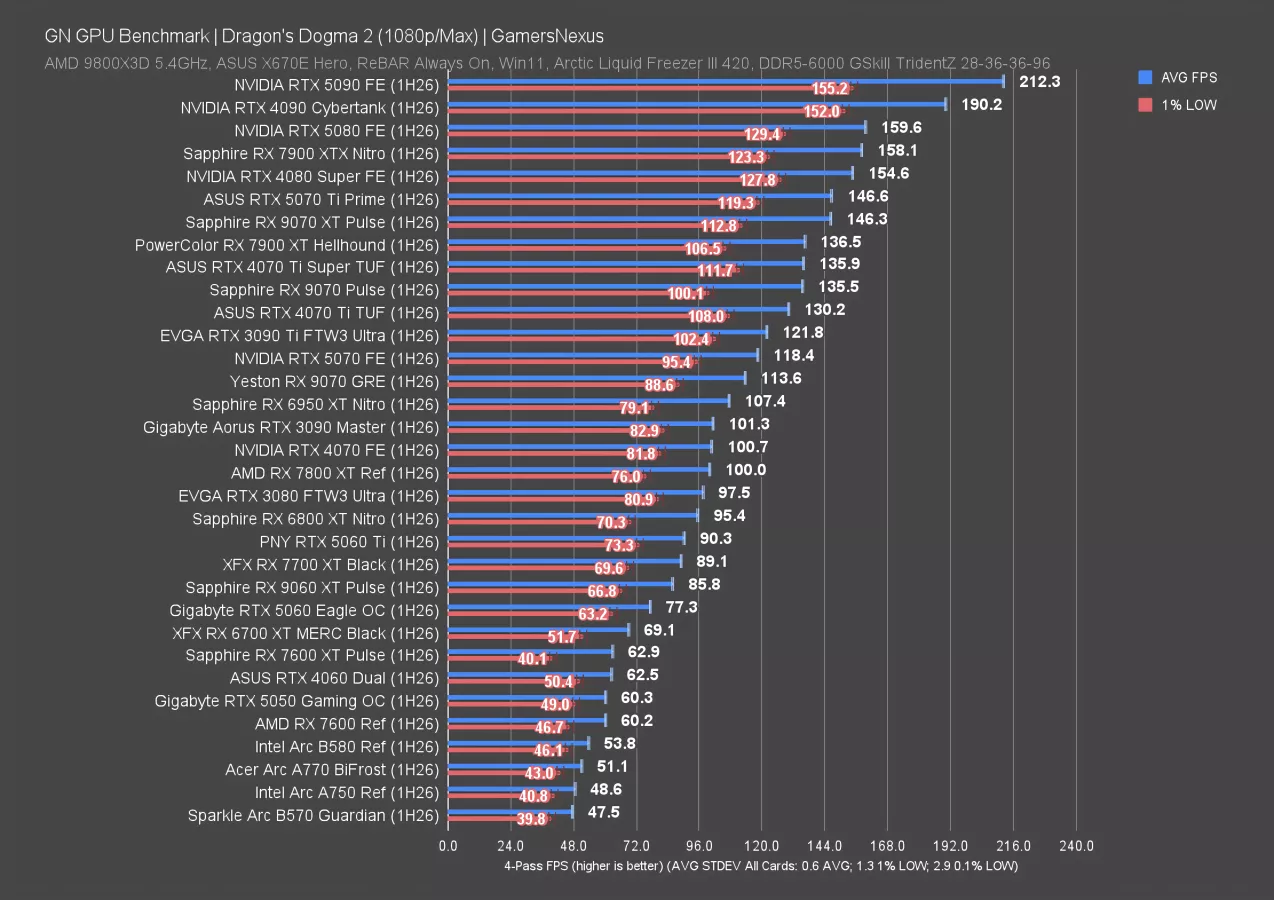
Now at 1080p, the RX 9070 GRE ran at 114 FPS AVG, 89 FPS 1% LOW, and 82 FPS 0.1% LOW. That has it right behind the RTX 5070 (read our review). From a human standpoint, the difference would be undetectable. From a metrics standpoint, this is a measurable and repeatable advantage for the 5070 of about 4%.
The 9070 Pulse ran at 136 FPS AVG, leading the 9070 GRE by 19%. This is a huge reduction from the 9070’s lead of 23% at 1440p and 26% at 4K. The 9070 XT has a 146 FPS AVG, for a 29% advantage that’s down from 35% at 1440p and 43% at 4K.
As for the 9060 XT, we had the 16GB model at 86 FPS AVG, yielding a 32% advantage to the 9070 GRE.
NVIDIA’s RTX 5060 Ti 16GB ran at 90 FPS AVG, so there’s a noticeable benefit in the GRE here.
Cyberpunk 2077: Phantom Liberty - 4K
Cyberpunk 2077: Phantom Liberty is up next, tested first at 4K Ultra and without any ray tracing effects. Cyberpunk has actually become one of our most consistent games by average framerate, which is really saying something -- historically, it had been one of the most problematic. They’ve really turned the game around.
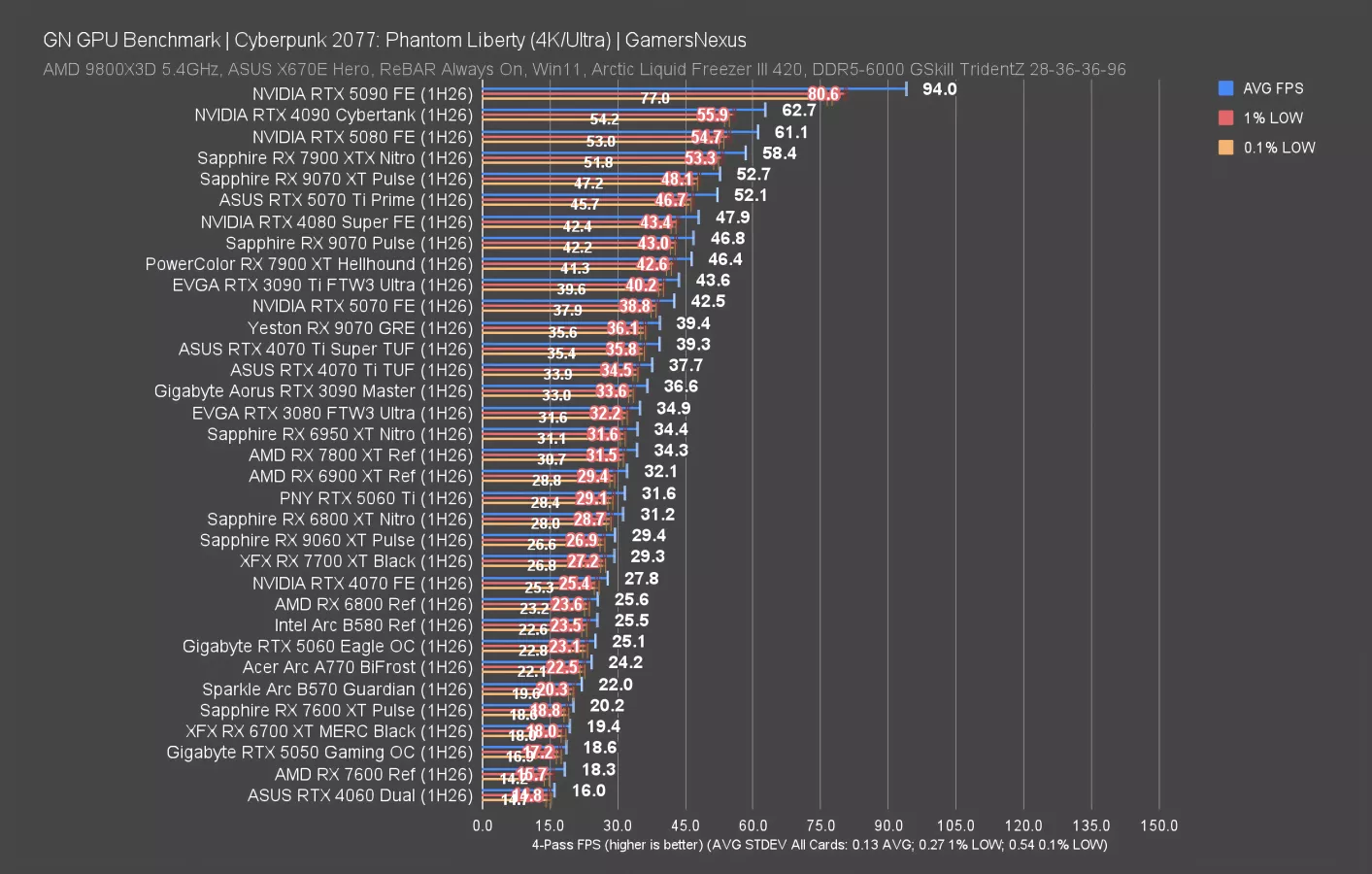
The 9070 GRE ran at 39 FPS AVG here, so it struggled. The lows are right behind that average, so that’s good, but this would need some upscaling help to run at 4K/Ultra or, more realistically, you’d need to drop settings below Ultra.
The 9070 ran 19% higher framerate at 47 FPS, with the XT up at 53 FPS AVG for a 34% lead. In this case, the 7900 XTX (read our review) holds on to AMD’s best-performing slot, but that’s not the case in every game. The GRE is also 34% ahead of the 9060 XT 16GB.
The 9070 GRE is most directly comparable to the 5070 and 4070 Ti (read our review) or Ti Super, as far as performance goes. It sits well ahead of the 5060 Ti 16GB, for about a 25% lead by average framerate.
Cyberpunk 2077: Phantom Liberty - 1440p
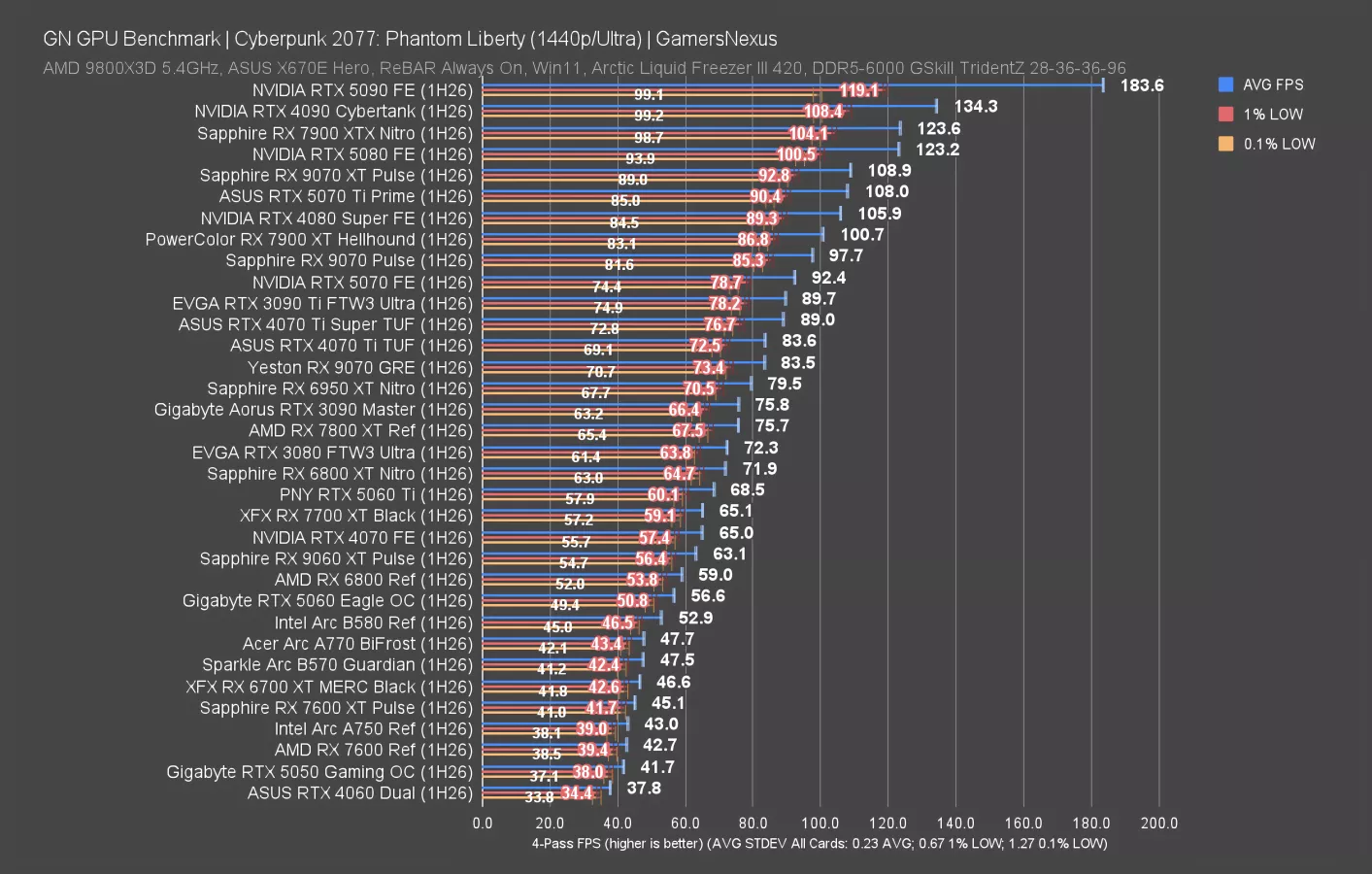
At 1440p, the 9070 GRE ran at about 84 FPS AVG. That’s more than playable here. Lows are likewise in a good spot. The 9070 GRE is identical to the 4070 Ti’s performance, which was the original RTX 4080 (if you remember its unlaunch), and is also about the same as the 6950 XT.
The 9070 XT has a 30% lead at 109 FPS AVG, with the 9070 splitting the difference at 98 FPS AVG. Below the GRE, once we’re past the 7800 XT and 3080, the 5060 Ti sits at 69 FPS AVG. The GRE leads the 5060 Ti by 22% and the 9060 XT’s 63 FPS AVG result by 32%.
The RTX 5070 definitely isn’t worth an extra $100 for the 10-or-so more frames per second it gets in this test.
Cyberpunk 2077: Phantom Liberty - 1080p
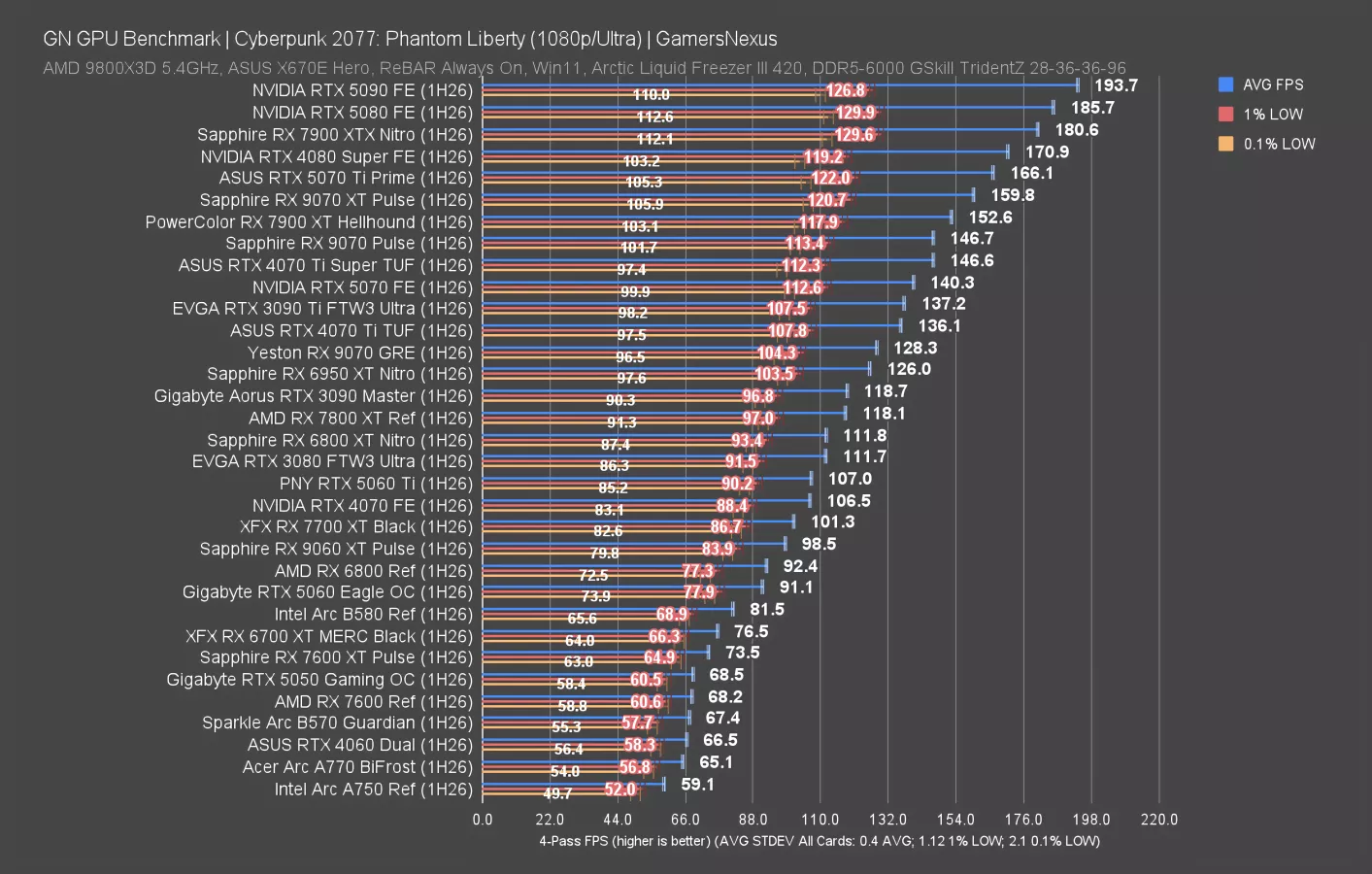
At 1080p, the 9070 GRE held a 128 FPS AVG result. We’re maxed-out at the top of the chart, so we’ve truncated some of the results since they were just bouncing off of the CPU.
The 9070 is about 14% ahead of the 9070 GRE, minimizing the gap while still being within the CPU’s capabilities. The XT card isn’t much ahead of that. This resolution is pushing the cards together.
The 9070 GRE is notably below the 4070 Ti now and is about the same as the 6950 XT.
Baldur’s Gate 3 - 4K
This test is for Baldur’s Gate 3 at 4K and Ultra settings. There’s no point showing below 4K for this one since the RX 9070 and 9070 XT are both against the CPU limit at 1440p.
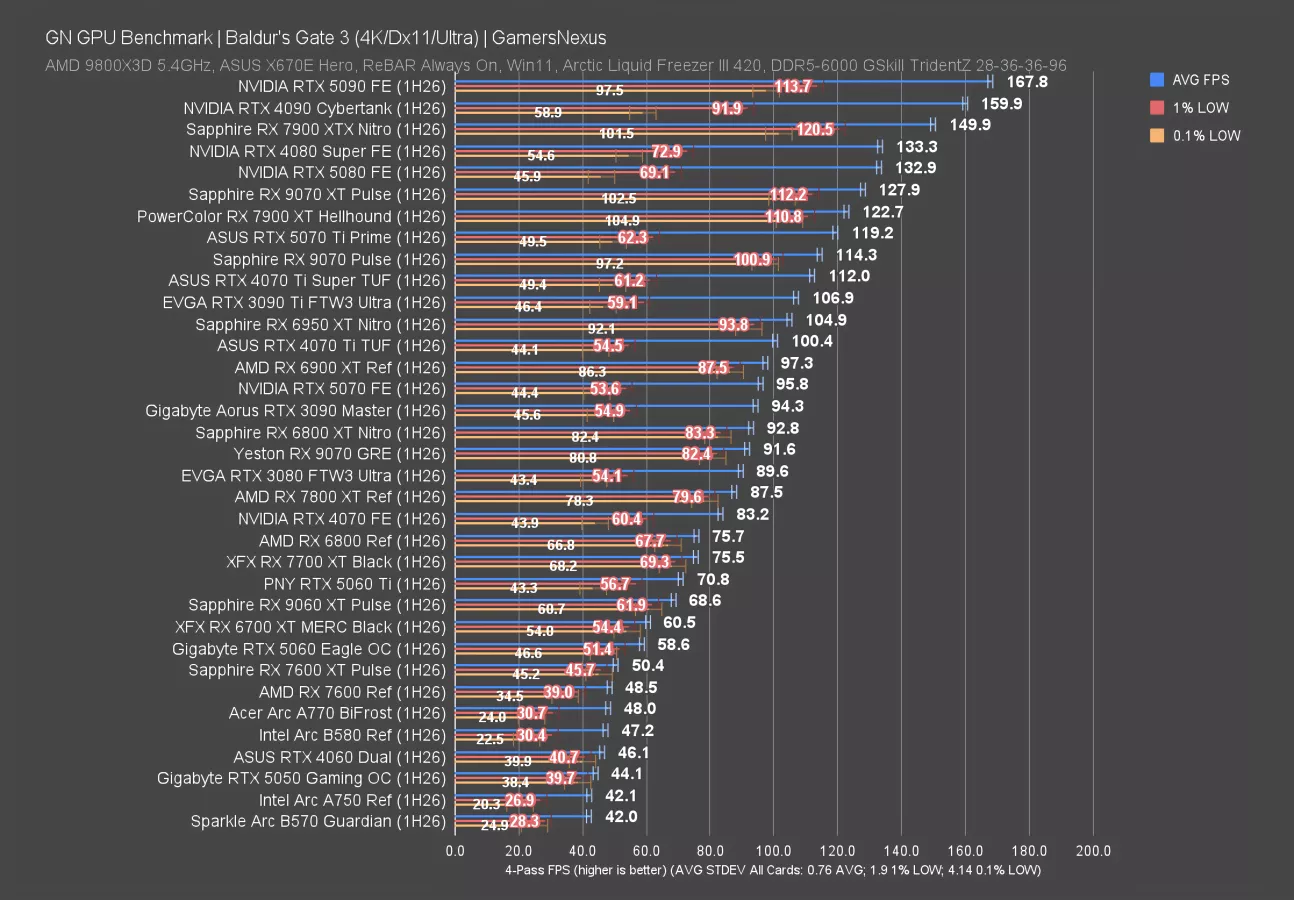
At 4K though, we still have some scaling.
The RX 9070 GRE ran at 92 FPS AVG with good lows. That has it about the same as the 3080 or 6800 XT, meaning that the 6950 XT breaks away in this test. The 4070 Ti also broke away, up at 100 FPS AVG. As for modern comparisons, the 9070 non-GRE, non-XT held a 114 FPS AVG, with the XT at 128 FPS AVG. Scaling is similar to the other games.
The 9070 GRE leads the 5060 Ti’s 71 FPS AVG by 29%, with the 5070 ahead of the 9070 GRE by just a few FPS -- not in a noticeable way; however, we did have consistent issues with the lows for the 5070. Actually, for that matter, all of the NVIDIA cards have significantly worse lows in this game with Dx11 than the AMD devices. In that way, the 9070 GRE would offer a better experience overall than the 5070, despite the 5070 being a few FPS ahead in the average framerate.
Kingdom Come: Deliverance II - 4K
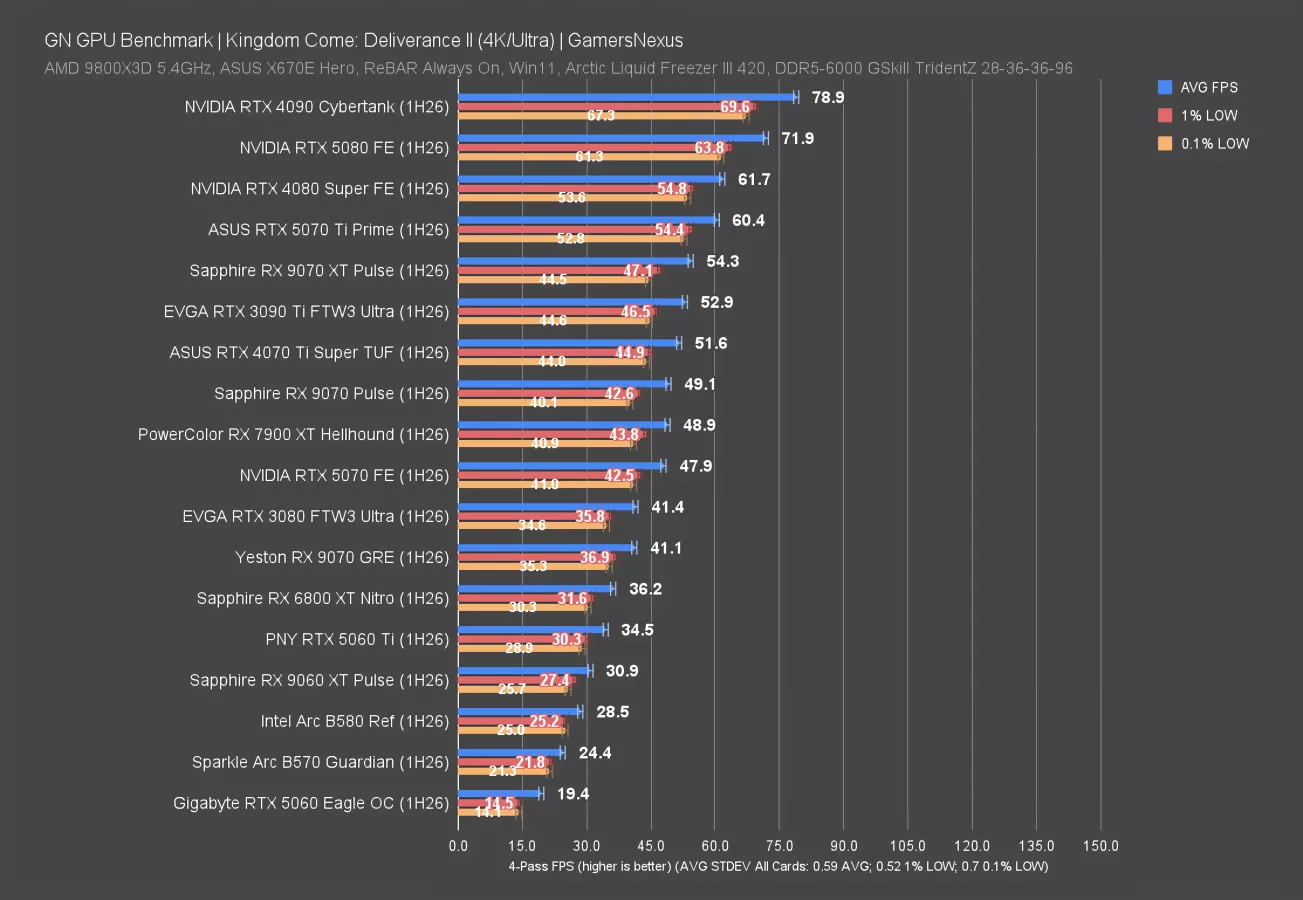
This next one is for Kingdom Come: Deliverance II, which is a new game to our test suite. The game launched in 2025 and is one of the newer titles we’ve added. Because this is brand new, we don’t have as many cards tested. The chart is more barren. On the positive side, this is one of the most consistent games we’re testing now, with the run-to-run variance often impressively below a 1 FPS change. That’s remarkably consistent.
At 4K, the 9070 GRE ran at 41 FPS AVG and tied the RTX 3080 in all metrics. They are indistinguishable from each other. The RTX 5070 has a measurable lead of nearly 17%, at 48 FPS AVG and with lows also technically higher. The 9060 XT had a 31 FPS AVG result, so the 9070 GRE does end up filling-in the gaps of the 9070 and 9060 XT fairly evenly. It seems possible that AMD gives the 9070 GRE a wider release at some point.
The 9070 XT maintains a 32% advantage at 54 FPS AVG, which is consistent with prior tests.
Kingdom Come: Deliverance II - 1440p
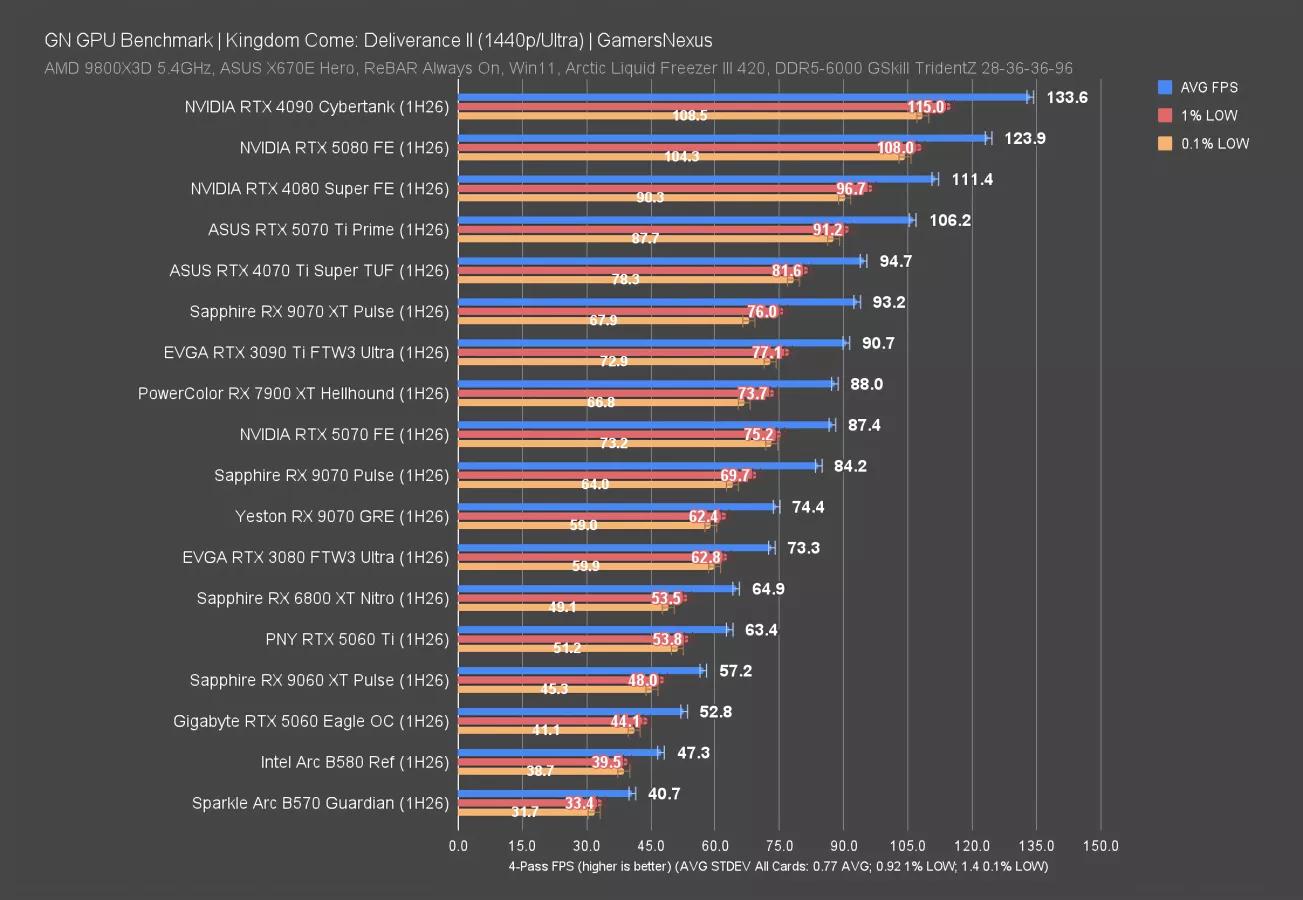
At 1440p, the 9070 GRE is just below the 9070 non-GRE, with nothing between them. The difference is about 10 FPS here, with the 9070 XT another 10 FPS (or so) ahead of the non-XT. The spacing is relatively even in this benchmark. NVIDIA’s RTX 5070 leads by 17%, with the 9070 GRE leading the 5060 Ti by 17%. It’s right in between NVIDIA’s entries.
Kingdom Come: Deliverance II - 1080p
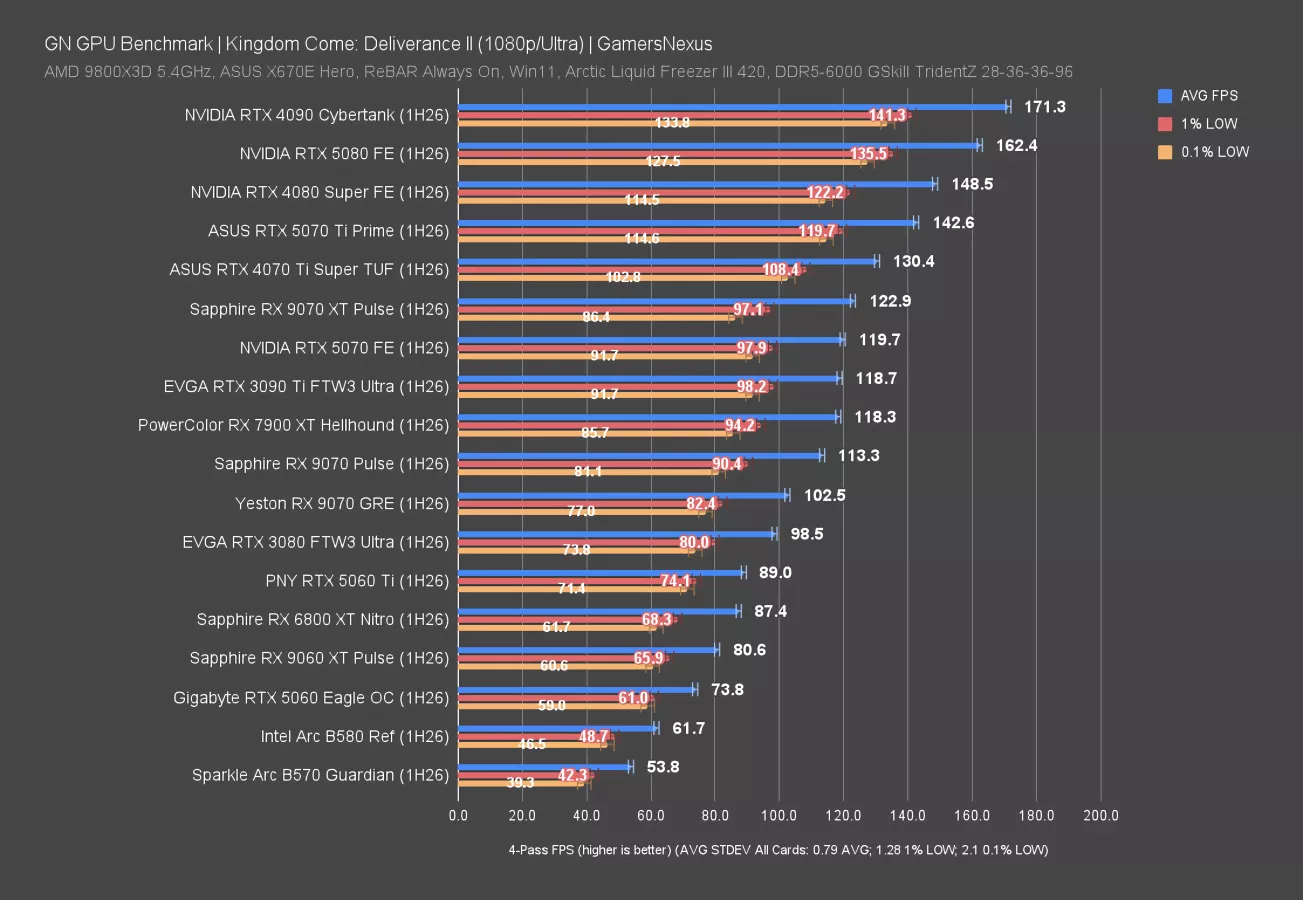
We’ll keep 1080p short as well.
We’re seeing the same lineup, with the 9070 GRE, 9070, and 9070 XT each about 10 FPS away from the next card. The 9060 XT breaks that pattern with an 81 FPS AVG result, putting it just past 20 FPS below the 9070 GRE. NVIDIA’s competition positions the 5070 just below the 9070 XT, so this is either a good result for NVIDIA or a bad result for AMD, depending how you look at it, and the 5060 Ti sits measurably below the 9070 GRE.
Outer Worlds 2 - 4K
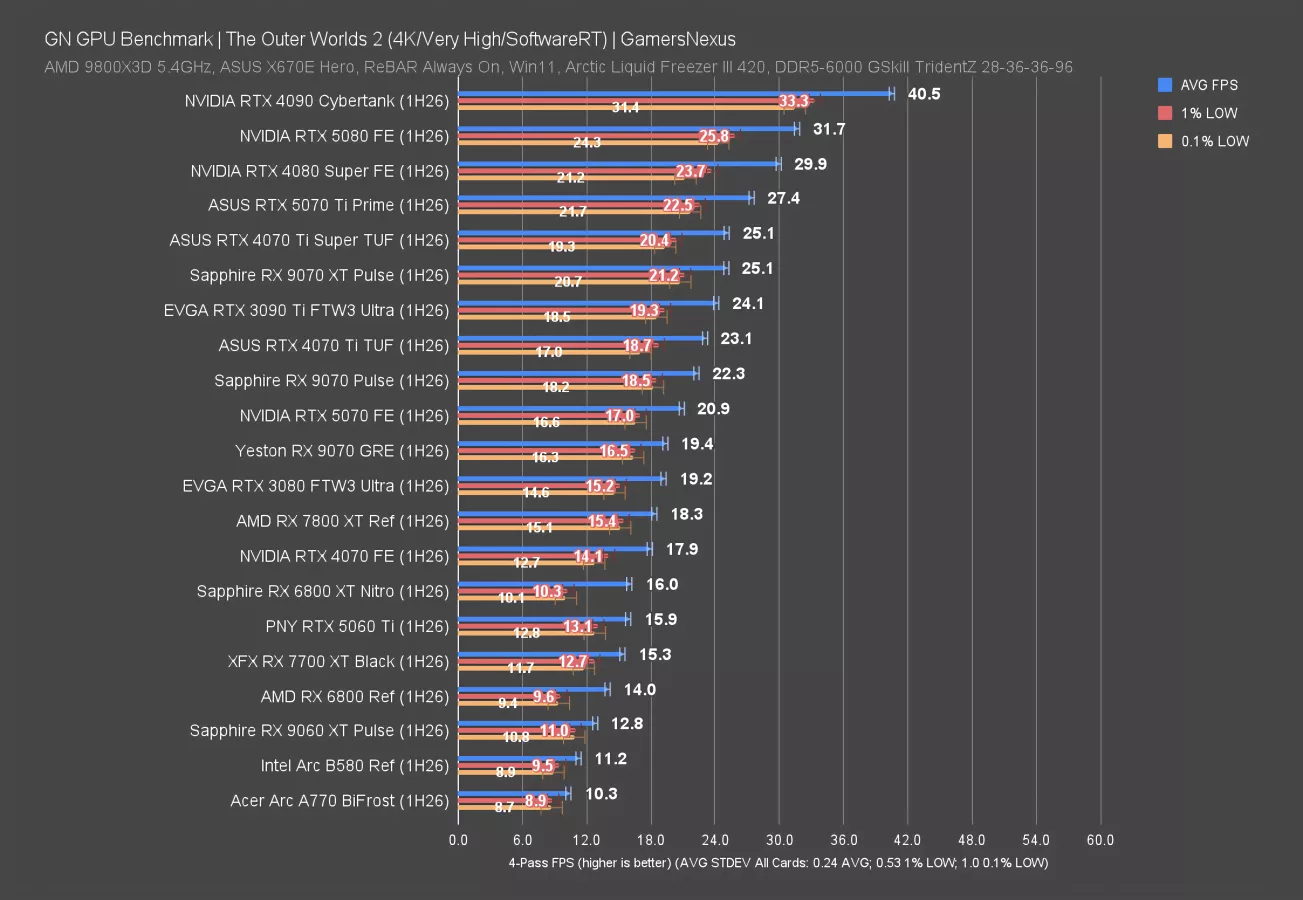
While we’re on games with a more limited data set, we’ll look at The Outer Worlds 2. This is another game we added from the 2025 lineup of releases, and it’s another that has proven overall consistent run-to-run. It’s also intensive with forced RT. We’re using software RT to maximize compatibility and comparability.
The RX 9070 GRE ran at just 19 FPS AVG at 4K, marking it as unplayable without assistance from some form of upscaler or reduced settings. It’s tied with the 5070 here, but since this result isn’t useful beyond a synthetic test, let’s move on.
Outer Worlds 2 - 1440p
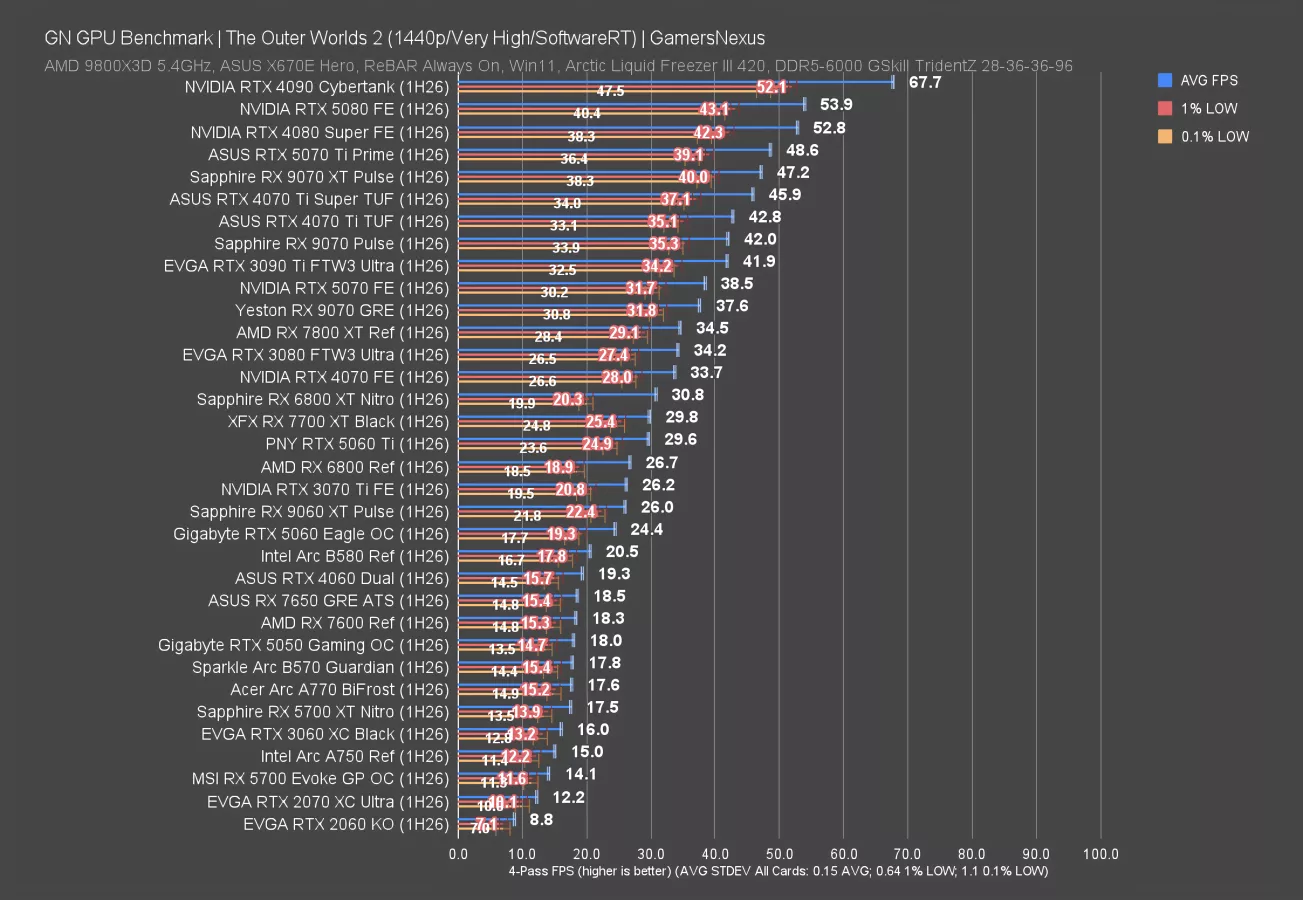
At 1440p, the RX 9070 GRE ran significantly better -- but still below a good framerate -- at 38 FPS AVG. The 9070 non-XT has a 12% lead, with the XT about 26% ahead of the GRE. Each card is about 5 FPS ahead of the last one. The 9060 XT 16GB struggles here, down at 26 FPS AVG.
NVIDIA’s 5070 is identical to the 9070 GRE in performance, with the 5060 Ti down in the ranks.
Outer Worlds 2 - 1080p
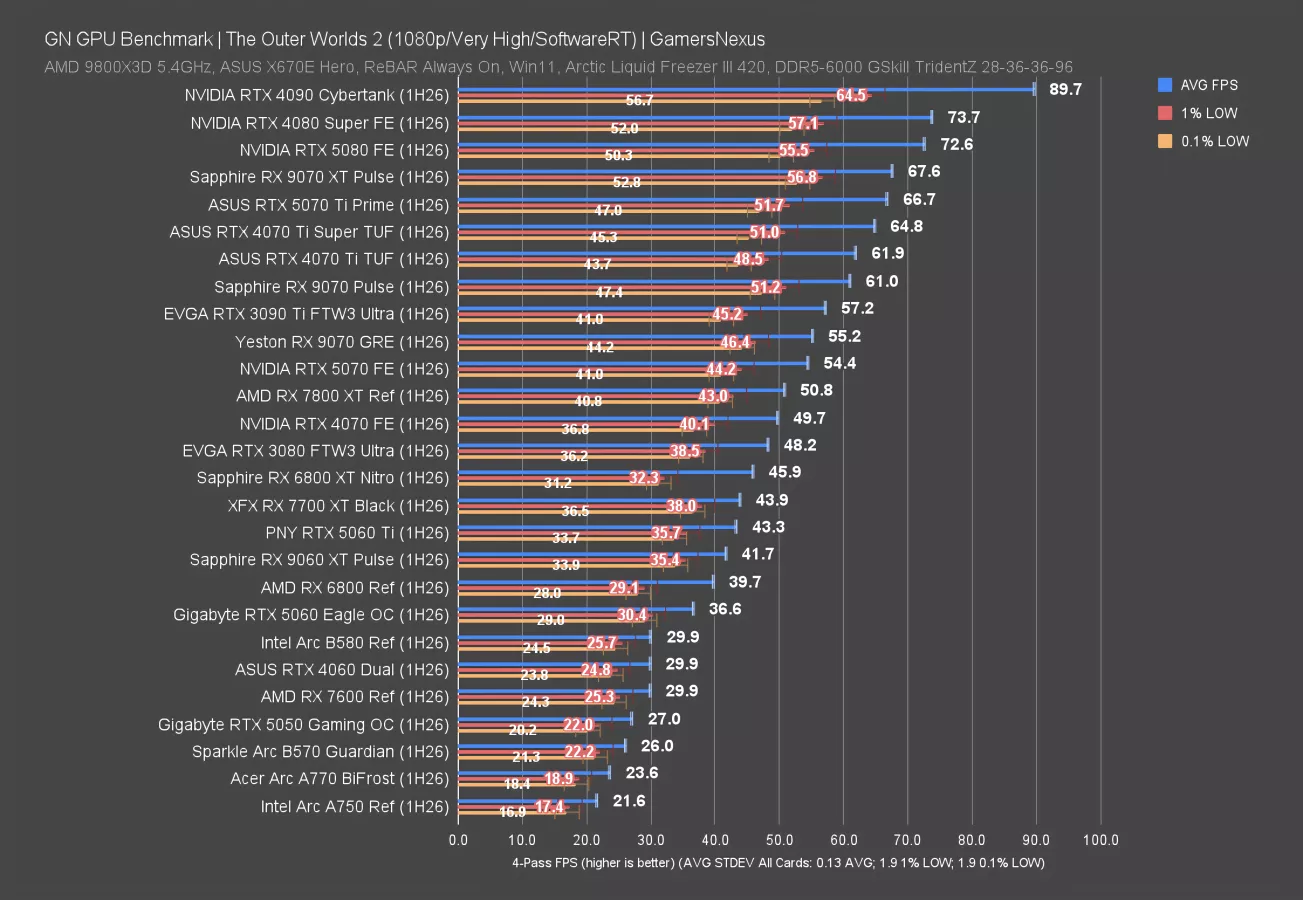
At 1080p, the 9070 GRE manages 55 FPS AVG and good lows, putting it in a far better spot than the past two tests. The card now technically outdoes the 5070, although the two are within error of each other. They’re the same. The 9070 breaks 60 FPS, with the 9070 XT up at around 68 FPS AVG.
The Elder Scrolls IV: Oblivion Remastered - 4K
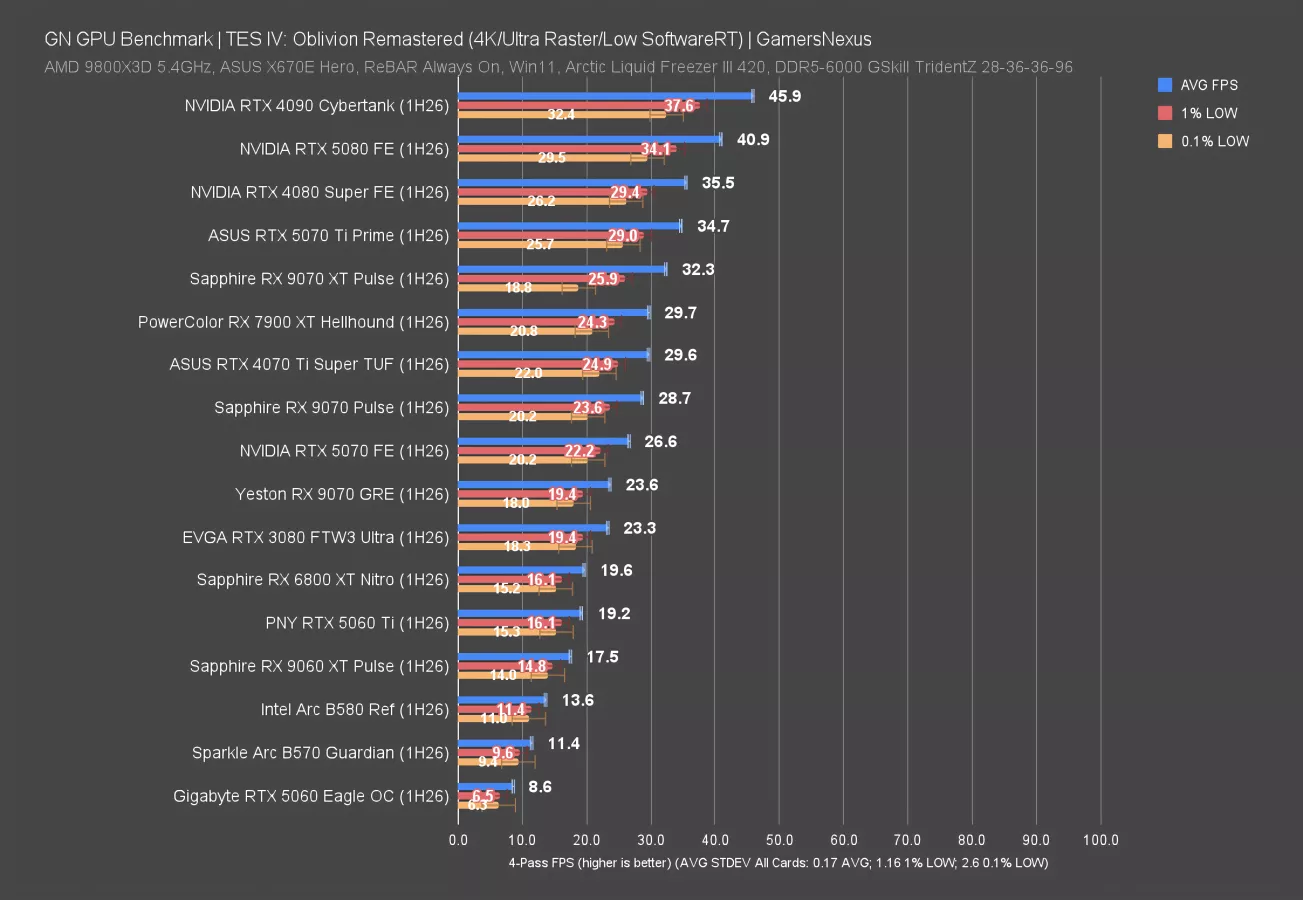
The next one takes us way back, but remastered: This benchmark is also new to our suite and uses The Elders Scrolls IV: Oblivion Remastered. This one’s also intensive. As a cautioning note, we’ve had trouble getting consistent testing with this game since the shader compilation requires a lot more care in monitoring, but we think we have it to a publishable level.
The RX 9070 GRE ran at 24 FPS AVG here, giving the 9070 a 22% lead and 9070 XT a lead of 37%. The RTX 5070 is between the 9070 GRE and 9070. Let’s move on to a more playable resolution for these settings.
The Elder Scrolls IV: Oblivion Remastered - 1440p
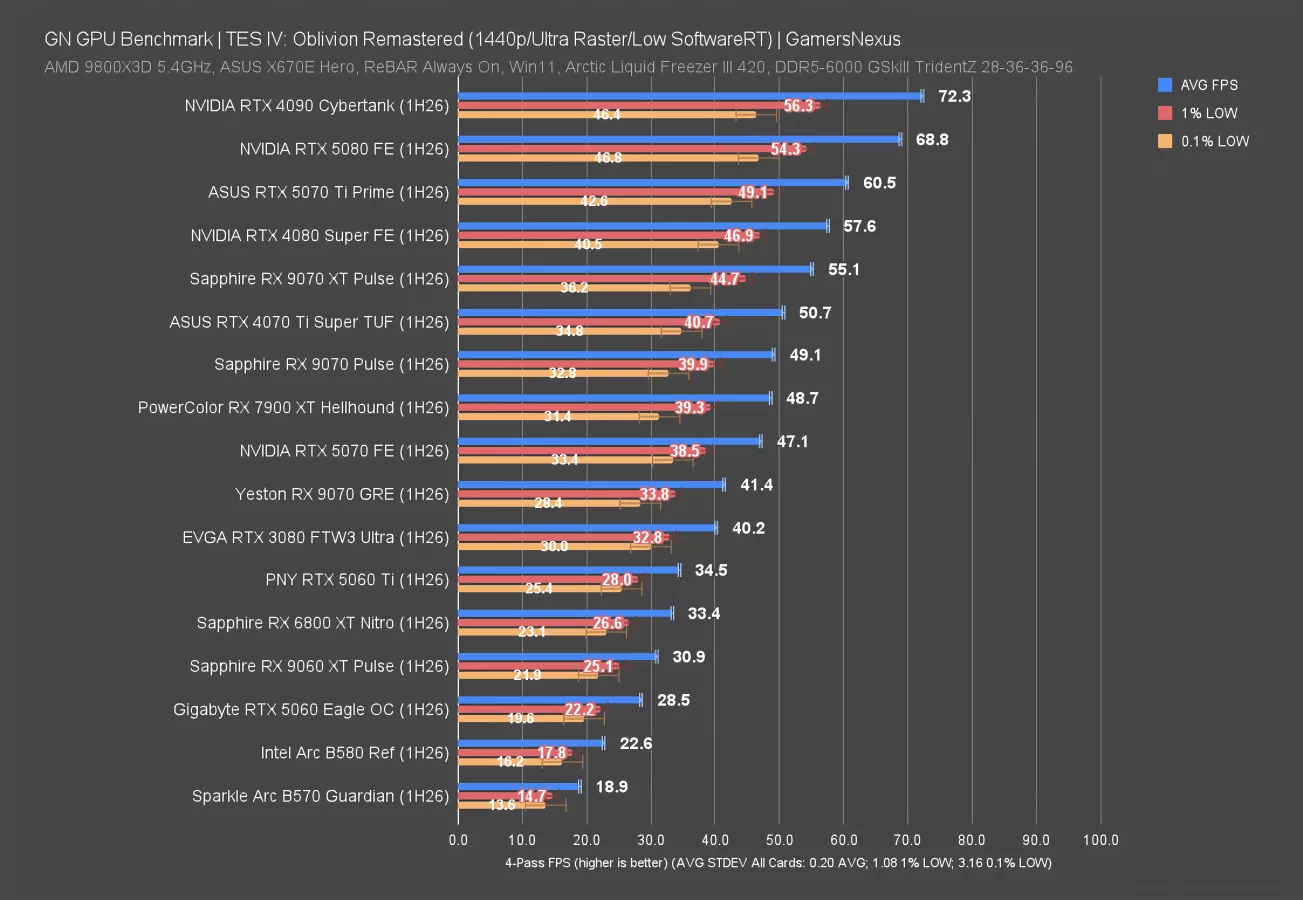
At 1440p, the 9070 GRE hit 41 FPS AVG with lows at 34 and 28. The 5070 outpaces it with a 47 FPS AVG result and improved lows, with an average FPS advantage of 14%. The 9070 GRE sits between the 5070 and 5060 Ti, improving upon the 5060 Ti 16GB’s result by 20%.
As for the 9070 non-GRE, that’s at 49 FPS, with the XT at 55 FPS.
The Intel GPUs are struggling here, but to their credit, they are running the game and doing so with consistent frametimes, despite the unplayable performance.
The Elder Scrolls IV: Oblivion Remastered - 1080p
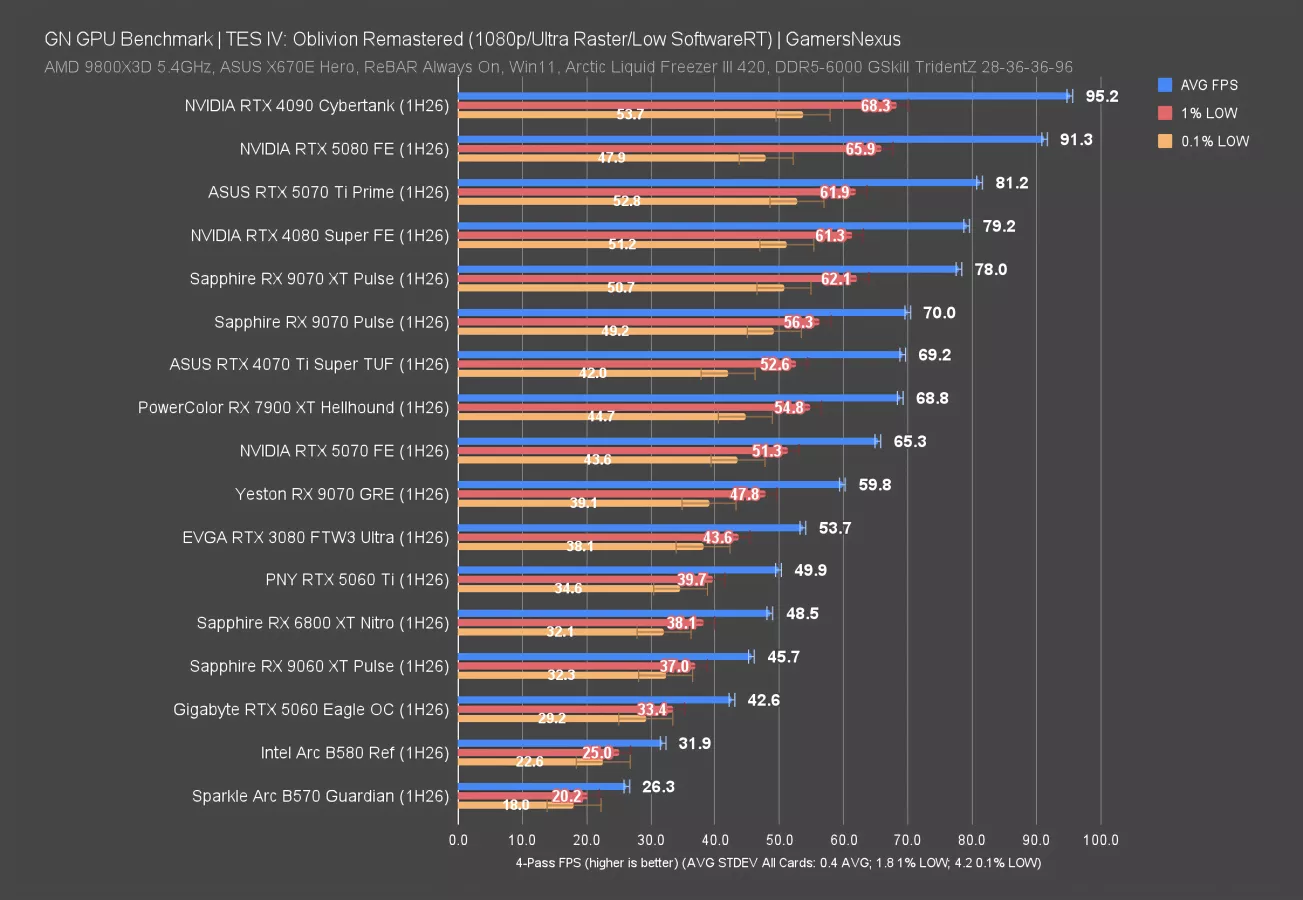
At 1080p, the RX 9070 GRE ran at 60 FPS AVG. That’s finally a decent framerate. 60 FPS has it below the 5070 by about 5-6 FPS average, which ultimately isn’t distinguishable. The price would matter more here than a few frames. The 9070 is ahead of the GRE by 17%.
Starfield - 4K
We’ll move quickly through these now.
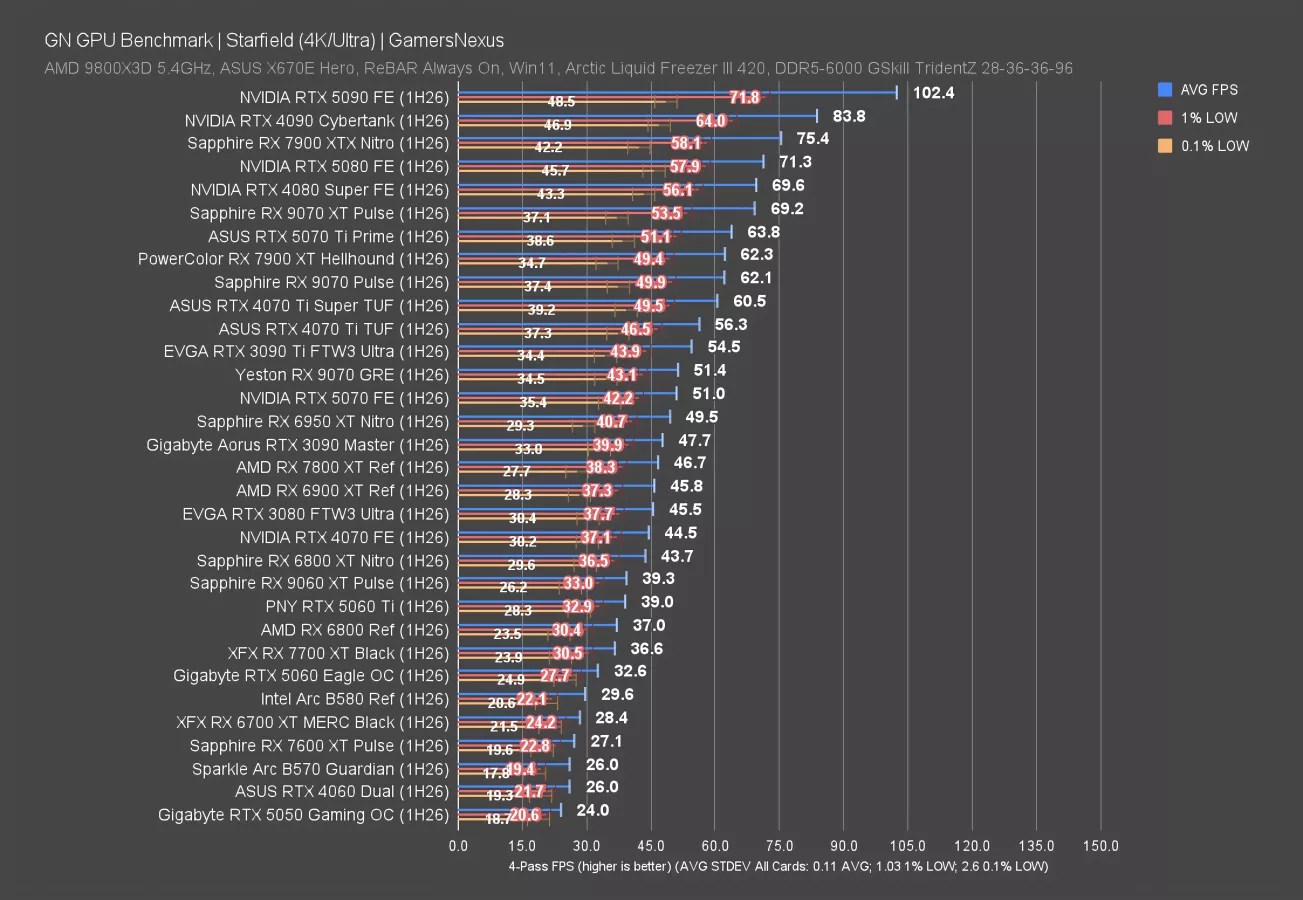
In Starfield at 4K, which is remarkably consistent (not that anyone would ever be playing it to notice), the 9070 GRE ran at 51 FPS AVG and had 1% and 0.1% lows consistent with neighbors. The 5070 ties the 9070 GRE, and actually, the 3090 Ti (watch our review) isn’t far ahead.
The 9070 is about 10 FPS ahead for roughly a 21% lead, with the 9070 XT another 7 FPS on top of that.
The 9060 XT is markedly lower, at 39 FPS AVG and giving a 31% improvement to the 9070 GRE. The 5060 Ti 16GB is about the same.
Starfield - 1440p
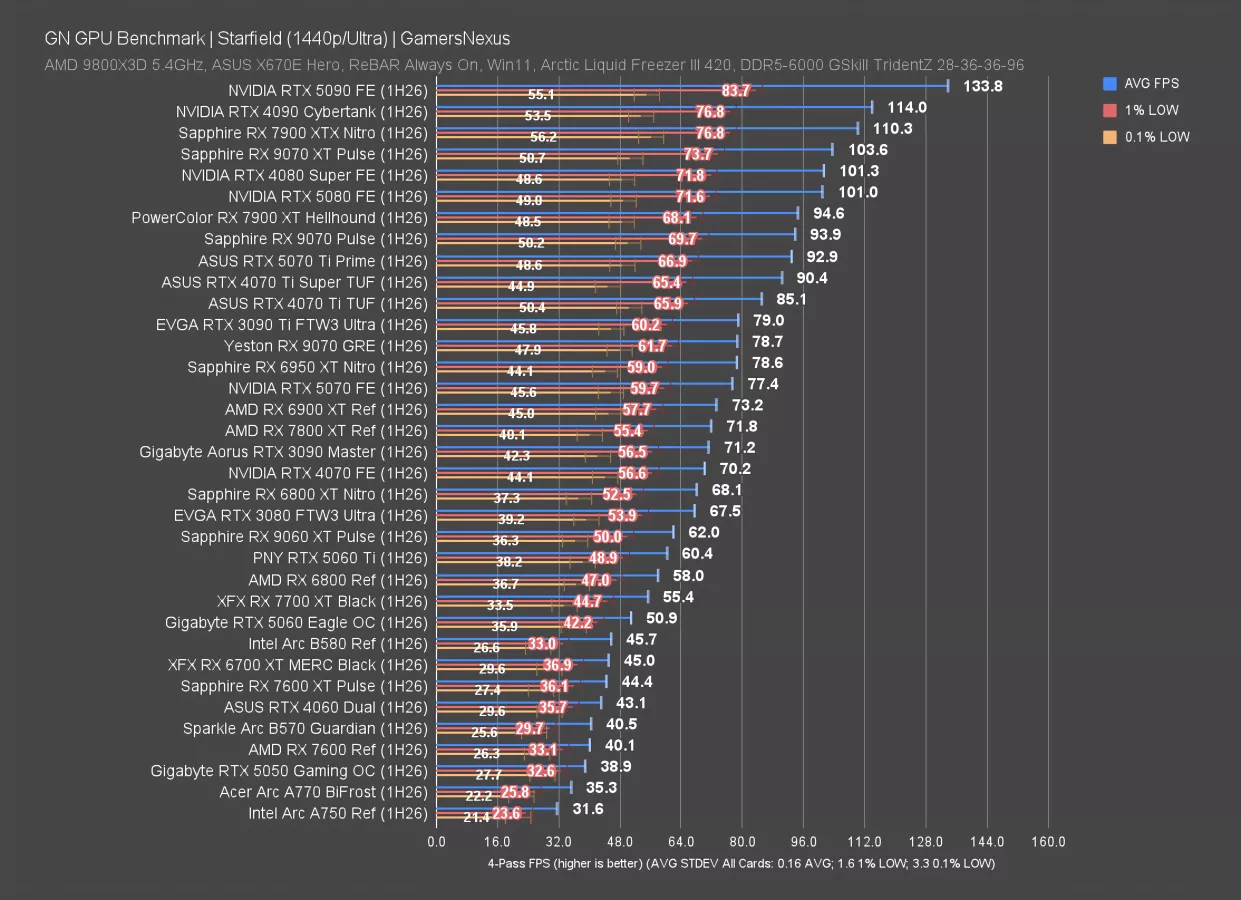
At 1440p, the 9070 GRE held a 79 FPS AVG, equaling the 3090 Ti in all 3 metrics. Obviously, the 3090 Ti’s real value these days is in its 24 GB of VRAM, but in terms of performance, these two are the same today. The 6950 XT is also about the same as the 9070 GRE, with the 5070 technically below it but experientially identical.
The 9070 hits 94 FPS and the 9070 XT adds another 10 FPS to that average. These remain spaced relatively equally, as we’ve now seen across a lot of games. One thing that also remains consistent is the relatively large improvement on the 9060 XT 16GB, at 27% here, favoring the GRE.
Starfield - 1080p
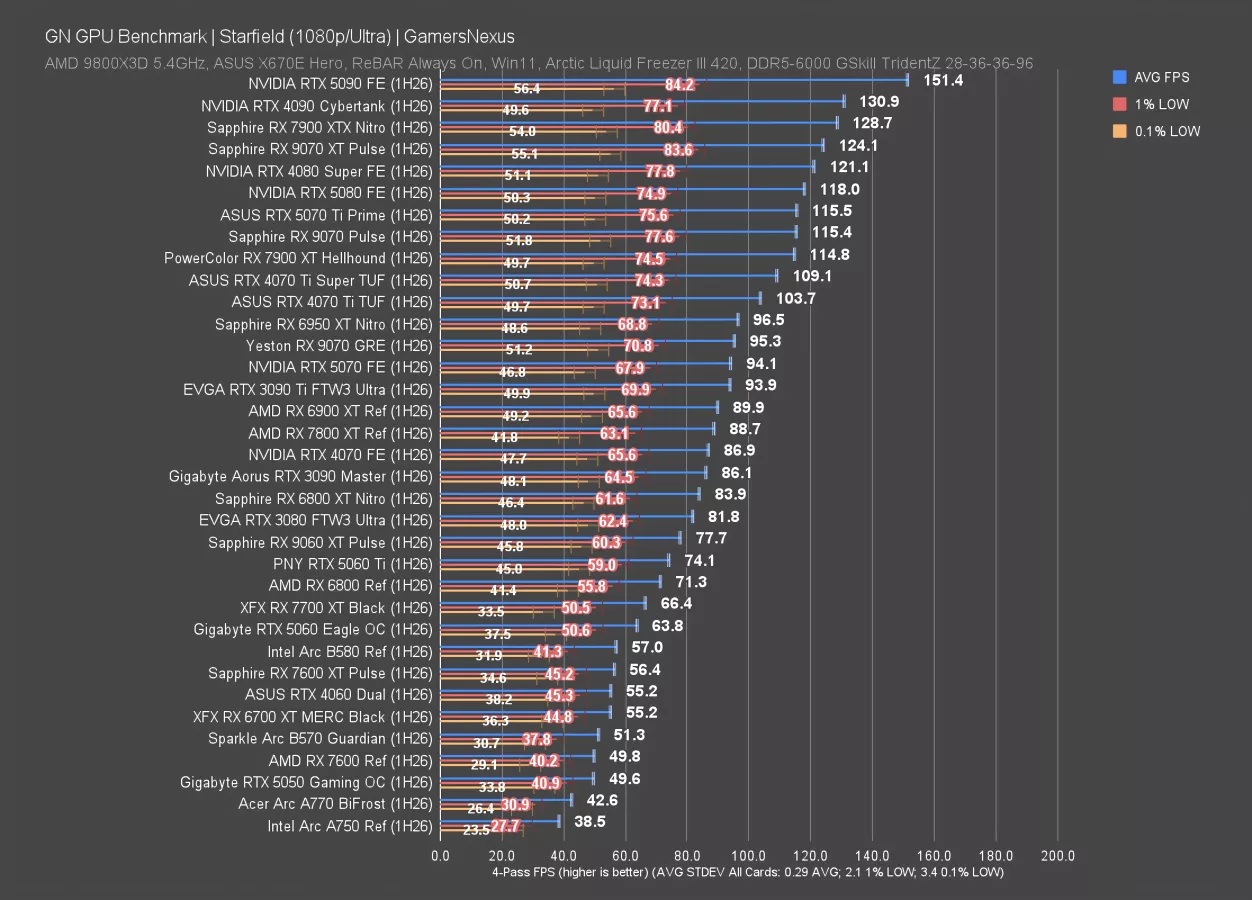
At 1080p, these 9070-class cards shift about 10 FPS higher. The 9070 GRE is included in that. The comparative still has the 9070 GRE and 5070 equal, with the 3090 Ti slightly below that. The 6950 XT marginally exceeds the 9070 GRE. Ultimately, this cluster of cards is about the same for performance.
So, like all of its players did a week after launch, let’s move on from Starfield.
Final Fantasy XIV: Dawntrail - 4K
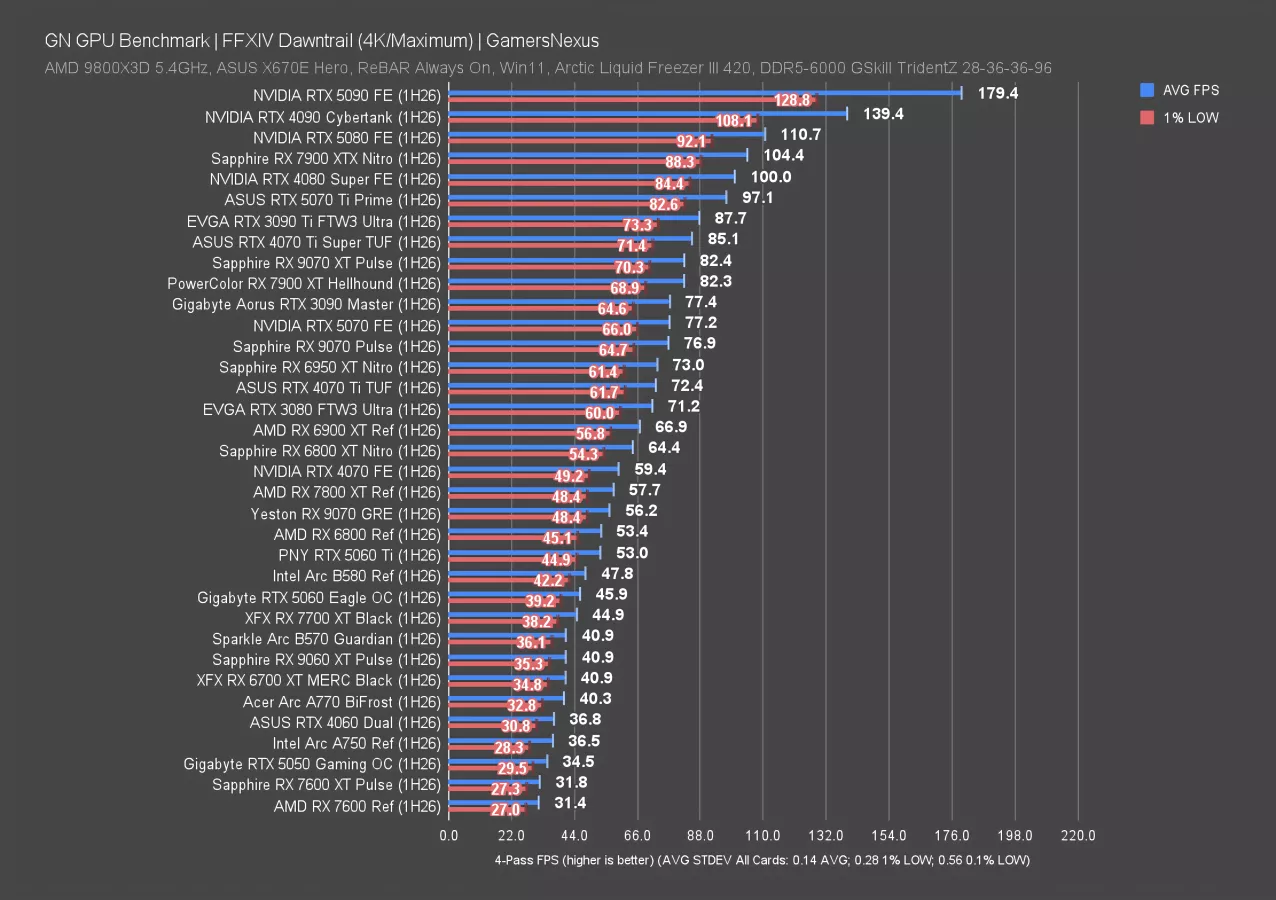
In Final Fantasy 14: Dawntrail at 4K, the RX 9070 XT ran at just 56 FPS AVG with maximum settings. The 7800 XT is functionally the same here. The RTX 5070 has a significant lead this time, now at 77 FPS AVG and leading both the 9070 non-GRE and the 9070 GRE. The advantage over the GRE is 37%. That’s the biggest leap we’ve seen so far from the 5070.
The 5060 Ti 16GB also encroaches on the 9070 GRE in this one, nearly equaling it. In this game, the AMD RX 90 series is just struggling in general: The 9070 XT falls below the 4070 Ti Super (read our review) and only barely beats the RTX 5070, with the 5070 Ti launching ahead of it. This has been true of this game since these cards launched, though.
Final Fantasy XIV: Dawntrail - 1440p
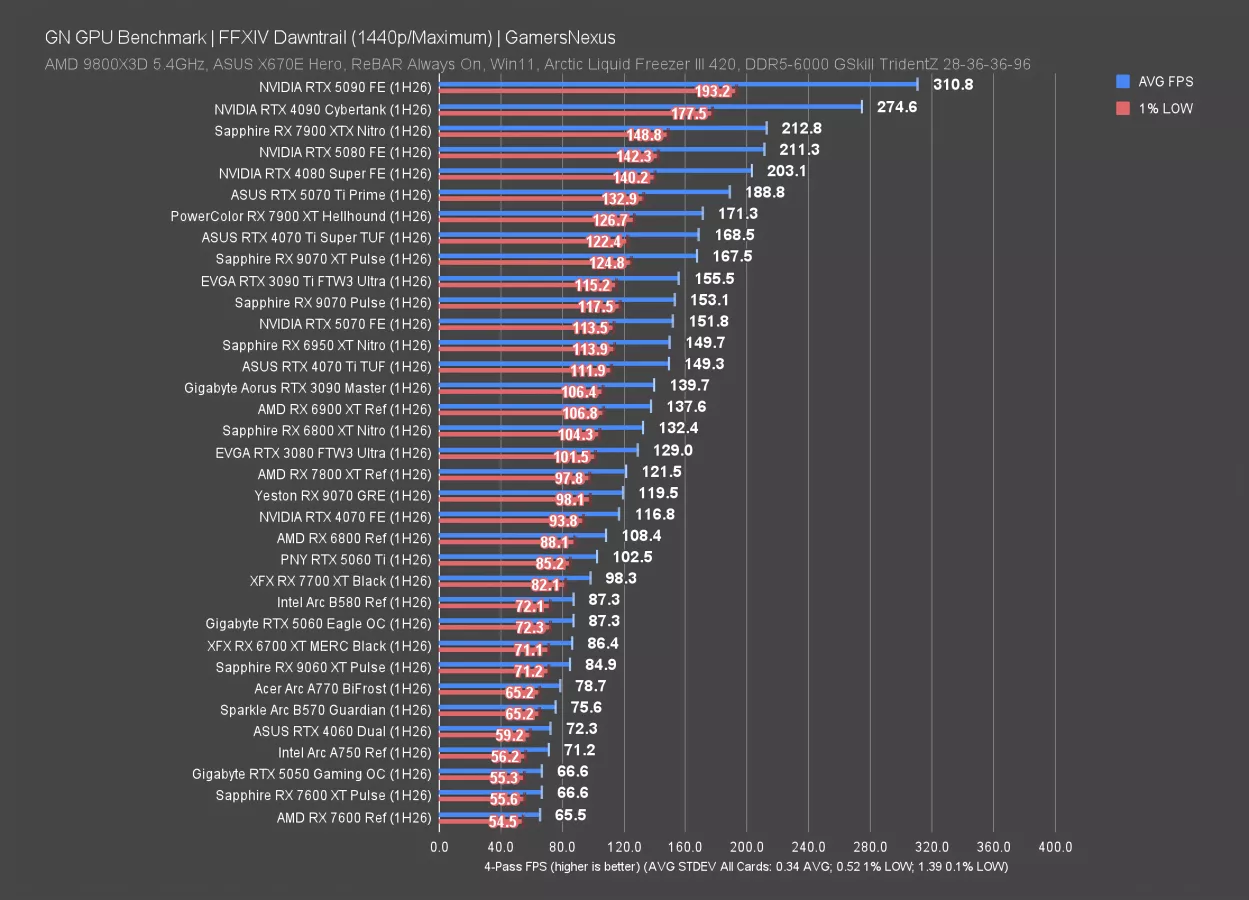
At 1440p, the 9070 manages to at least marginally pull itself ahead of the 5070, but otherwise, the lineup is similar. The positive for AMD is that as the resolution has come down, the 9070 GRE has gained some distance from the 5060 Ti and is approaching the 5070, which has had its lead cut down from 37% to 28%.
Final Fantasy XIV: Dawntrail - 1080p
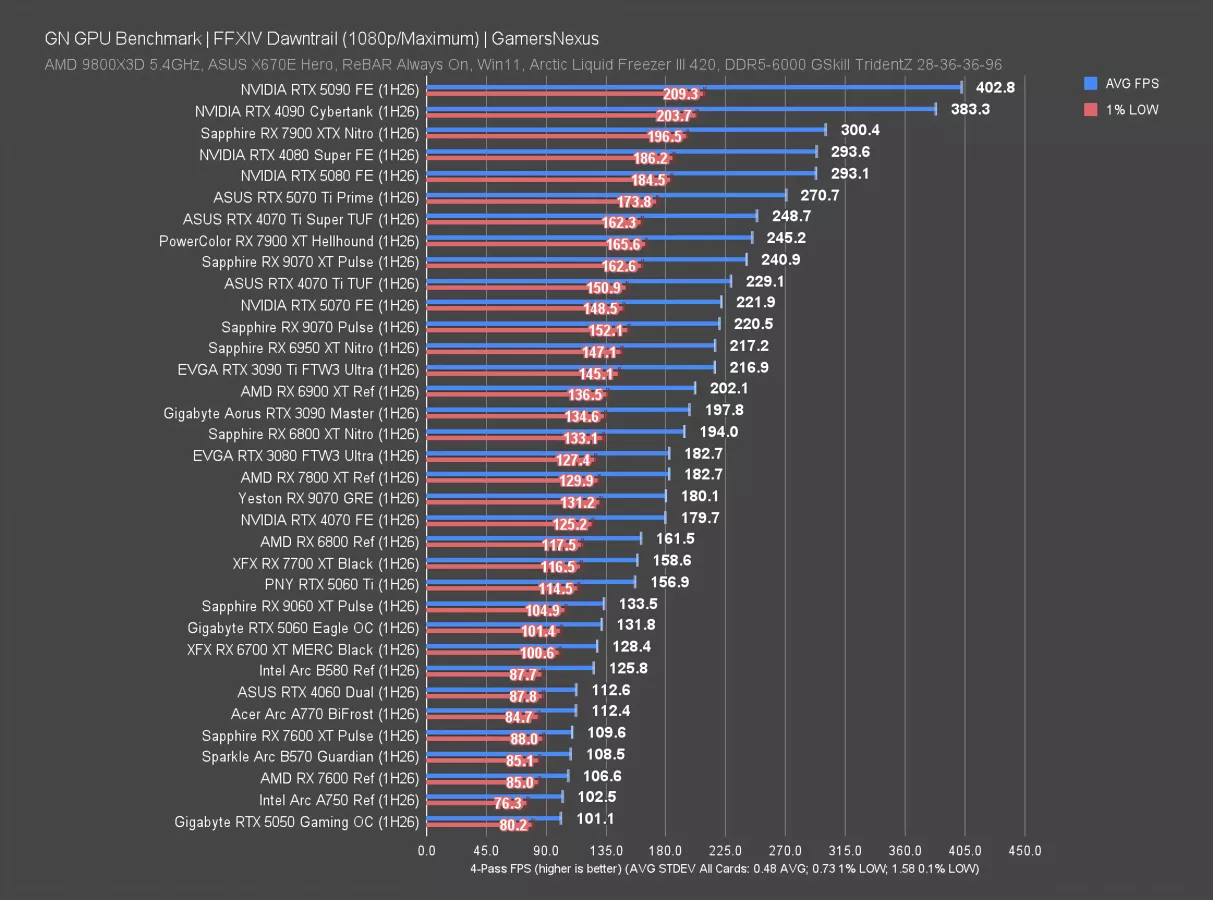
At 1080p, the 9070 GRE now holds 180 FPS AVG and sits between the 7800 XT, 3080, and 4070. The RTX 5070 is still locked in a back-and-forth battle with the 9070, but its lead over the 9070 GRE has now been cut down to 23%. Still a big lead, of course.
Dying Light 2 - 4K
We’ll keep these quicker now.
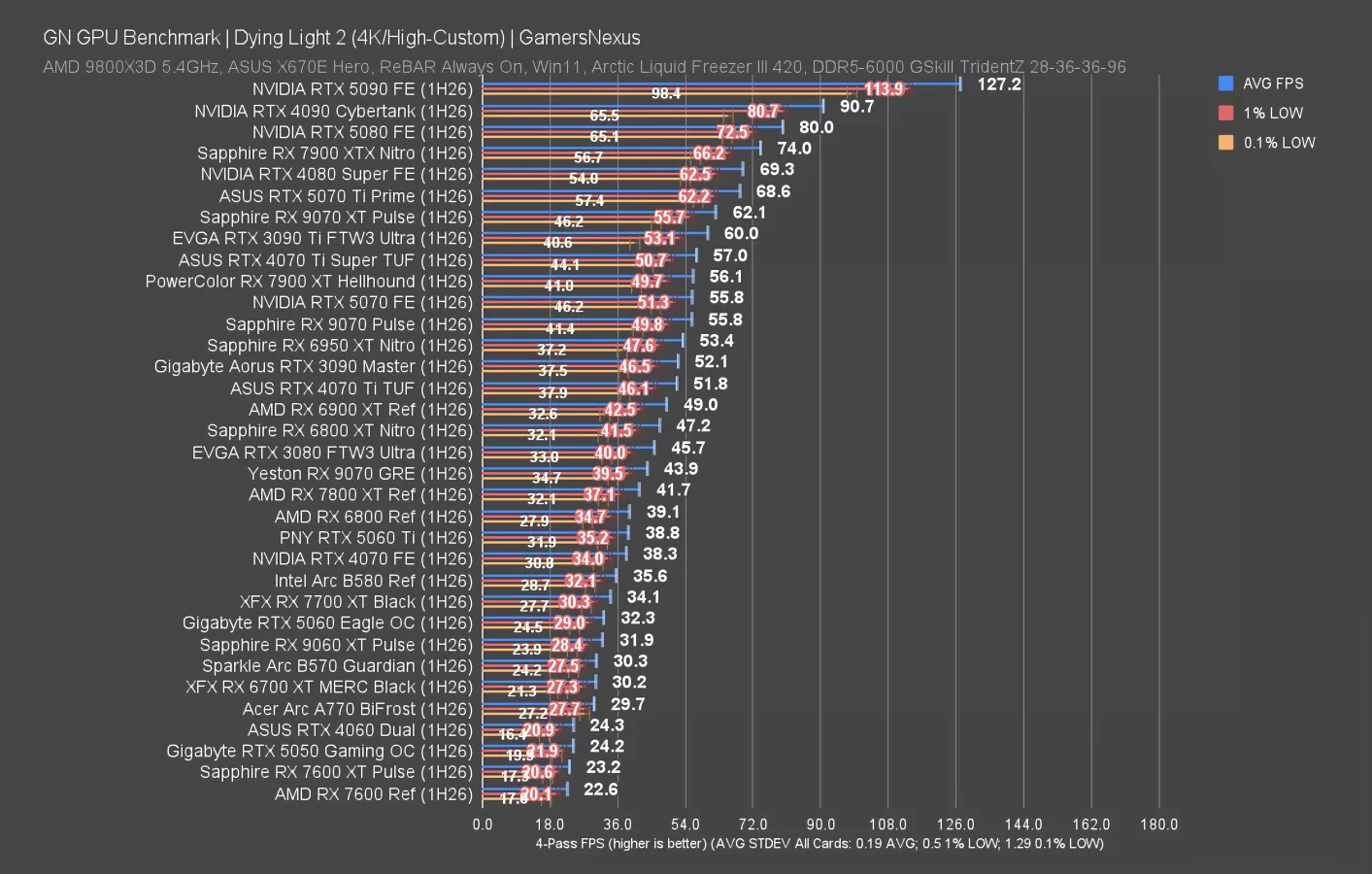
Dying Light 2 at 4K had the 9070 GRE at 44 FPS AVG, about the same as the RTX 3080 and just ahead of the 7800 XT. The 9070 is just past 10 FPS AVG ahead, with the 9070 XT up at 62 FPS AVG. The modern 5060 Ti trails, giving the GRE a lead of 13%. The 5070 has one of its larger leads here, at 27%.
Dying Light 2 - 1440p
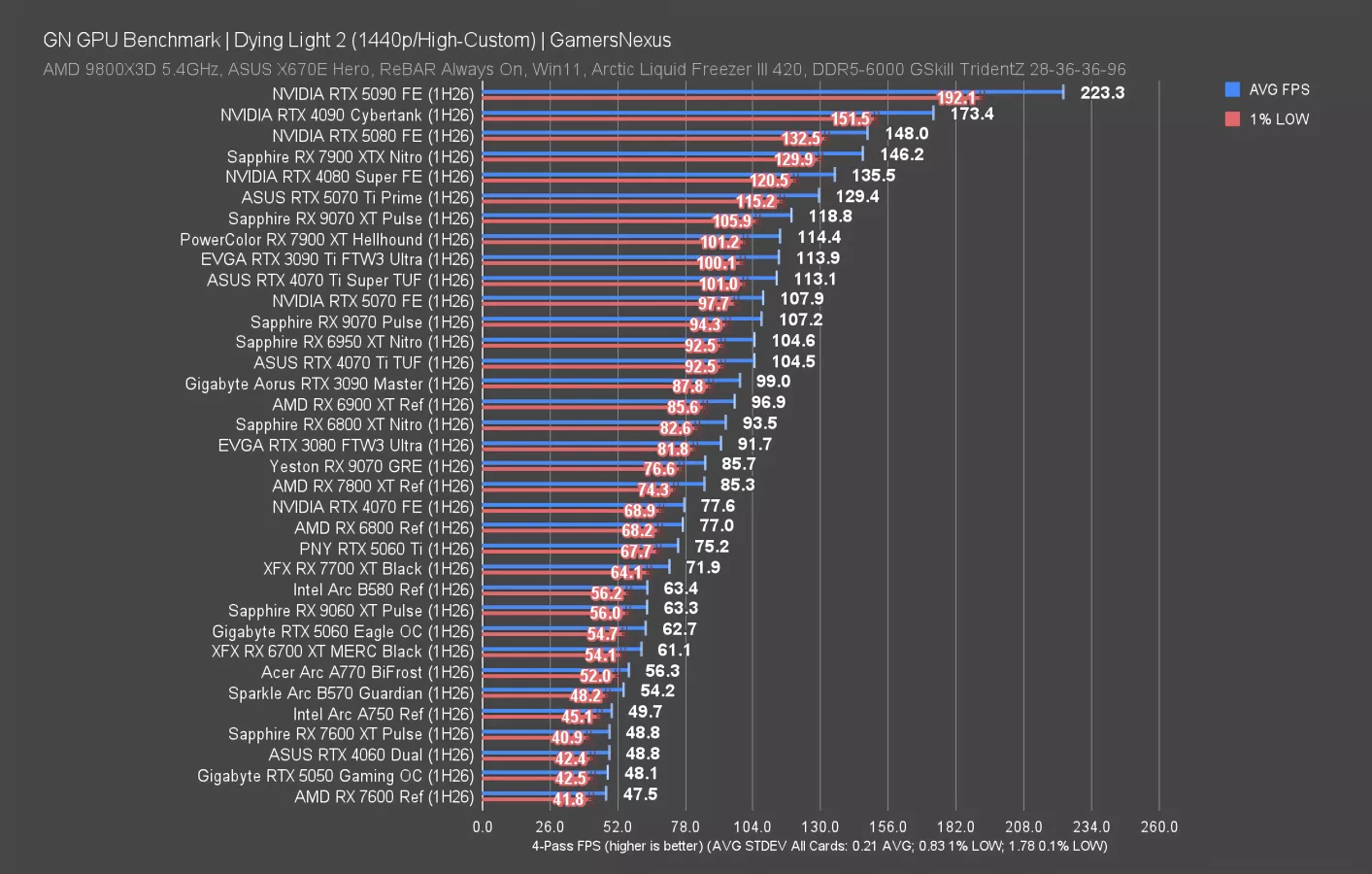
1440p has the 9070 GRE at 86 FPS AVG, with the 9070 and 5070 ahead by 25% and the XT ahead by 38%. The 9070 GRE trails the 3080 by a measurable amount now and is tied with the 7800 XT. Let’s move to another game.
Black Myth: Wukong - 1440p
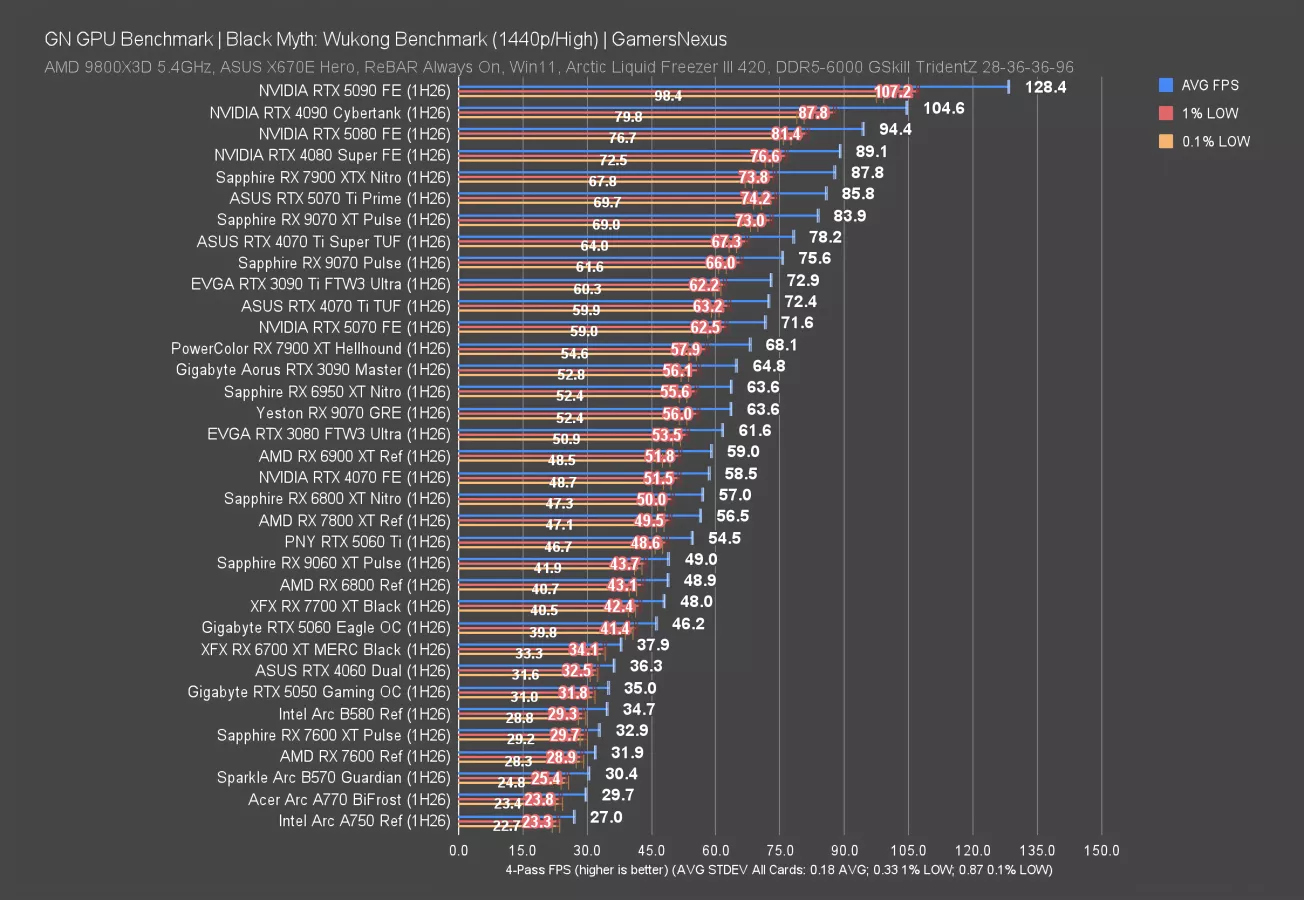
Black Myth: Wukong is next, first with rasterized testing. We’re skipping 4K since it’s too much for the 9070 GRE.
The GRE ran 1440p at 64 FPS AVG, almost perfectly equal to the 6950 XT -- down to the decimal point in two of the metrics. The 3080 is just behind it. Against modern cards, the 9070 hit 76 FPS AVG with the XT at 84. The 5070 sits below these with its 72 FPS AVG, a 13% improvement over the 9070 GRE. The GRE leads the 5060 Ti by about 17%.
Black Myth: Wukong - 1080p
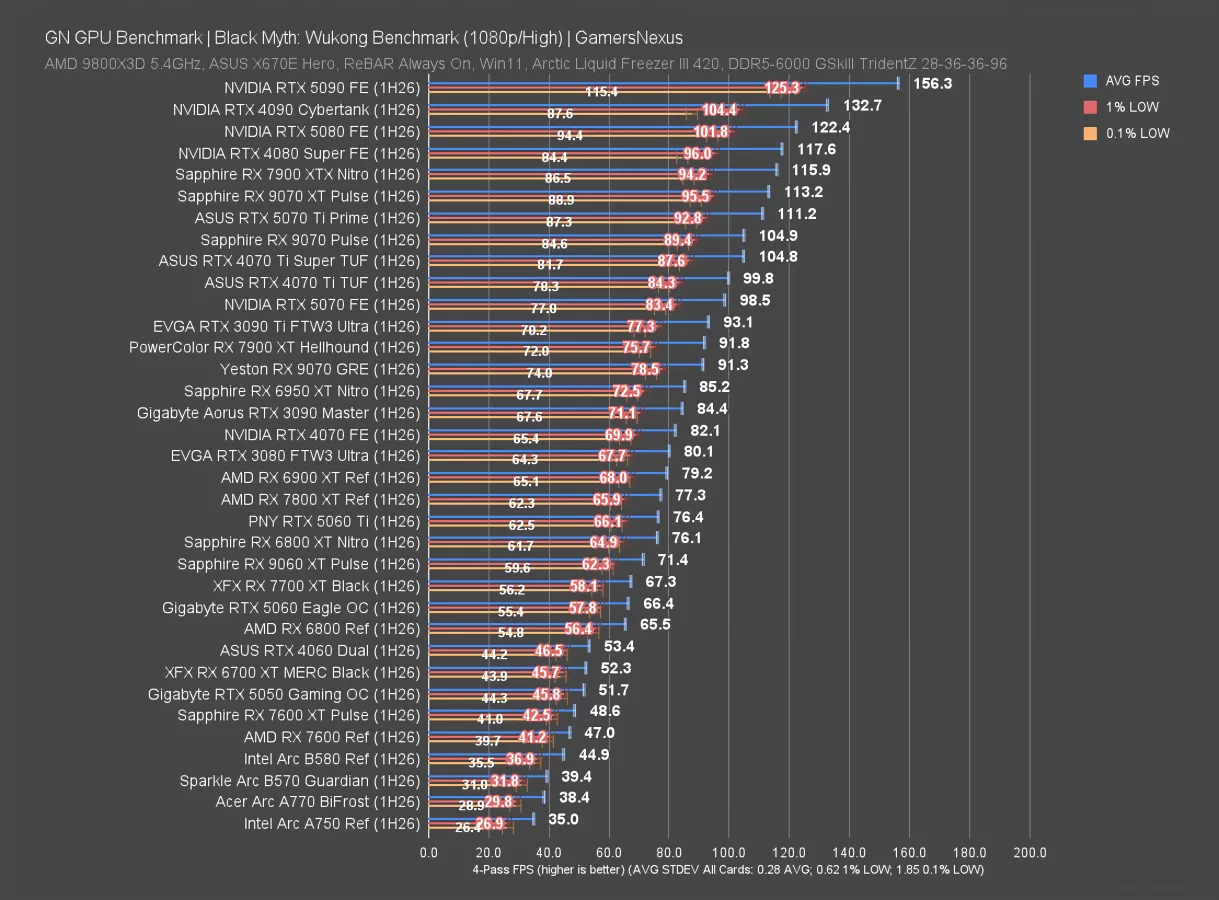
At 1080p, the RX 9070 GRE held 91 FPS AVG and tied the RX 7900 XT (read our review). The 6950 XT dips slightly below. The 5070 is also now close enough that these wouldn’t really feel any different, with the gap minimizing as resolution comes down.
We’ll skip Resident Evil rasterized, F1, and Total War: Warhammer. That’s enough raster data for this card. Let’s move on to ray tracing.
Ray Tracing Benchmarks

(RT) Dragon’s Dogma 2 - 4K
Adding ray tracing to the mix, we’ll start with one of the lighter RT workloads with Dragon’s Dogma 2. This game mostly augments existing graphics with RT.
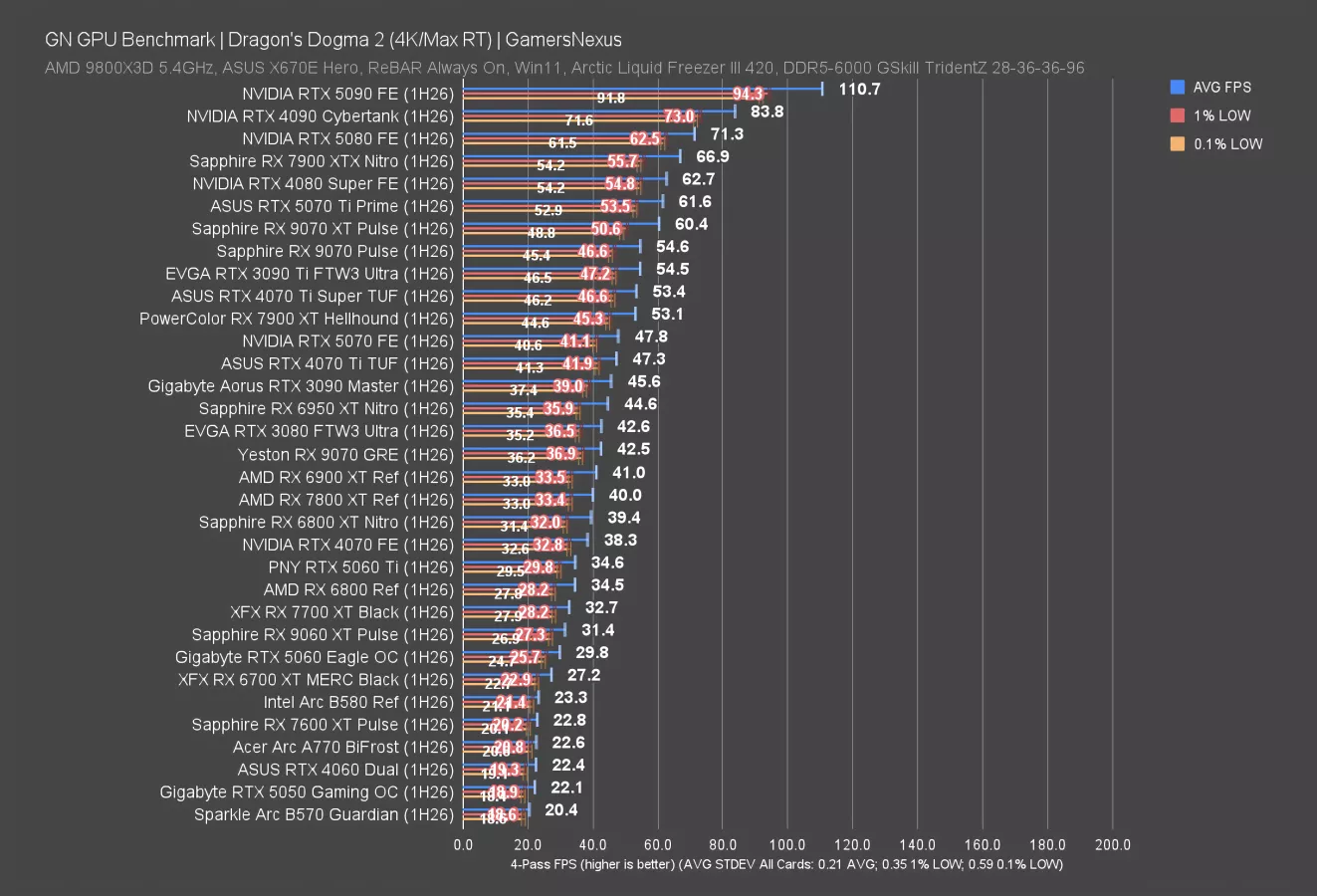
The RX 9070 GRE ran at 43 FPS AVG here, giving the 9070 a 28% advantage when RT is on. The XT is only a few FPS ahead of the 9070, but the gap between the GRE and non-GRE cards is large. The 9060 XT is down at 31 FPS AVG and is struggling, for about a 35% improvement with the GRE card over the 9060 XT.
NVIDIA’s 5070 runs at 48 FPS AVG in this test, not significantly better than the 9070 GRE despite NVIDIA’s RT advantages and headstart.
(RT) Dragon’s Dogma 2 - 1440p
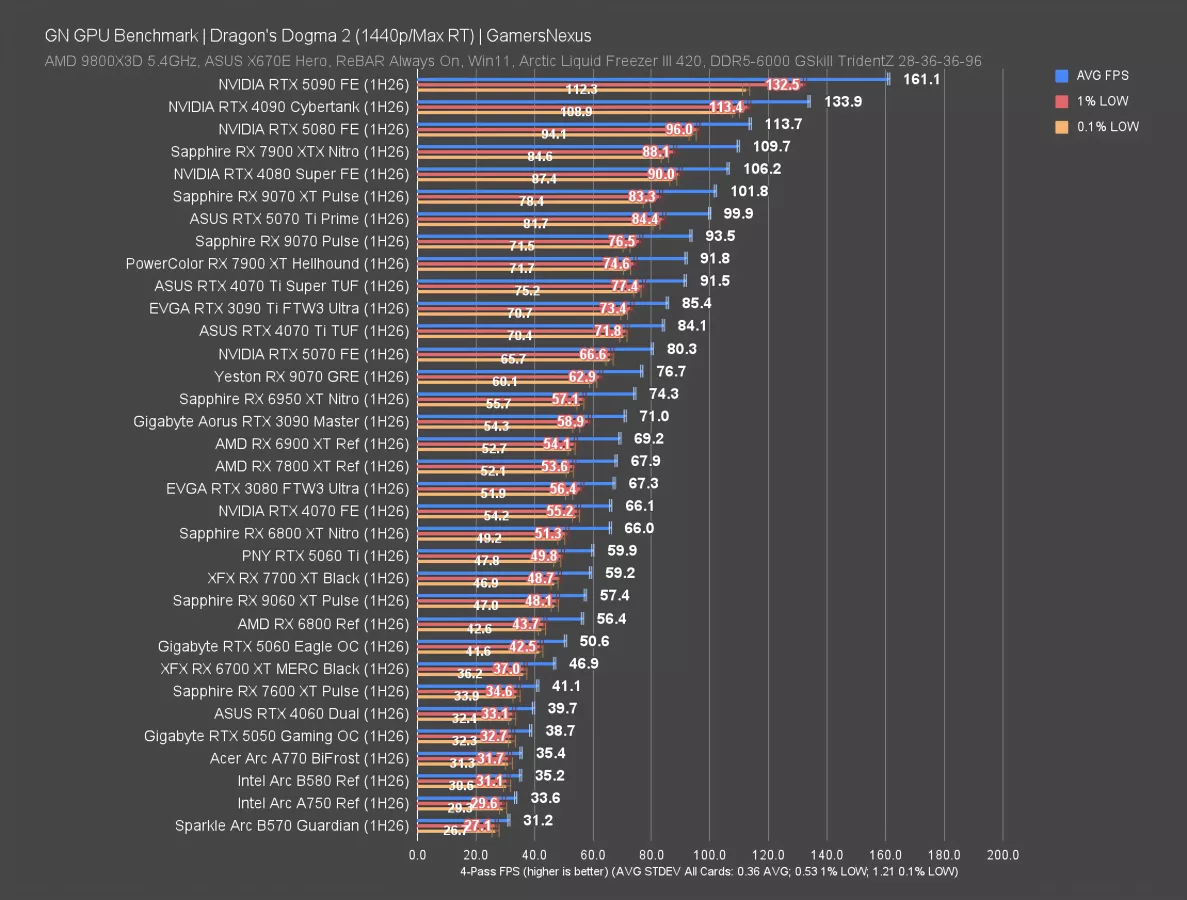
At 1440p, the 9070 GRE is now right next to the 5070 FE when ray tracing is enabled for both. There’s technically still a 3-4 FPS gap, but these are functionally the same result. The 5060 Ti is down at 60 FPS AVG, just ahead of the 9060 XT and with both giving the GRE a meaningful spot on the charts. It’s filling a gap that AMD has otherwise left open for most markets.
(RT) Dragon’s Dogma 2 - 1080p
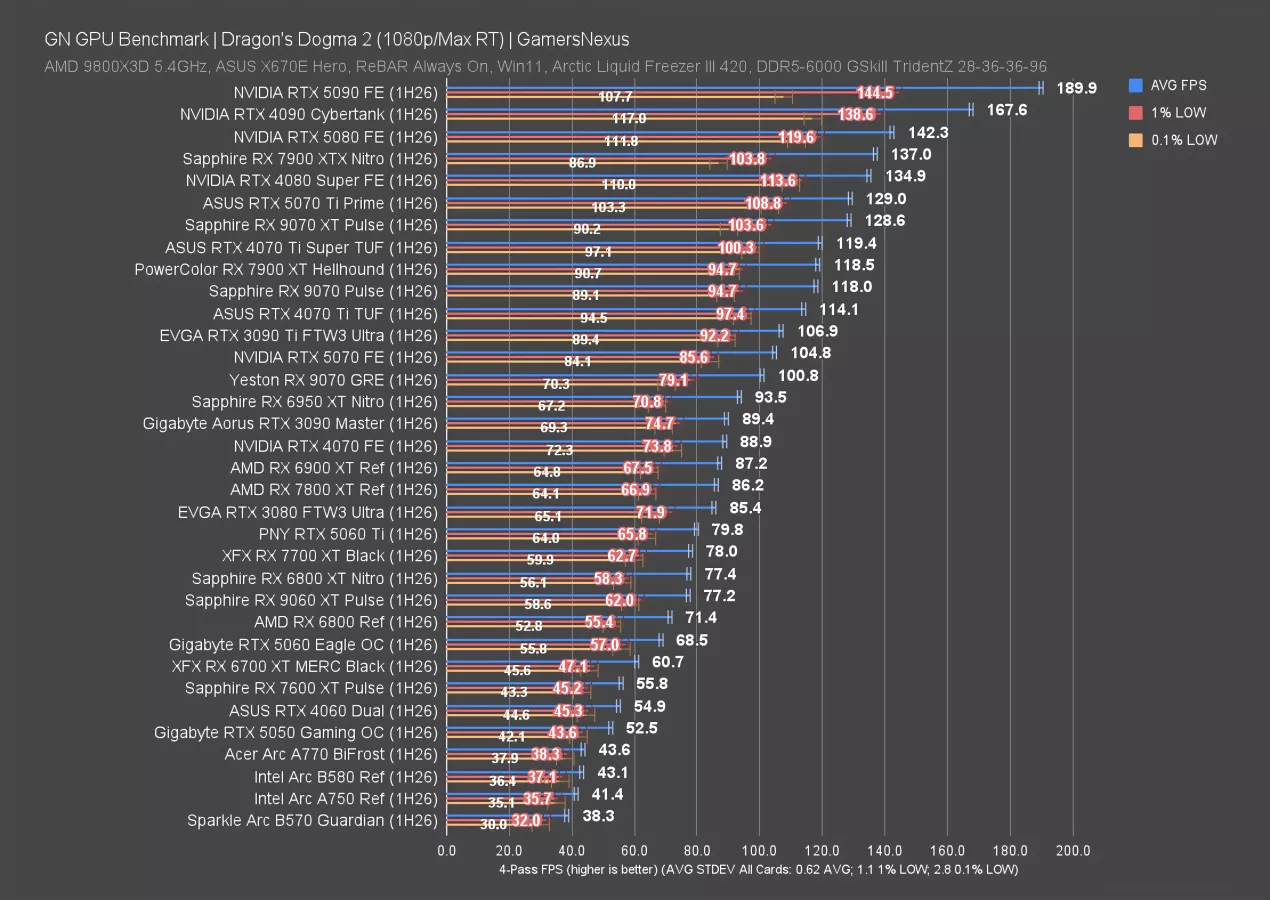
1080p isn’t that interesting, but we’ll show it briefly. The 5070 and 9070 are still about 4 FPS apart from each other. Otherwise, all we’re really seeing is the same scaling as earlier. Let’s move on.
(RT) Cyberpunk 2077: Phantom Liberty - 1440p/Medium
Cyberpunk is next. Given the 9070 GRE’s moderate performance, we’re only looking at our Medium RT settings results rather than Ultra.
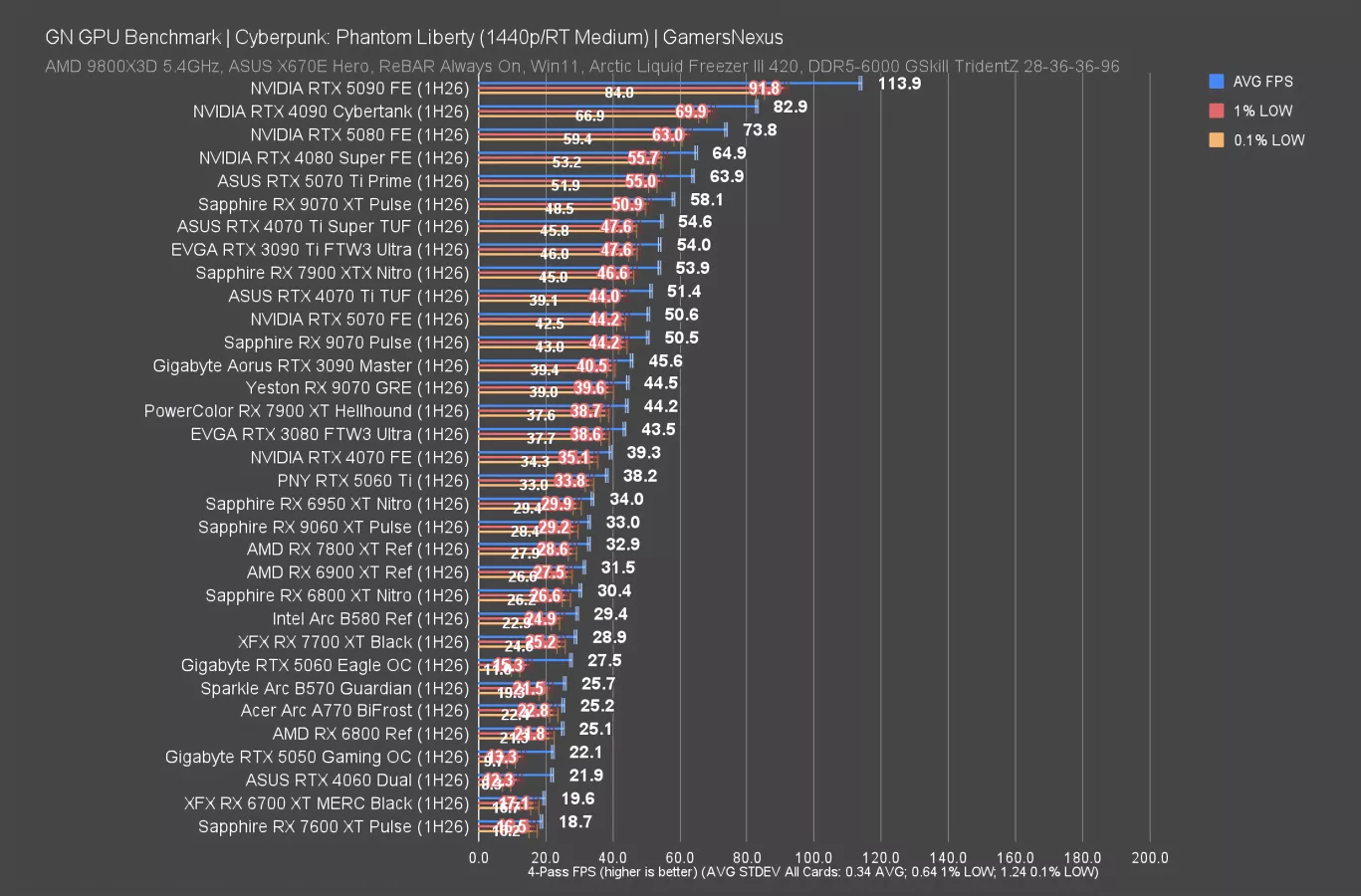
At 1440p with RT Medium, the 9070 GRE is only 6 FPS AVG behind the 9070, although that’s a 13% lead for the 9070 still. The XT has a large jump to 58 FPS AVG. The 5070 is basically the same experience as the 9070 non-GRE here, with the 5060 Ti down at 38 FPS AVG and the 9060 XT at 33 FPS AVG. Intel’s B580 (read our review) actually does well here, given its far lower price, with a 29 FPS AVG. That’s still not something we’d play, but comparatively, it’s doing a lot better than its price would suggest reasonable.
(RT) Cyberpunk 2077: Phantom Liberty - 1080p/Medium
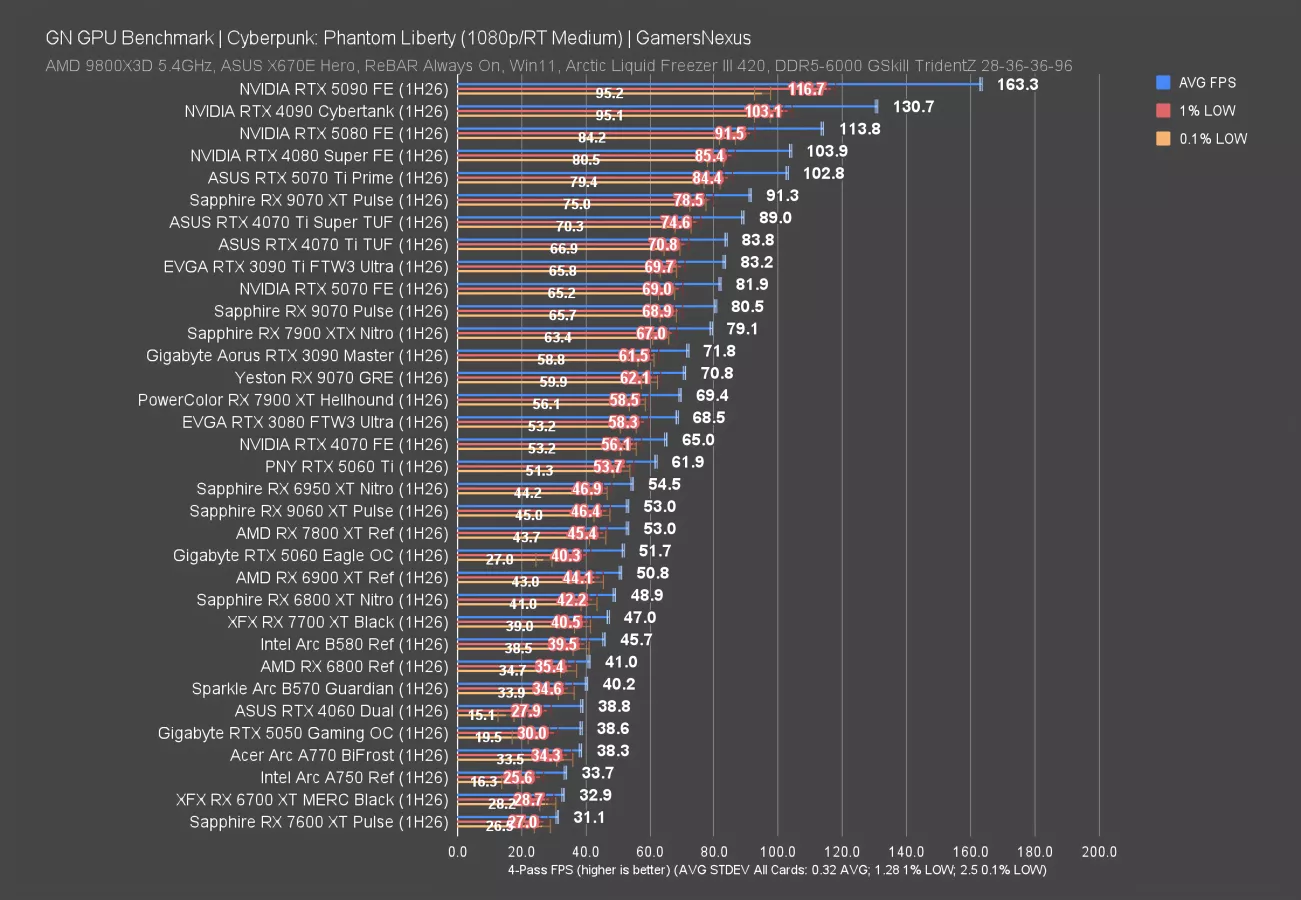
At 1080p, the 9070 GRE is in a playable position at 71 FPS AVG, just behind the 3090 and ahead of the 7900 XT. These are all about the same, including in lows. The 5070 leads the grouping, including a technical but irrelevant victory over the 9070 Pulse. The 5060 Ti gives the GRE about a 14% advantage.
(RT) Black Myth: Wukong - 1080p
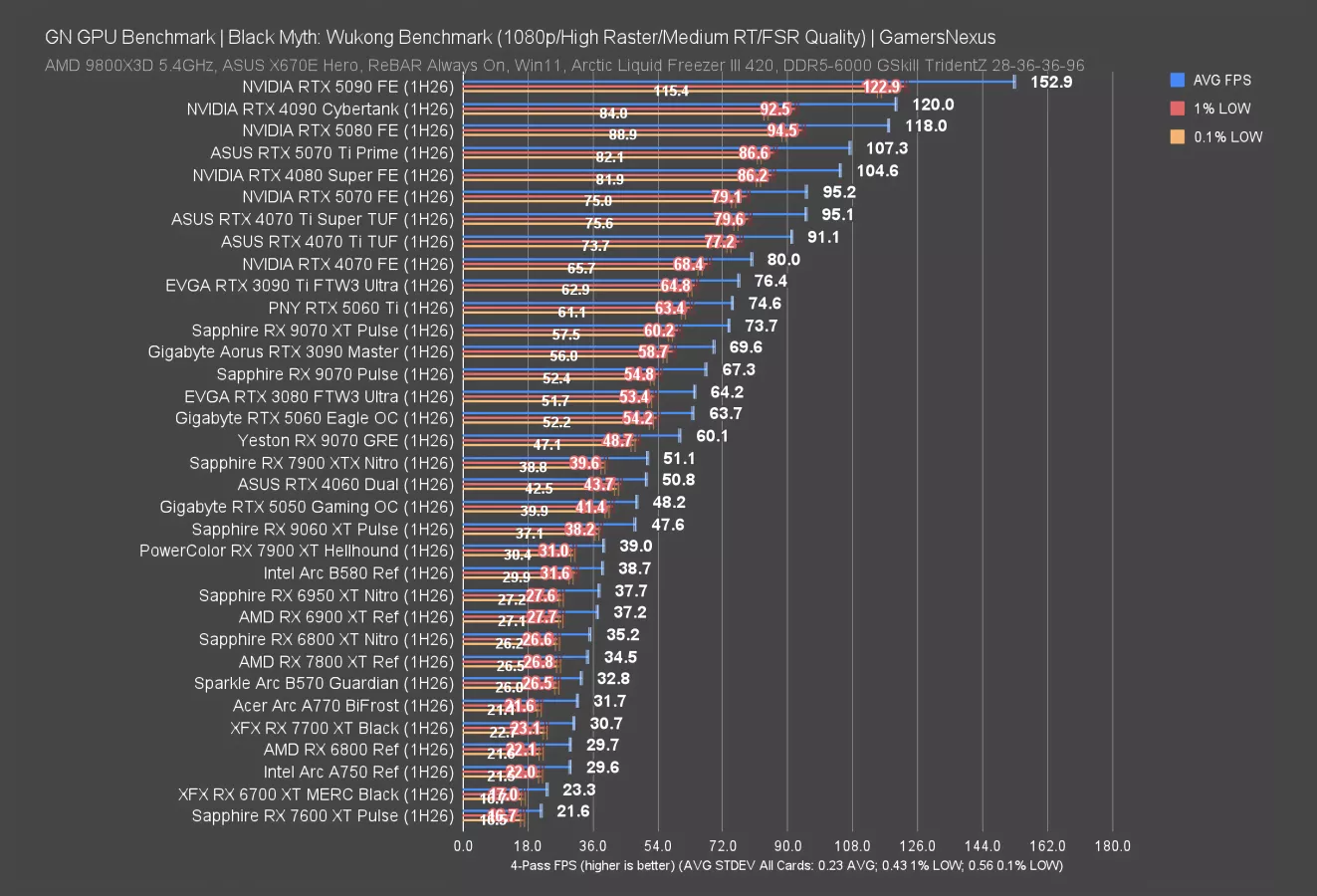
In Black Myth: Wukong at 1080p with RT, the 9070 GRE -- and actually, the entire RX 9070 lineup, including the XT -- all fall below the 5060 Ti. NVIDIA has a disproportionate advantage in this game when ray tracing is enabled. That’s not news for this title, but every time we see it, it’s clear just how big that advantage is. That a 5060 Ti 16GB is outdoing the 9070 XT speaks to NVIDIA’s favor in this title.
Conclusion

The GPU is where you’d expect it to be in performance. It’s between the 9060 XT and the 9070. Because it has fewer CUs, the clocks can run higher on the 9070 GRE than on the 9070 because they have the same TDP, but the GRE has fewer compute units on it, which is how that works out. Ultimately, the lineup is exactly what you’d expect.
The 5070 is often ahead of the 9070 GRE. There are some instances where it’s substantial, like 28-30% sometimes, but in a lot of cases, they are closer than that. The 5060 Ti tends to give up a relatively large lead to the 9070 GRE.
Ignoring the GPU and examining Yeston’s part in the card, it’s doing well. The company still continues to impress for GPUs that that look like meme products.
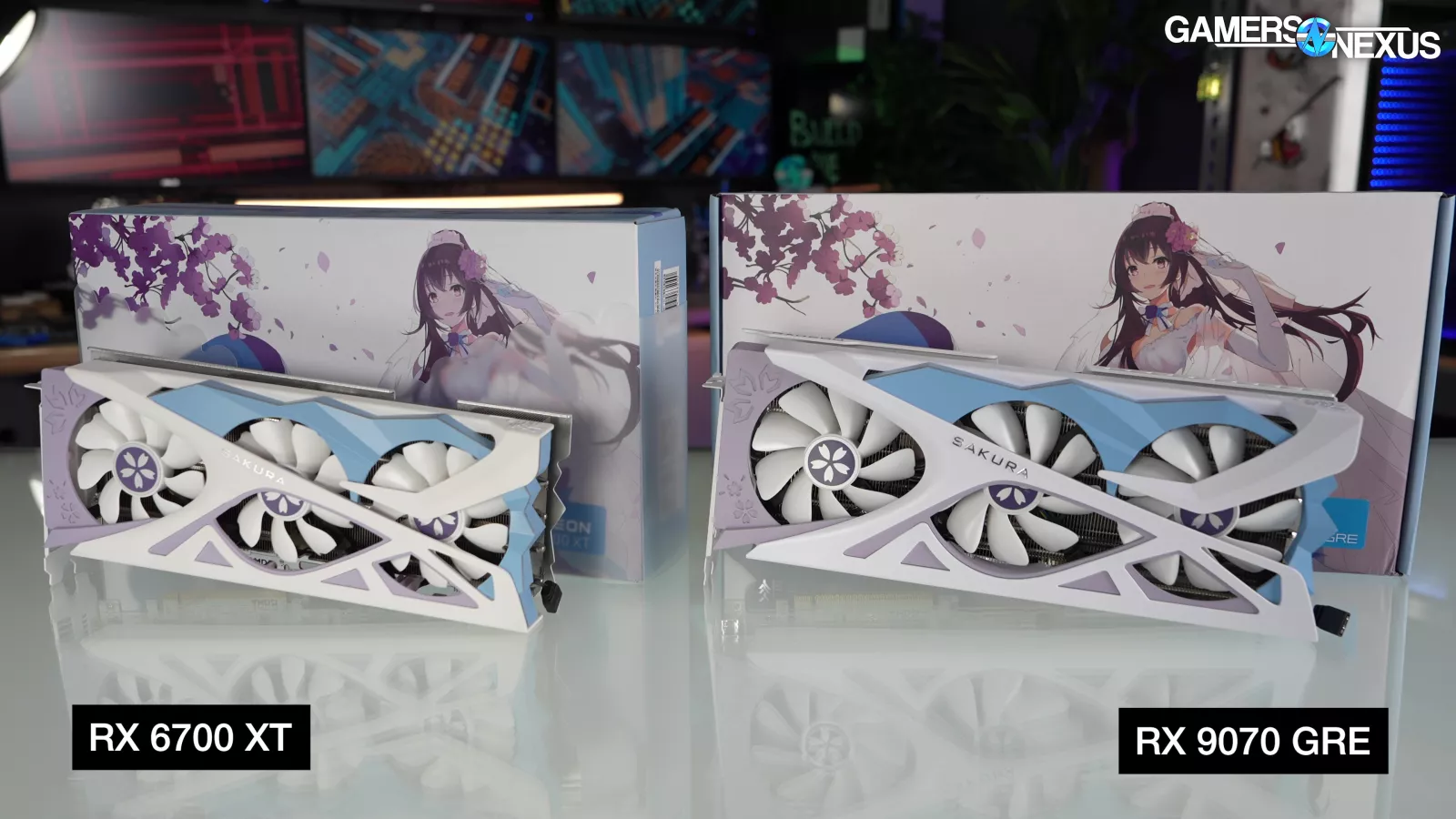
The art has been around since AMD’s 6000 series and the cooler has been applied to a new GPU in this case.
The end result is a card that’s really quiet out of the box, and even with an aggressive thermal target, the fans didn’t need to spin that fast with its 3 fans and relatively fat heat sink.
The frequency spectrum also looks pretty normal, which is a good thing.
Thermally, the card did well except for the delta. So the core to hotspot delta is a little big. They’re just further apart than what we’d like to see on that. That comes down to the mounting pressure, the distribution, and the quality of the coldplate, but it never pushed into a level where we felt like it was bad for the GPU or outside of what’s reasonable for the core.
Overall, Yeston has done well on the actual design of the card. It looks different, which is always nice to see. It’s got an extra V BIOS, which is actually pretty great for experimenting with flashing an alternative V BIOS. It has an LED toggle as well, which is a cool quality-of-life feature.
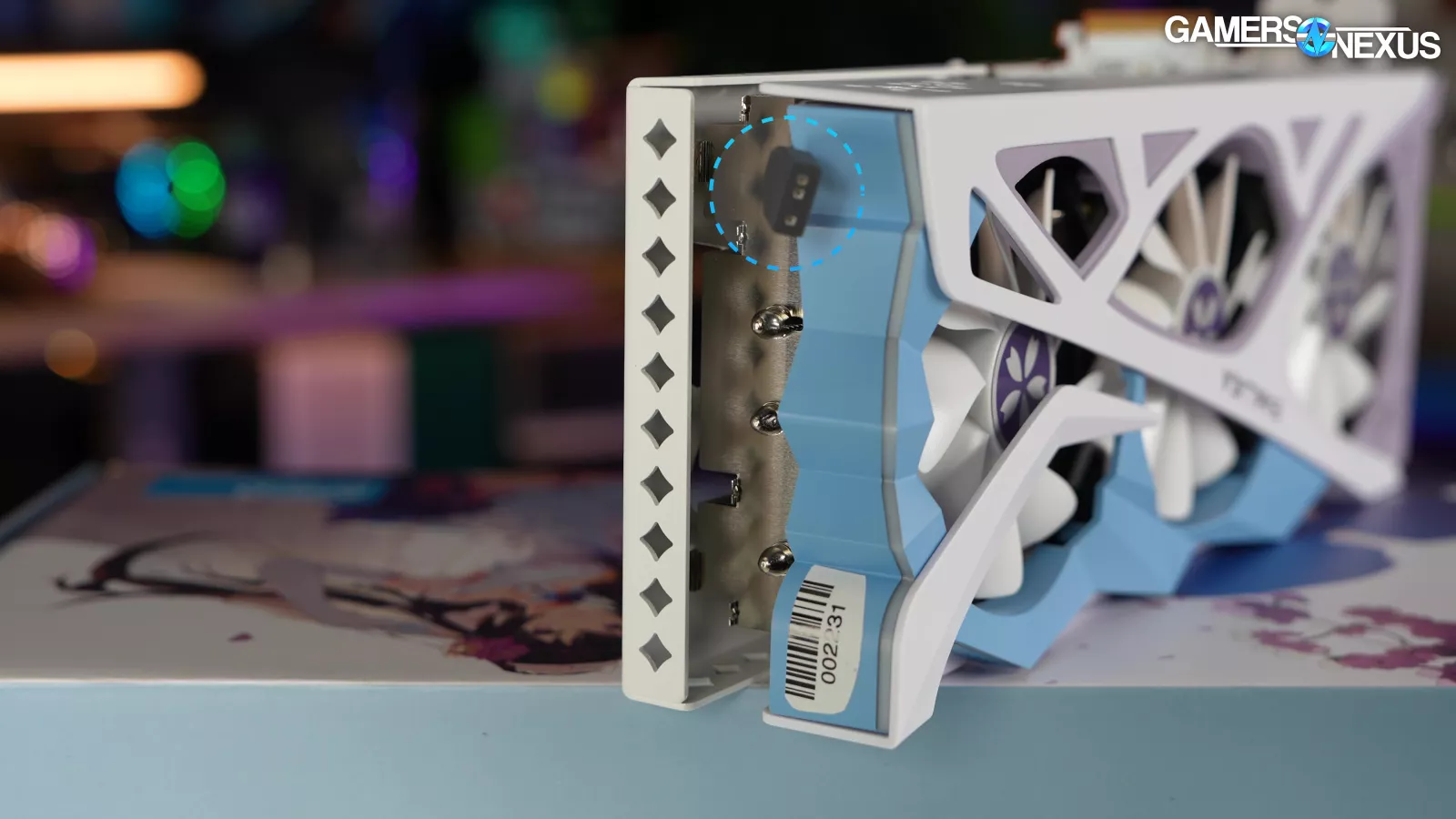
It also has an RGB cable sticking out of it so you can synchronize it with the rest of your RGB lights in your system if they use the same connector.
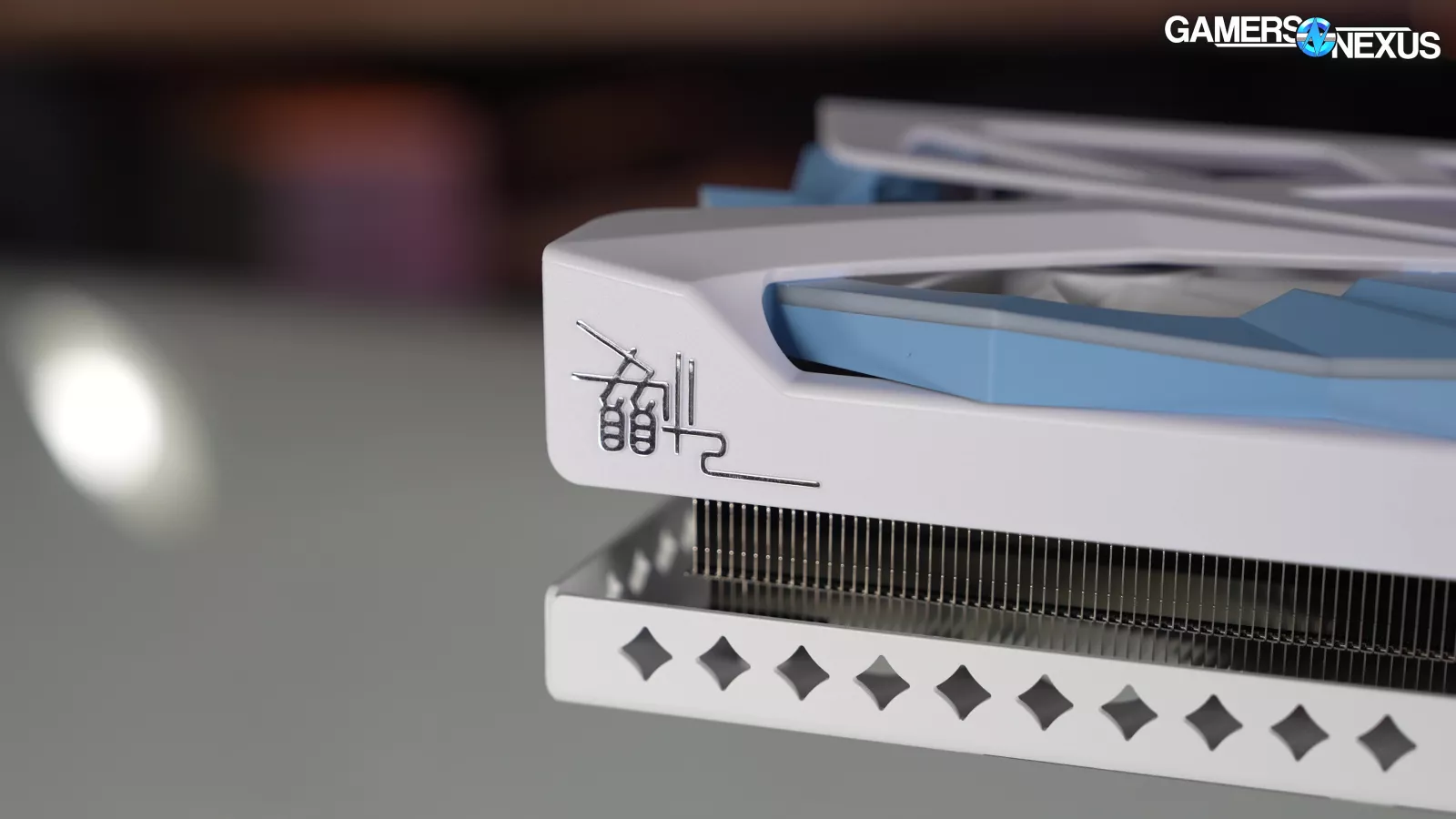
As for the GRE part, older cards are performing better for a similar price. So if you’re willing to get it used for cheaper, maybe that’s an option, but at least Yeston has done their part. Speaking of which, make sure to check out our factory tour with them.