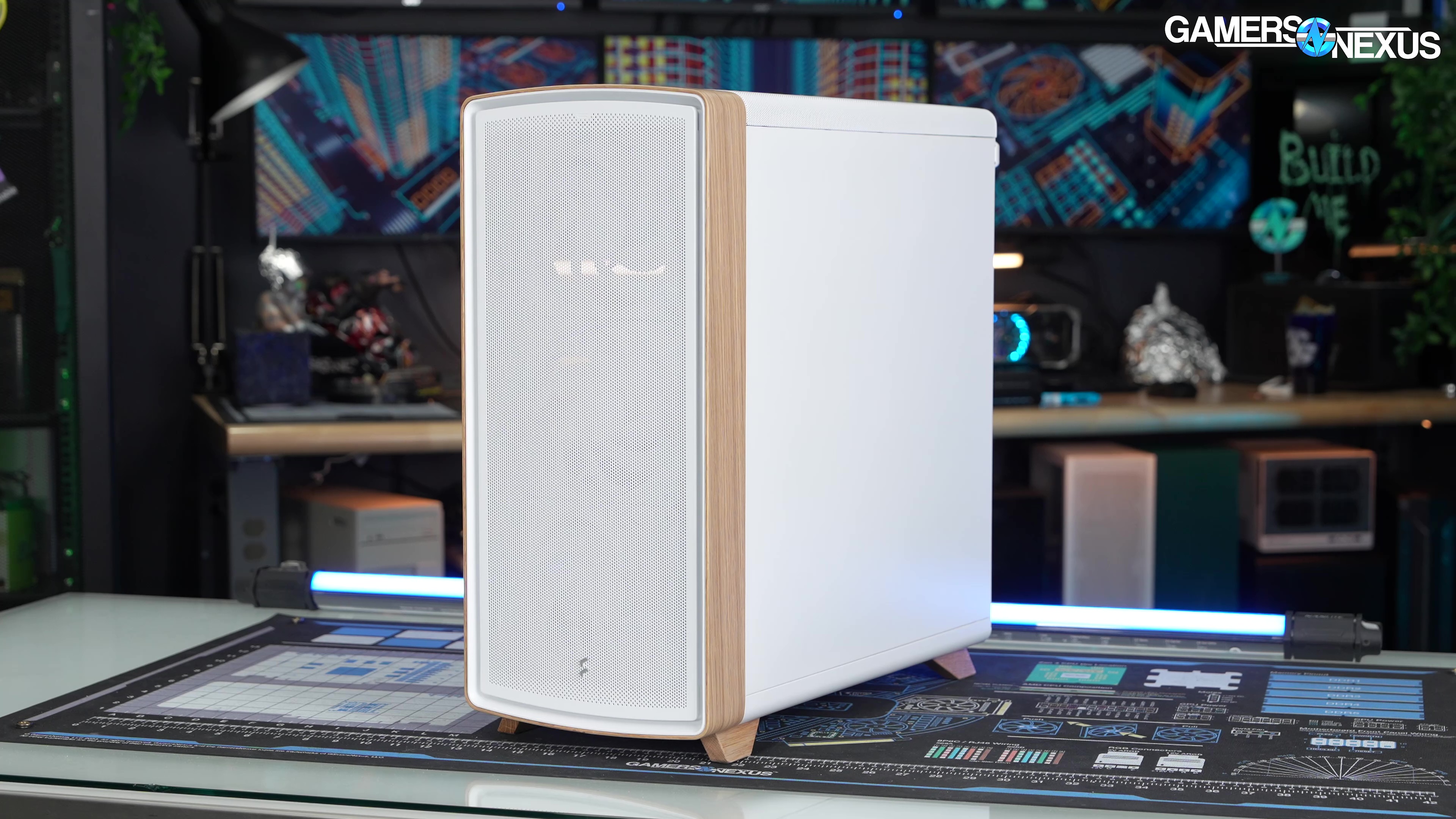
We analyze the Fractal Summit’s thermal performance, noise and acoustics, cable management, build quality, and more
The Highlights
- The Summit follows Fractal's Epoch and Meshify 3 launches in recent years and lines-up against Lian Li, Cooler Master, Corsair, and Hyte for similarly priced cases
- Some of the case’s panels are flimsier than we’d like them to be
- If you don’t like the look of the case, there’s not a compelling reason to buy it
- Original MSRP: $170-$200
- Release Date: September 2, 2026
Table of Contents
- AutoTOC
Intro
Today, we have an in-depth review of the Fractal Summit PC case.
Editor's note: This was originally published on September 2, 2026 as a video. This content has been adapted to written format for this article and is unchanged from the original publication.
Credits
Test Lead, Host, Writing
Steve Burke
Testing, Writing
Patrick Lathan
Camera, Video Editing
Vitalii Makhnovets
Tim Phetdara
Writing, Web Editing
Jimmy Thang
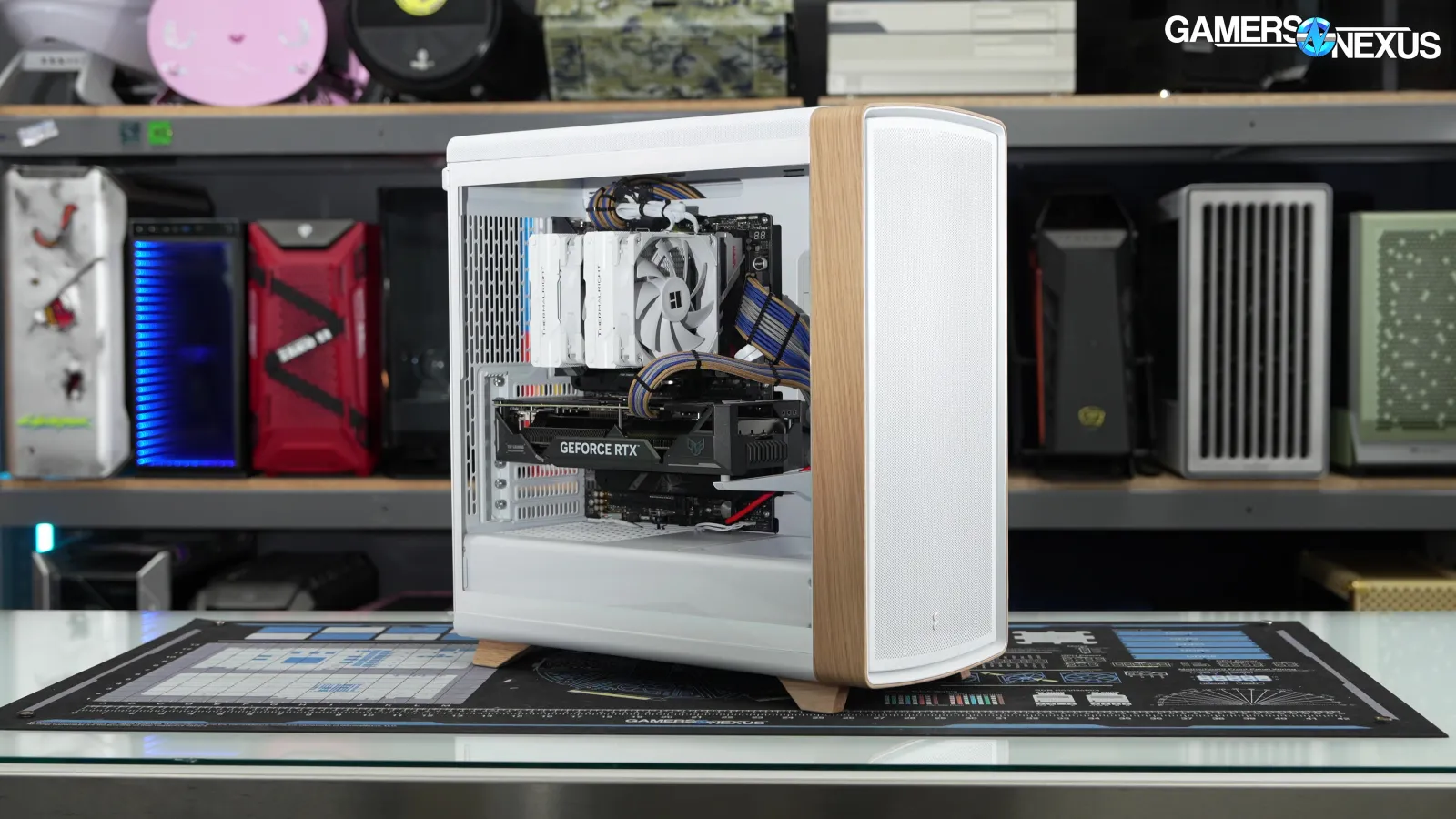
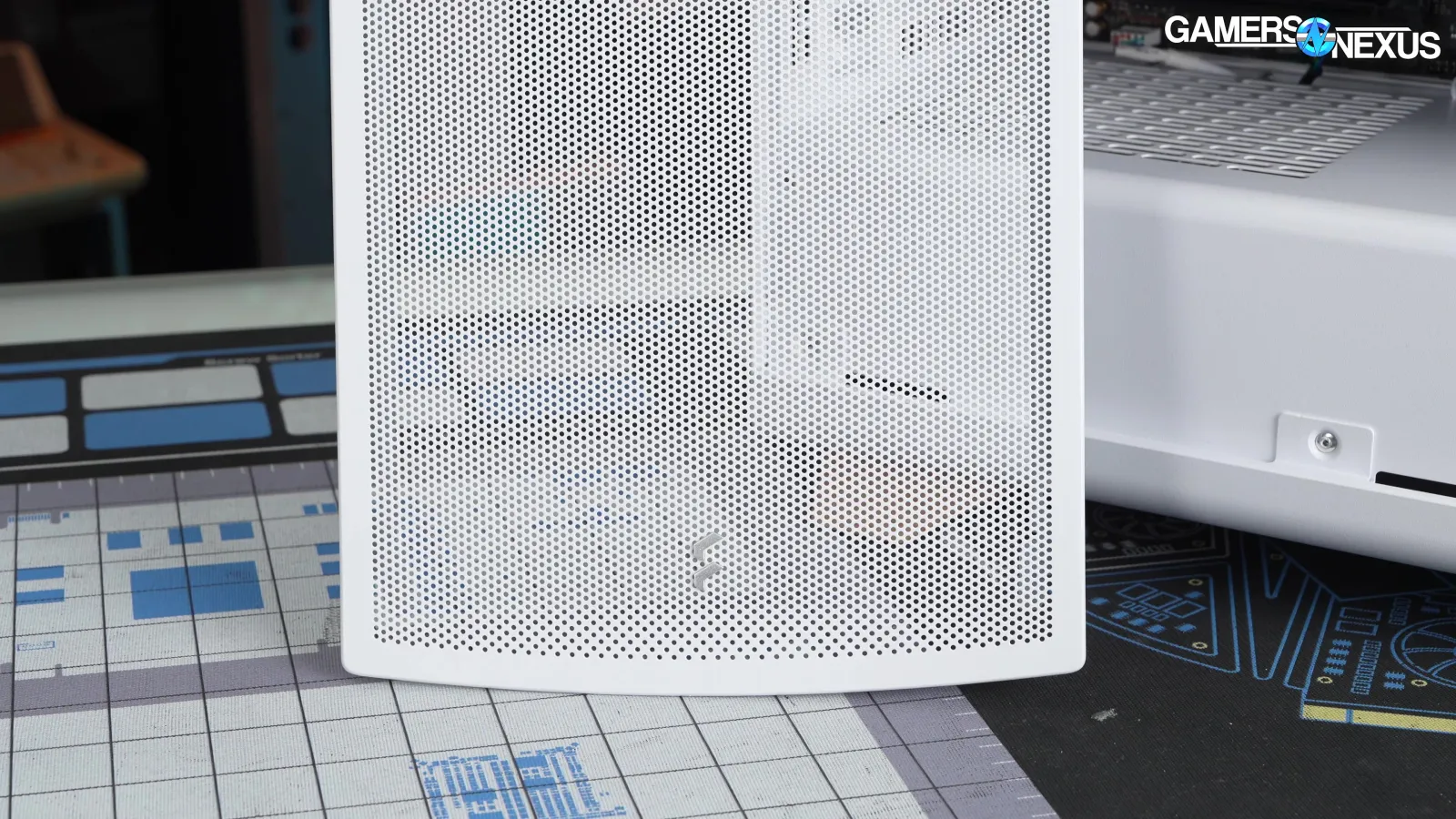
This is the Summit. It’s another of many $170-$200 cases right now -- because the case companies are hurting, and they’ve realized the only people left in the market are those who can afford $1,400 for RAM.
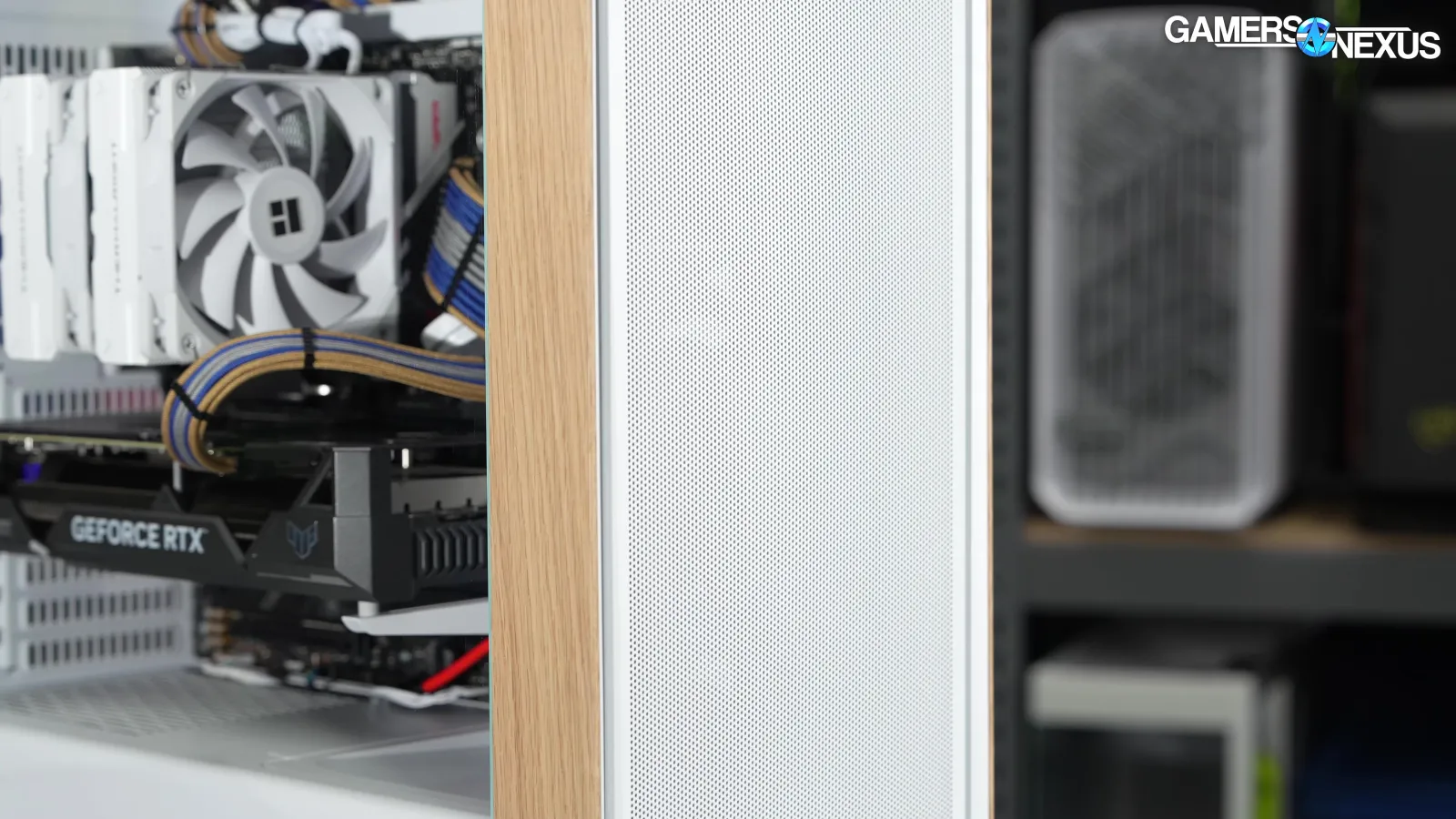
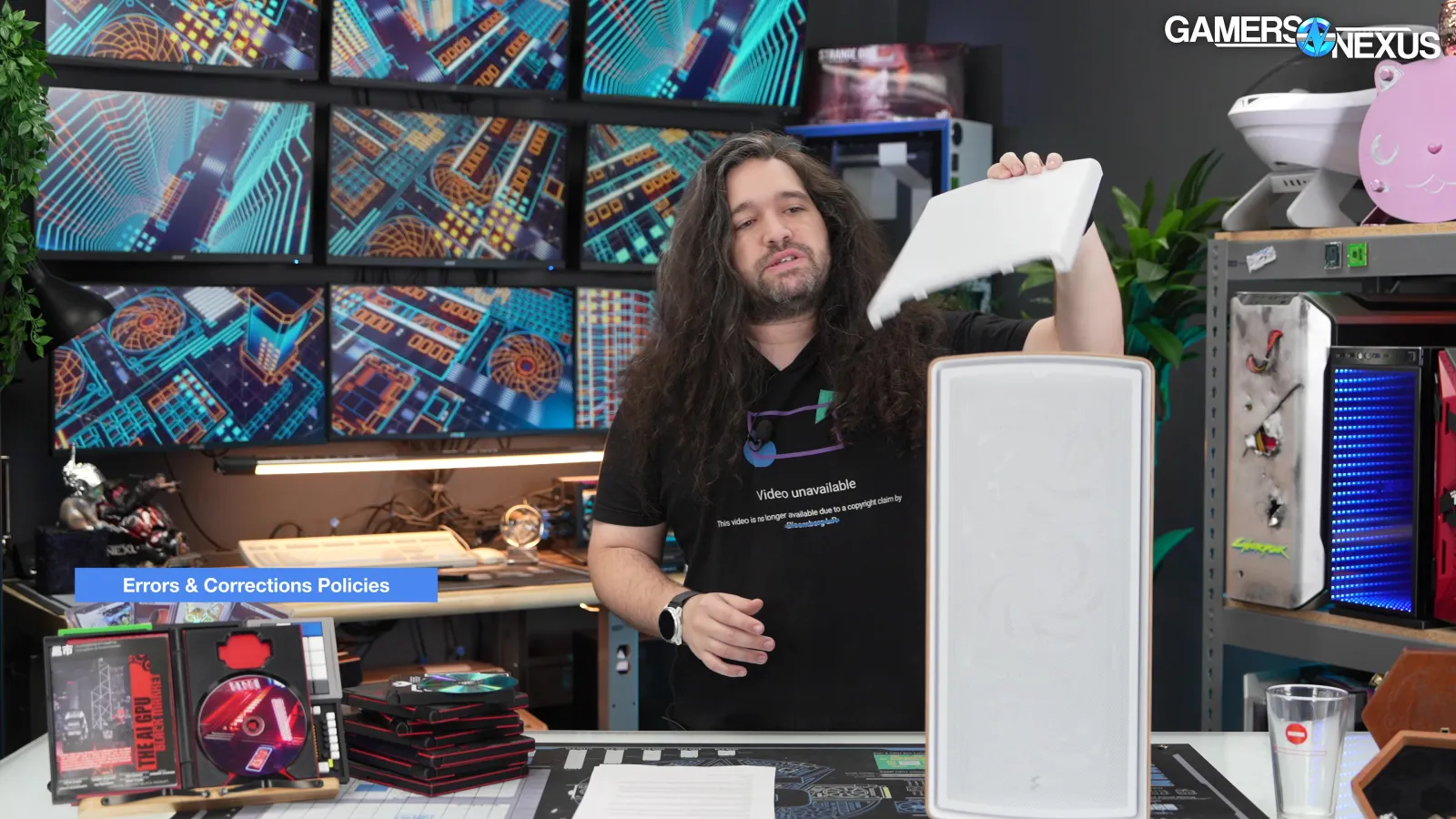
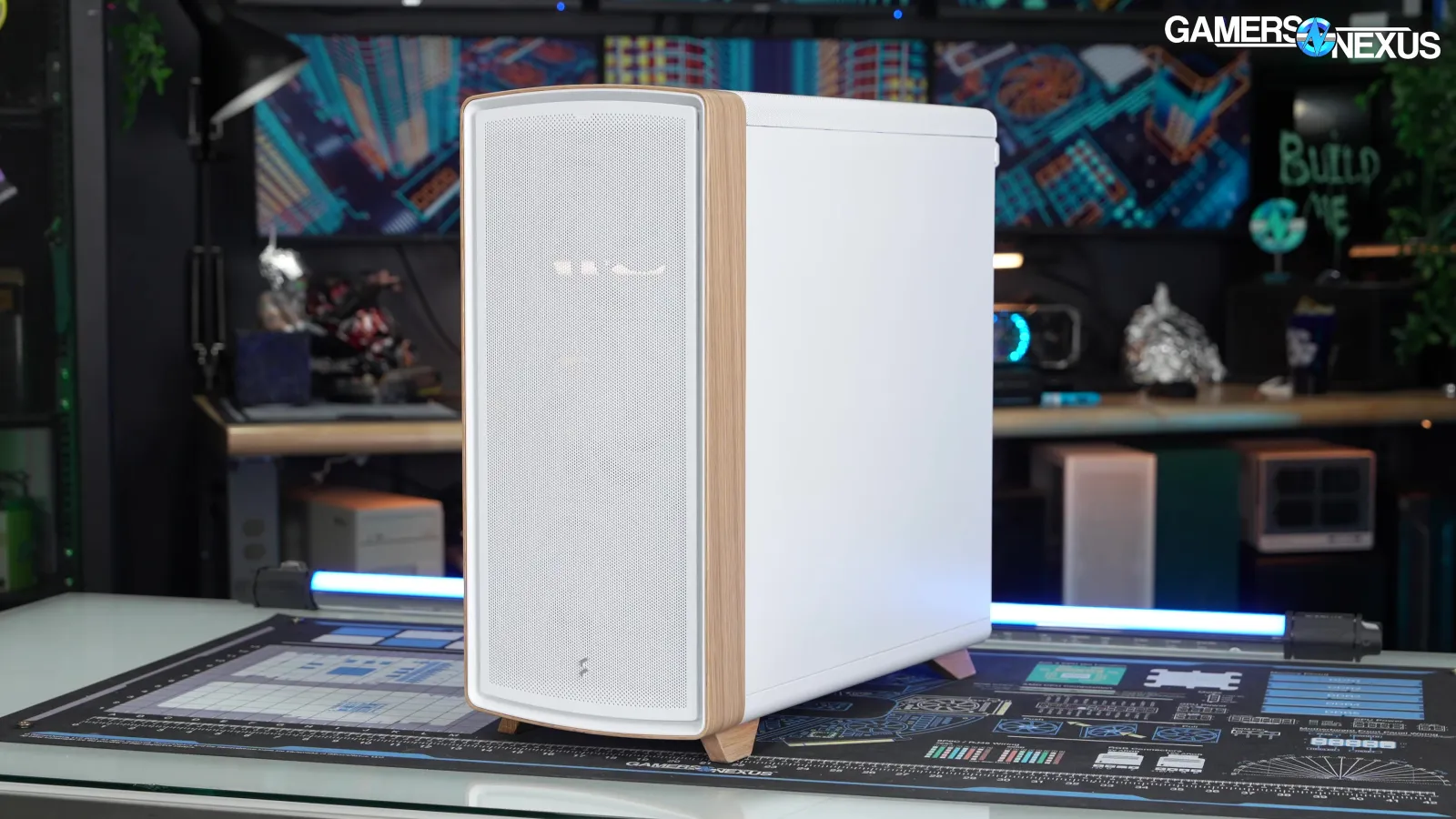
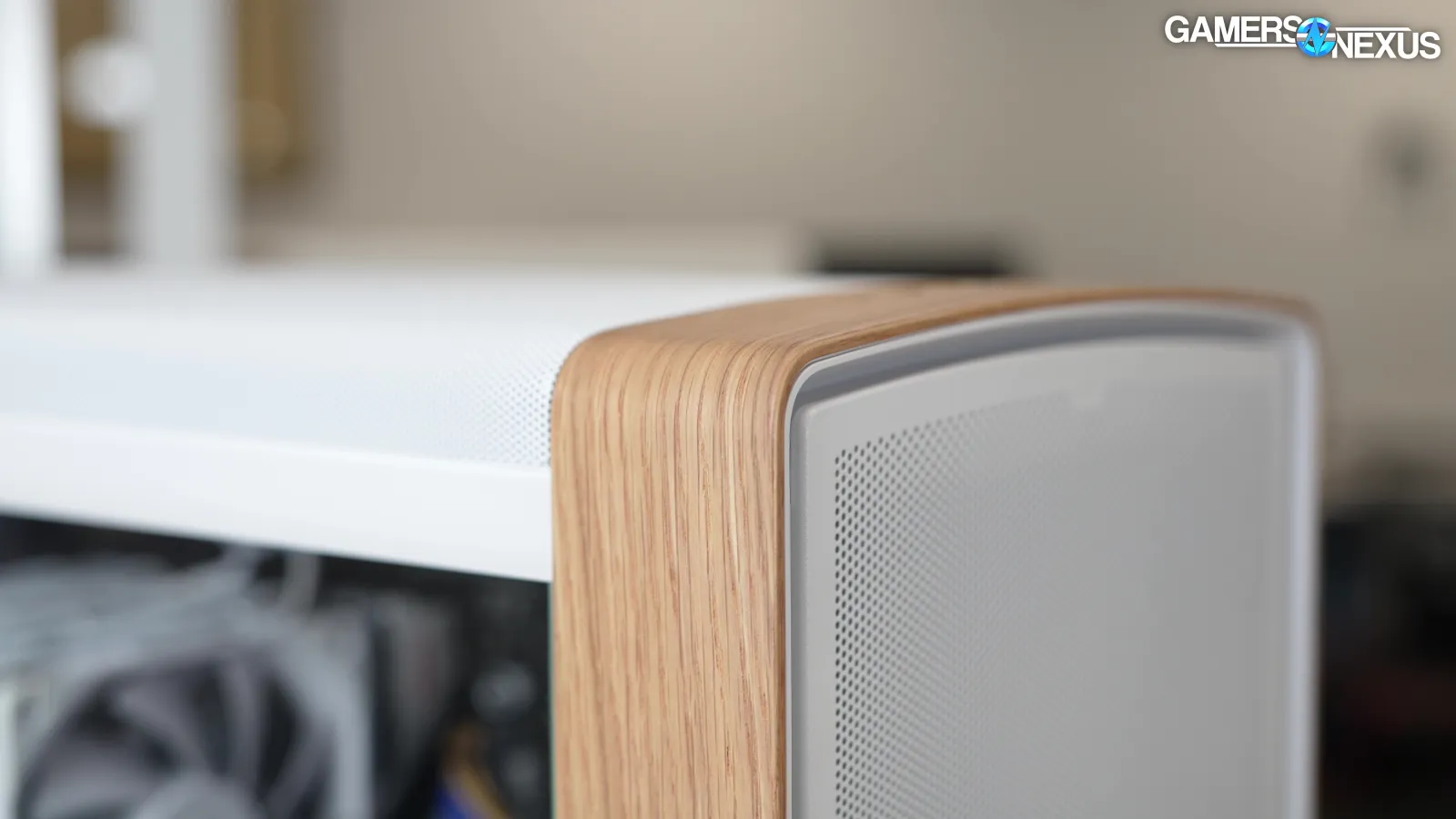
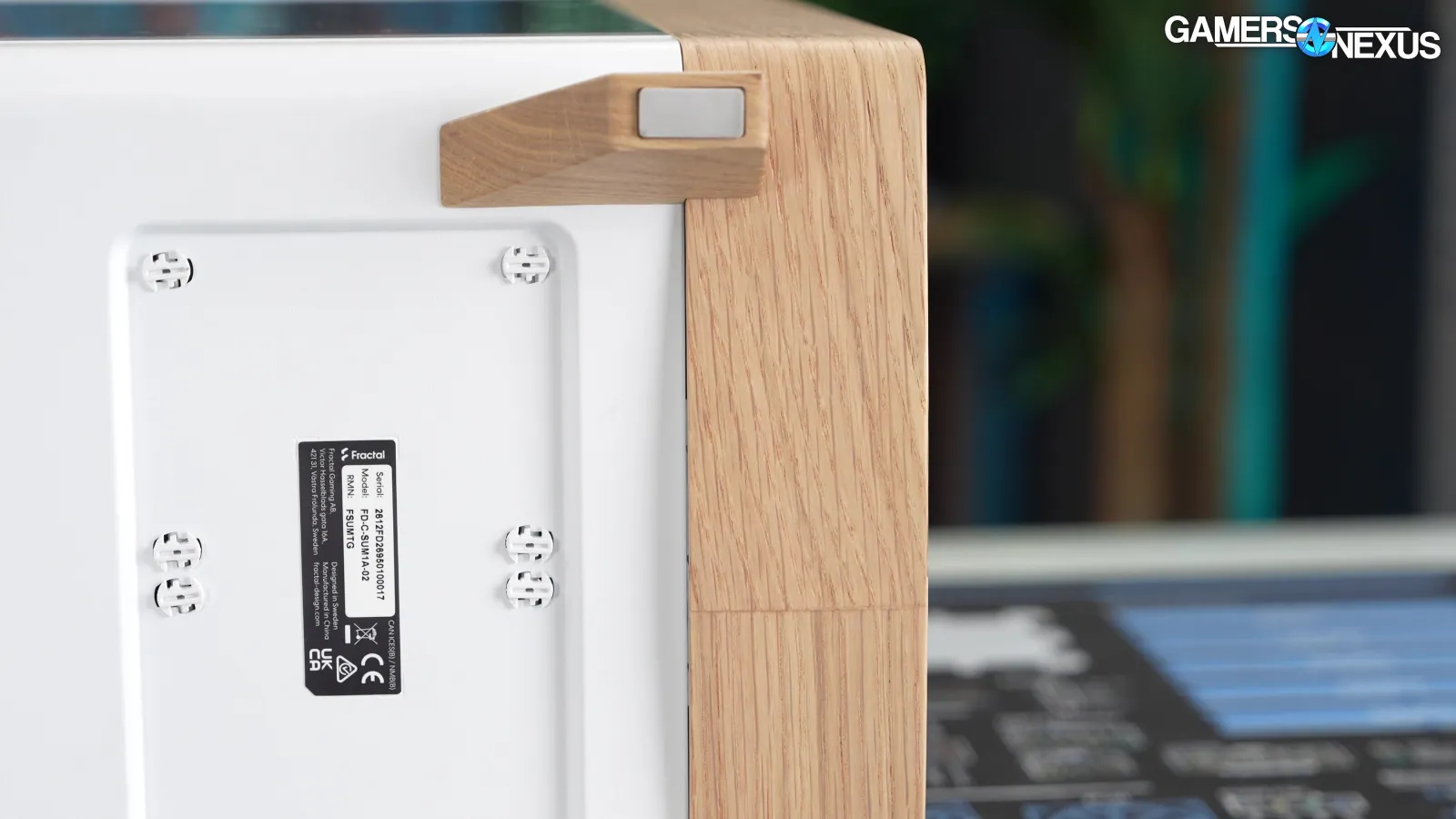
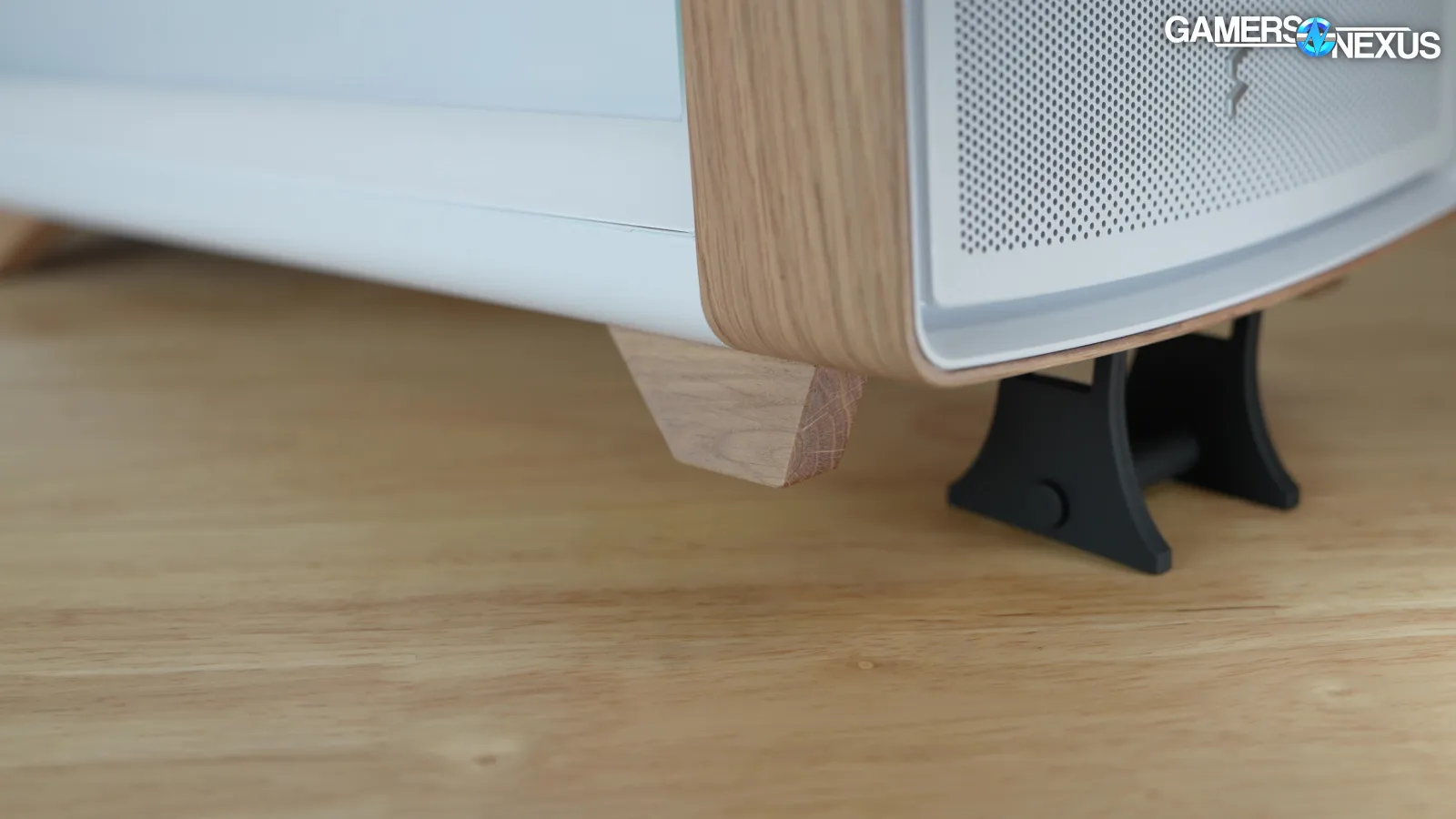
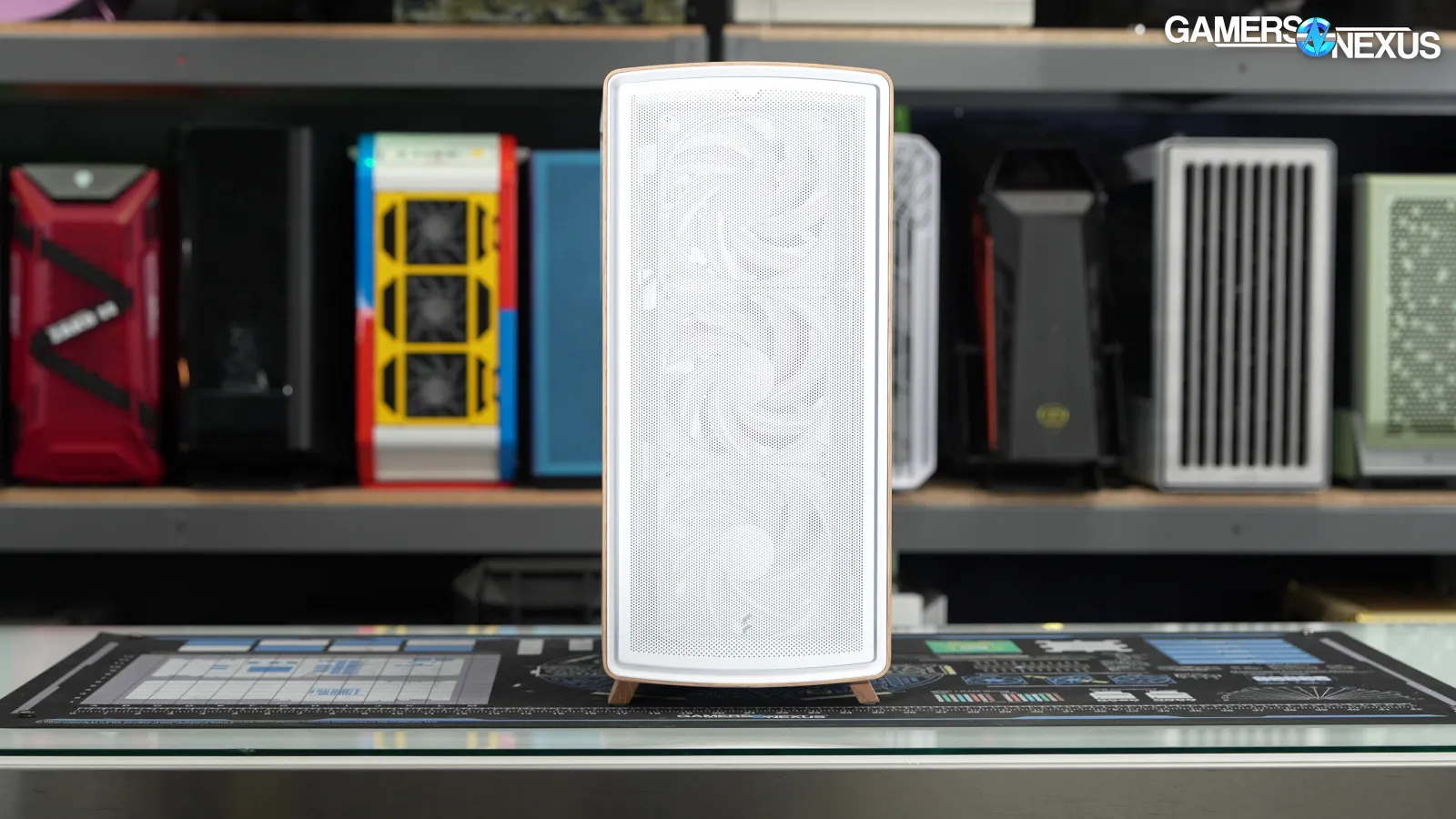
The feature that jumps out is the wood frame around the front panel, slightly curved at the top and bottom in a way that reminds us a little of the SilverStone PM01, or maybe even the NZXT Manta.
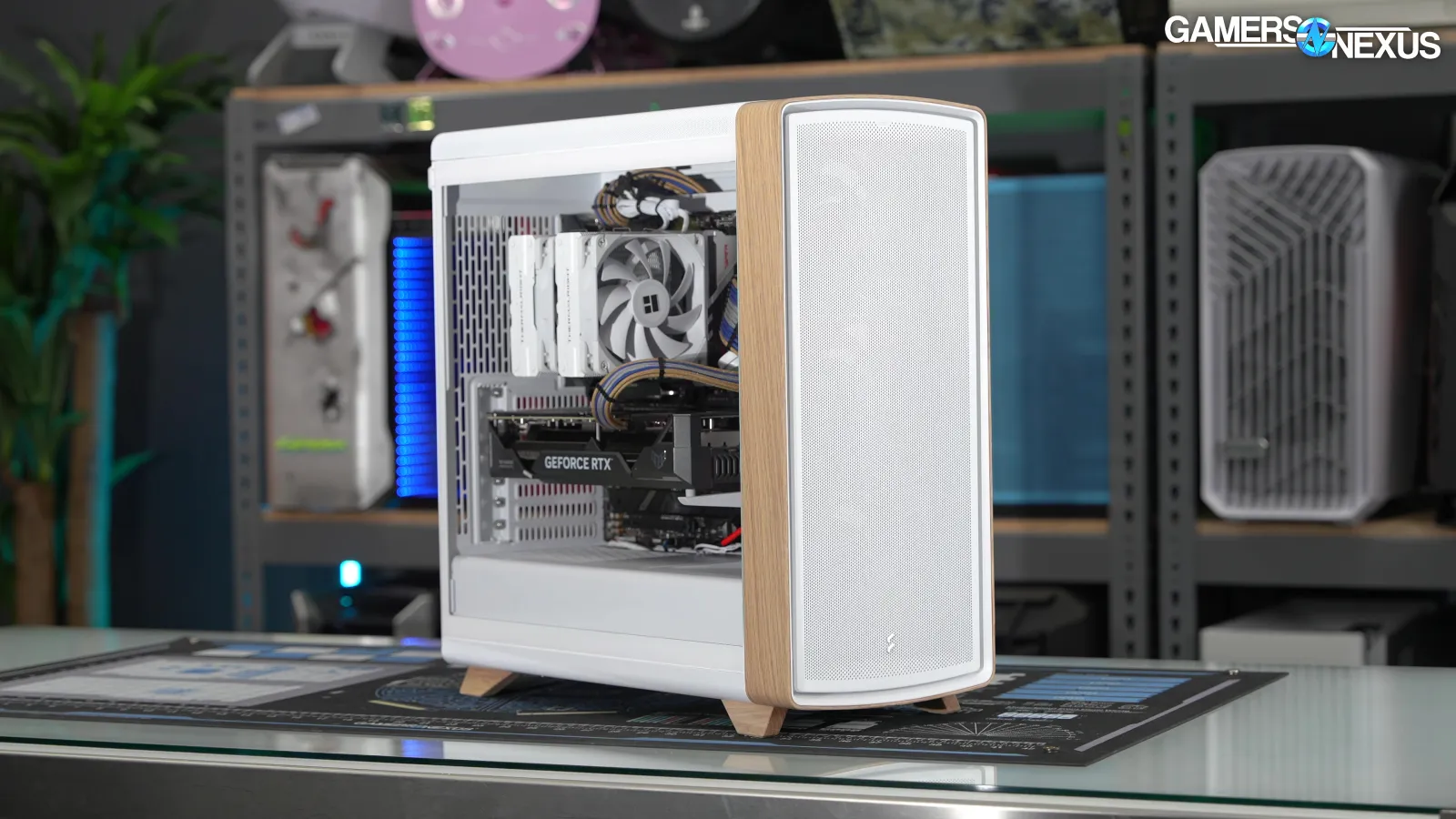
Even within GN, some of us are okay with it and some of us hate it, so we expect this to be divisive. Camera operator Vitalii hates it, for example, and you really don’t want to be on Vitalii’s bad side.
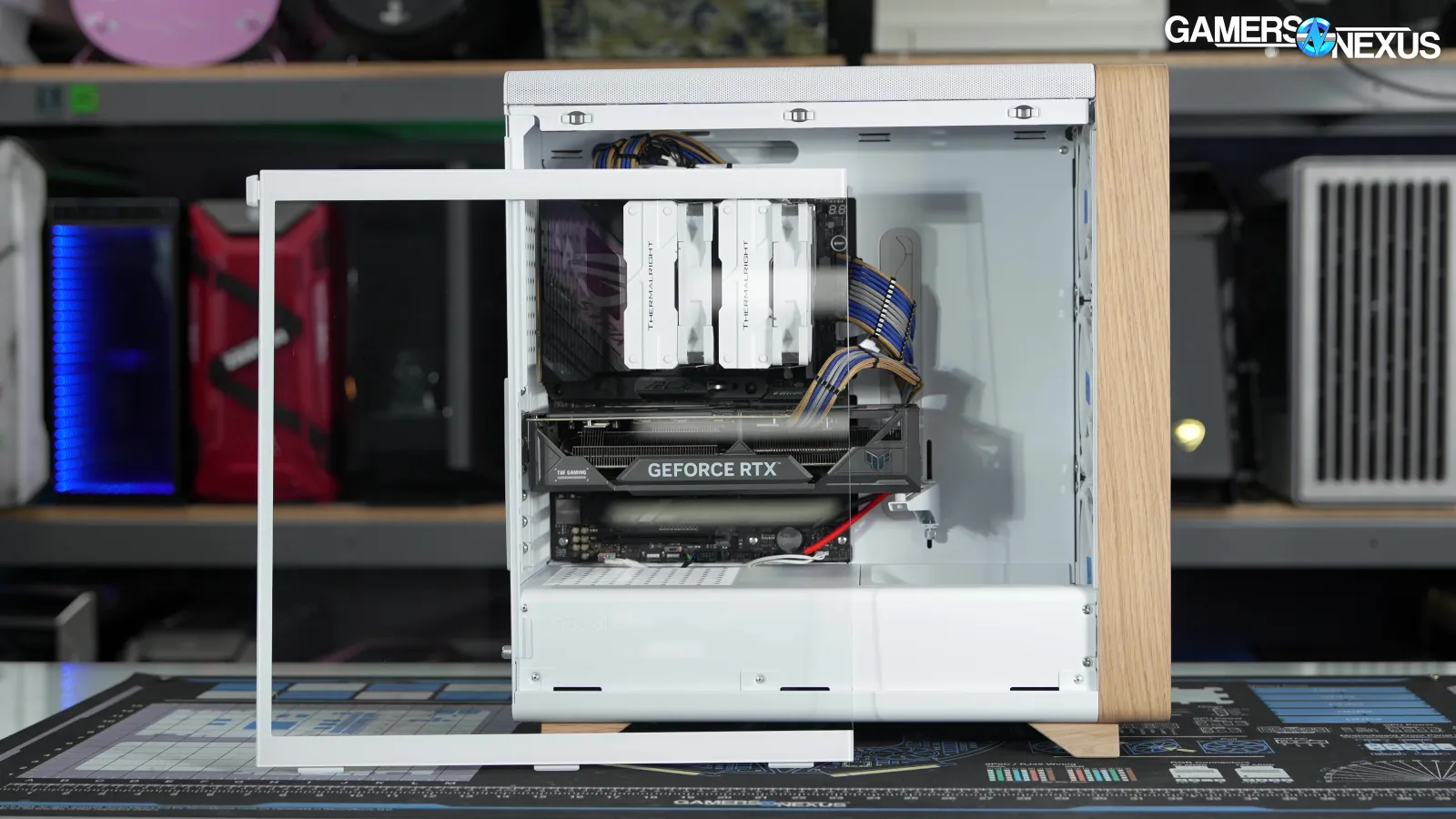
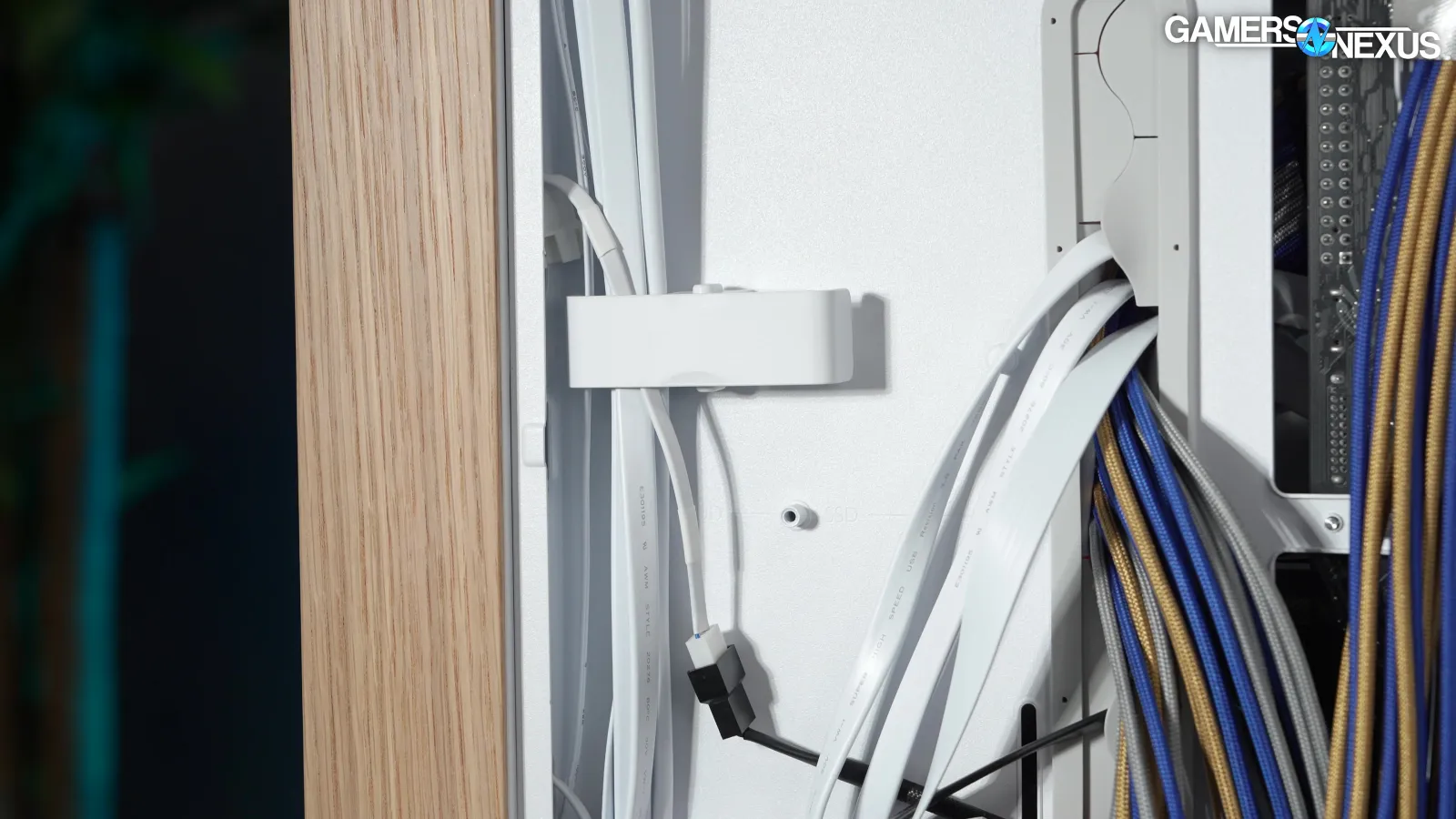
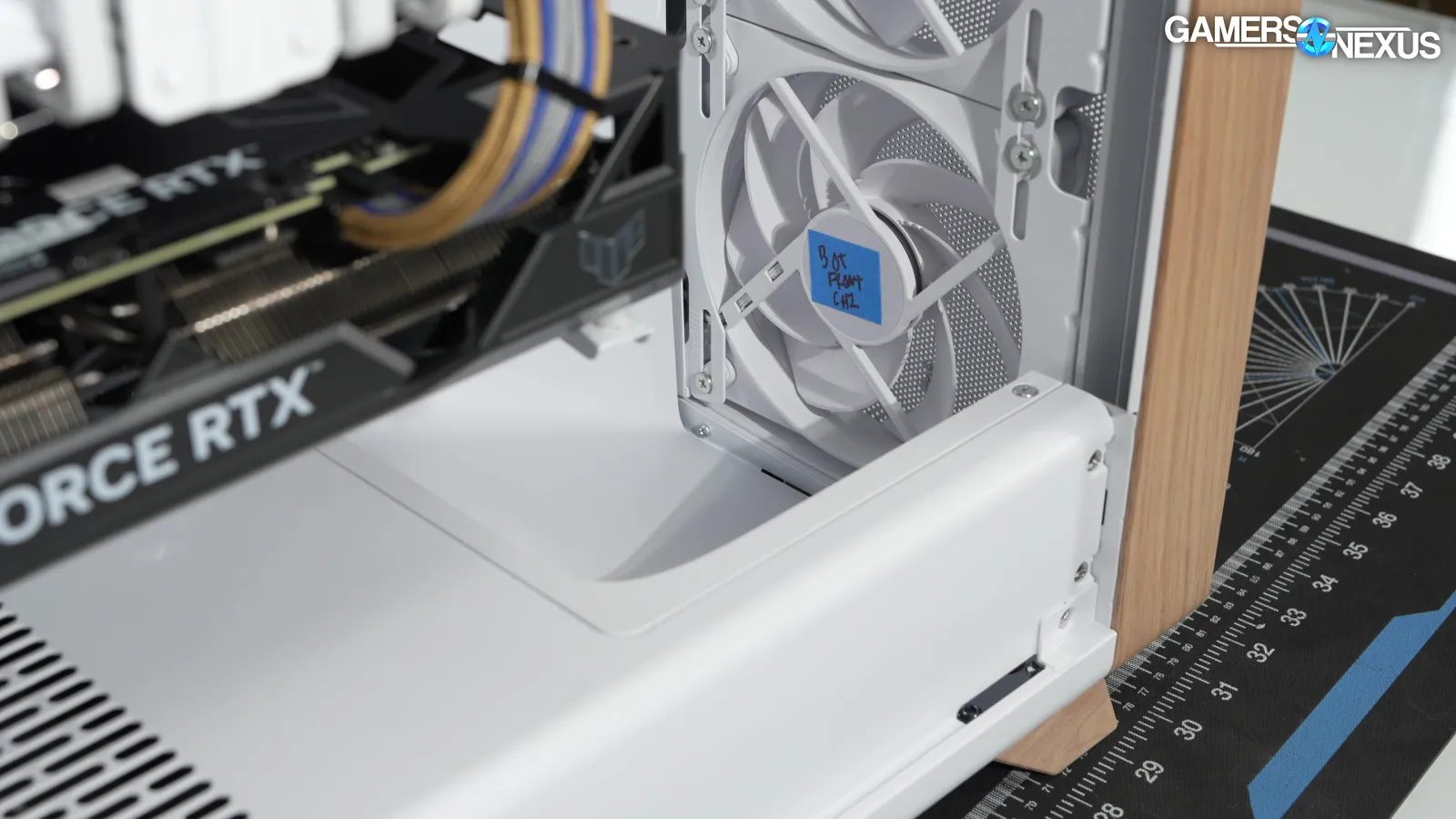
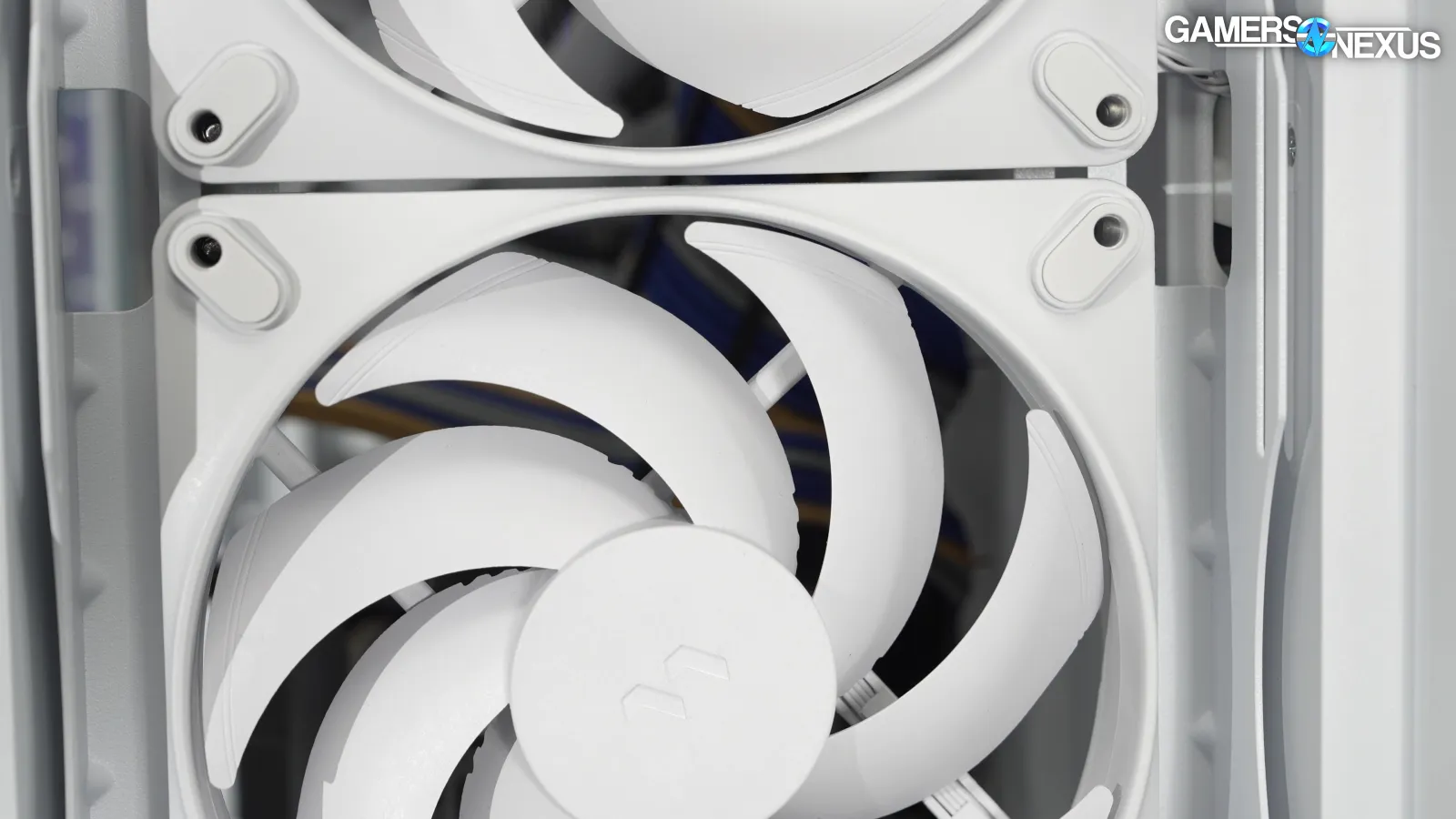
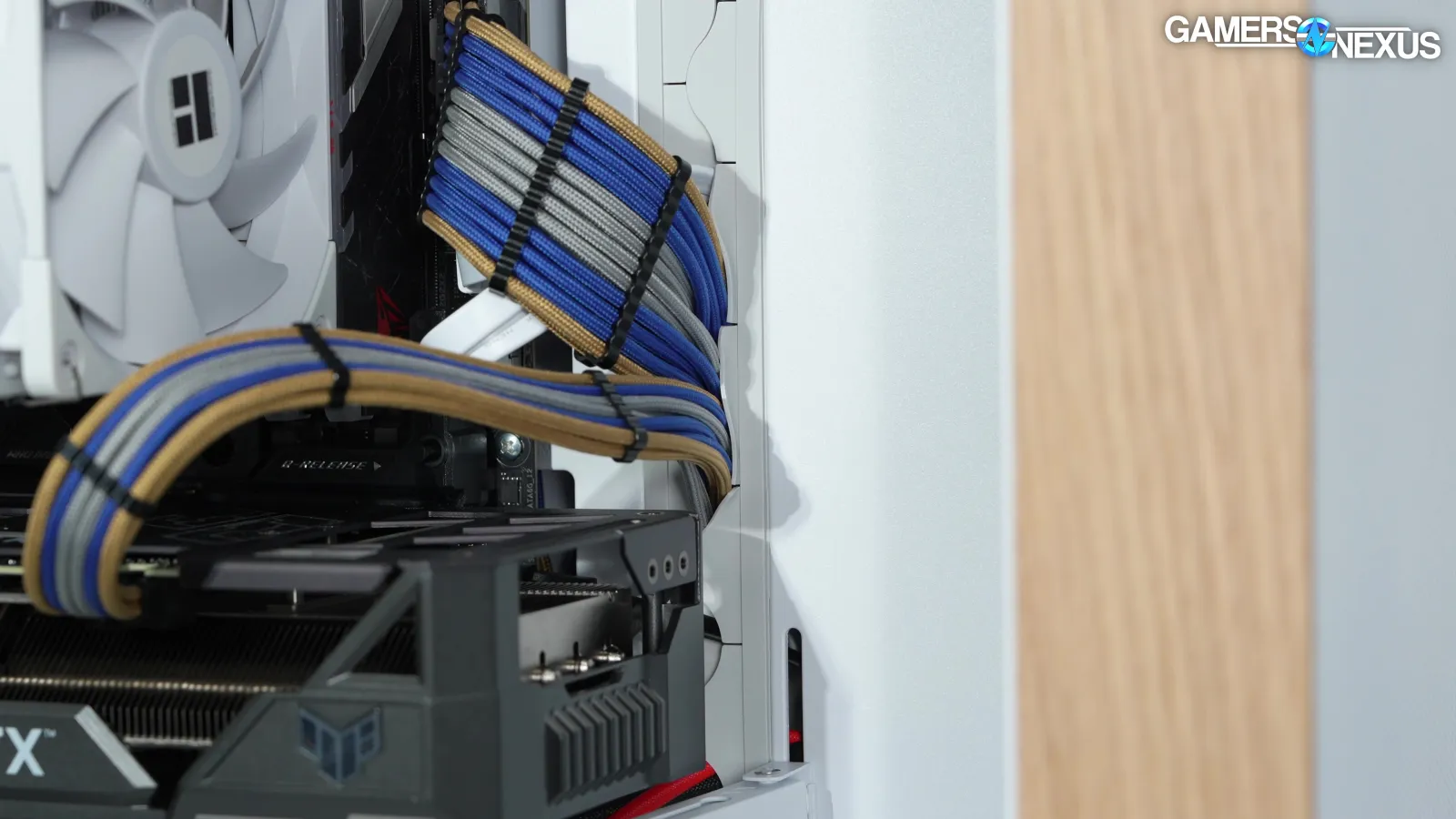
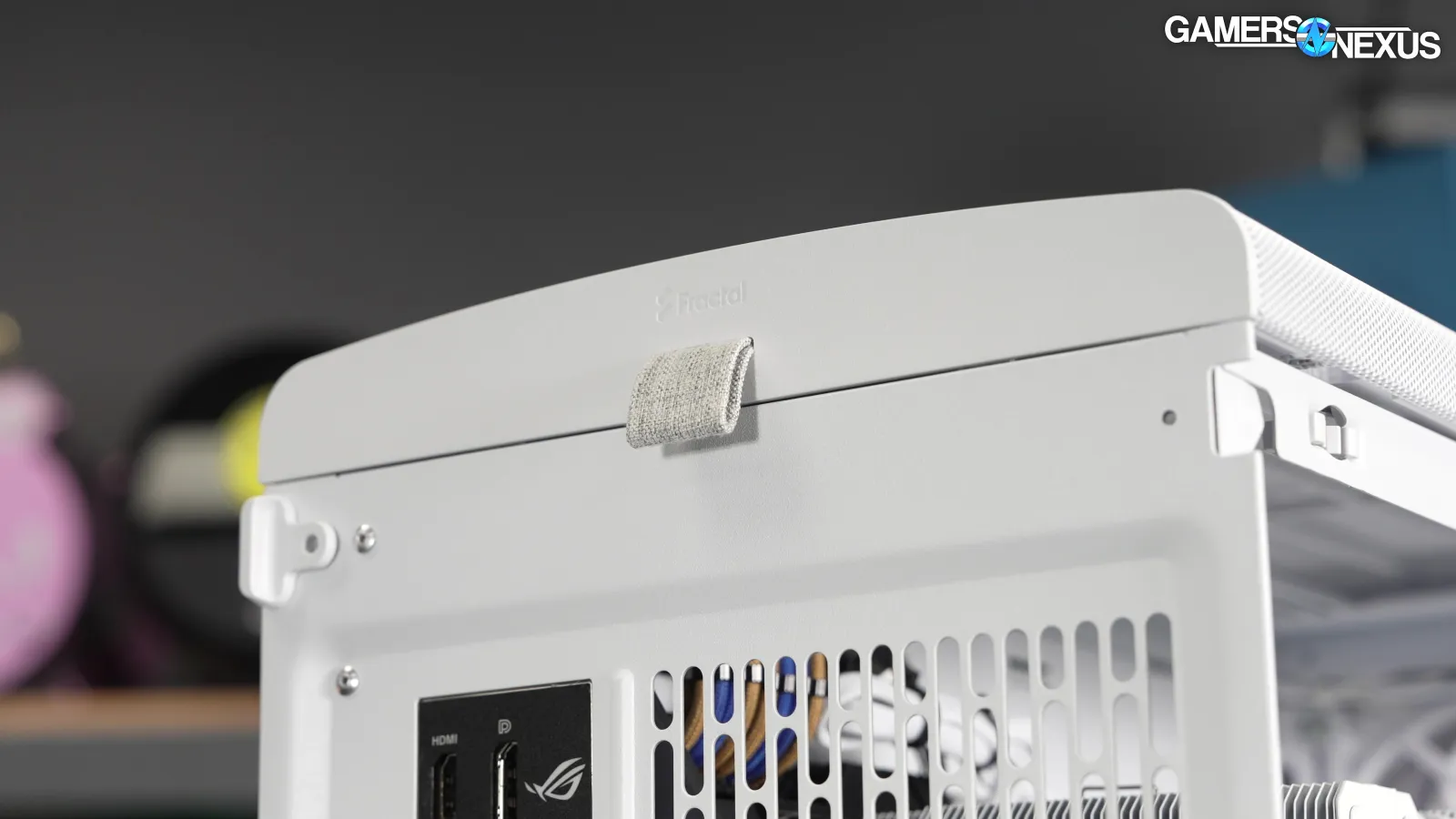
Otherwise, we have some returning Fractal features like the "cable aligner" arches, airflow scoop, and LCP fans, as well as some new touches like an unusually nice cable grommet.
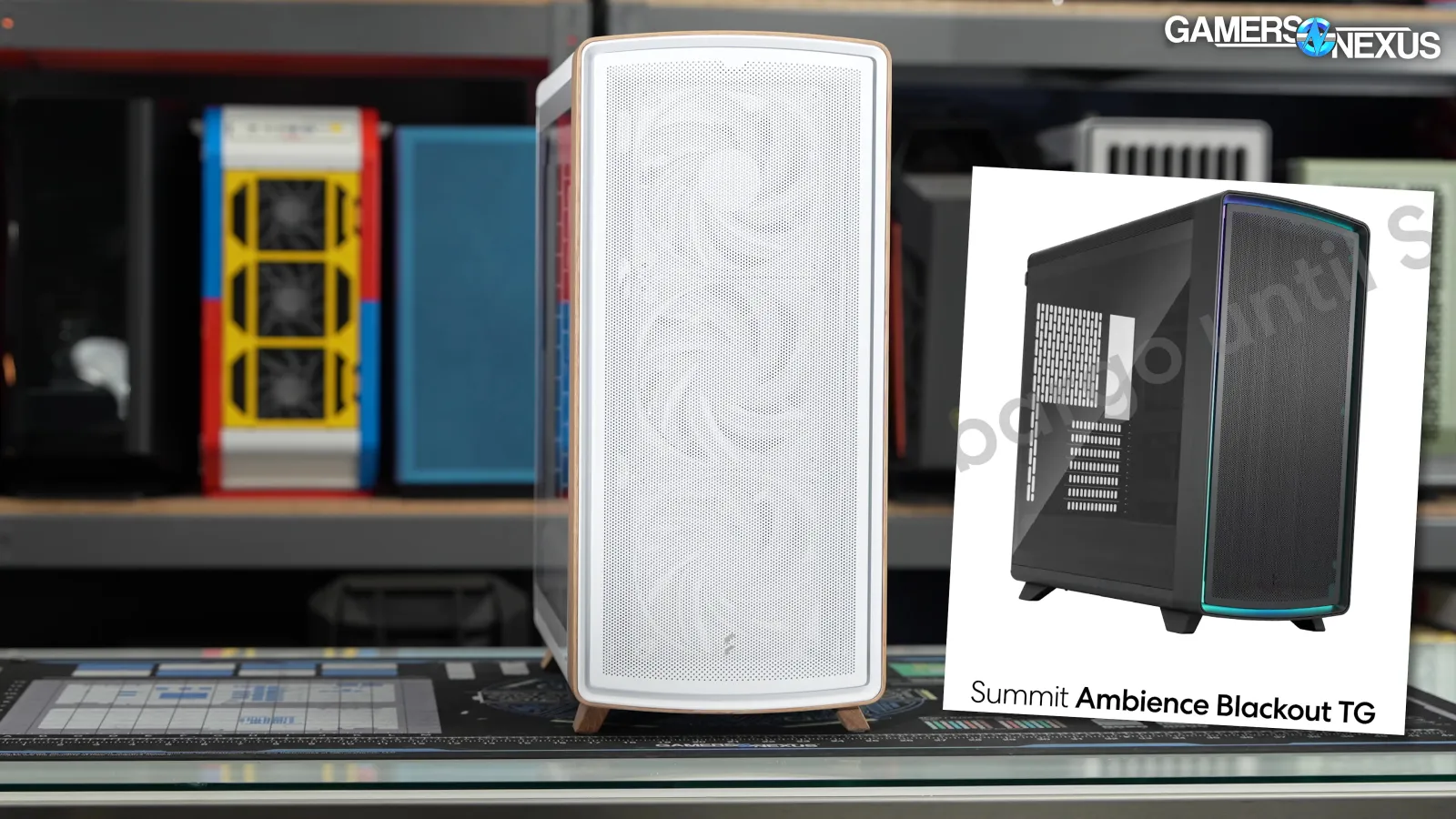
As usual, Fractal has a lot of SKUs for this product launch. The company has variations with solid and glass-sided options, white and black (oak and walnut), a “blackout” option with blackened walnut, and an "ambience blackout" option with blackened walnut -- plus RGB around the front panel (which is not what “blackout” means).
The pricing is a little weird: it's $170 for all variants except the "Summit Ambience Blackout TG Light Tint," which is $200.
The Build
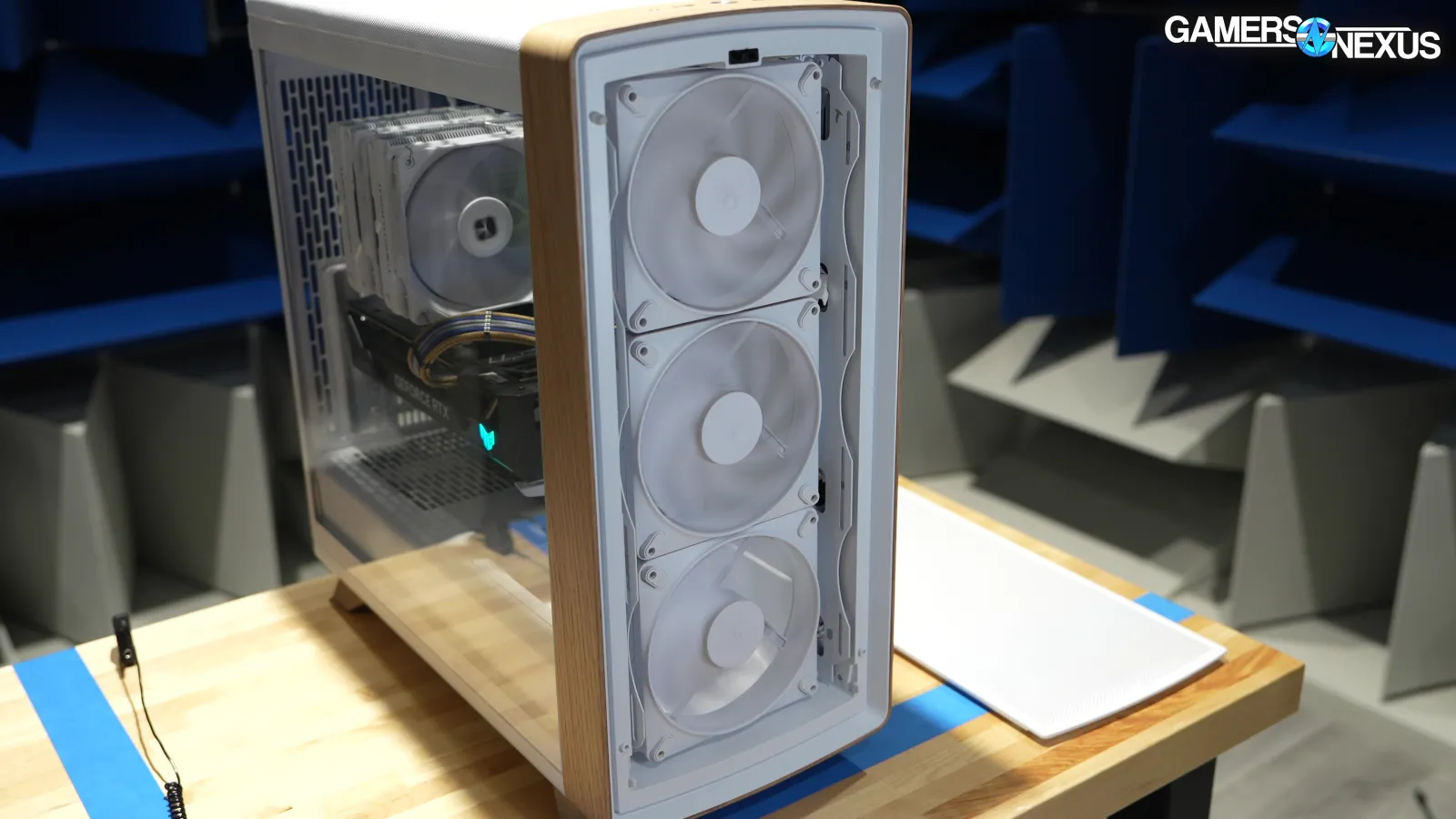
The case is pretty straight forward (in our SKU of the case at least):
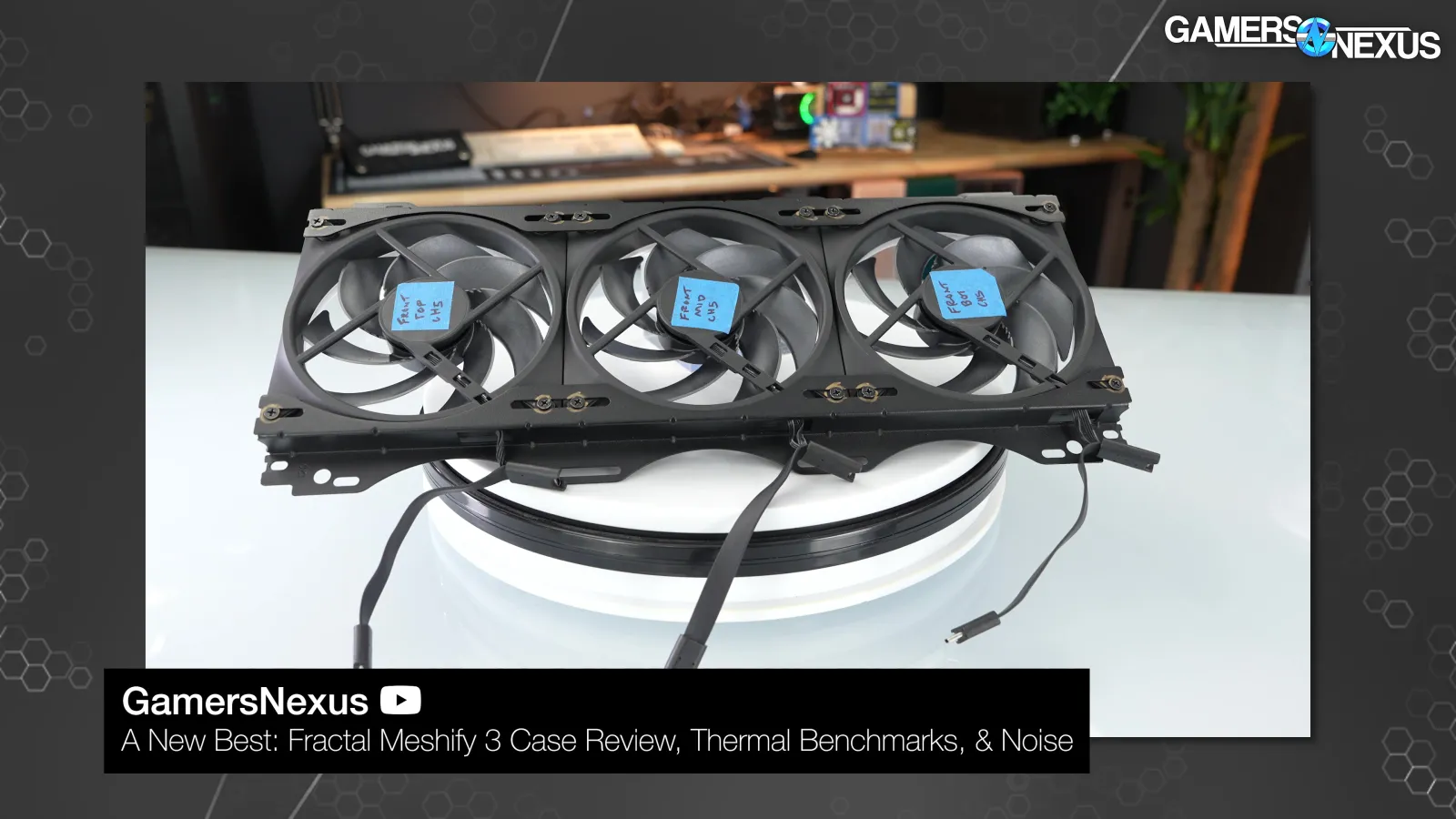
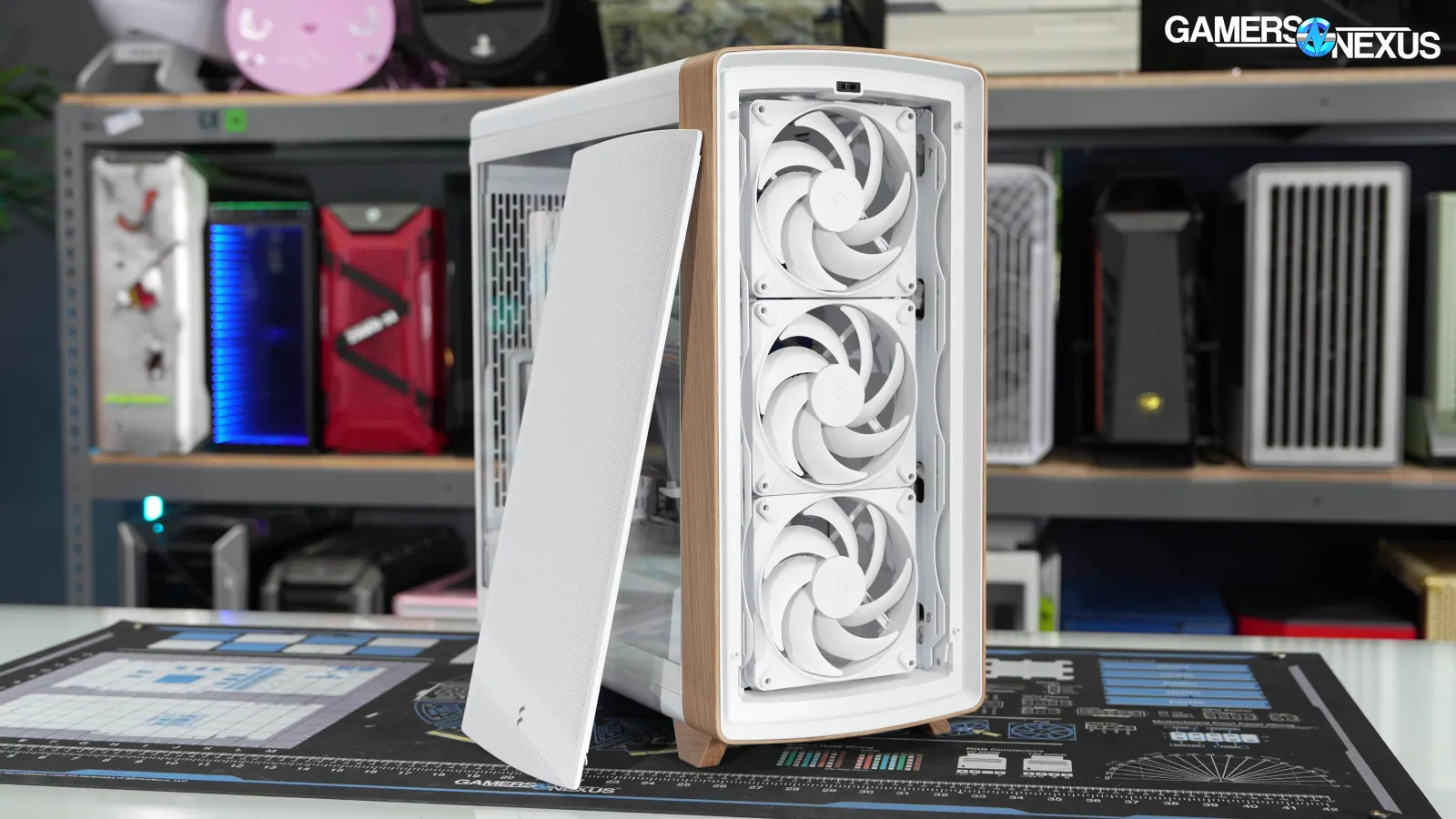
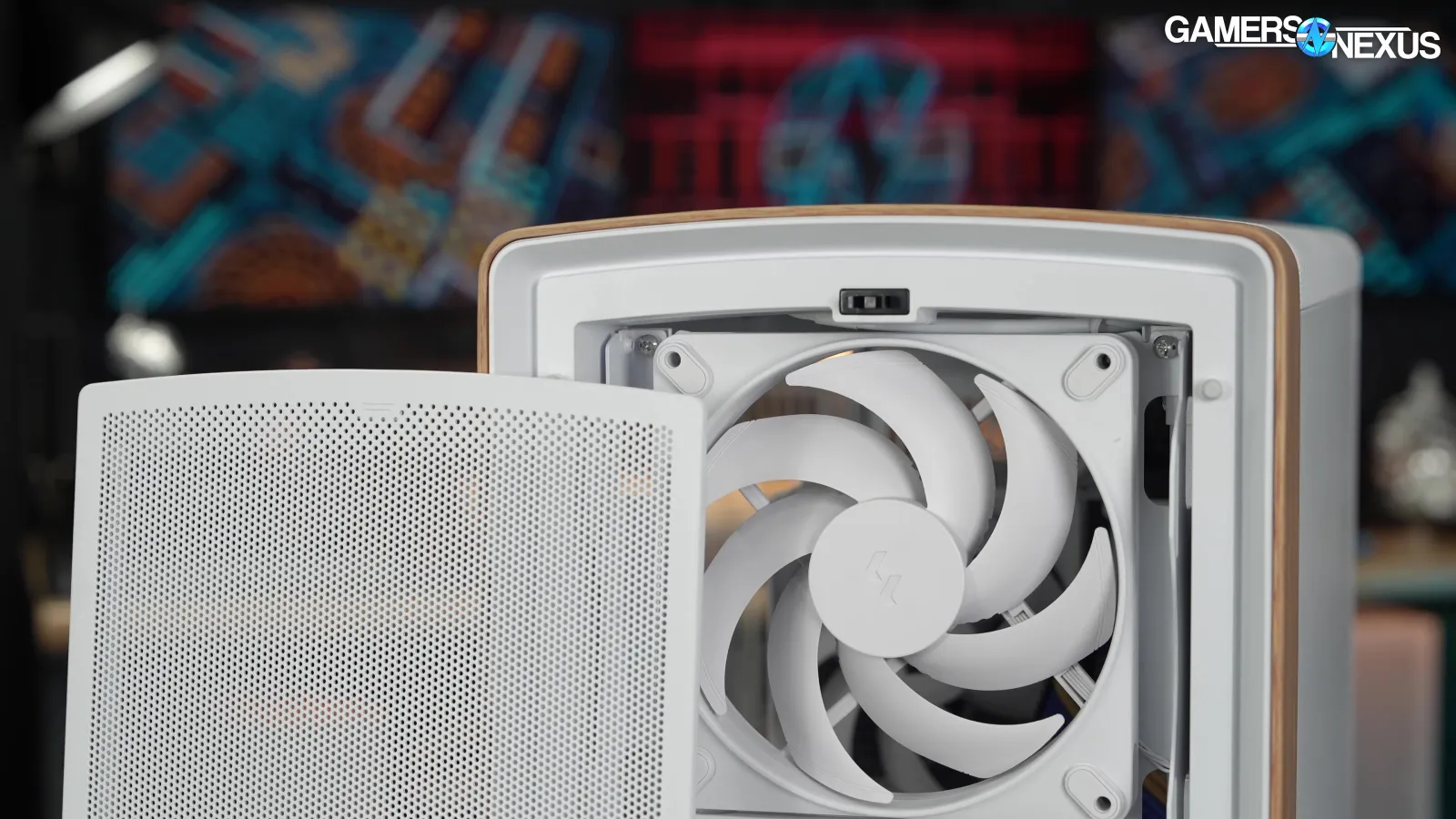
We’ve got 3 included front fans. They’re good fans and have performed well in the past.
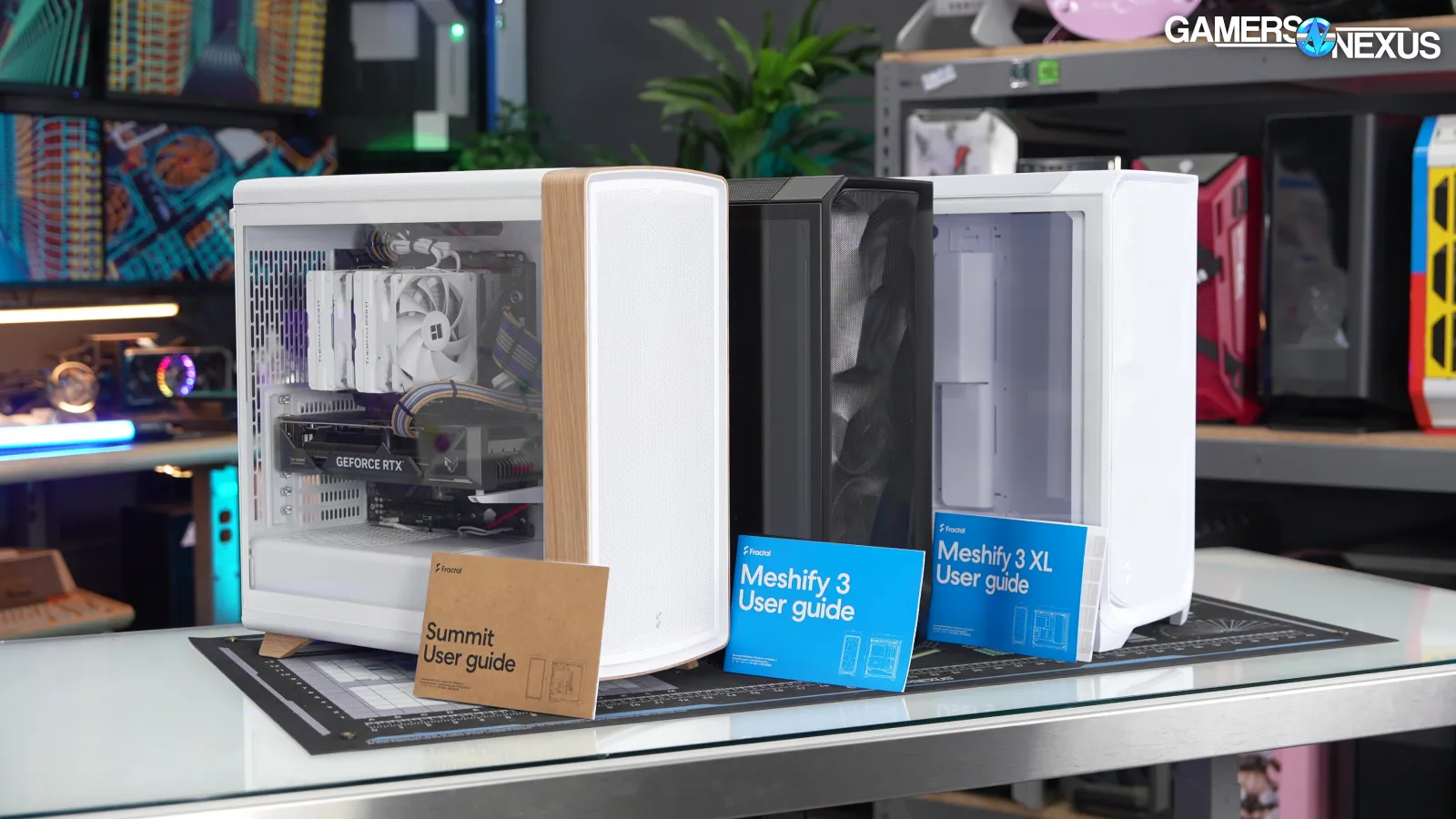
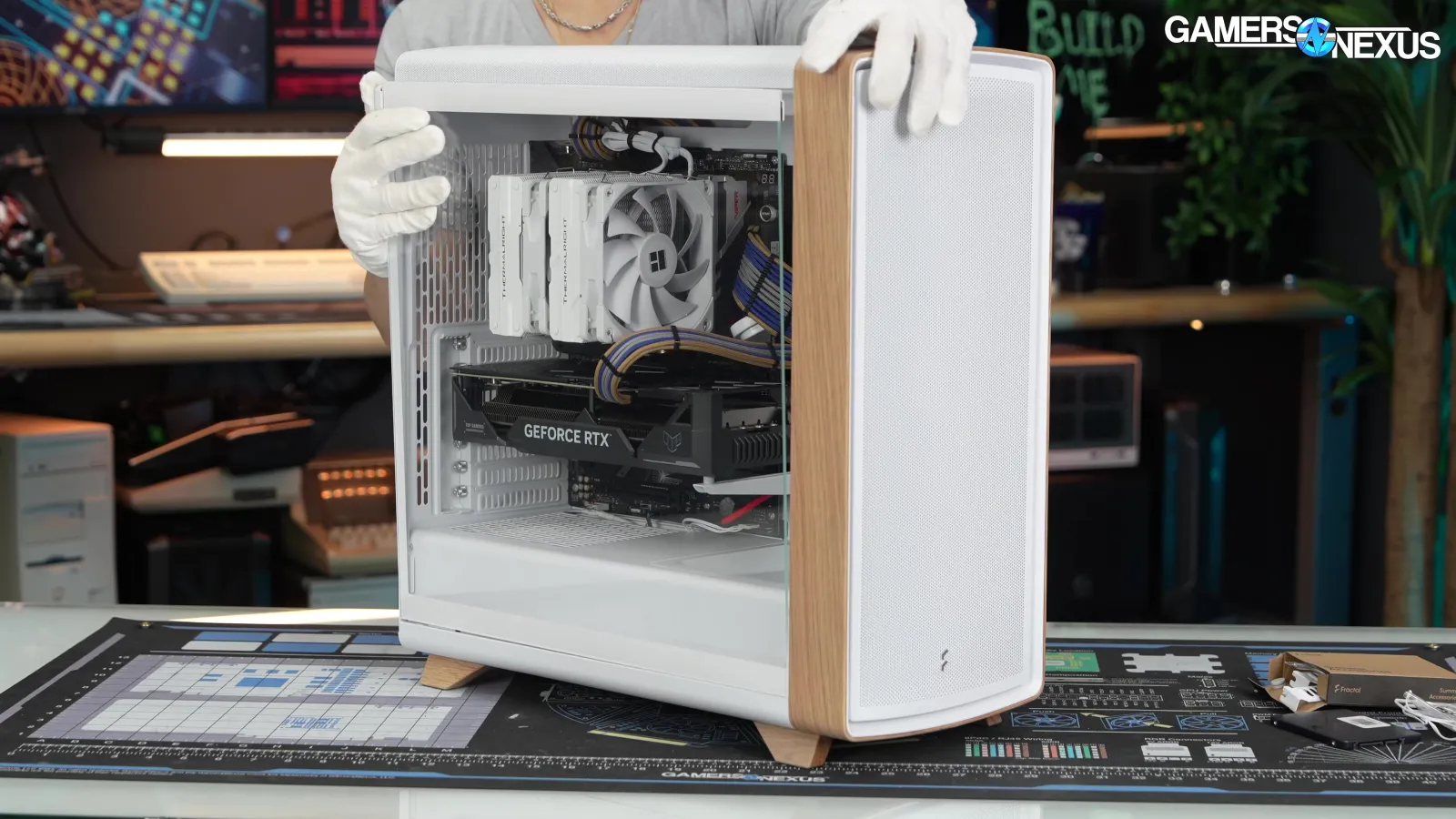
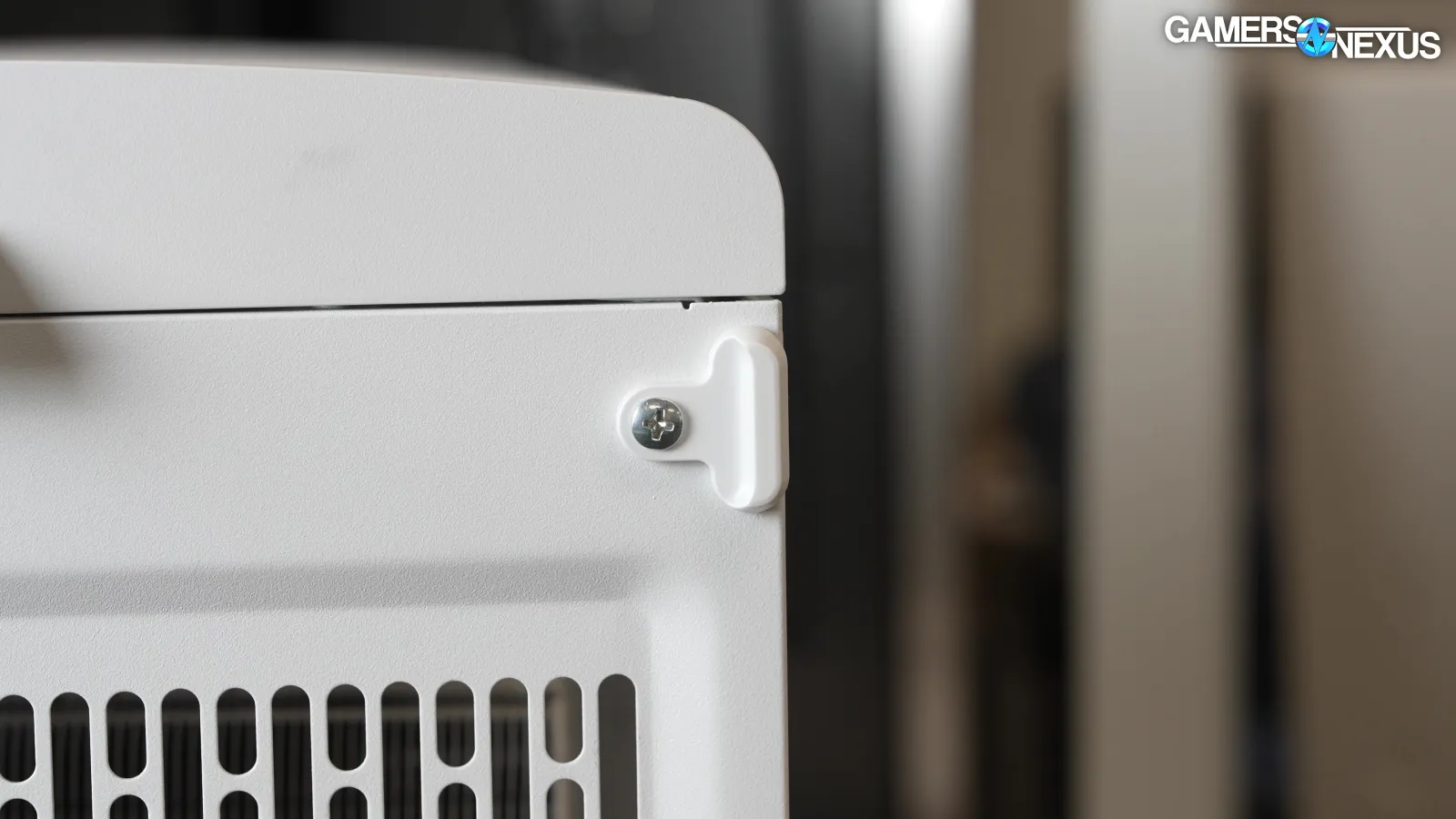
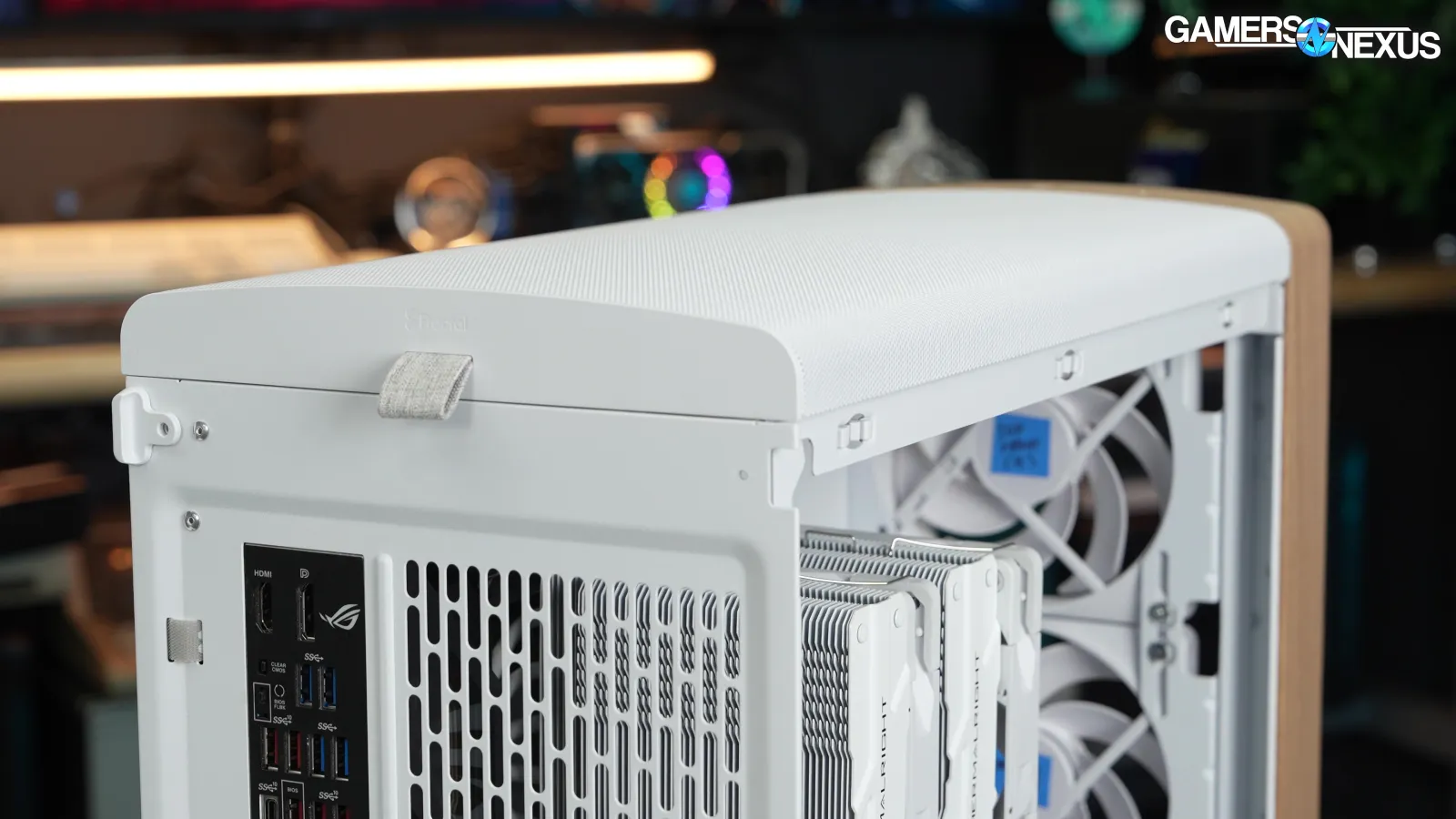
Otherwise, the case has pretty expected features for Fractal. These include easy-to-remove panels with tabs on the back, which includes an optional screw.
Some of the panels are a little flimsier than we’d like them to be.
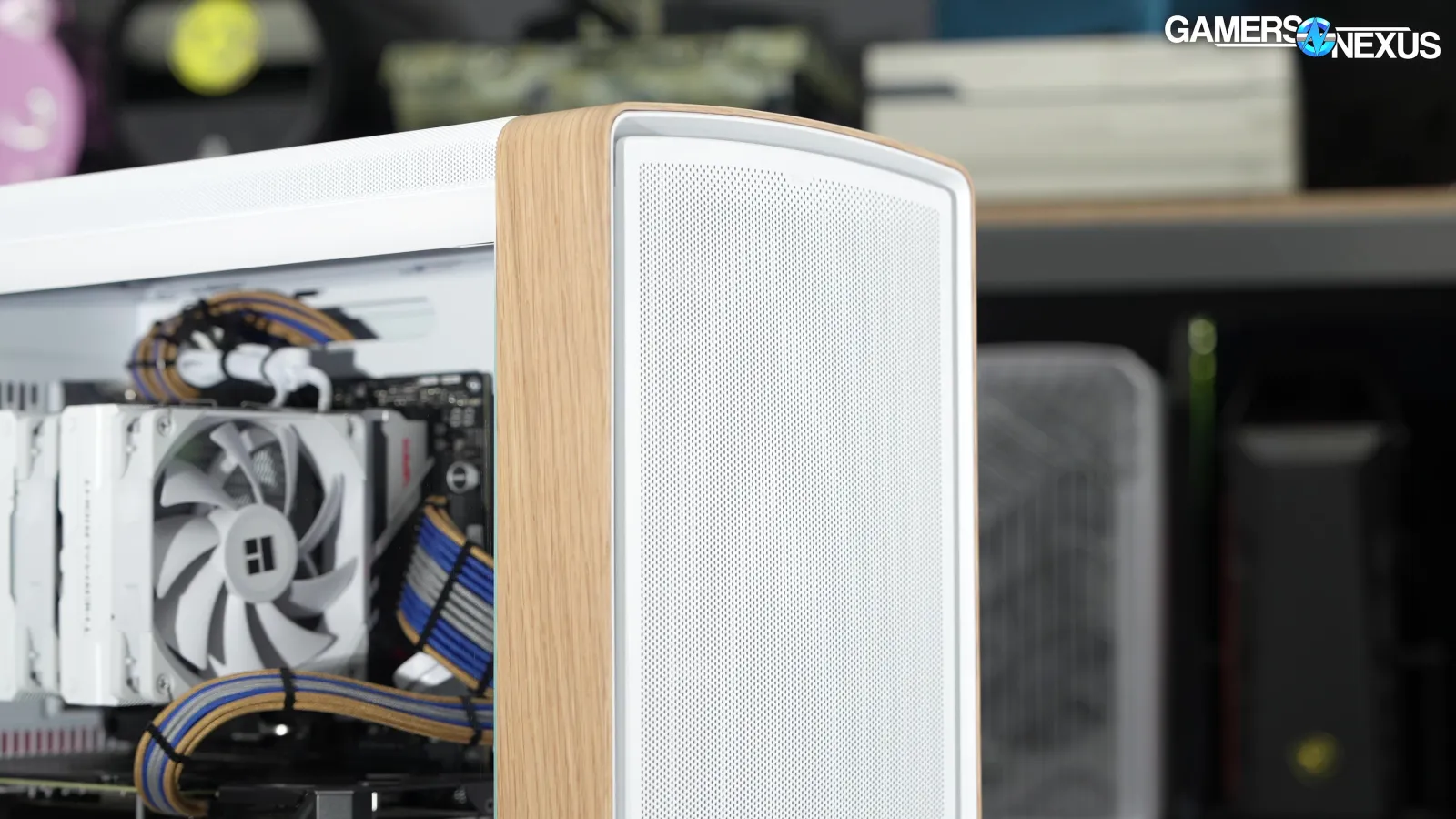
We can at least agree that the wood has been shaped well. That’s a hell of a bend and it’s holding.
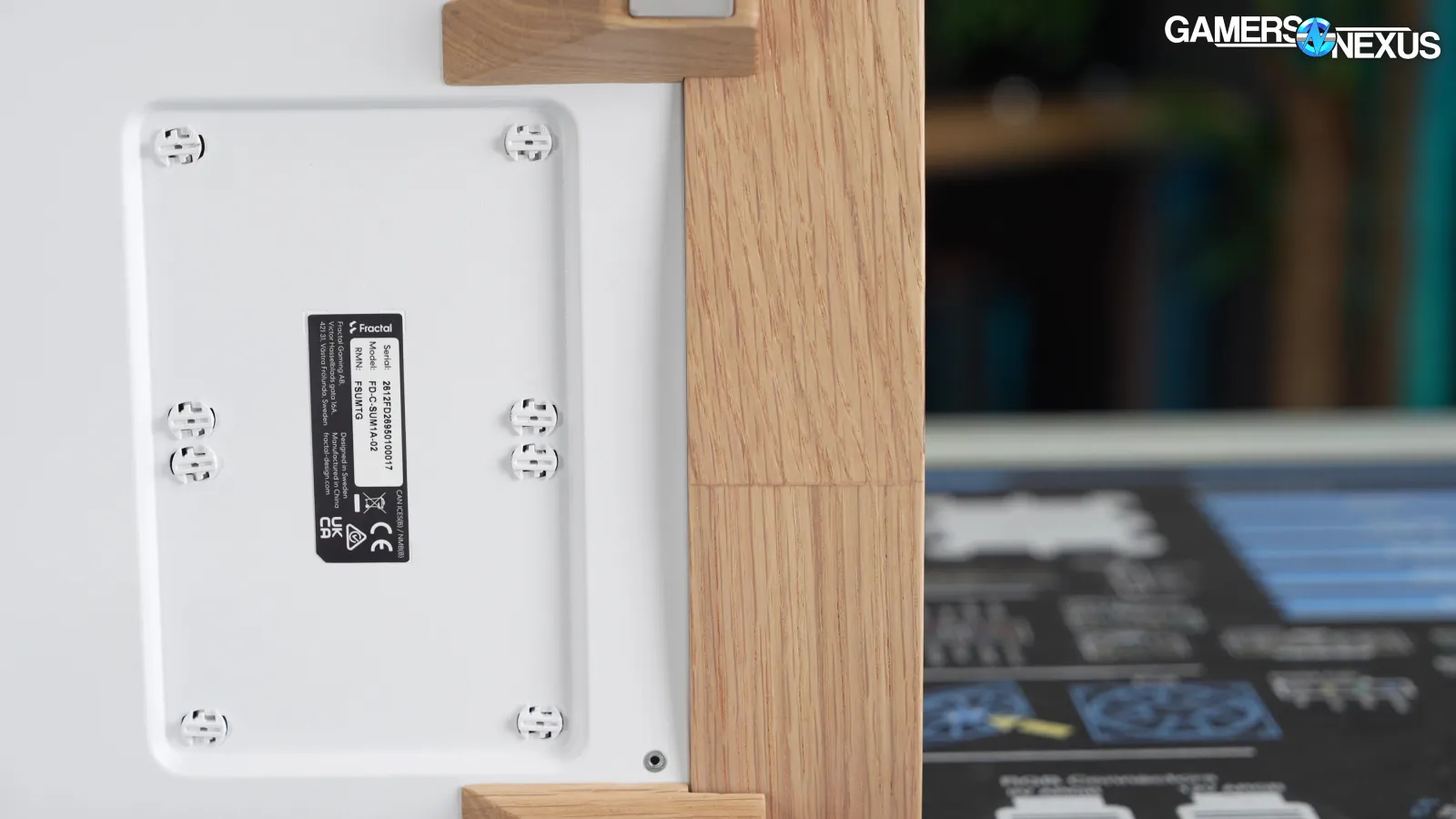
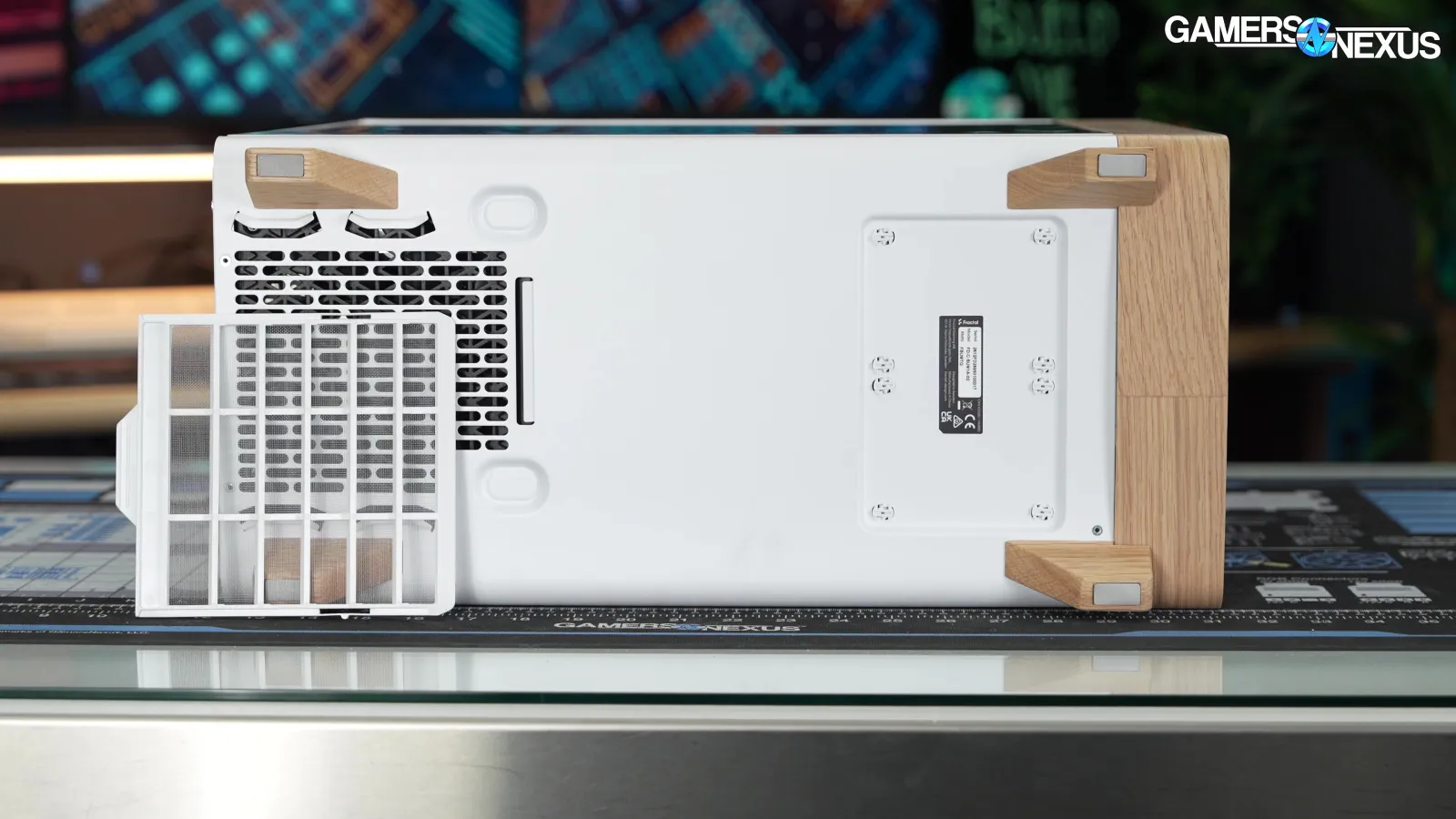
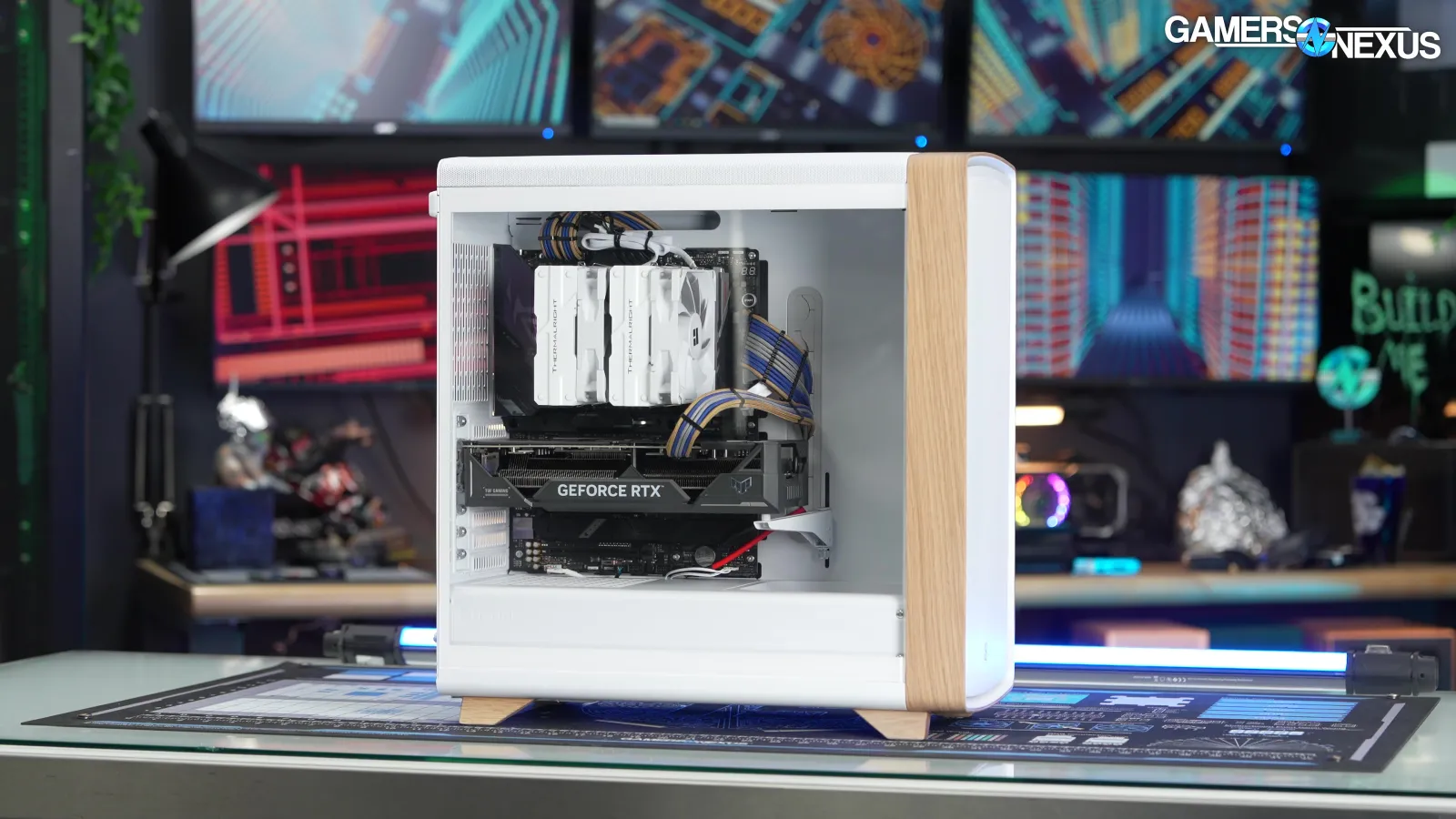
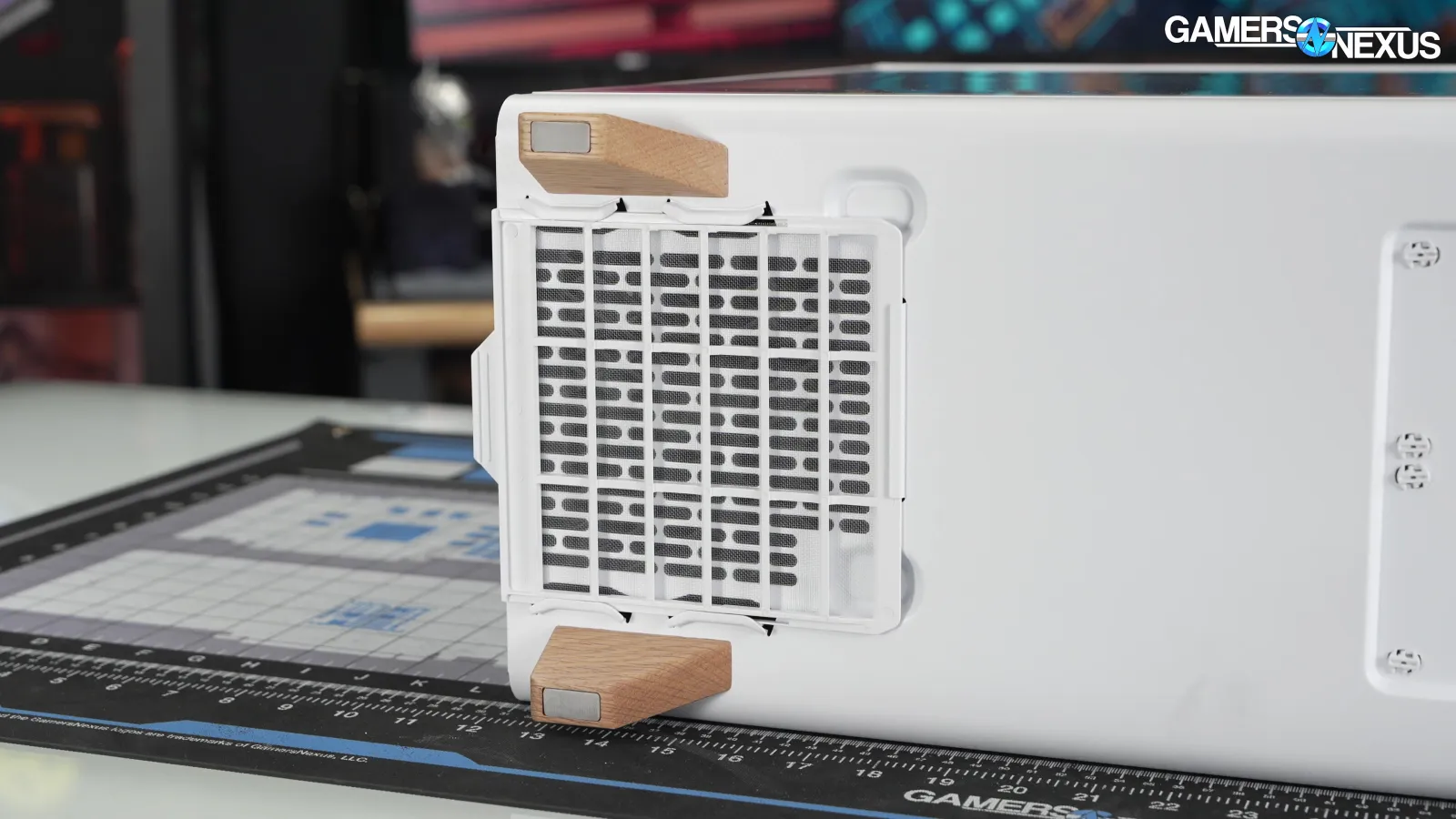
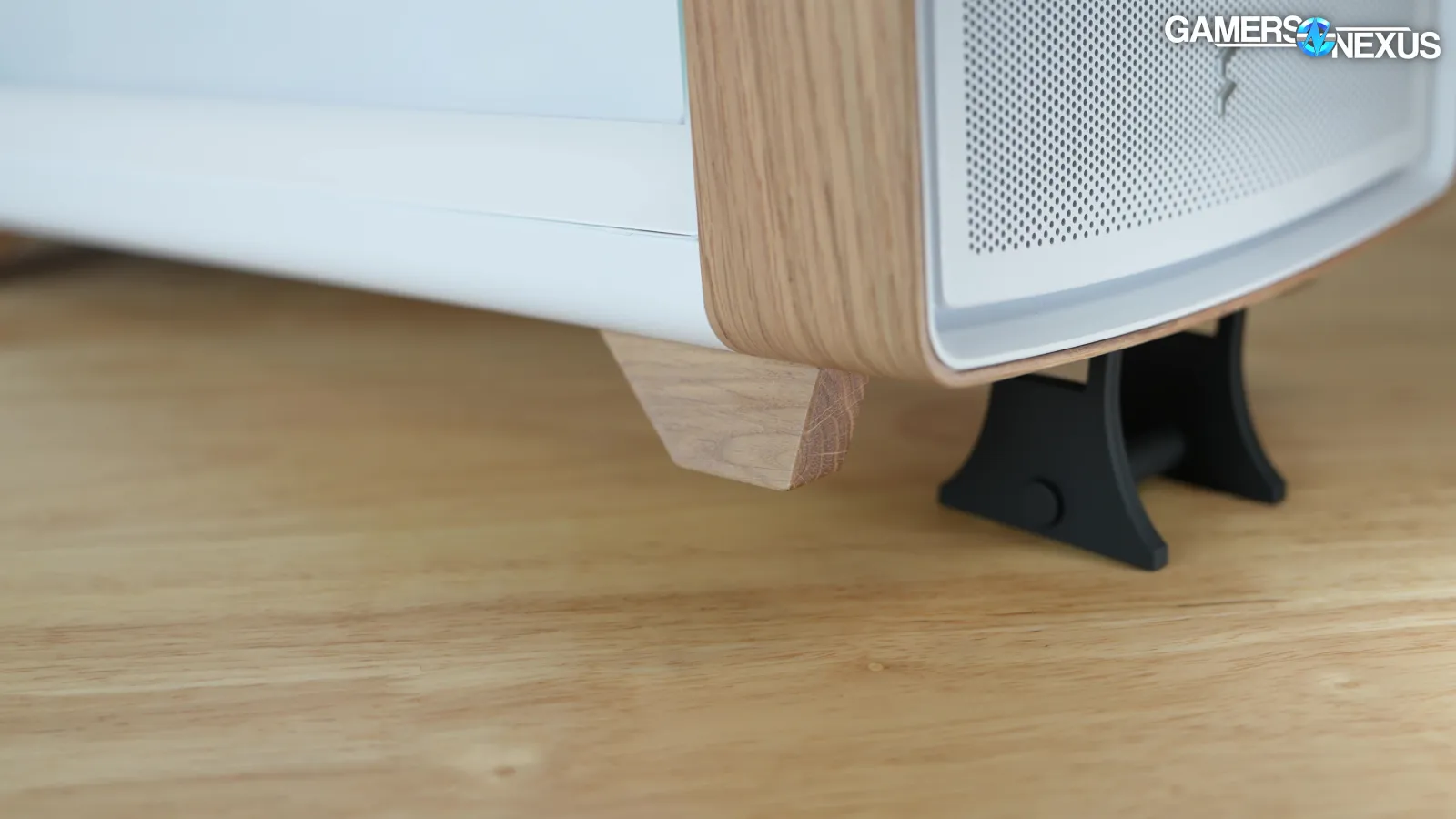
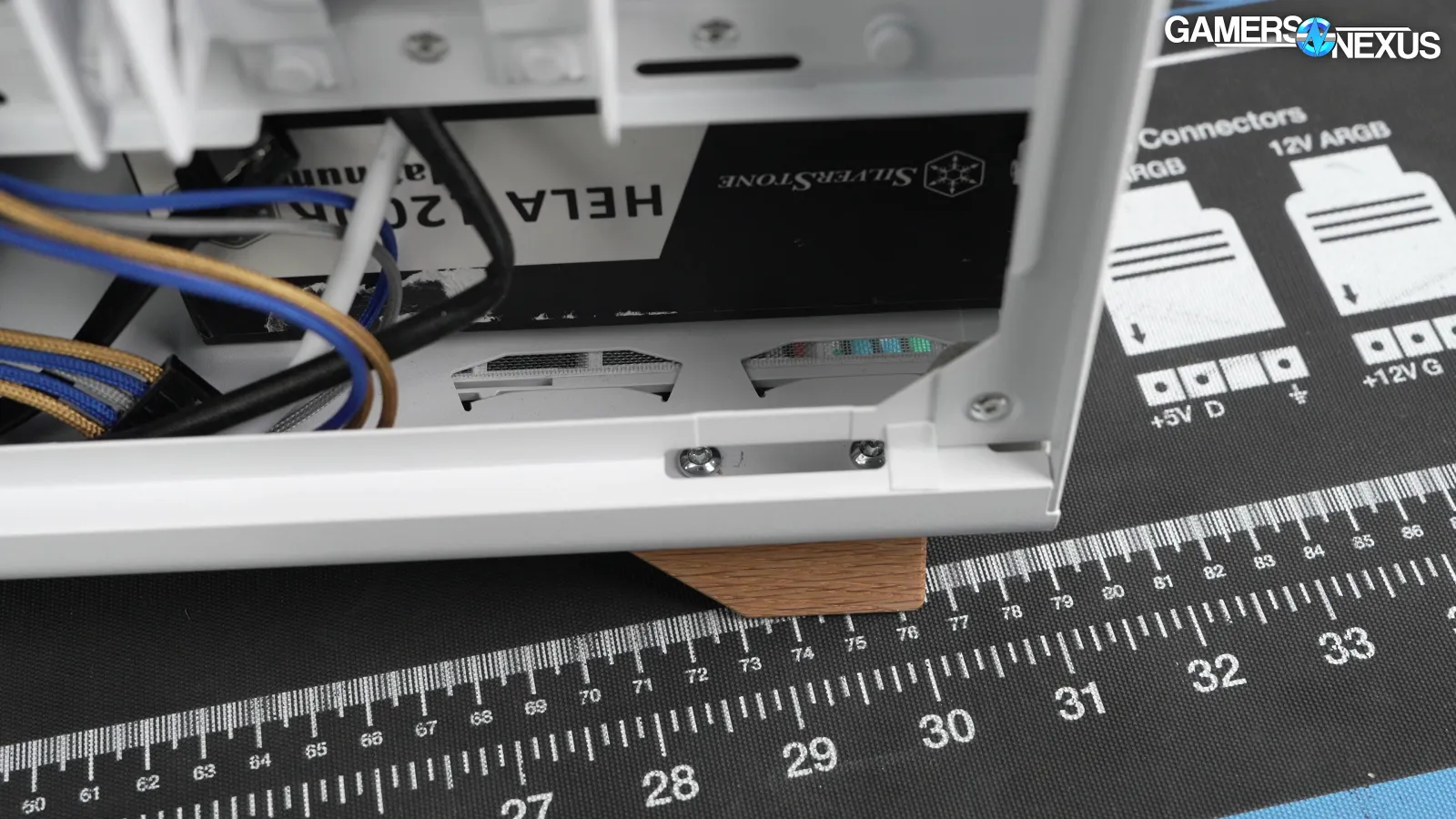
Fractal did popularize wood on cases and they continue to, at least on a technical level, do it well. There's a single strip of either oak or walnut that's bent all the way around the front panel and joined at the bottom, accompanied by four matching solid wood feet. It's still rare to see a case manufacturer use wood as a structural element (Cryorig did it a while ago), and it seems risky given the variability of real wood. The screws that hold the feet on are short, so be careful about dropping the case on its corners. In a resting position, the screws aren't under load, which is demonstrable on removing them.
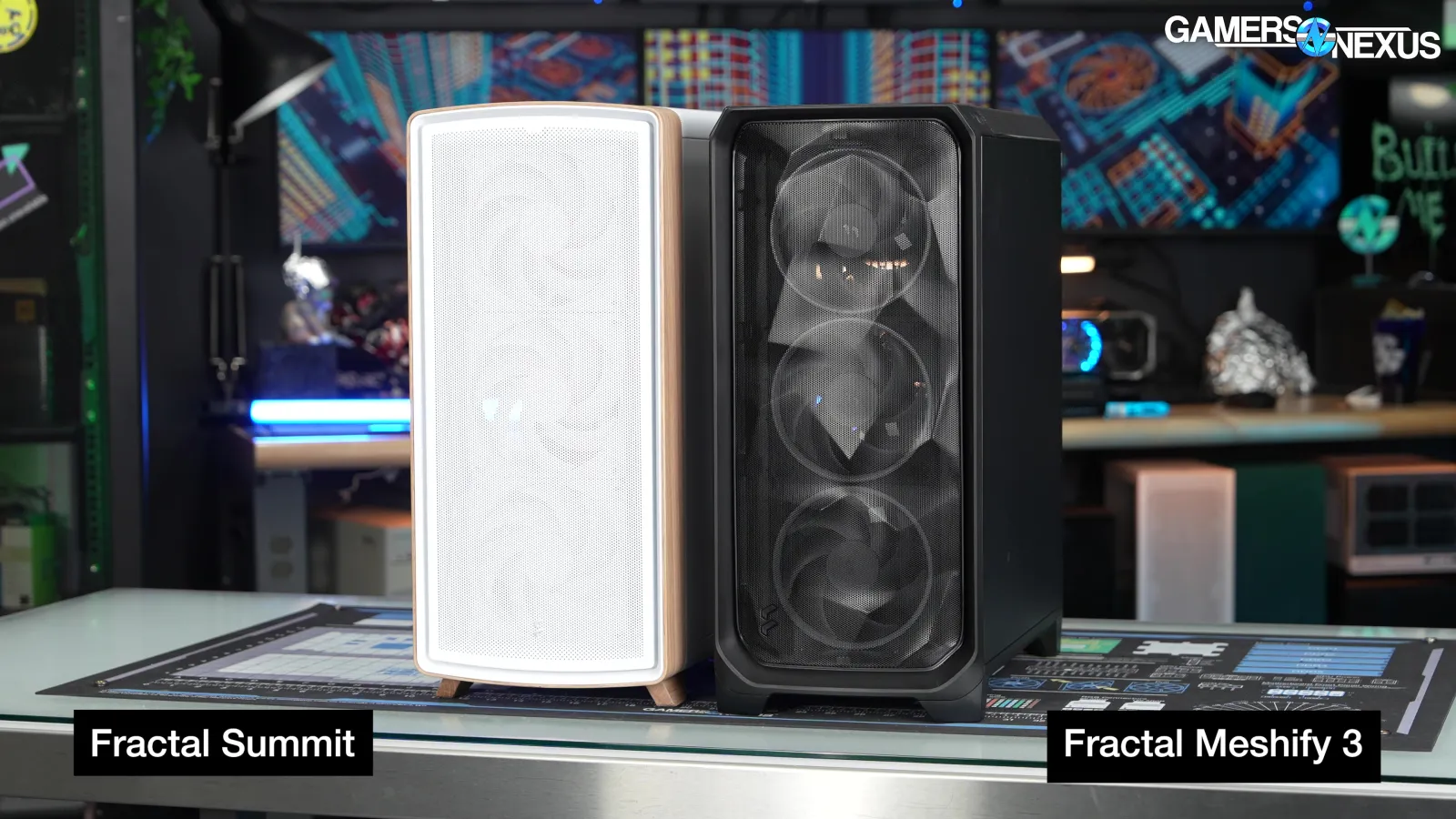
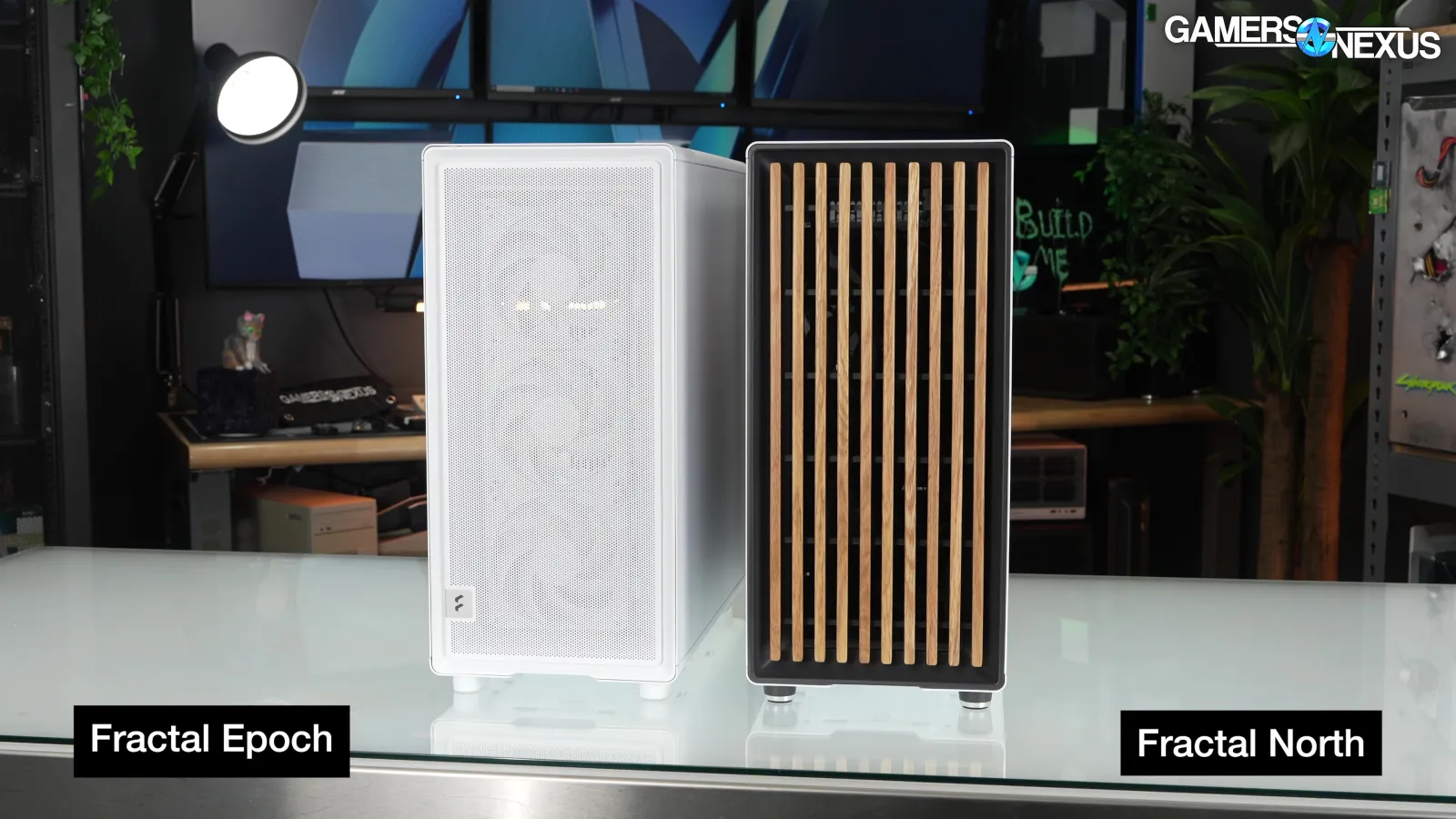
We were wondering if the Summit would be to the Meshify 3 (read our review) what the Epoch (read our review) was to the North (watch our review), i.e. the same thing with a new front, but there are differences.
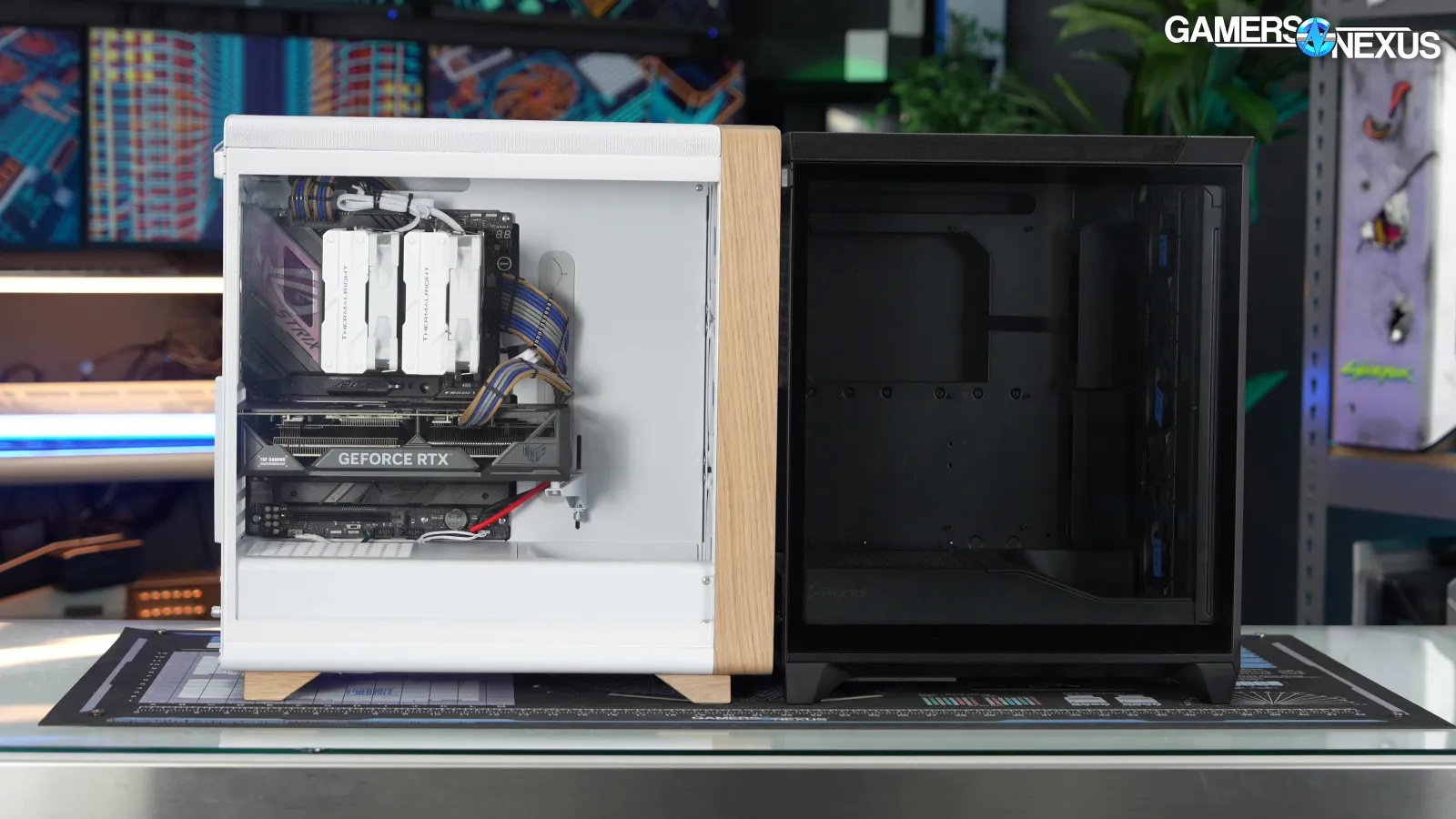
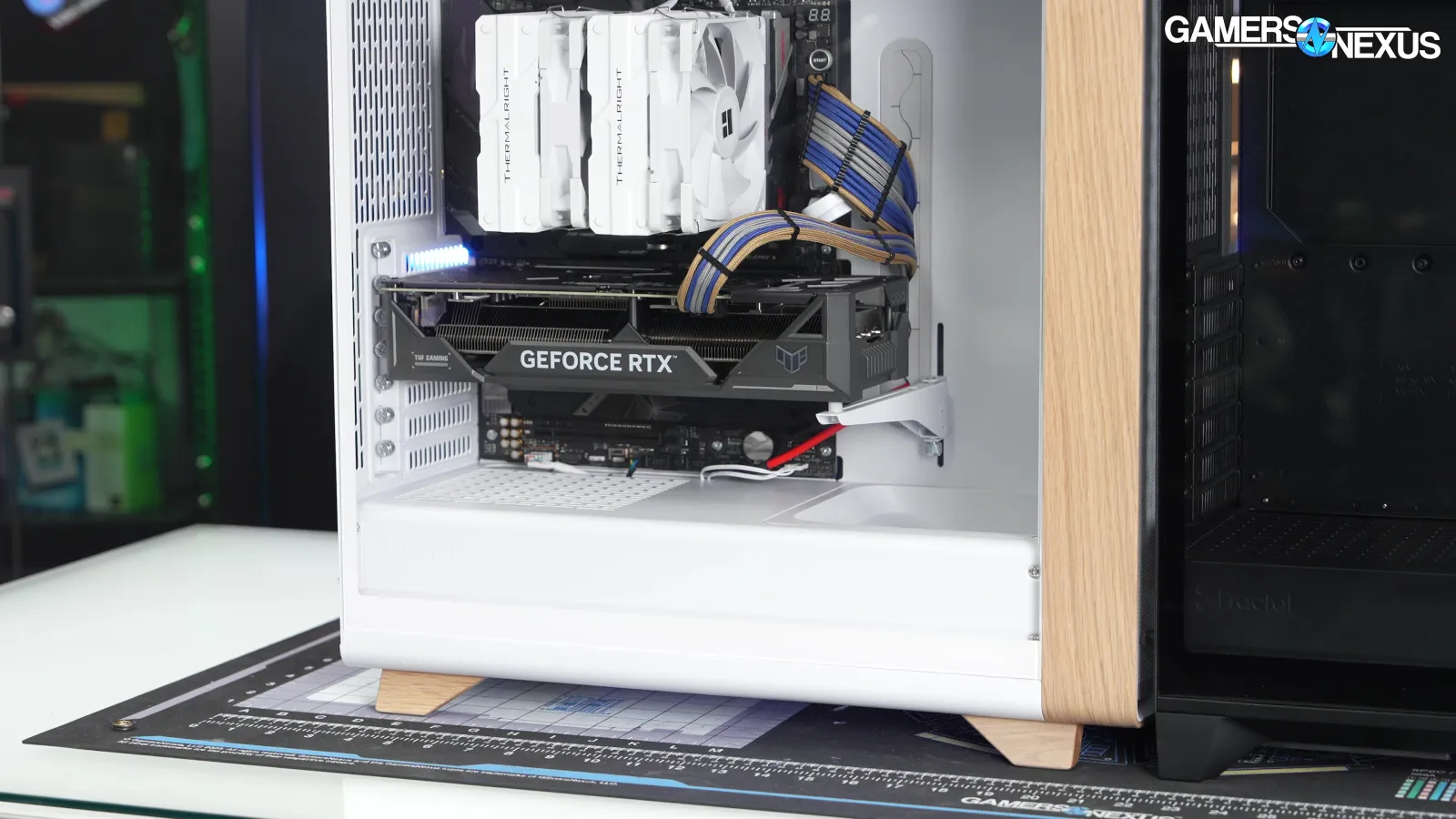
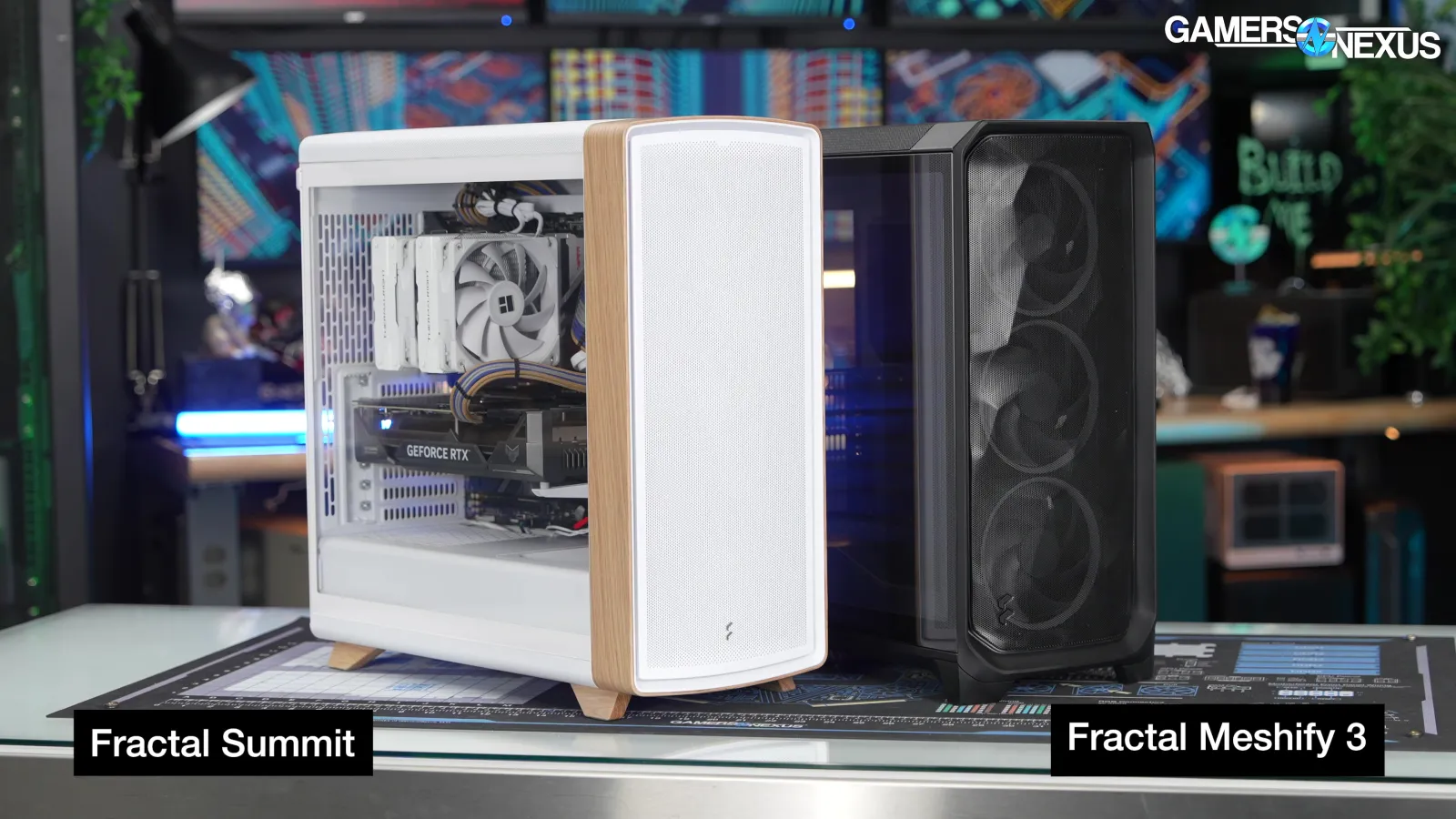
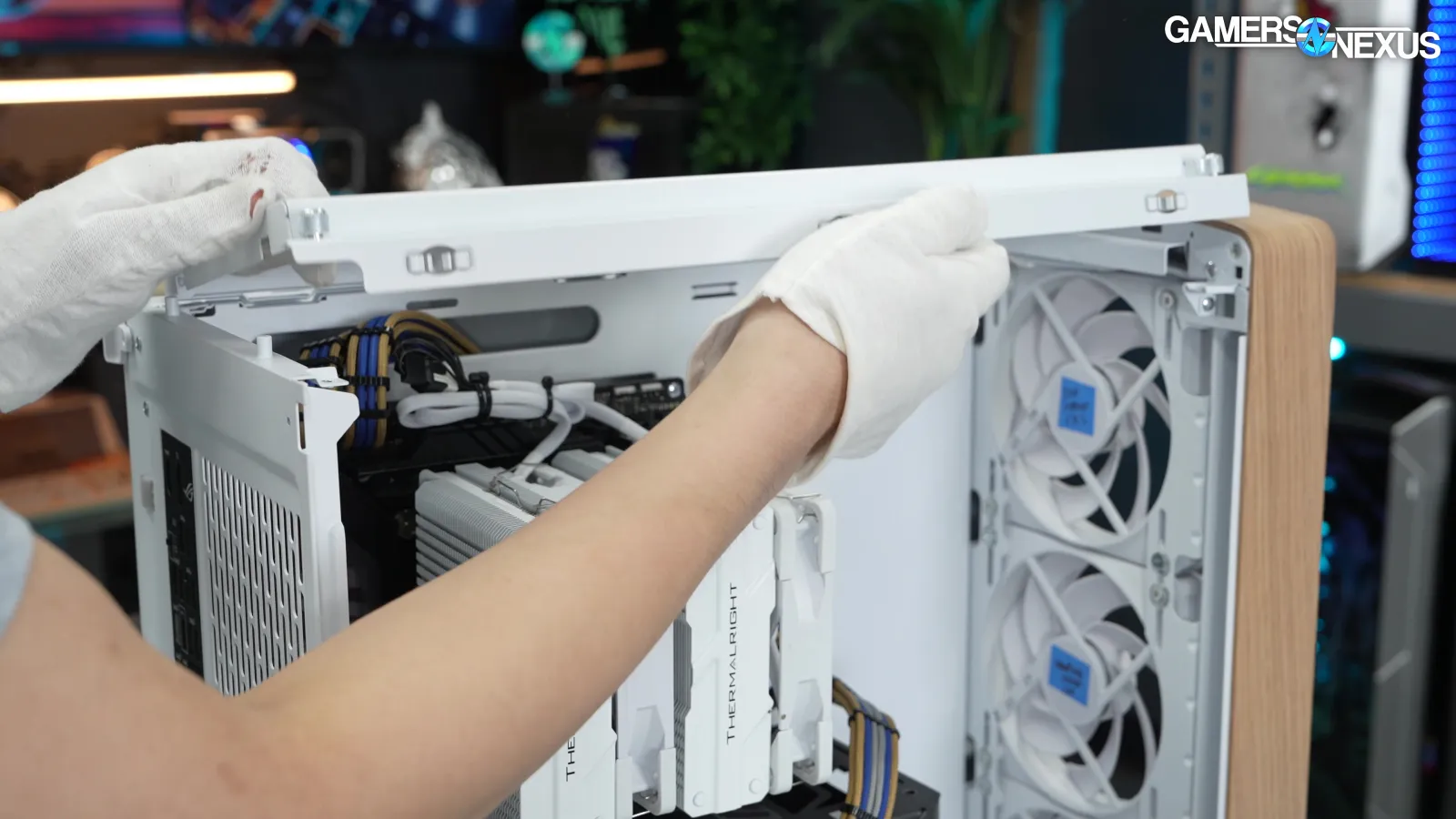
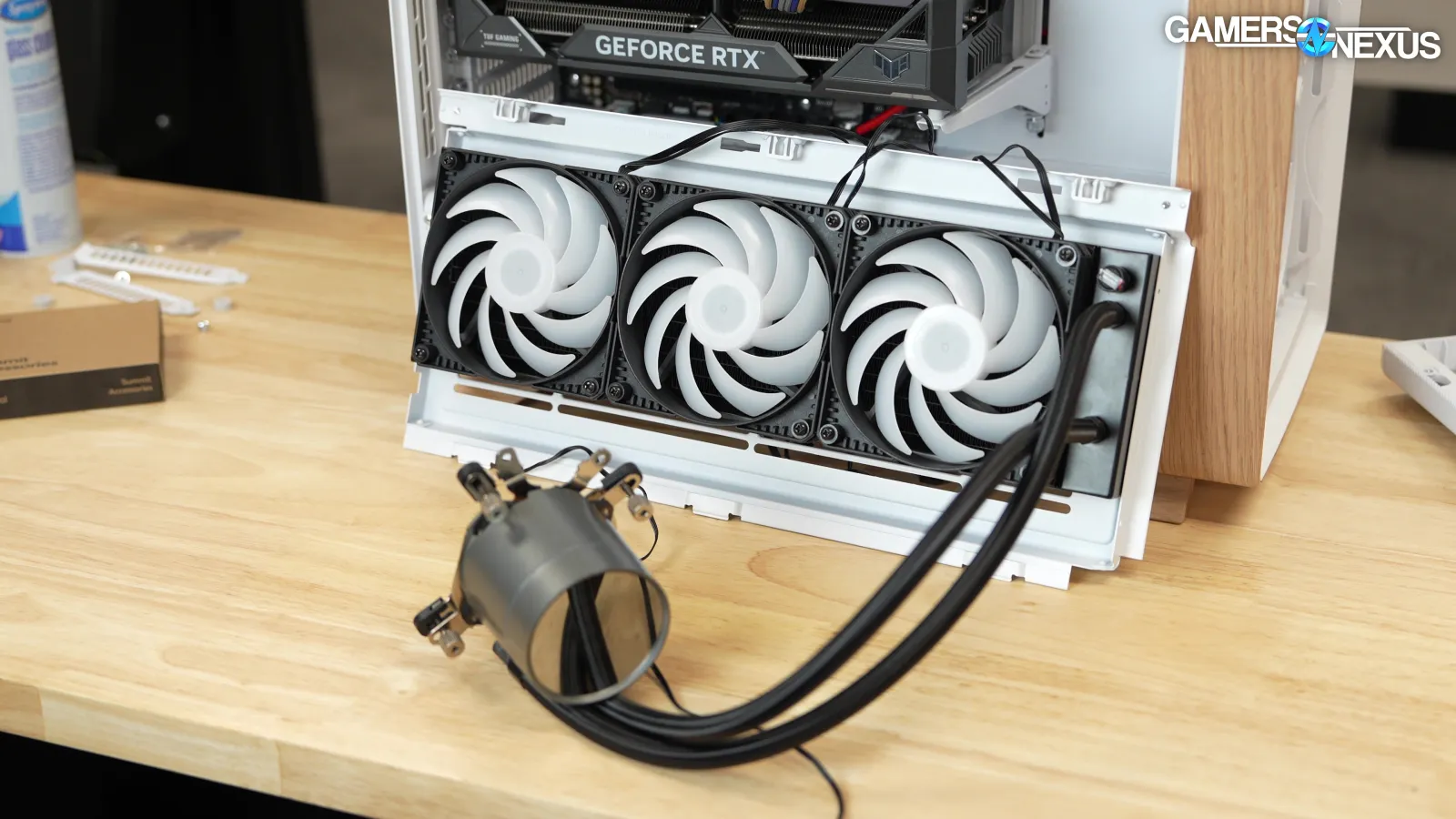
The most important is that the Summit is larger than the Meshify 3 with a maximum GPU length of 425mm to the Meshify's 349mm. The Meshify 3 XL (read our review) is even larger, though. With the extra space, the Summit can also fit up to 360mm radiators in its removable top tray, although space is so limited that most radiators will only fit properly with the tubes at the front of the case.
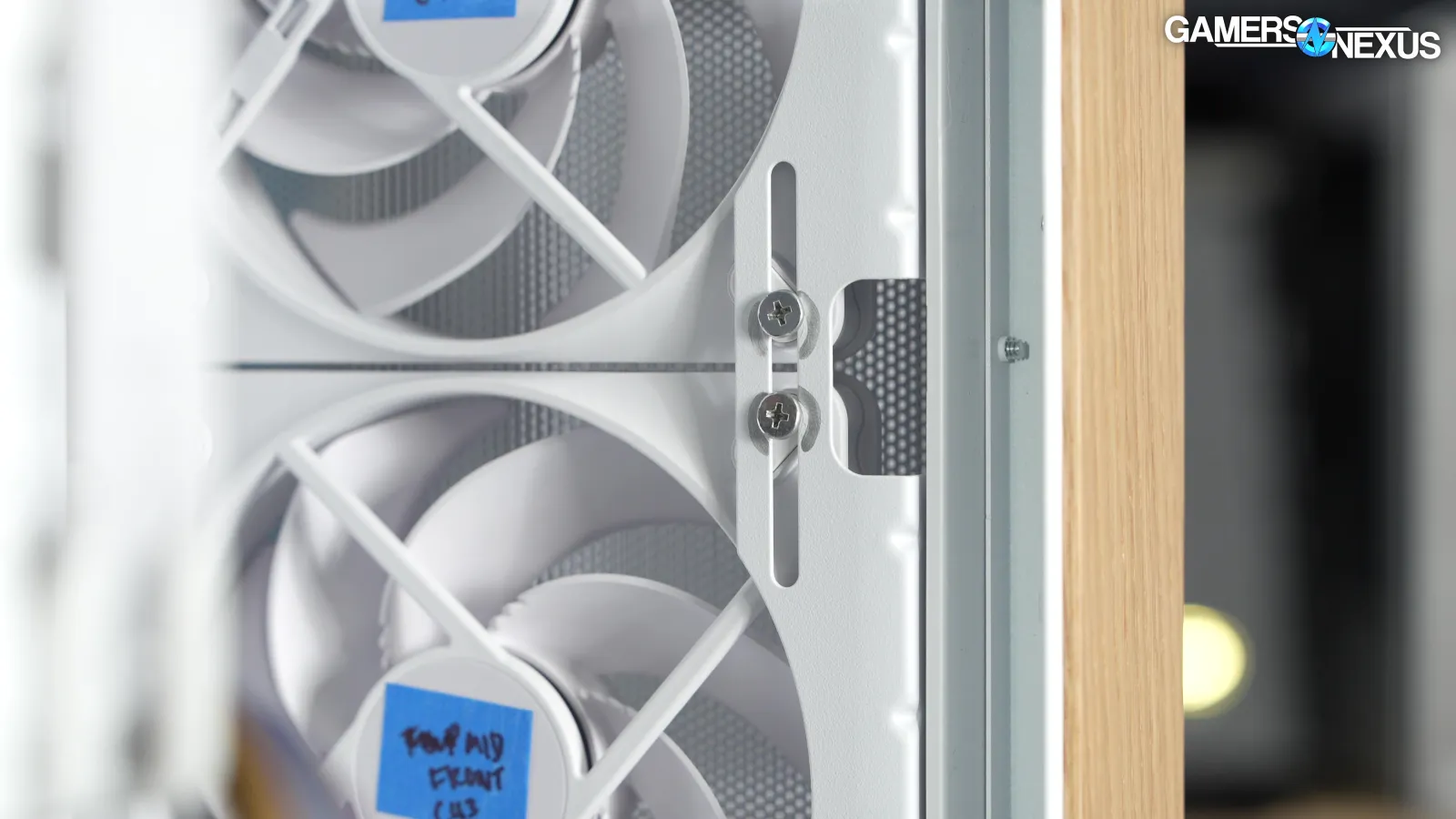
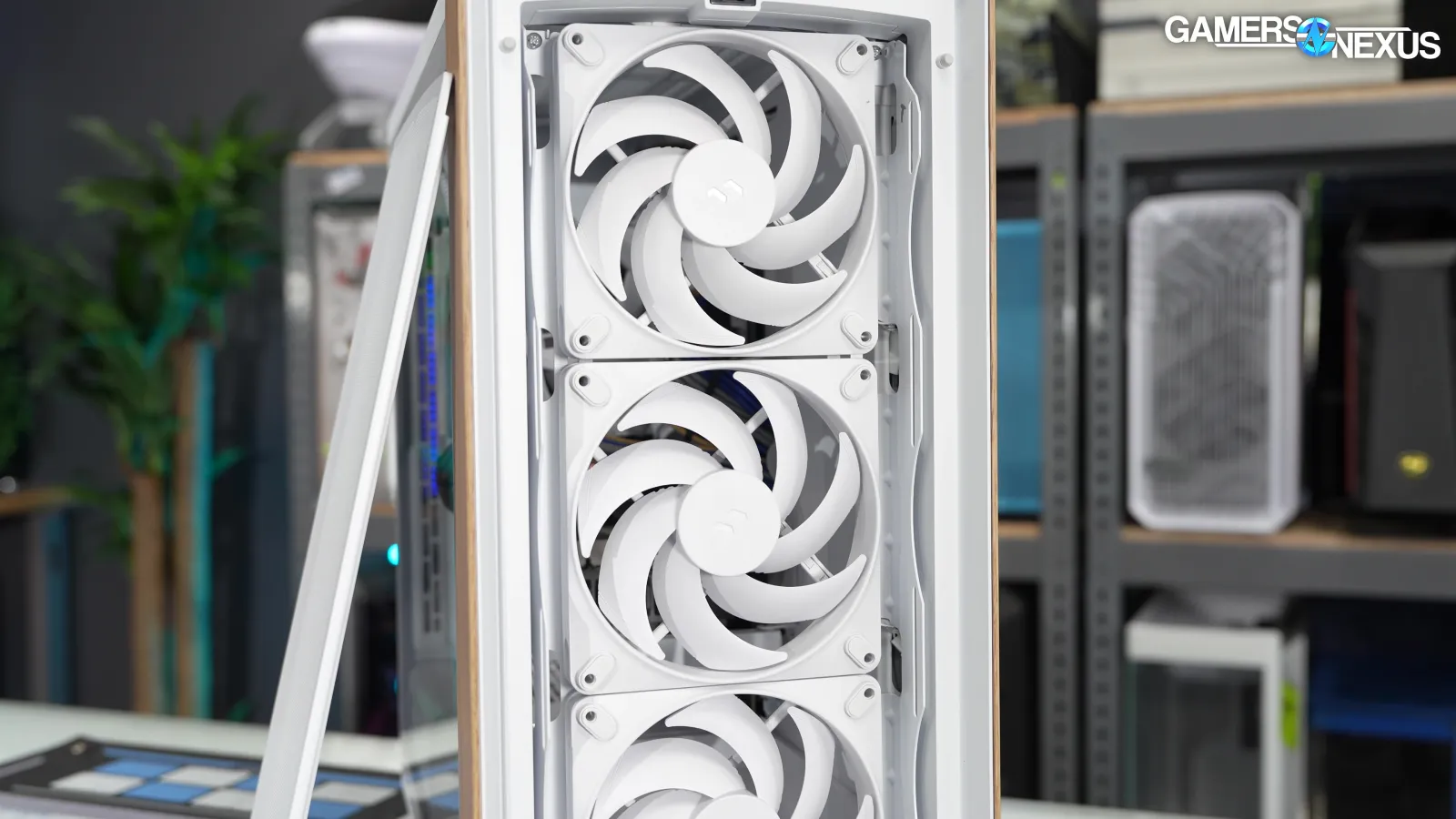
There's more room on the front mount, but Fractal's mounting rails are shaped around specific locations, so fans fit into discrete top, middle, or bottom slots without any customization in-between.
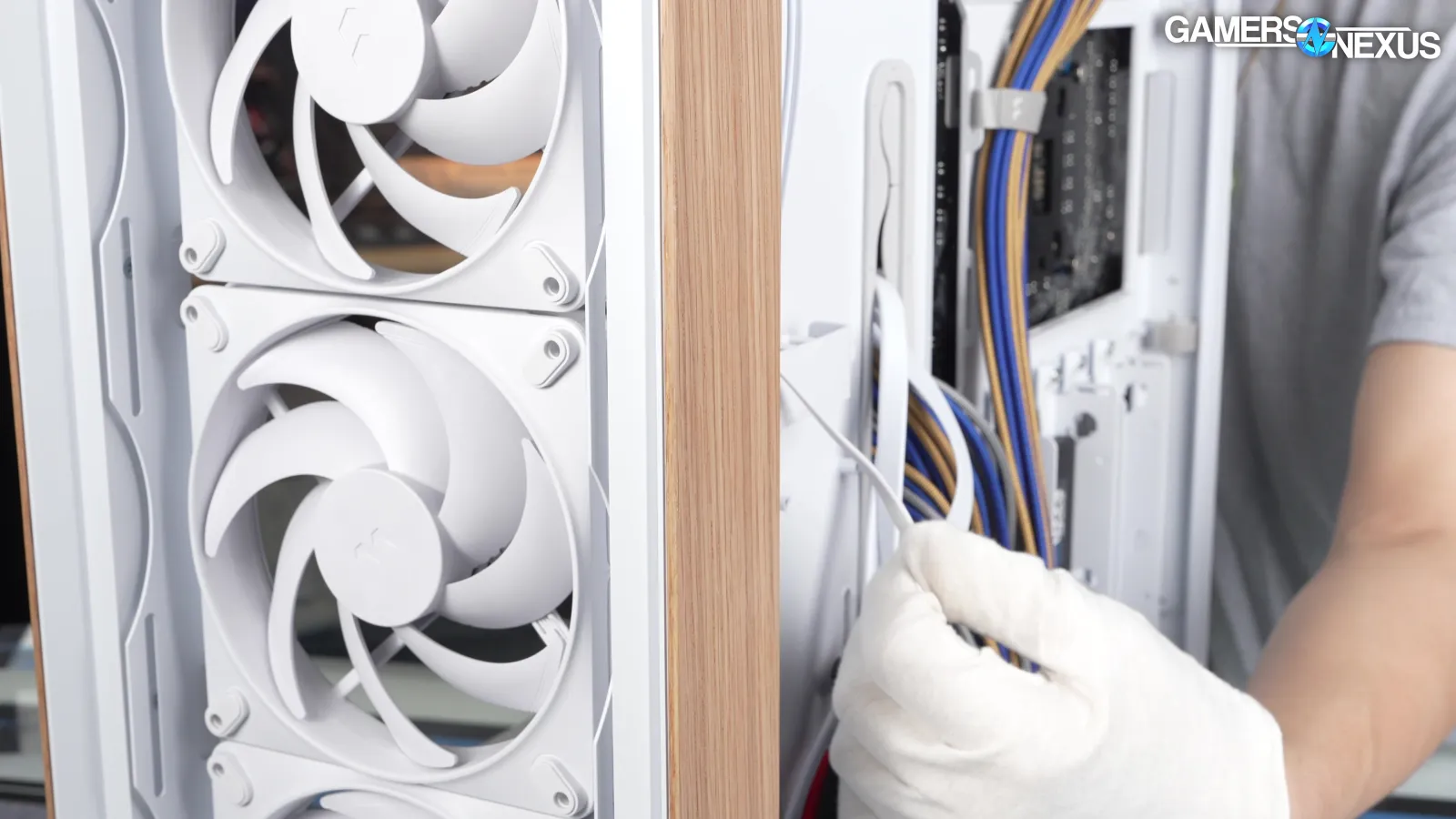
None of the SKUs have RGB fans or fancy USB-C connectors or the Ambience Pro RGB hub that we saw in the Meshify 3 Ambience Pro RGB. Instead, the "Ambience" Summit uses regular RGB connectors, so we're not sure whether Fractal will stick to that ecosystem.
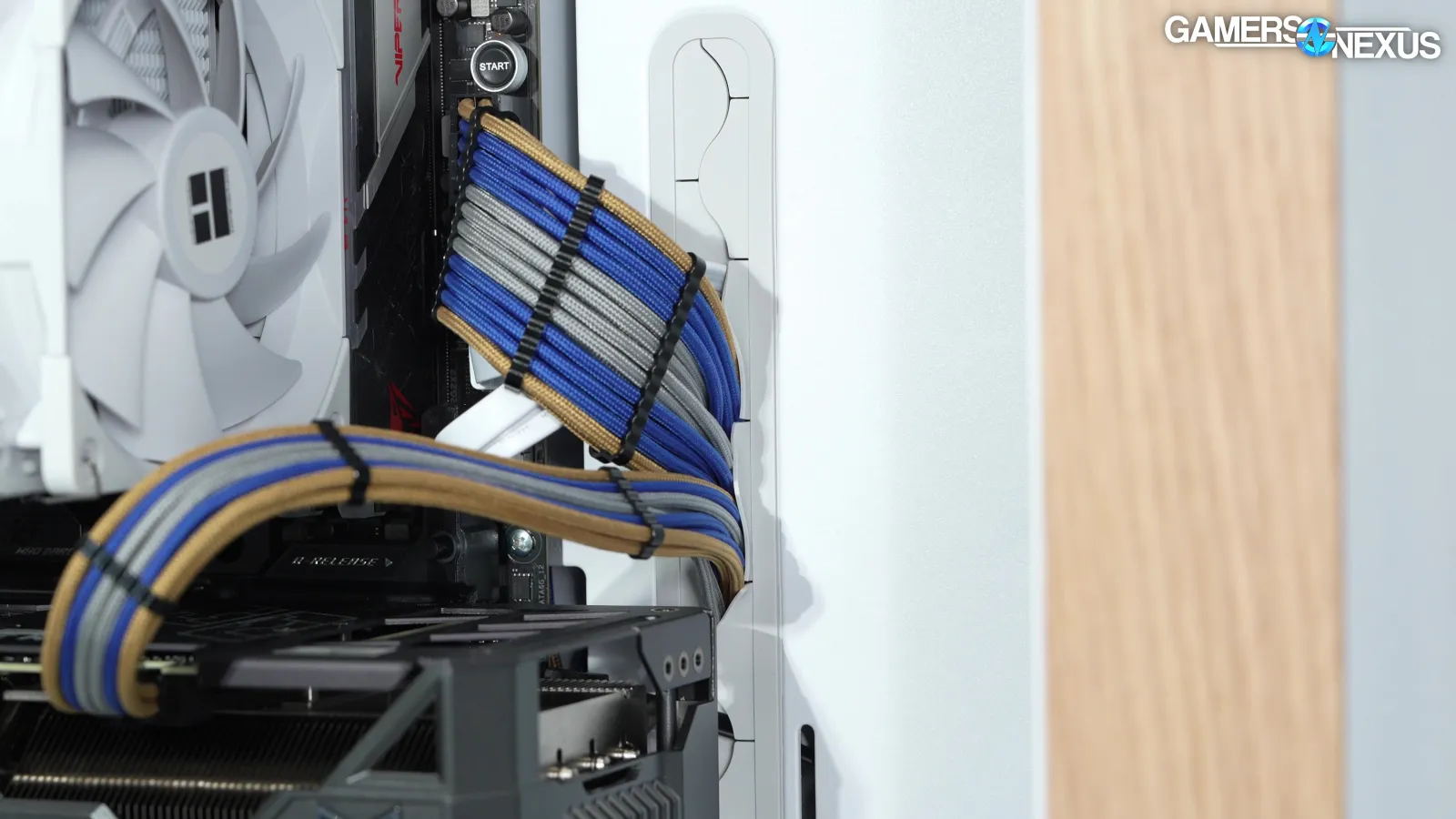
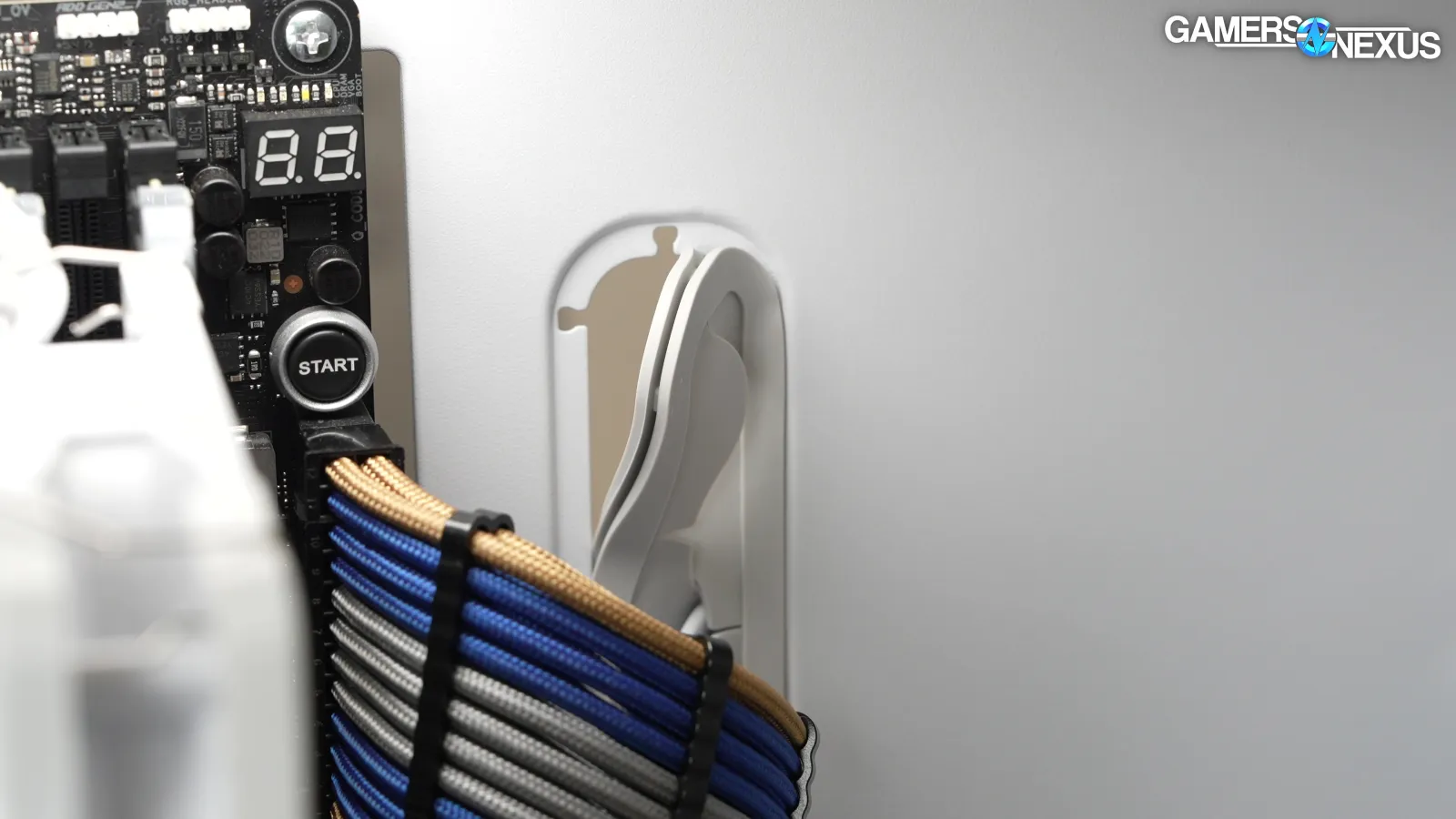
There's only one cable grommet in the Summit, but Fractal went to the trouble of molding fasteners around the edge so that it's extremely difficult to accidentally pop it out of place, which is a good thing. We always want to call things like this out, because it requires effort and money to design a feature that users will ideally never notice. It’s a nice attention to detail element.
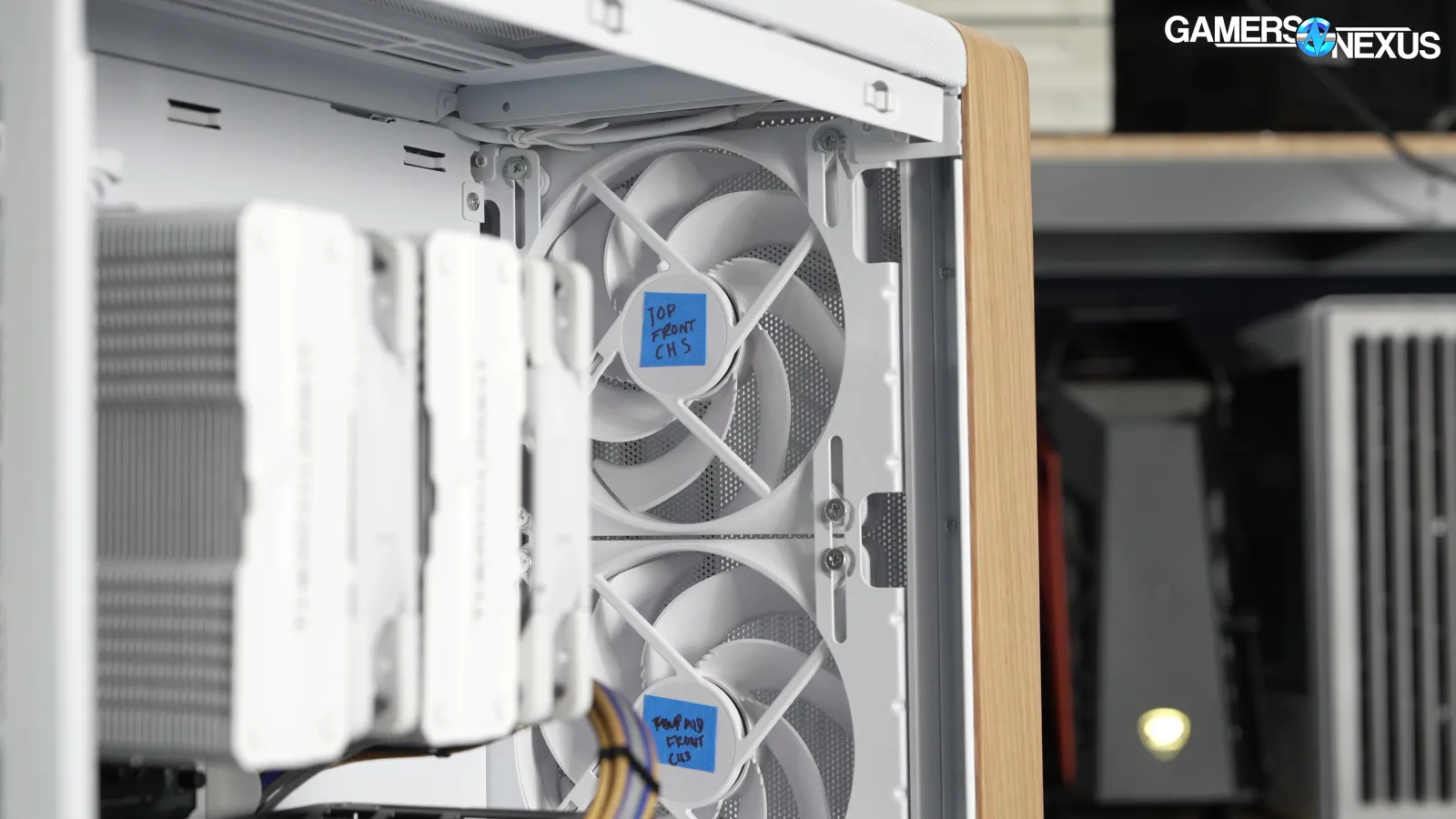
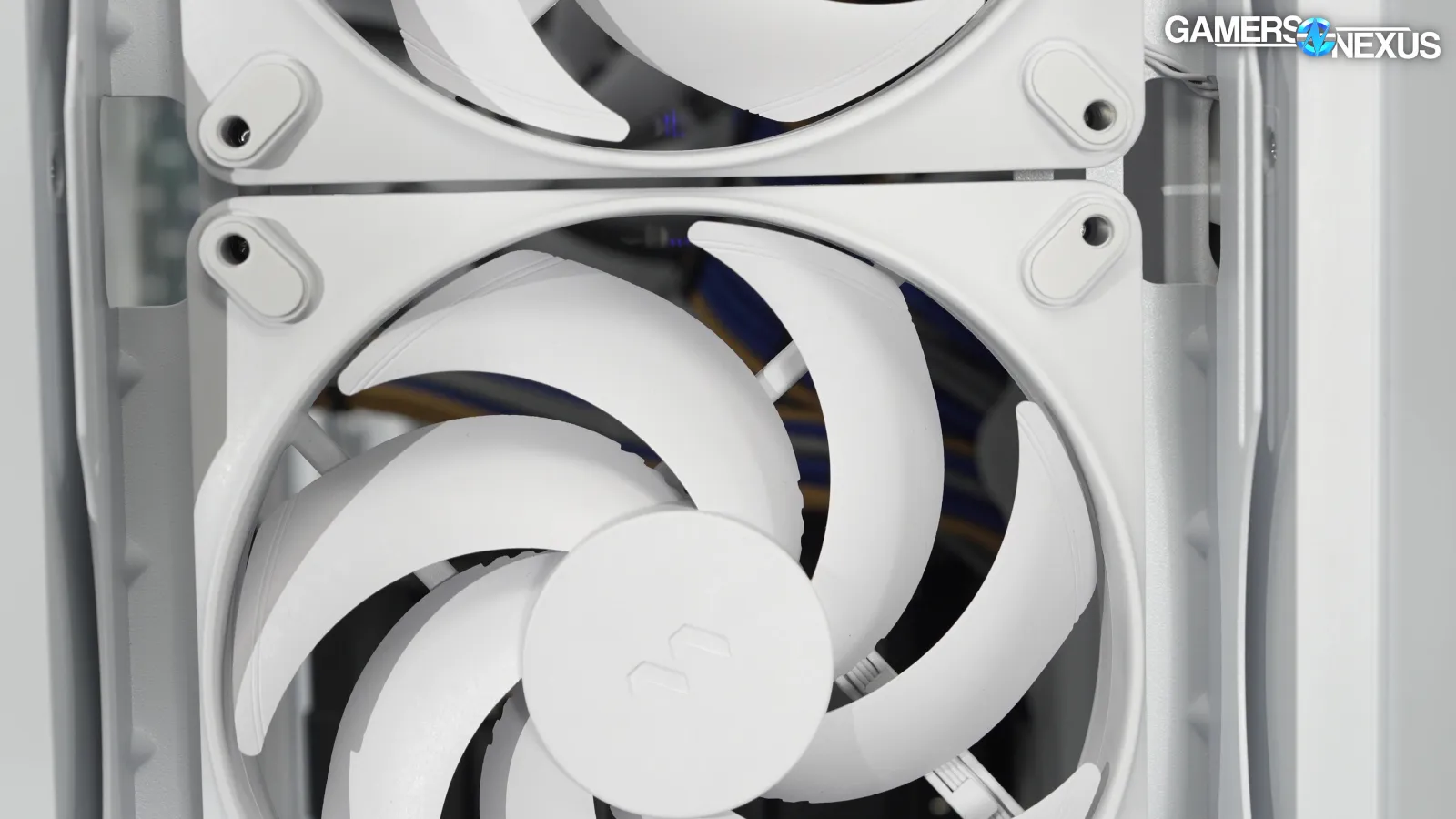
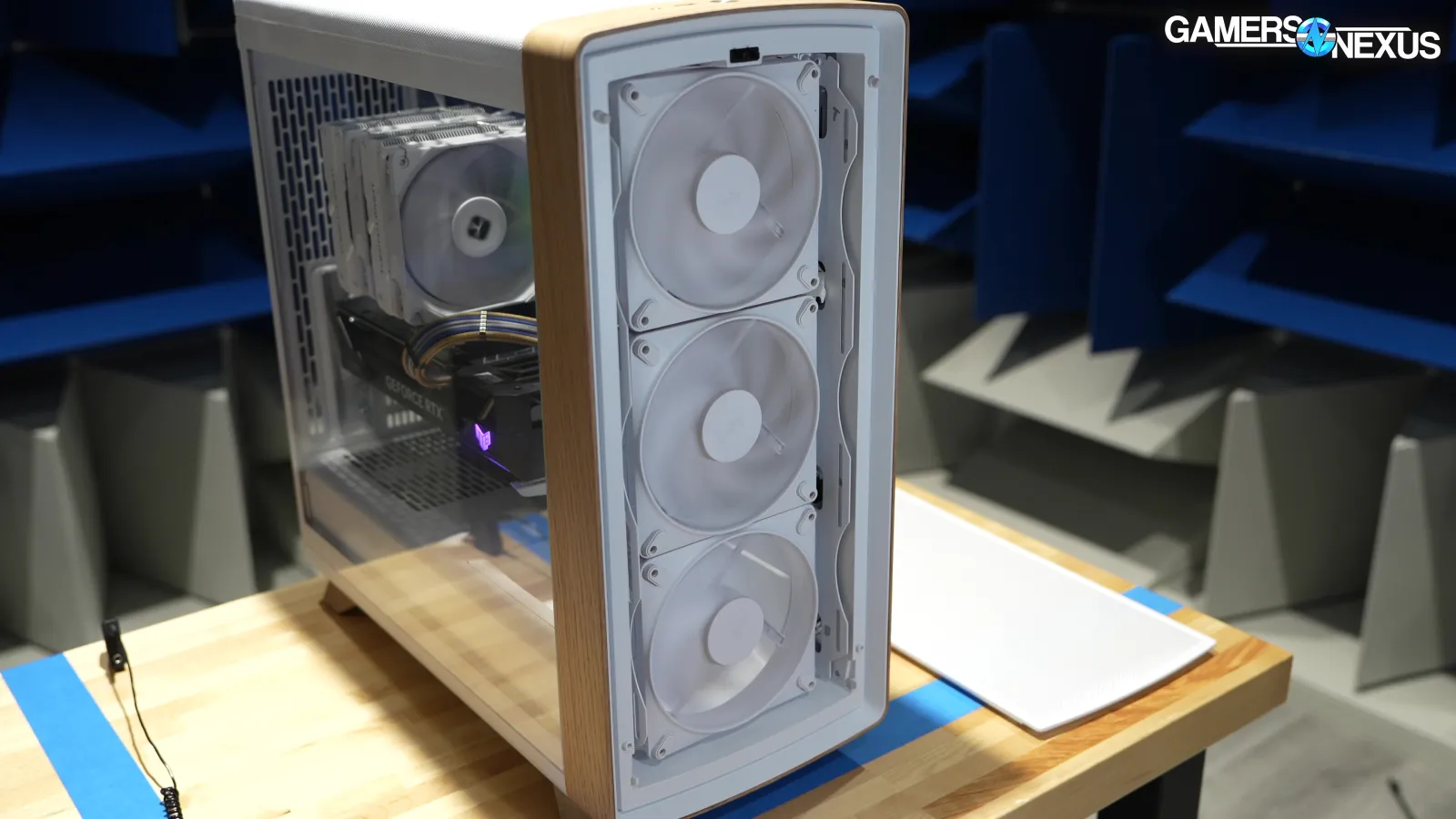
We've had white Momentum fans in the office before, but this is the first time we've taken an extended close look at them. The LCP blades have a stone texture that works really well in white, especially if you don't like the distinctive gray patterns in black LCP, although they do disappear behind the front panel.
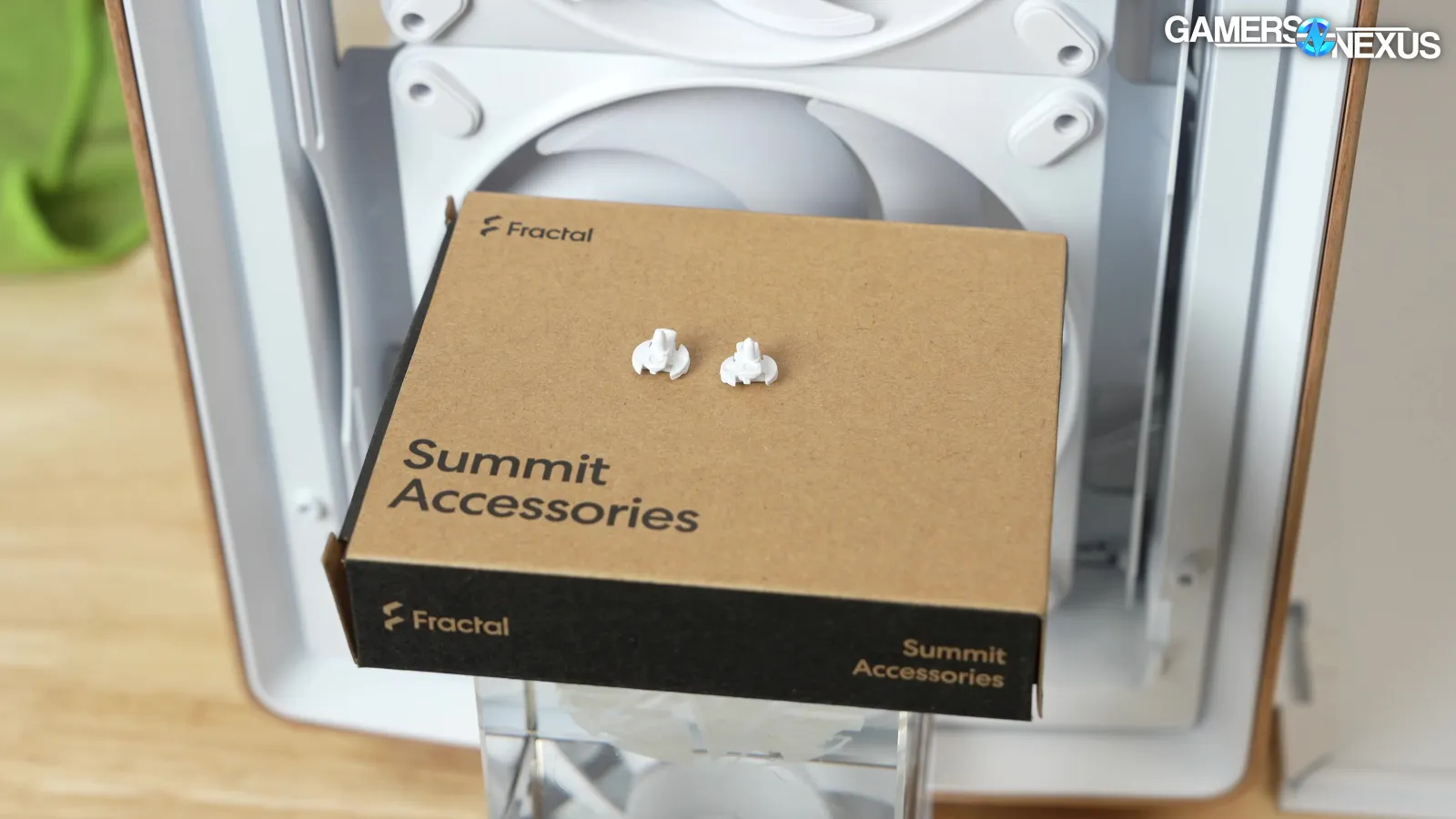
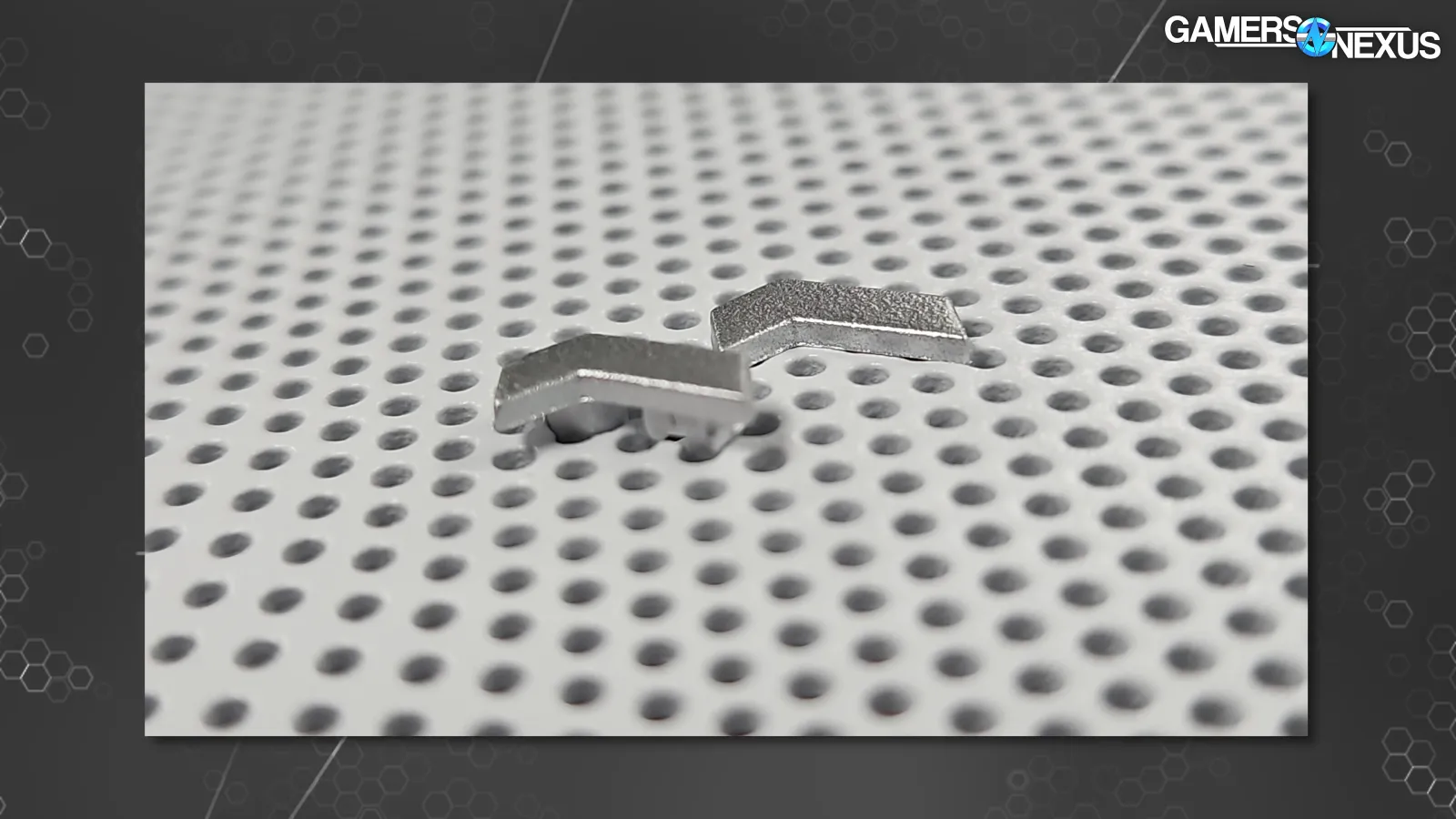
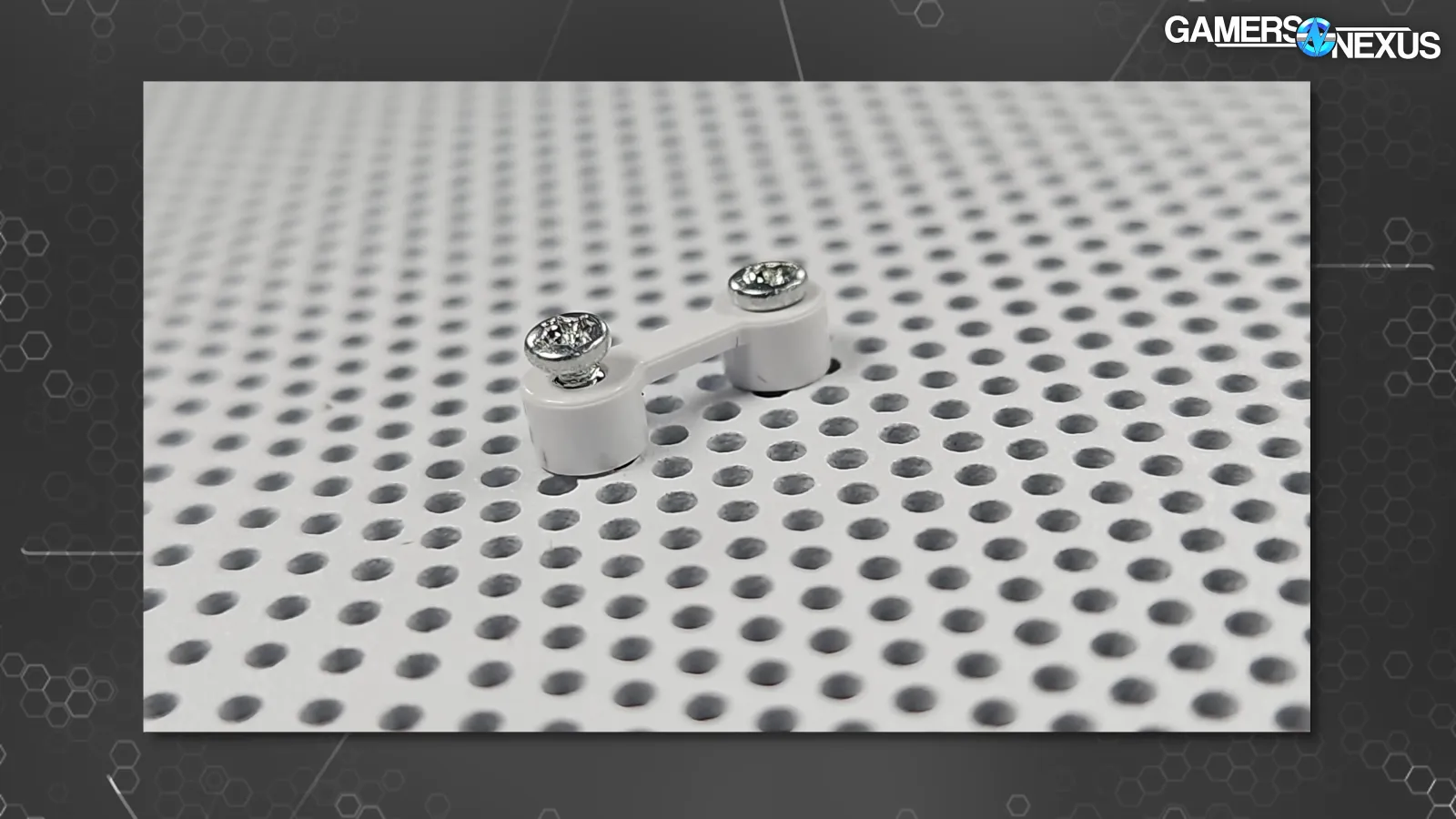
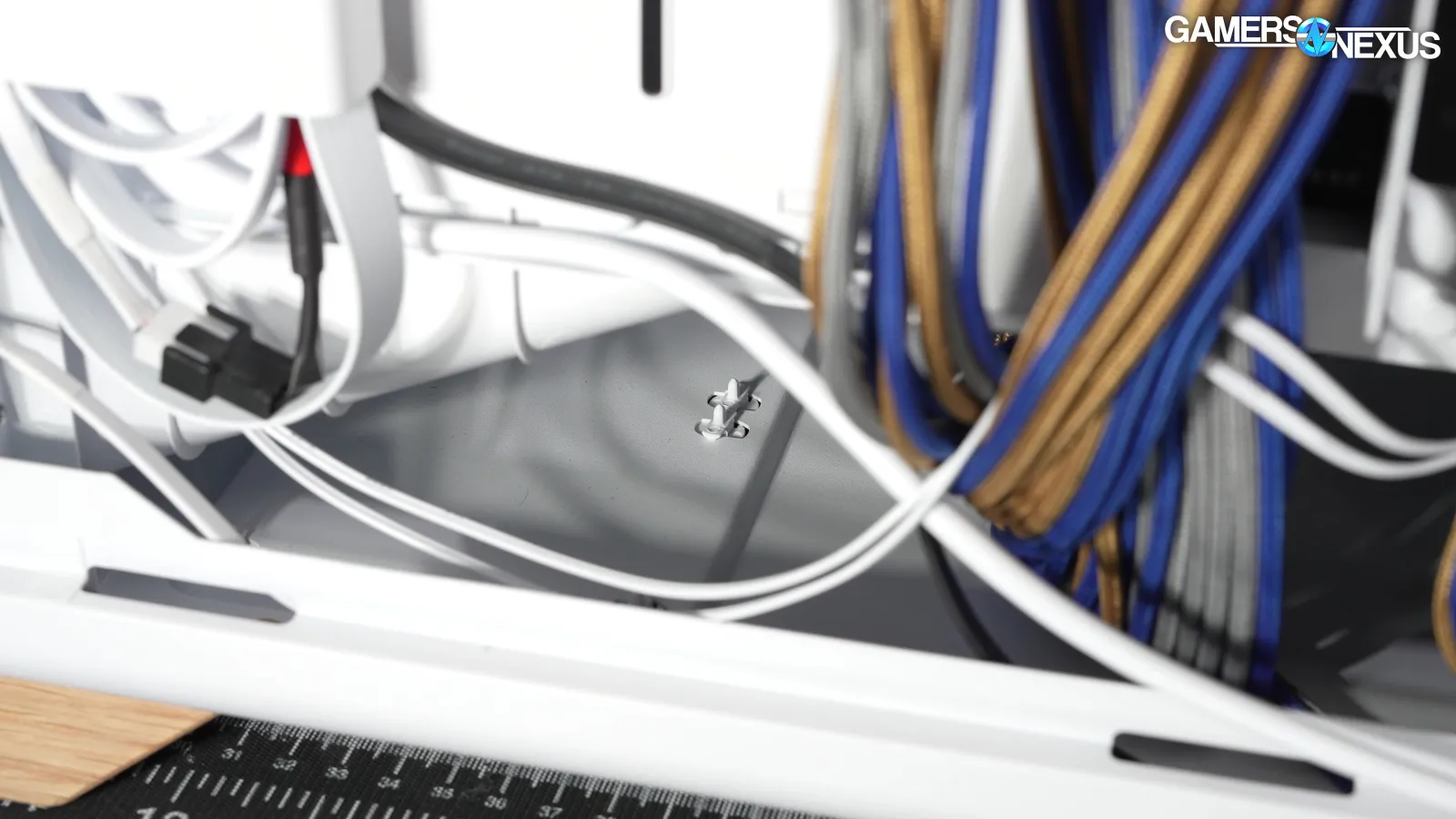
Out of the box, we saw a plastic piece floating around as well as a loose Fractal badge on the front of the case. The badge is attached with screws that hadn't been tightened all the way, which was an easy fix, and the piece that had fallen off was one of the removable plastic studs for mounting 2.5" drives under the PSU shroud. Nothing was broken, but it’s not a good first impression and could be a sign of poor QC or packing. This could be a sign of penny pinching.
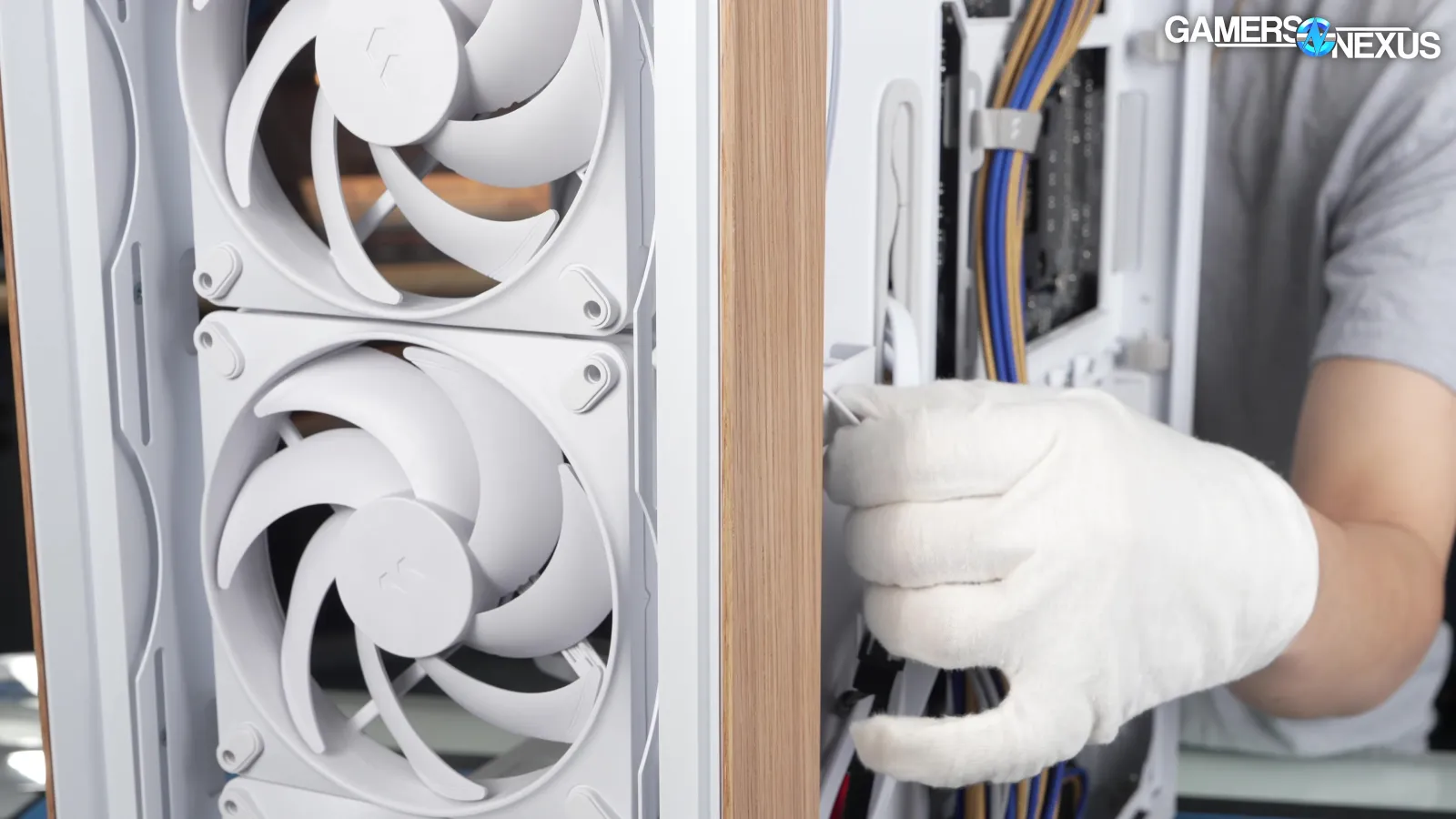
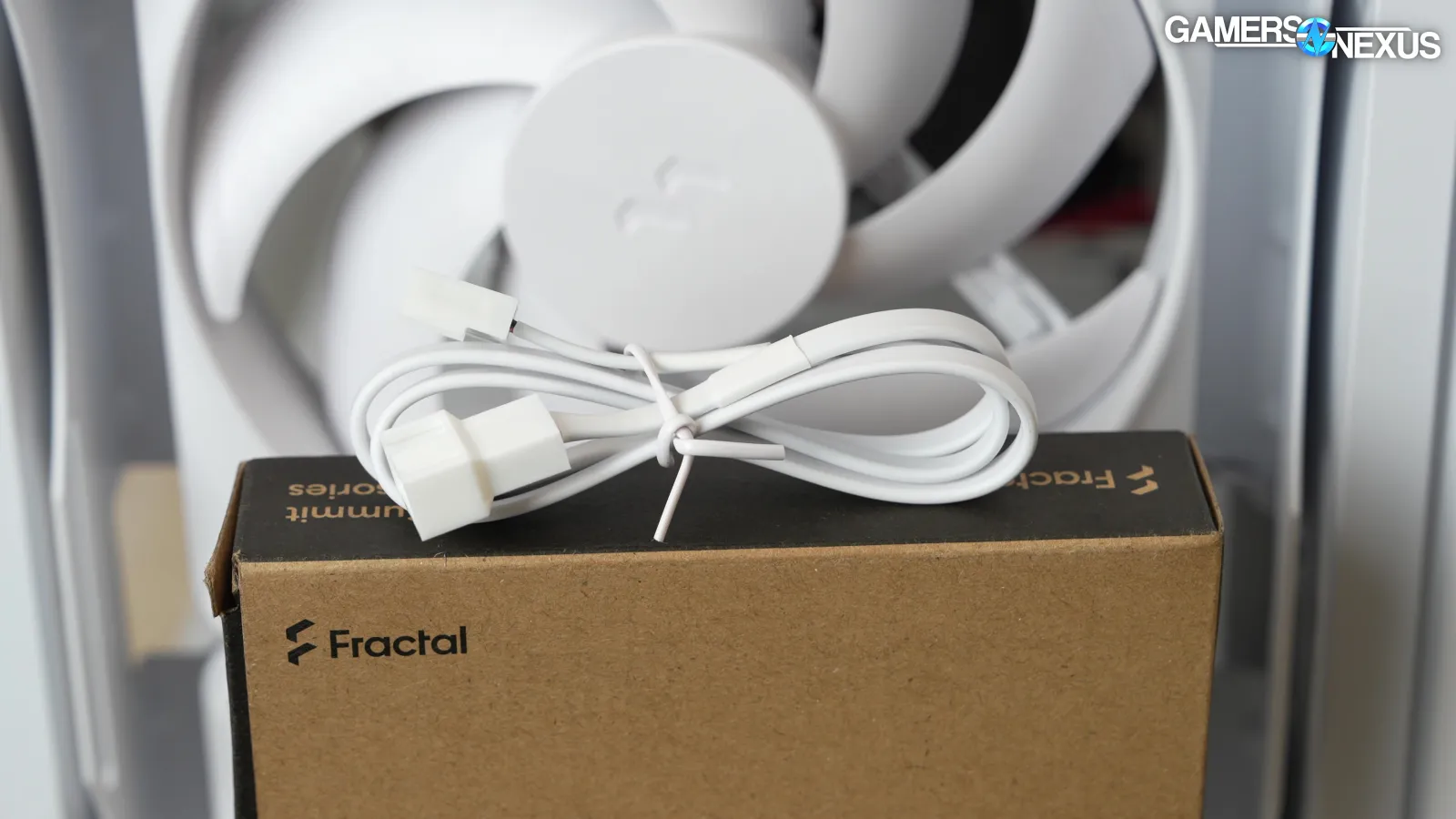
The case fans are intended to be daisy-chained and then powered with a single extension cable in the accessory kit. Fractal has a mixed history with fan hubs, so not including one may be more than just a financial decision.
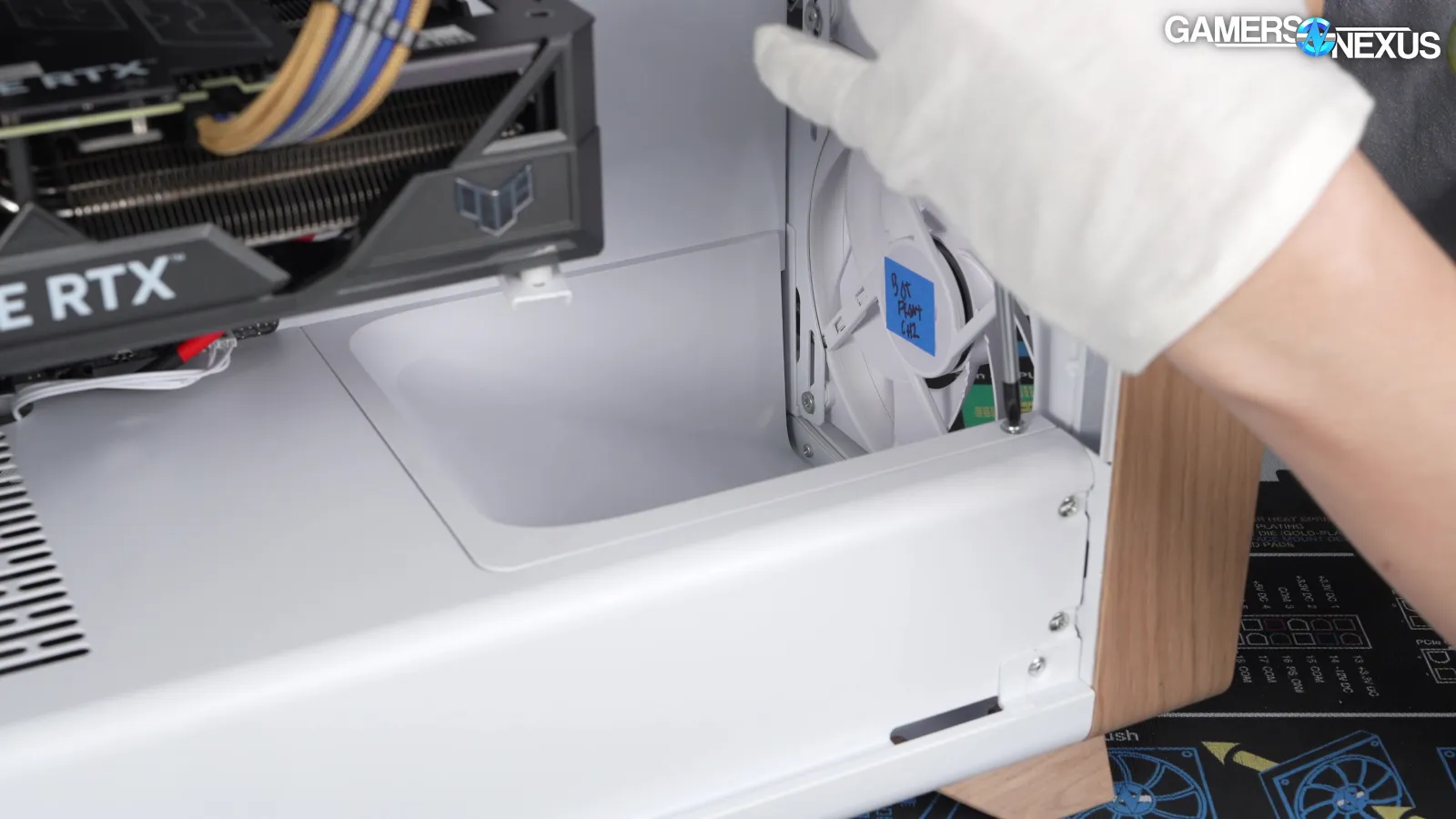
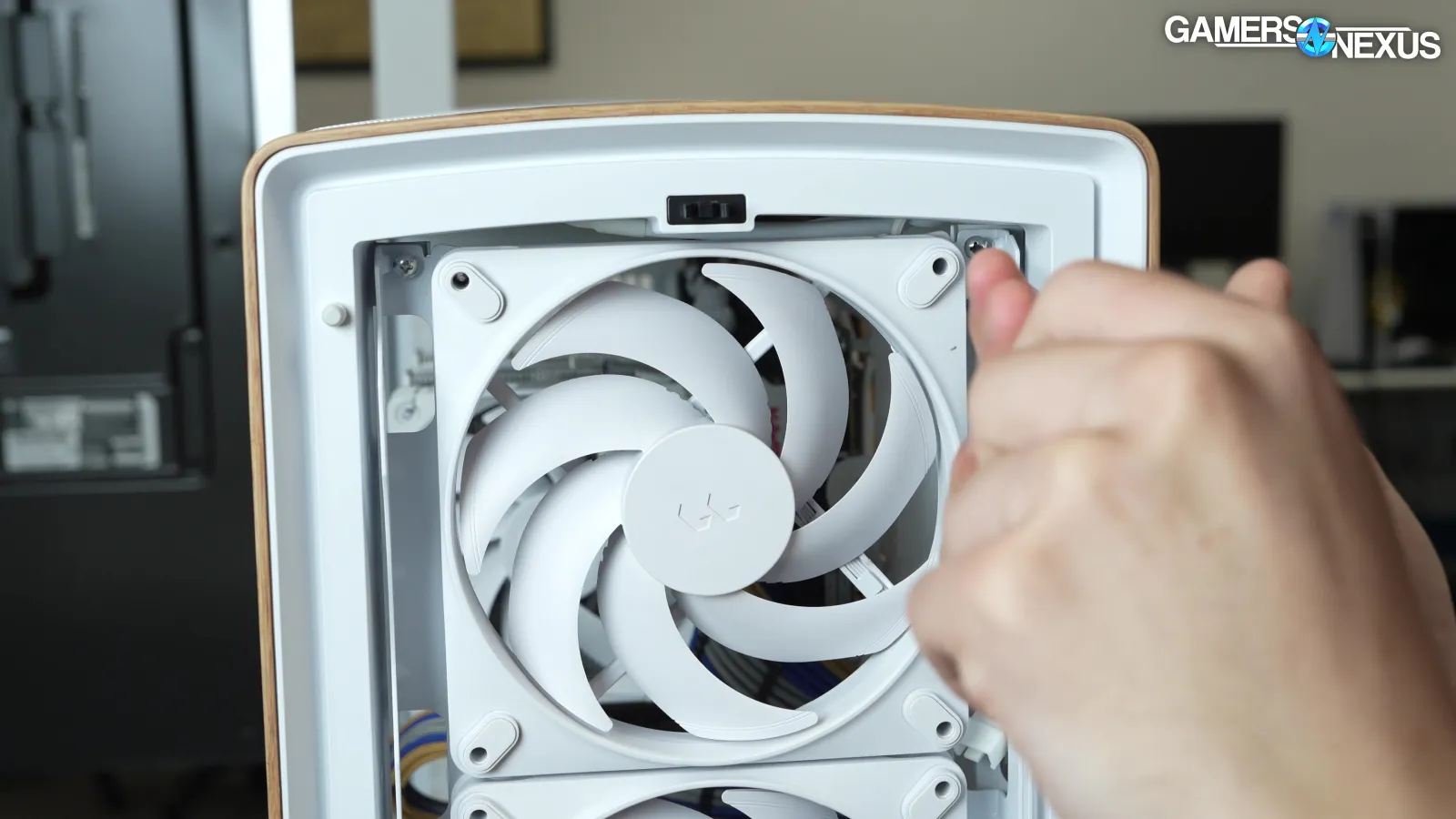
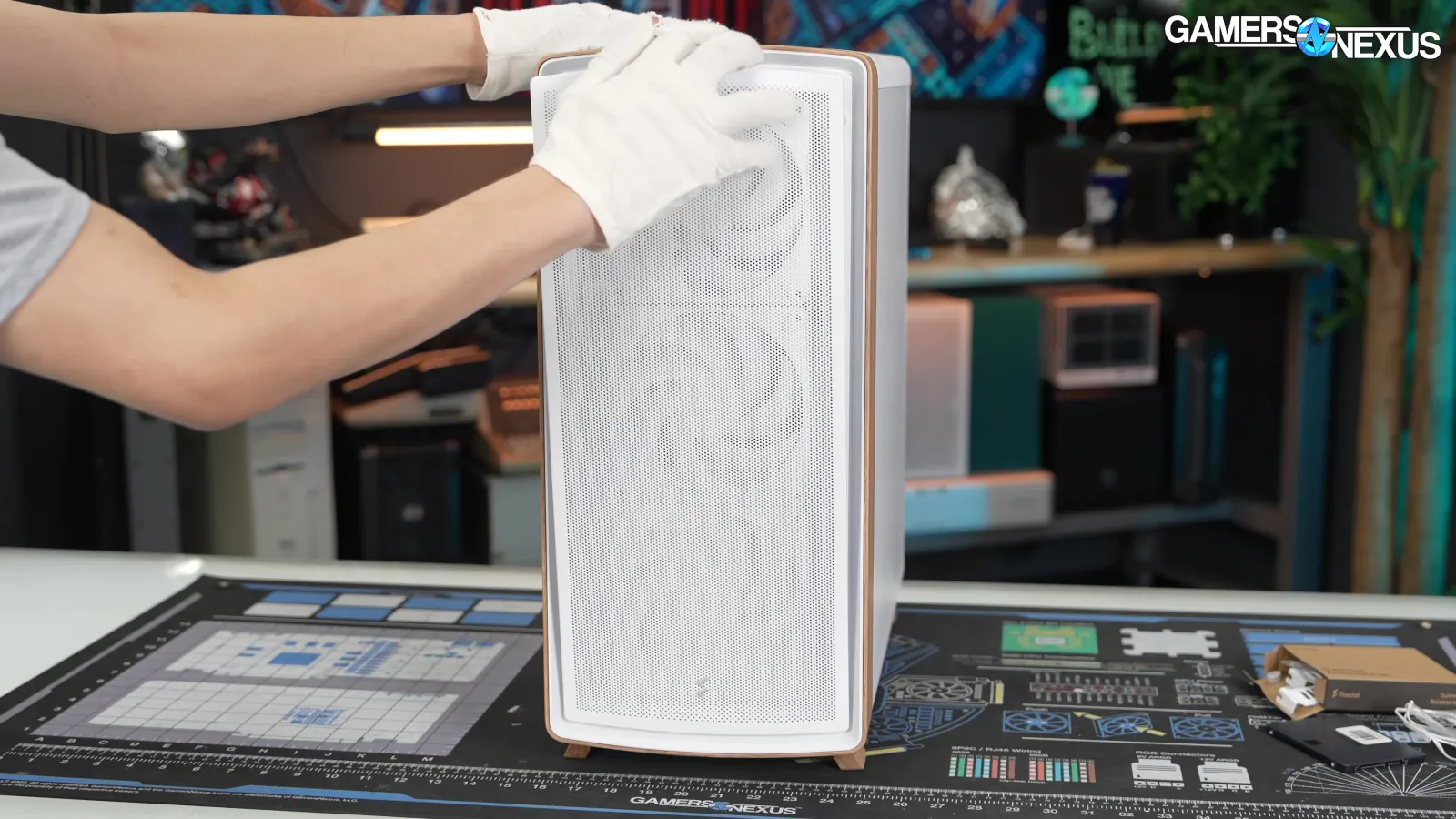
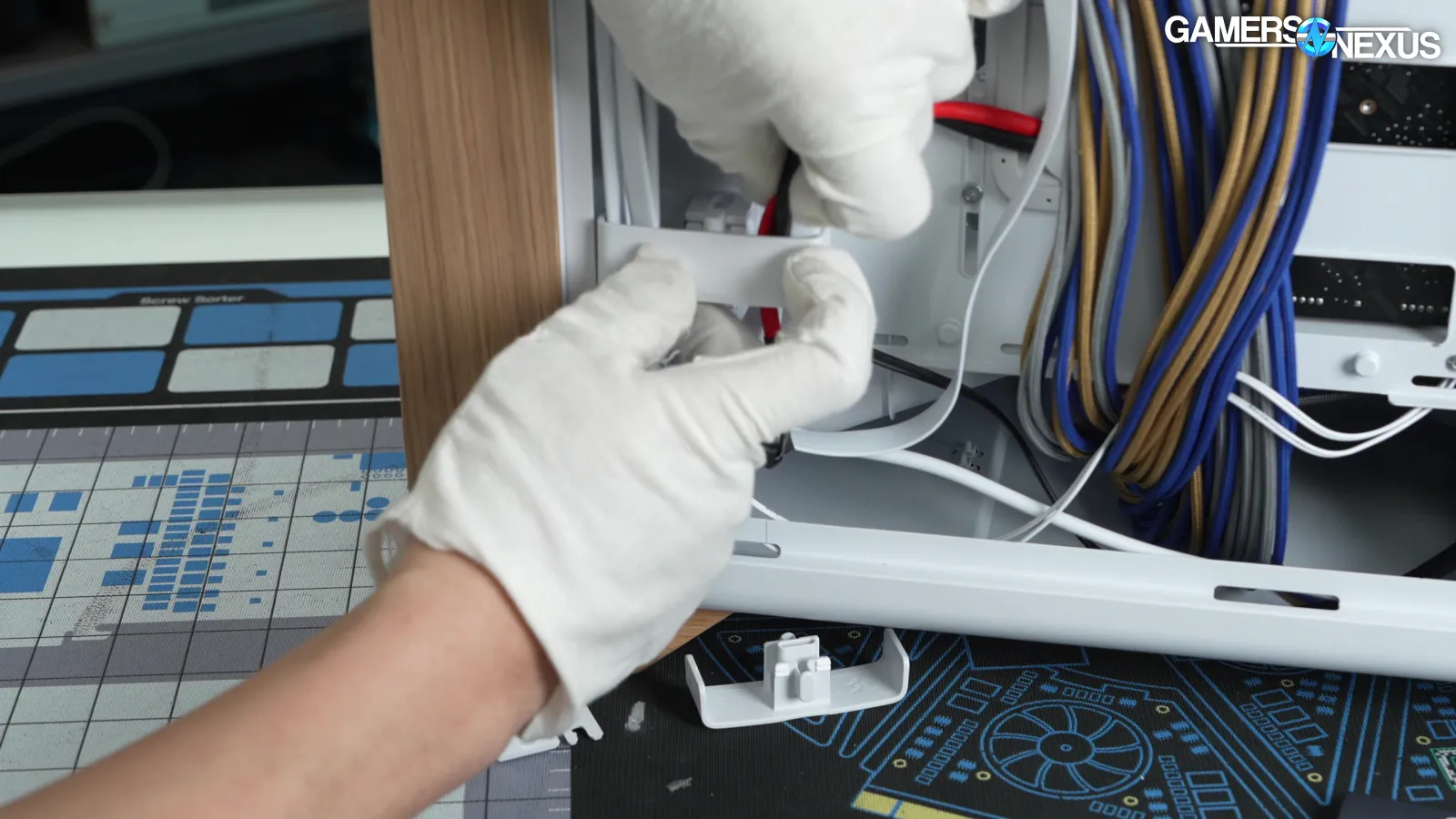
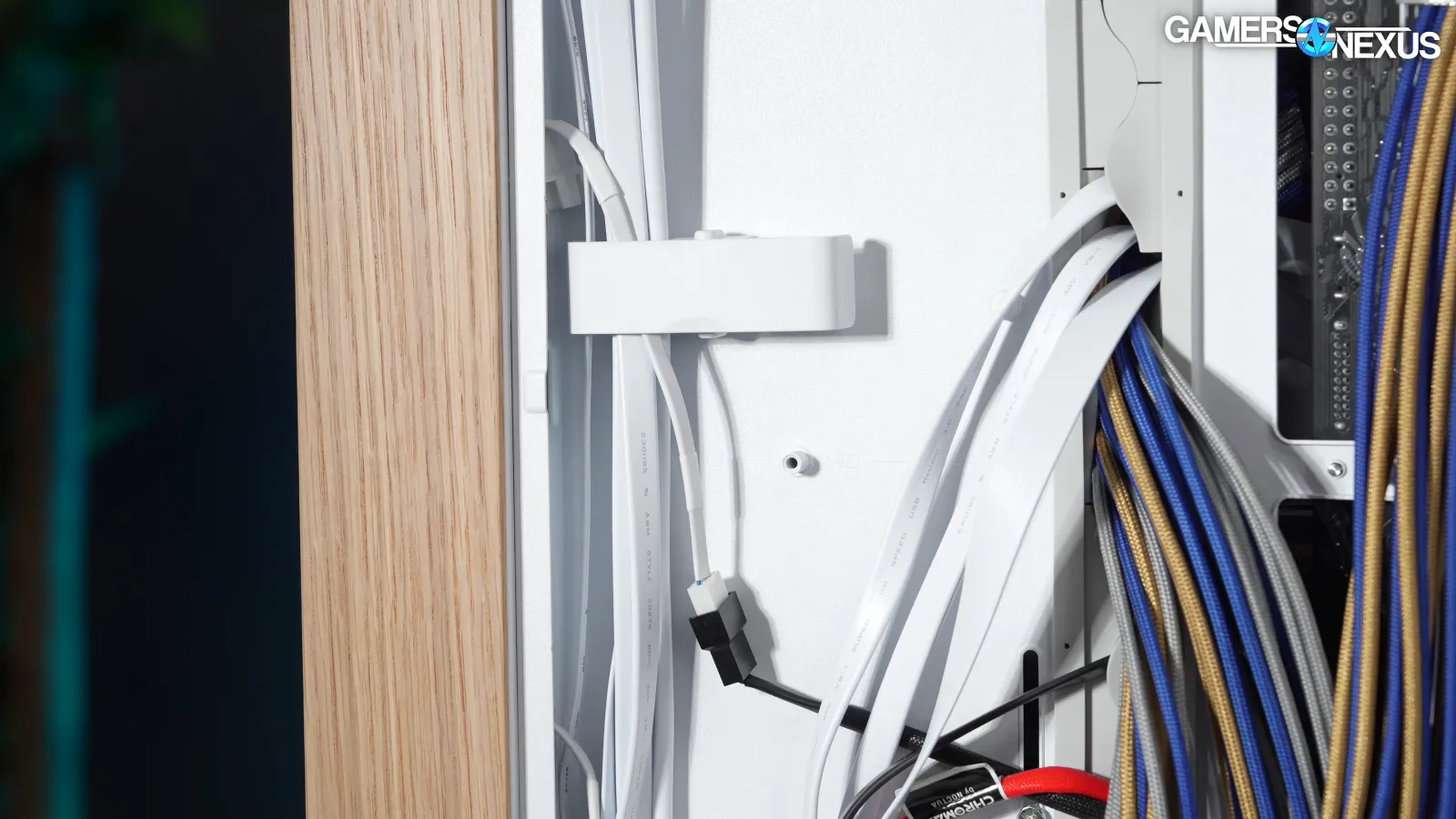
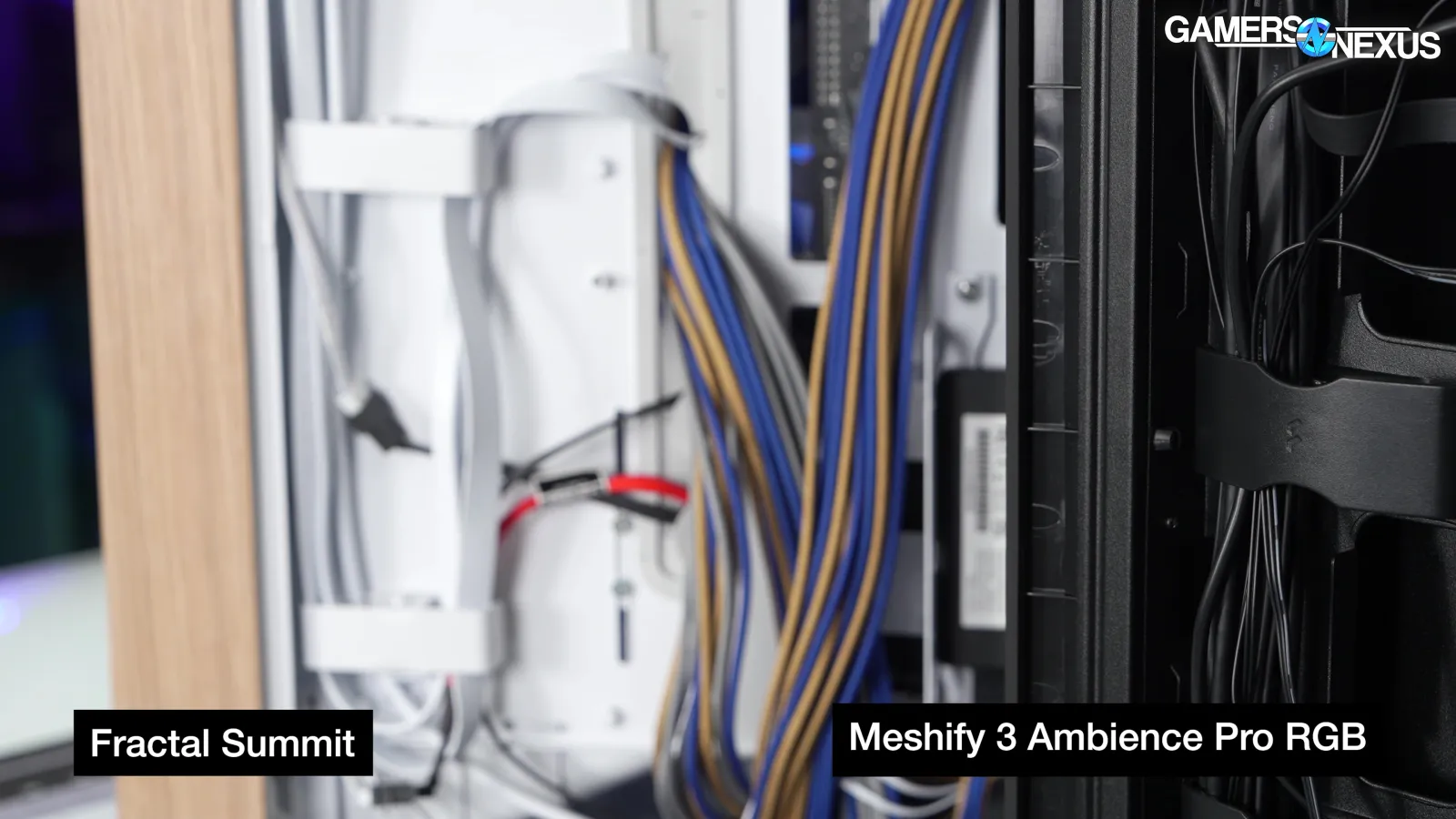
There are subtle incremental improvements versus the Meshify 3. The screw that secures the airflow scoop is in plain view and is captive, rather than a hidden non-captive screw that a user might rip out. The front fan rails are also held in with captive screws now, and the front panel pops into a spring-loaded latch that holds it against two rubber stoppers. The plastic cable management arches are no longer keyed (so there's no right-side-up), which was probably our most ridiculous issue with the Meshify.
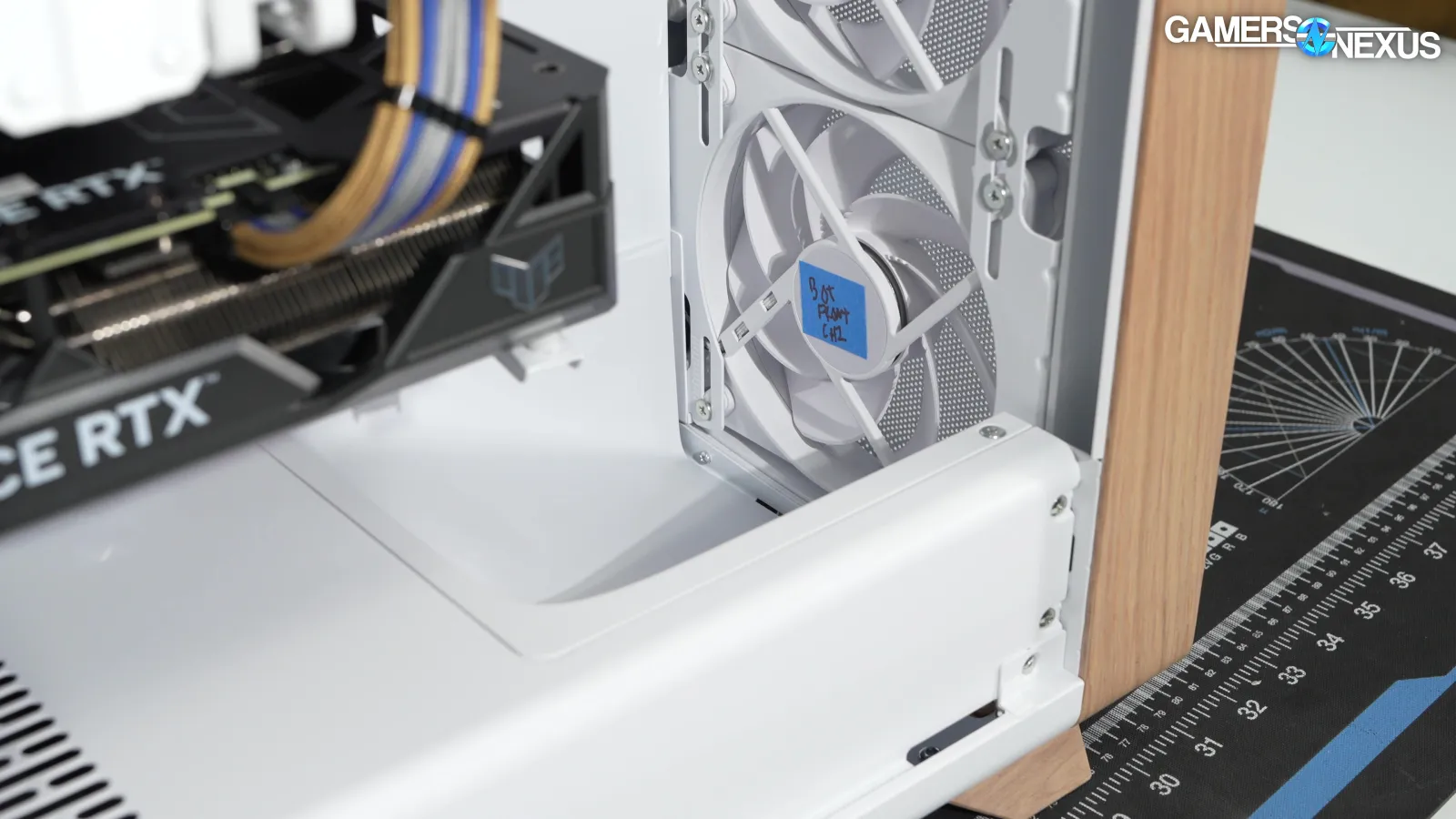
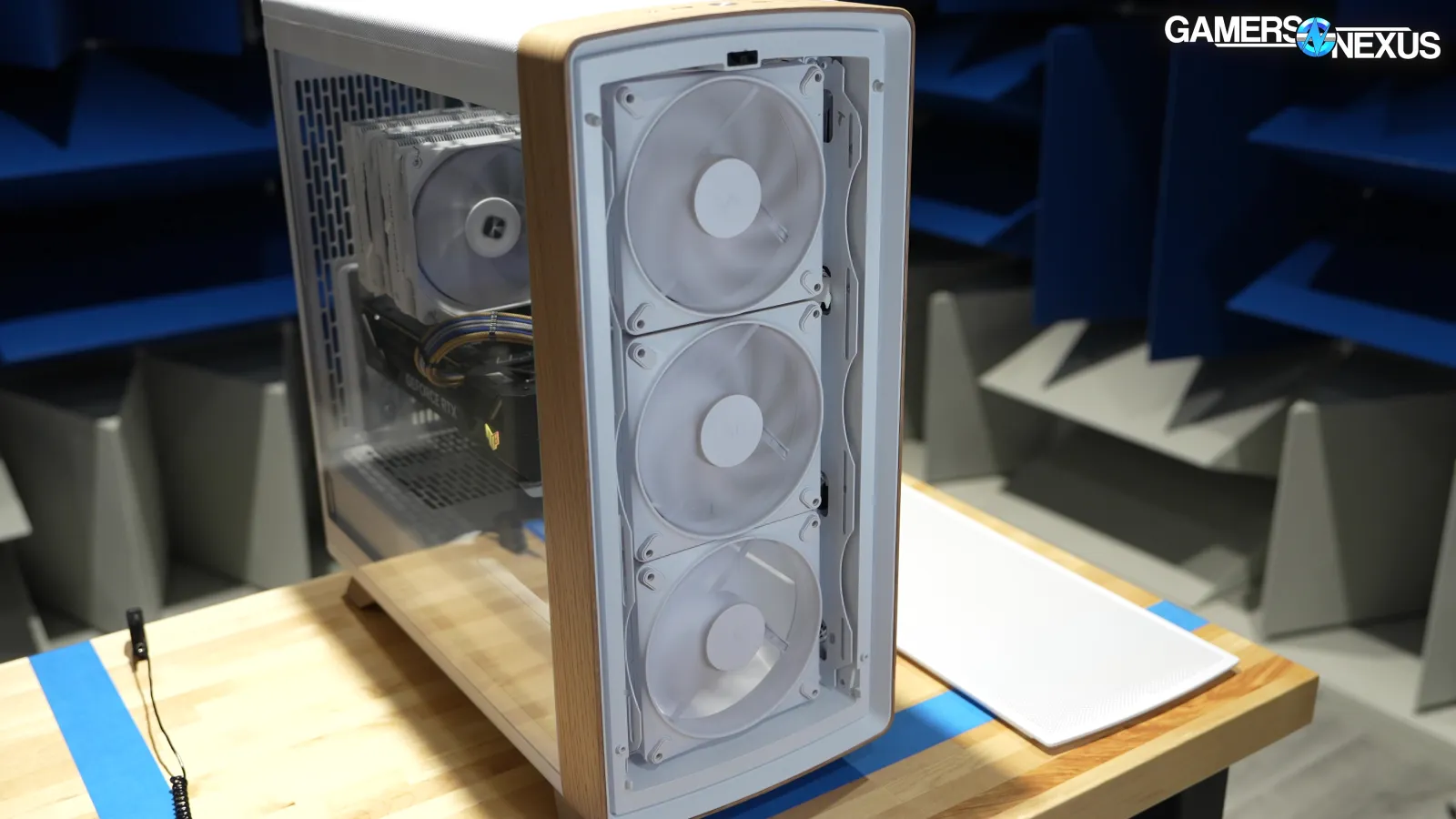
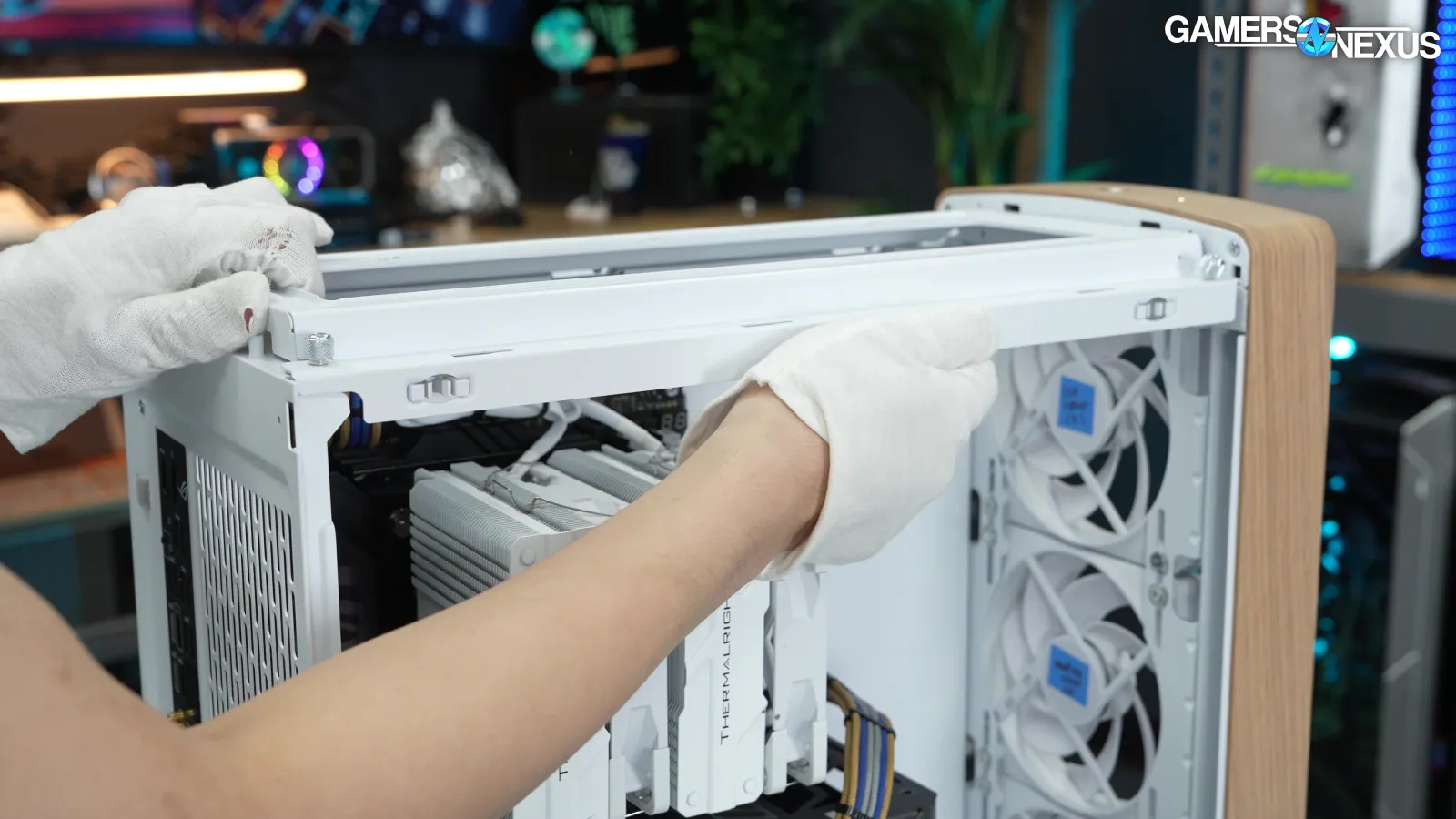
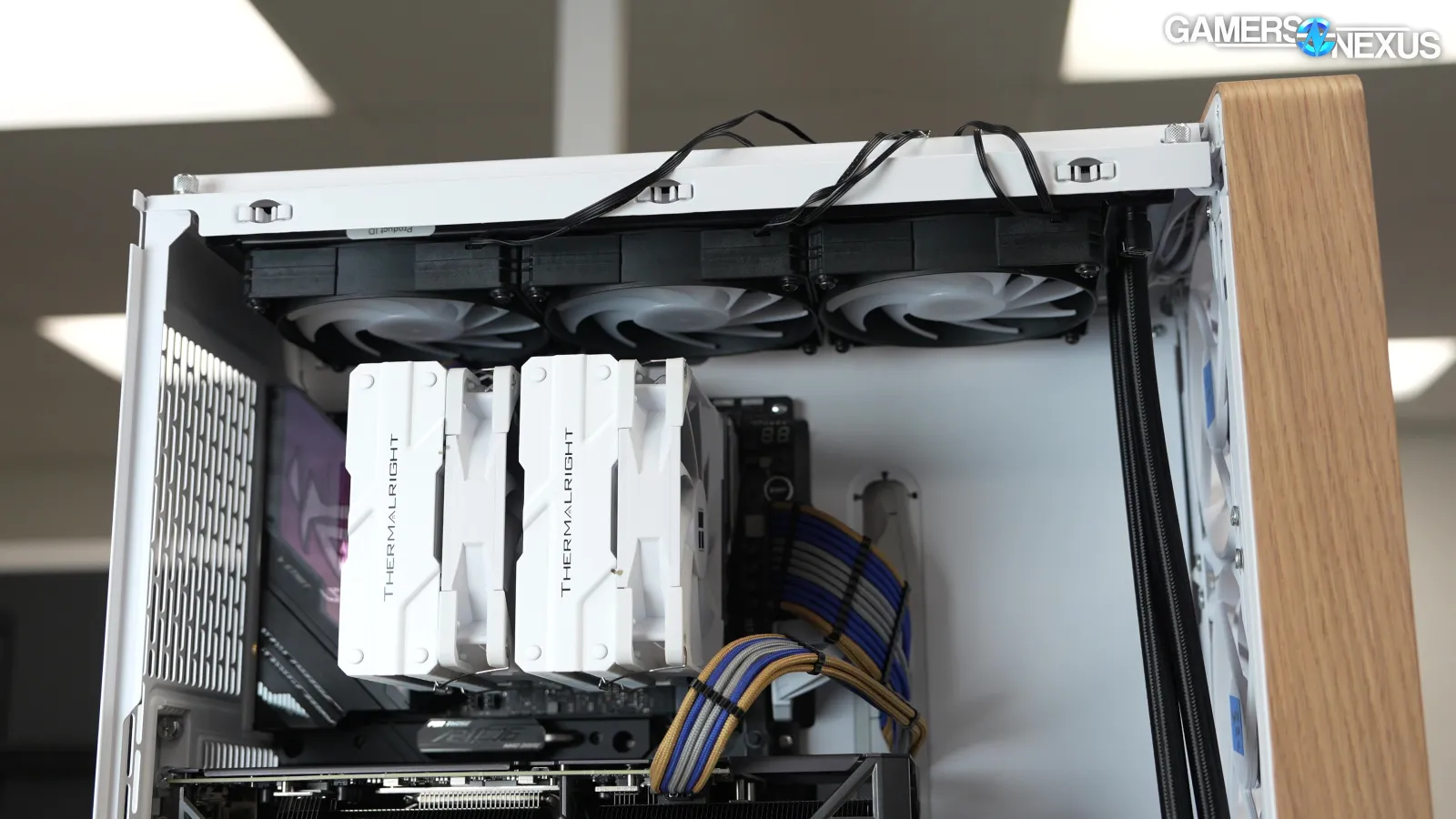
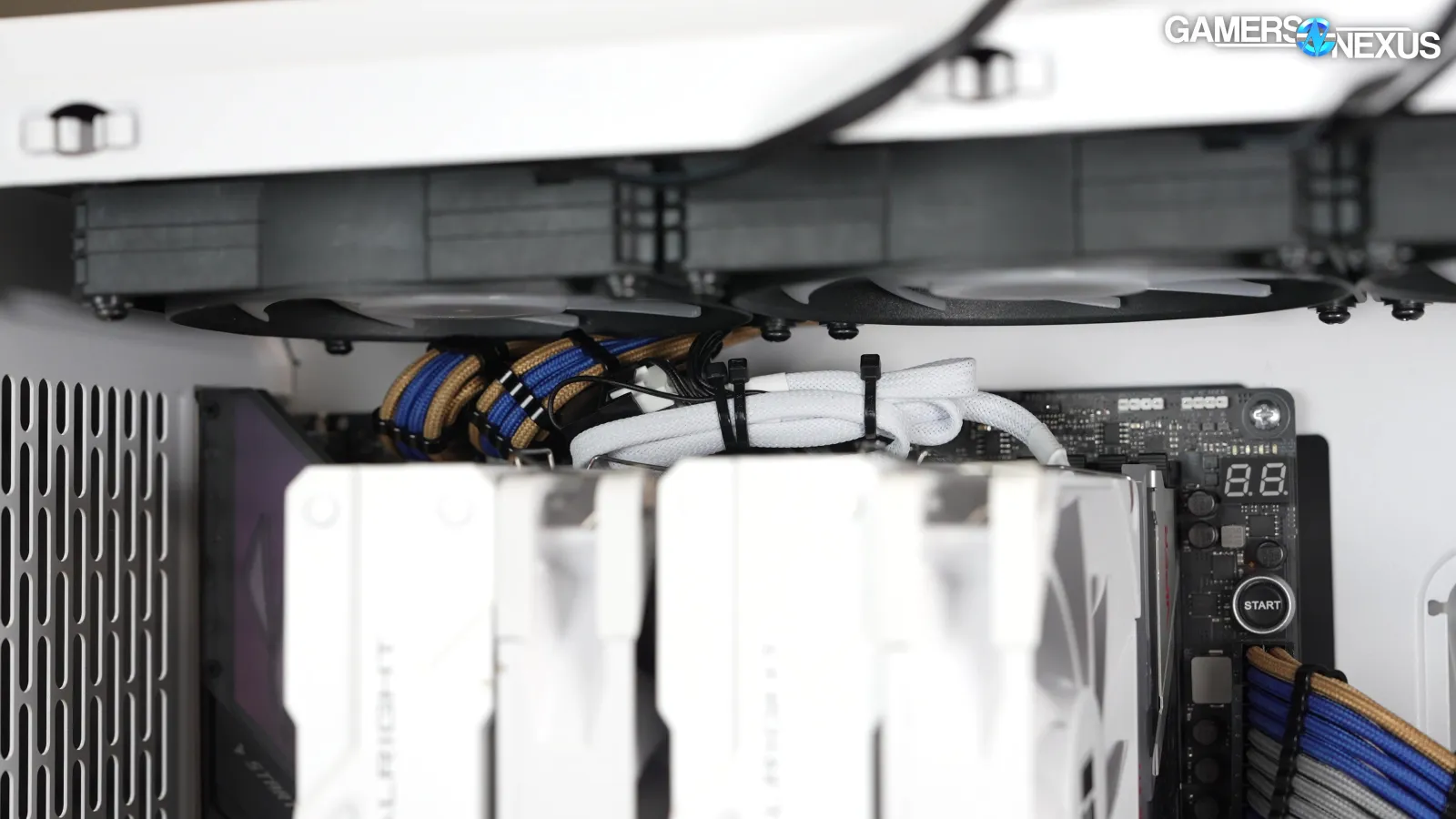
We were worried that the airflow scoop would need to be removed in order to install a radiator, but a 360mm rad of typical 25mm thickness fits fine. Note that although the front mounts support three 140mm fans, 360mm is the max radiator size. The top tray is removable, leaving the top of the case fully open, and also supports up to 360mm rads as long as tubes are positioned forwards. Beware that top-mounted rads will conflict with the cutout above the motherboard tray, making it more difficult to route CPU power cables.
Fractal could have used the extra space in the Summit for more effective cable management.
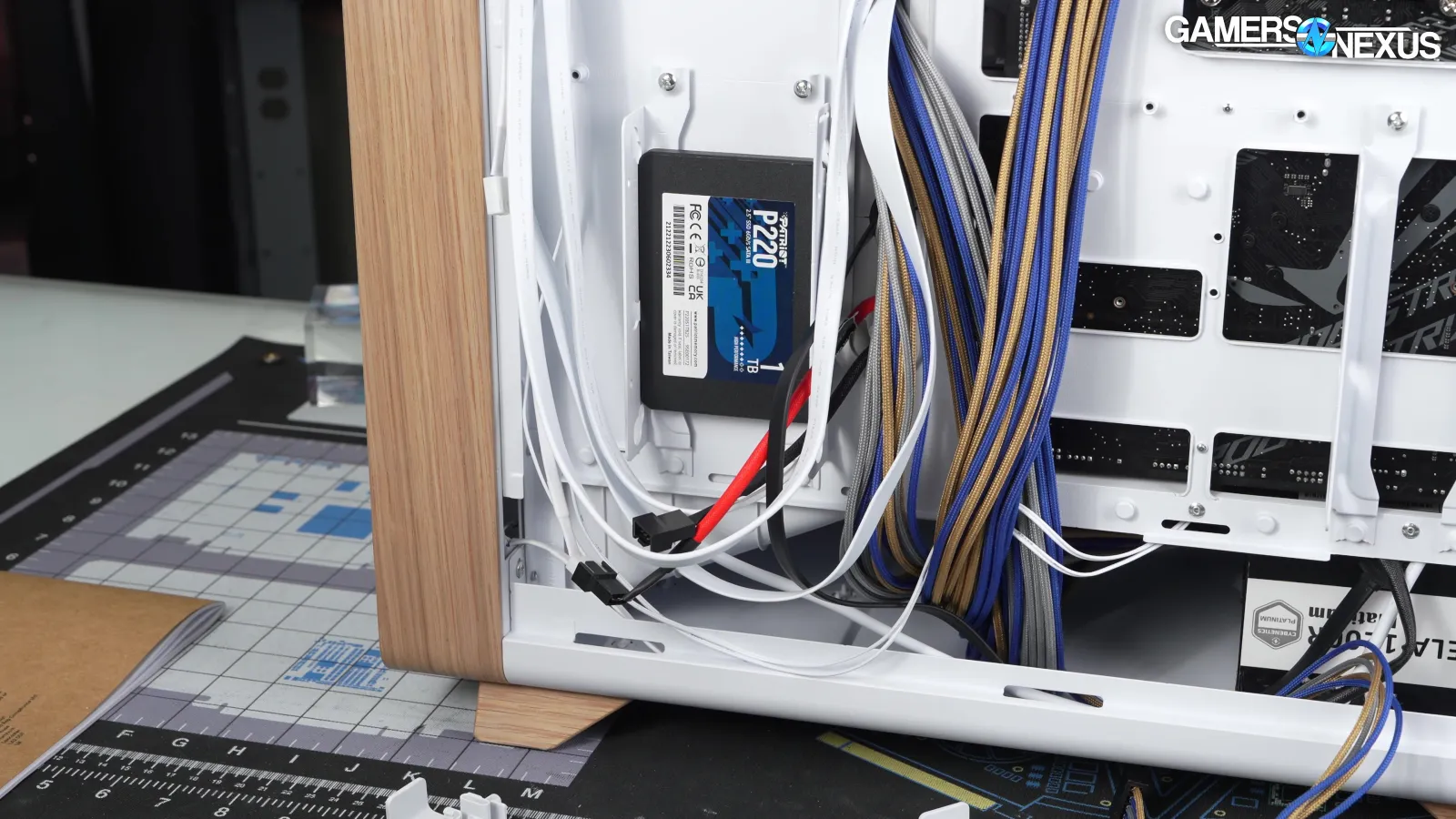
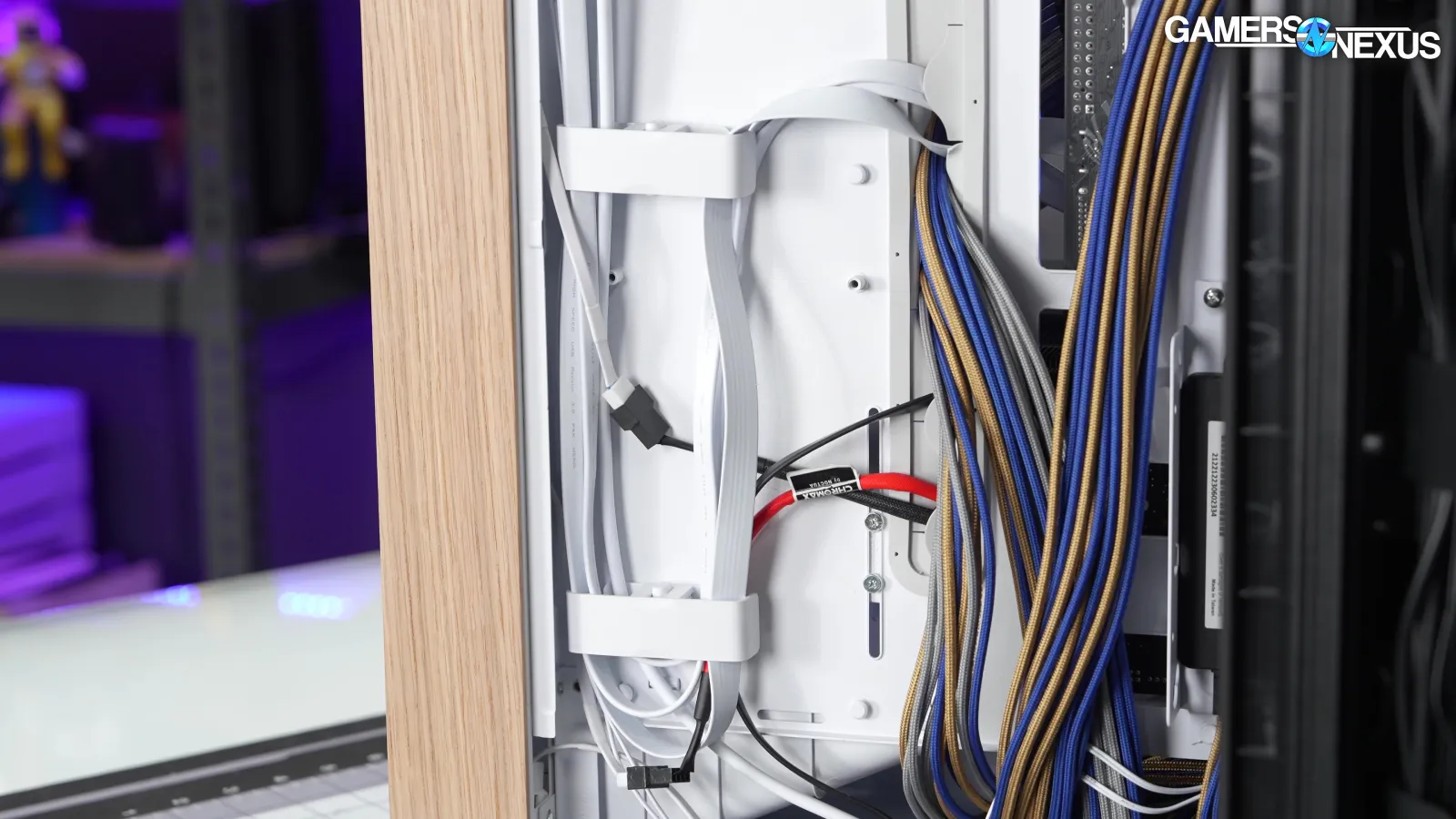
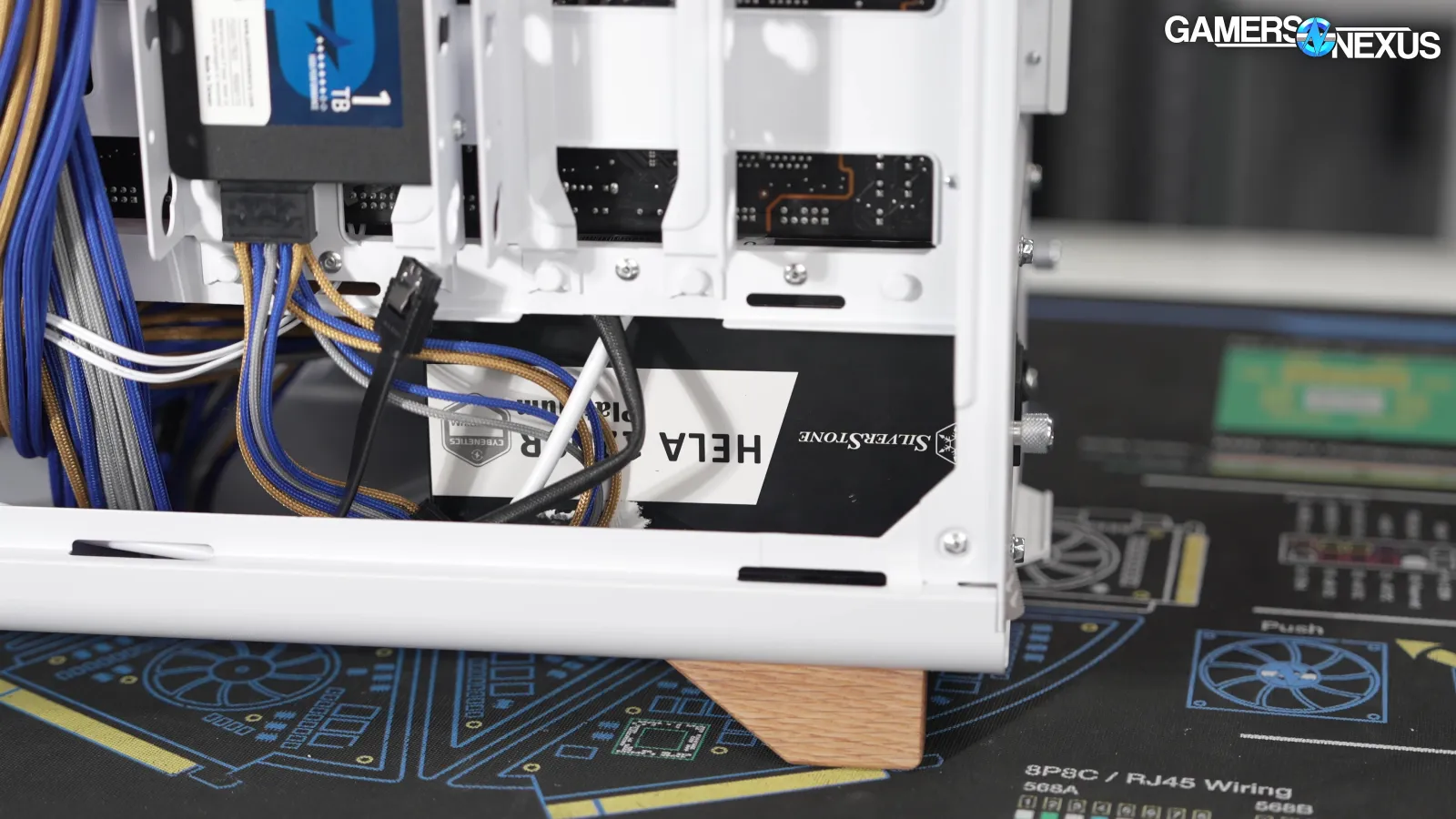
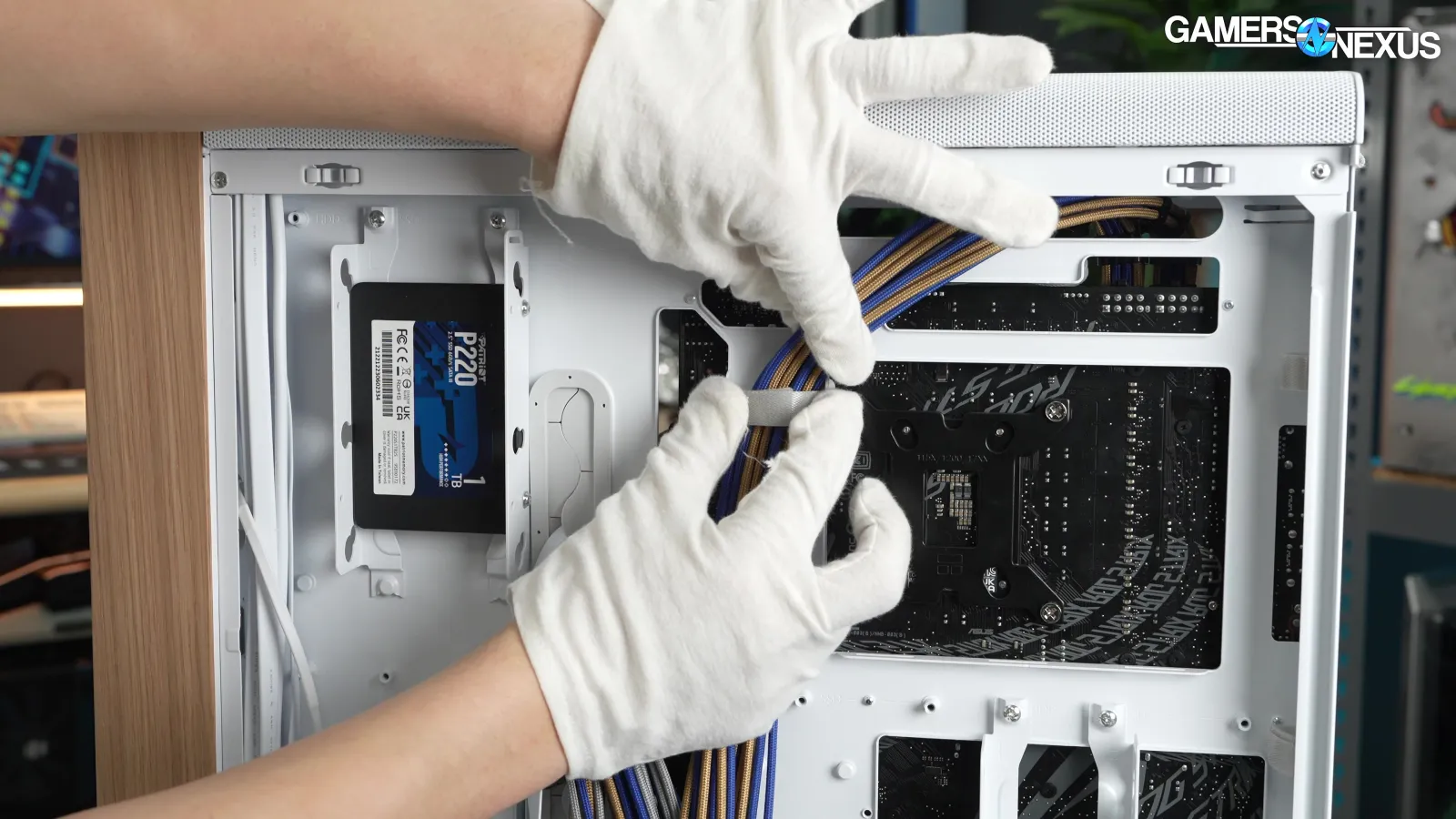
Instead, Fractal traded-off to use the space right above the airflow scoop for additional HDD and SSD mounting options, while the cable arches are reduced in size and number versus the Meshify 3 and pushed into the corner of the case. We didn't have trouble fitting our power cables, but there aren't clear paths for them. Fractal only includes one strip of velcro for cables, or you could steal a couple from the rear of the case.
The plus side of those extra drive mounting locations is flexibility, but Fractal doesn't include extra mounting hardware, so the number of simultaneous drives supported is exactly the same as the Meshify 3. It sort of falls flat for that reason and keeps us favoring the Meshify 3, of the two.
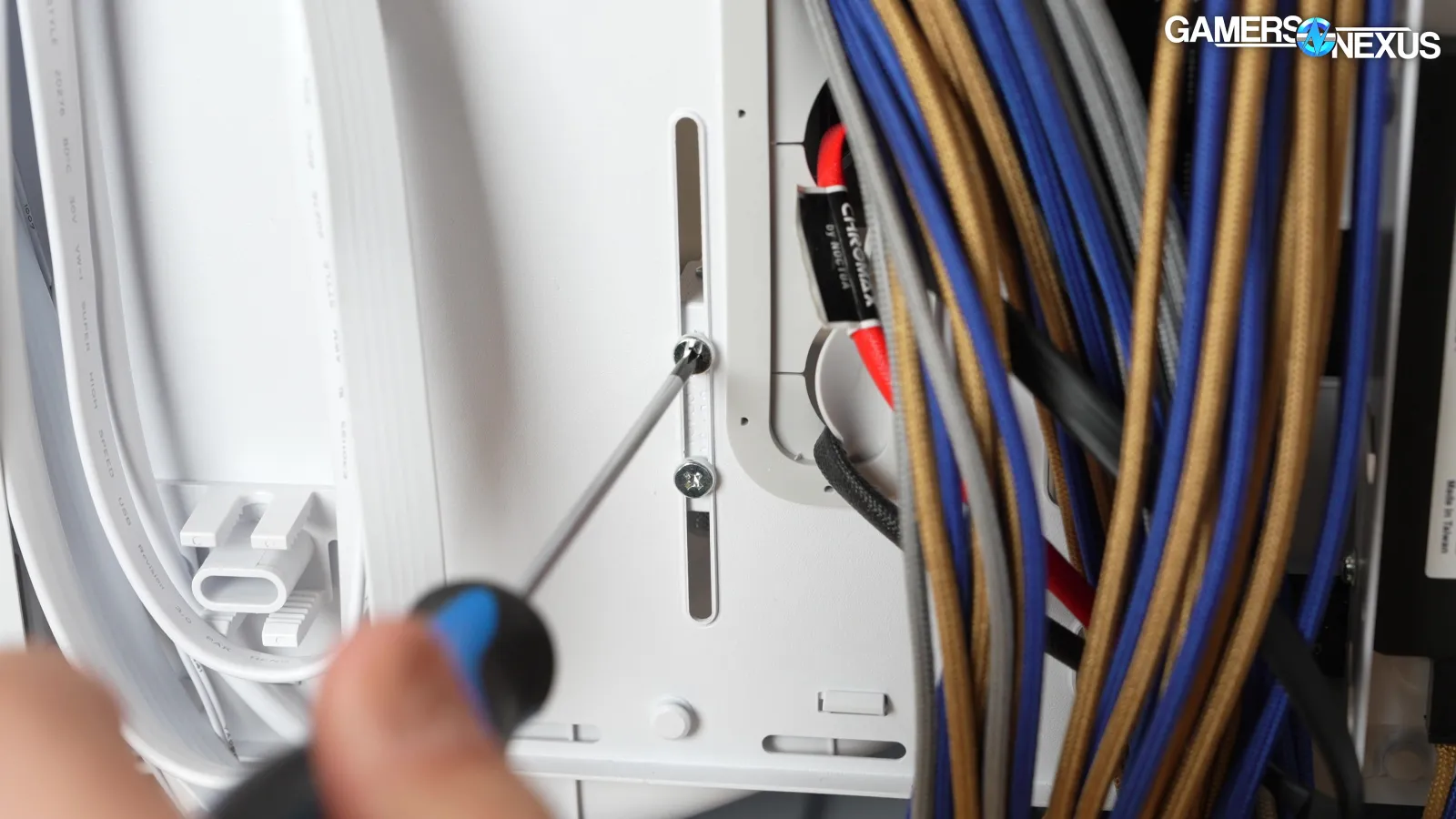
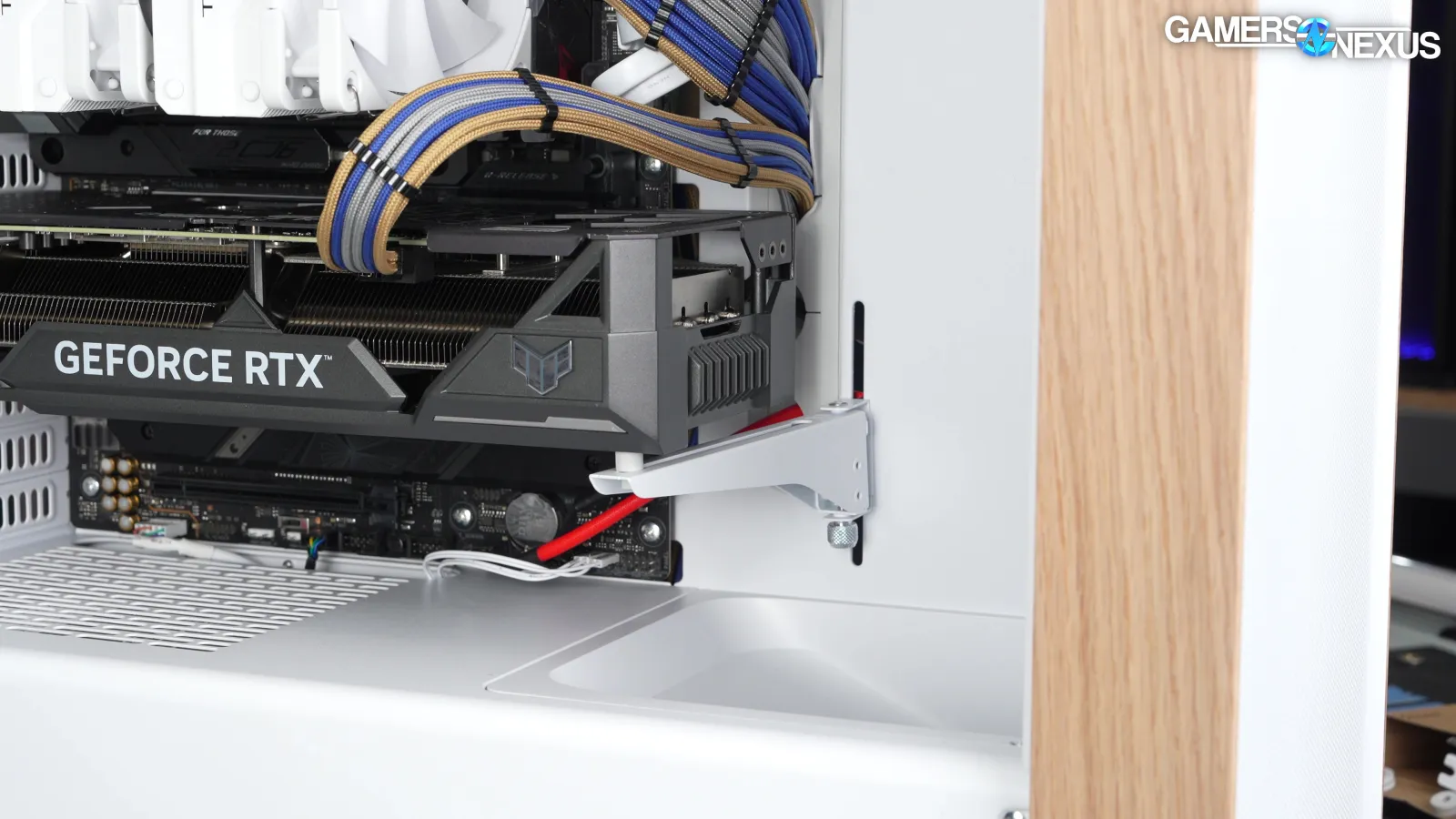
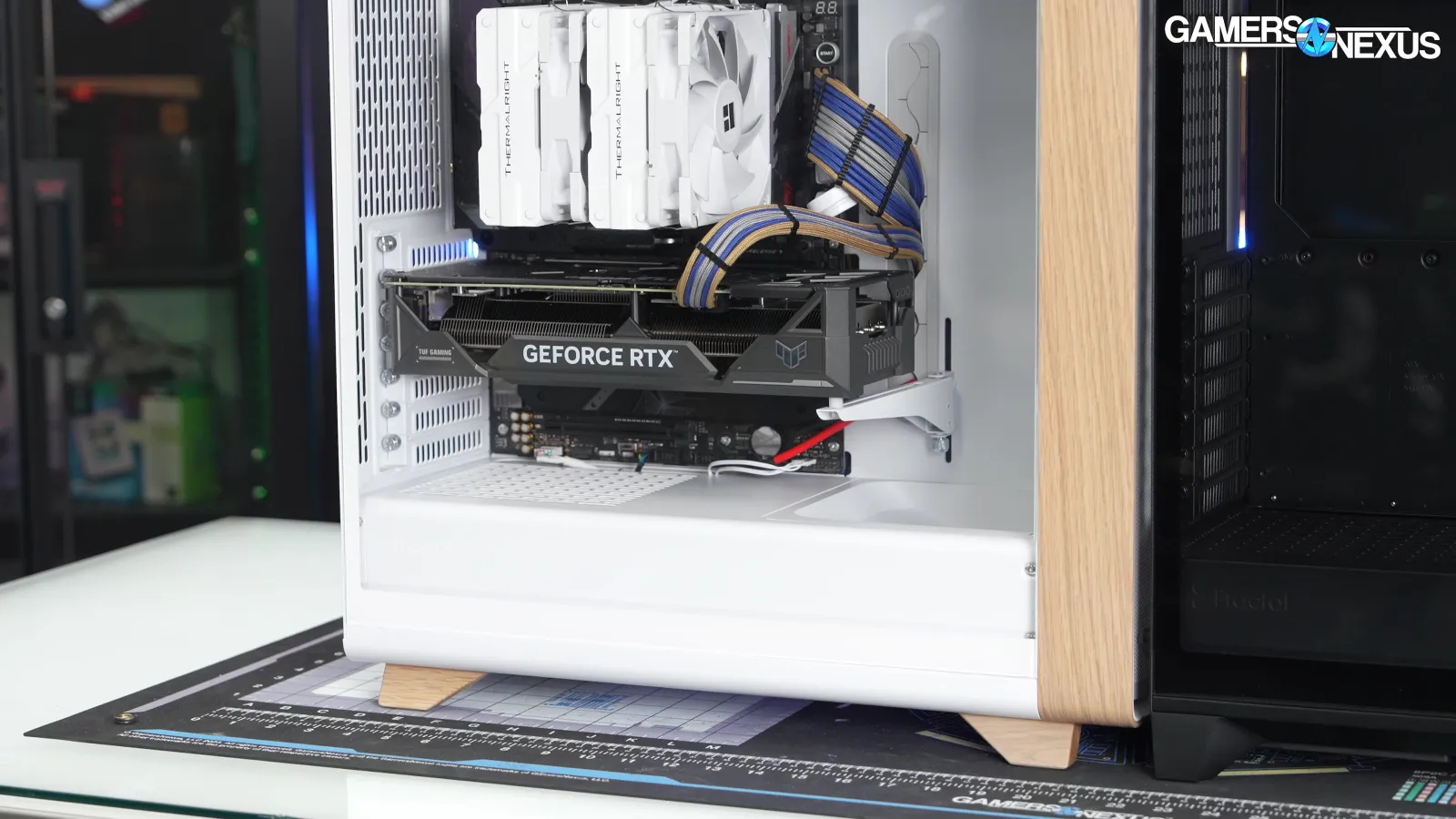
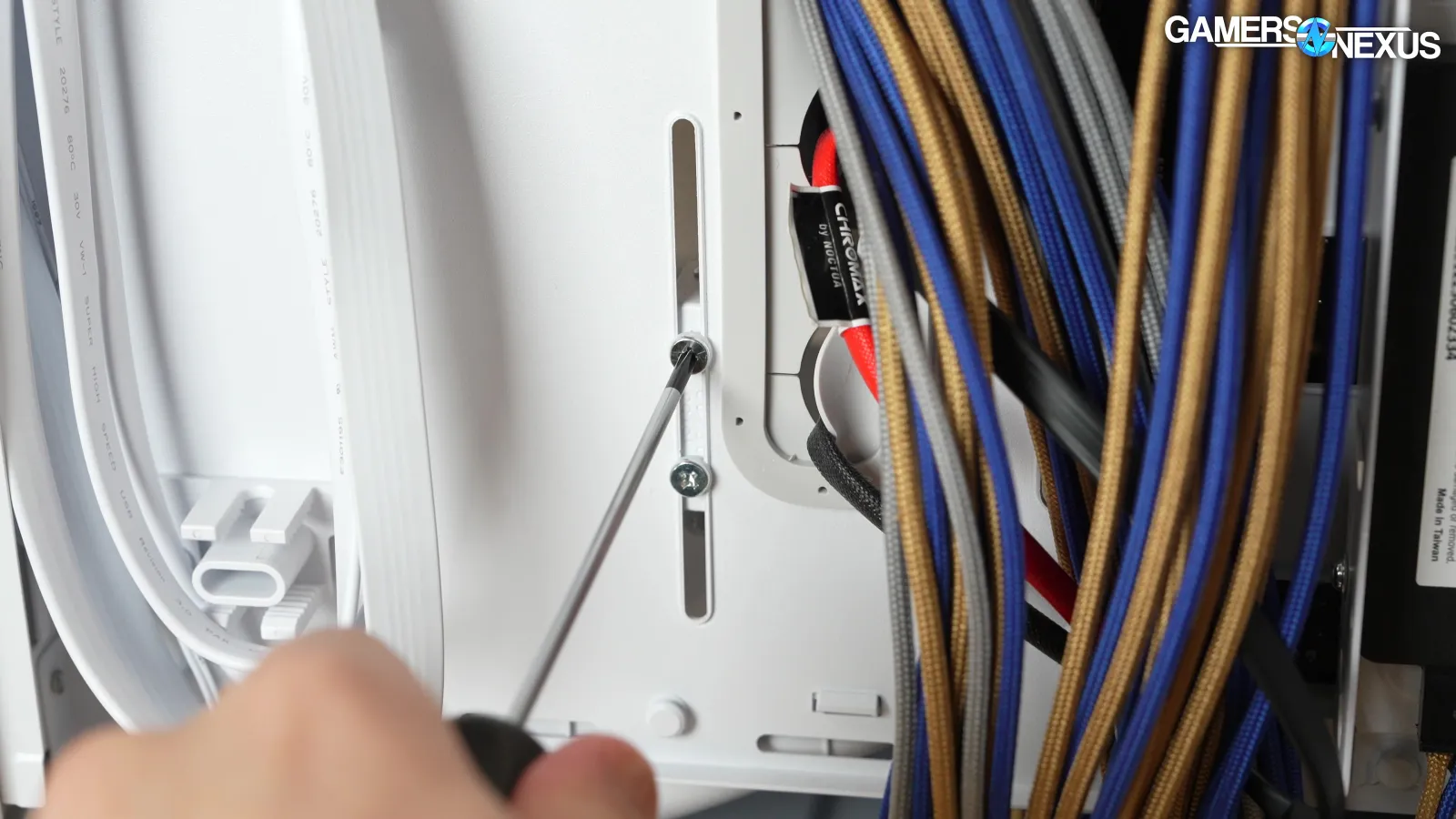
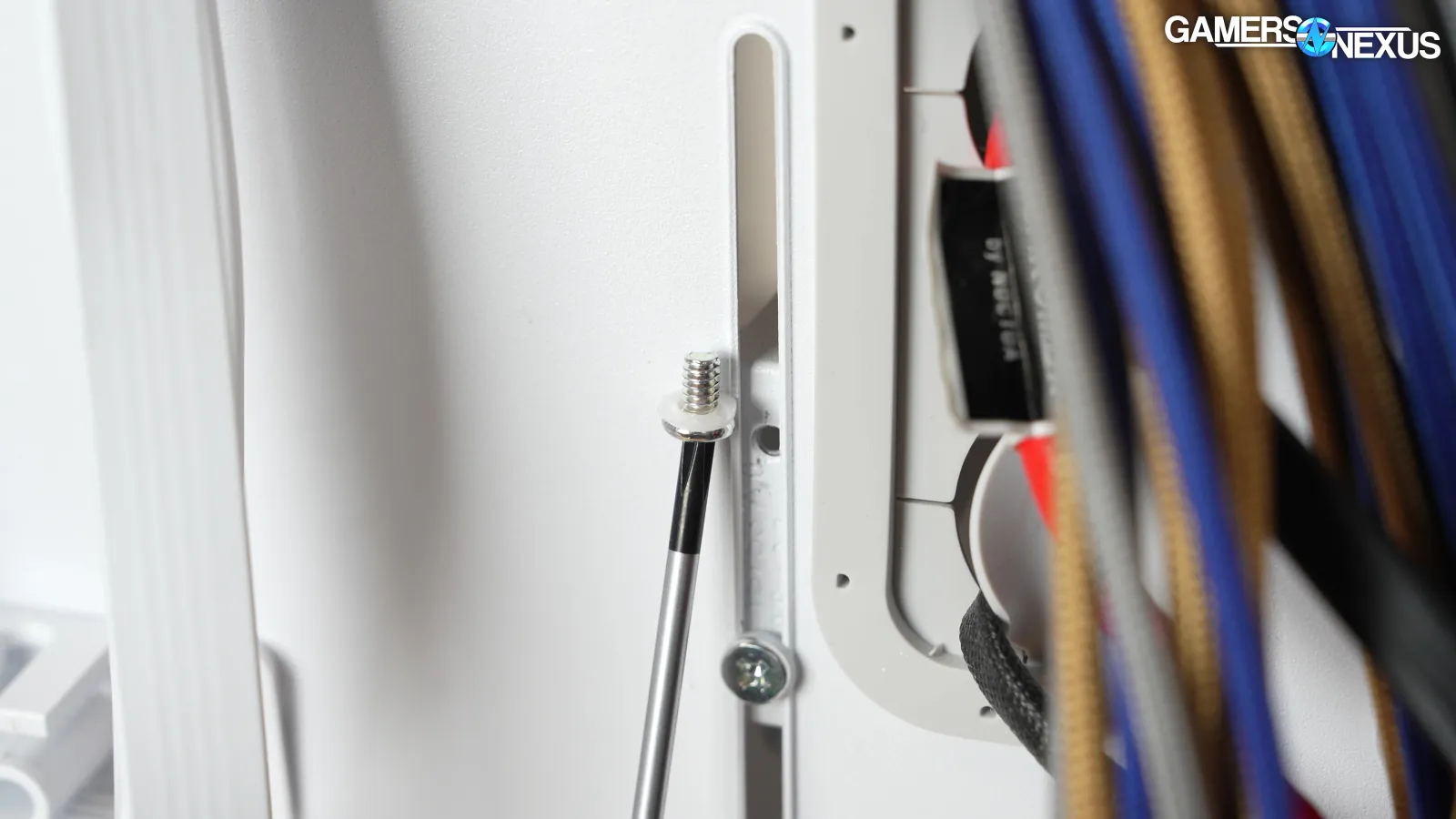
The GPU support is sturdy and easy to adjust, but because it's braced against the relatively thin material of the motherboard tray, it sags easily. It still supports the GPU, but the straight lines of the support arm make it extremely obvious that it's drooping down. We also found that the plastic washers on the screws that fasten the arm to the motherboard tray were basically destroyed by being tightened onto a sharp edge.
Fractal Summit Thermals & Noise
For close comparisons to the $170 Summit, we'll be using the $150-$185 Antec Flux Pro, $120-$125 Lian Li Lancool 217, and $156-$195 Fractal North XL. Each of these cases vary in price based on color and sales, hence the ranges. We'll also definitely be comparing to the Fractal Meshify 3, which is $155 for the most similar SKU.
Because the Summit has clearly defined upper, middle, and lower fan slots, we had to make a decision on which slots to use for our standardized fan testing. In the Meshify 3 we tested using the upper and middle slots, and again using the middle and lower slots. The middle+lower configuration did better overall, so it's the one we used for the Summit.
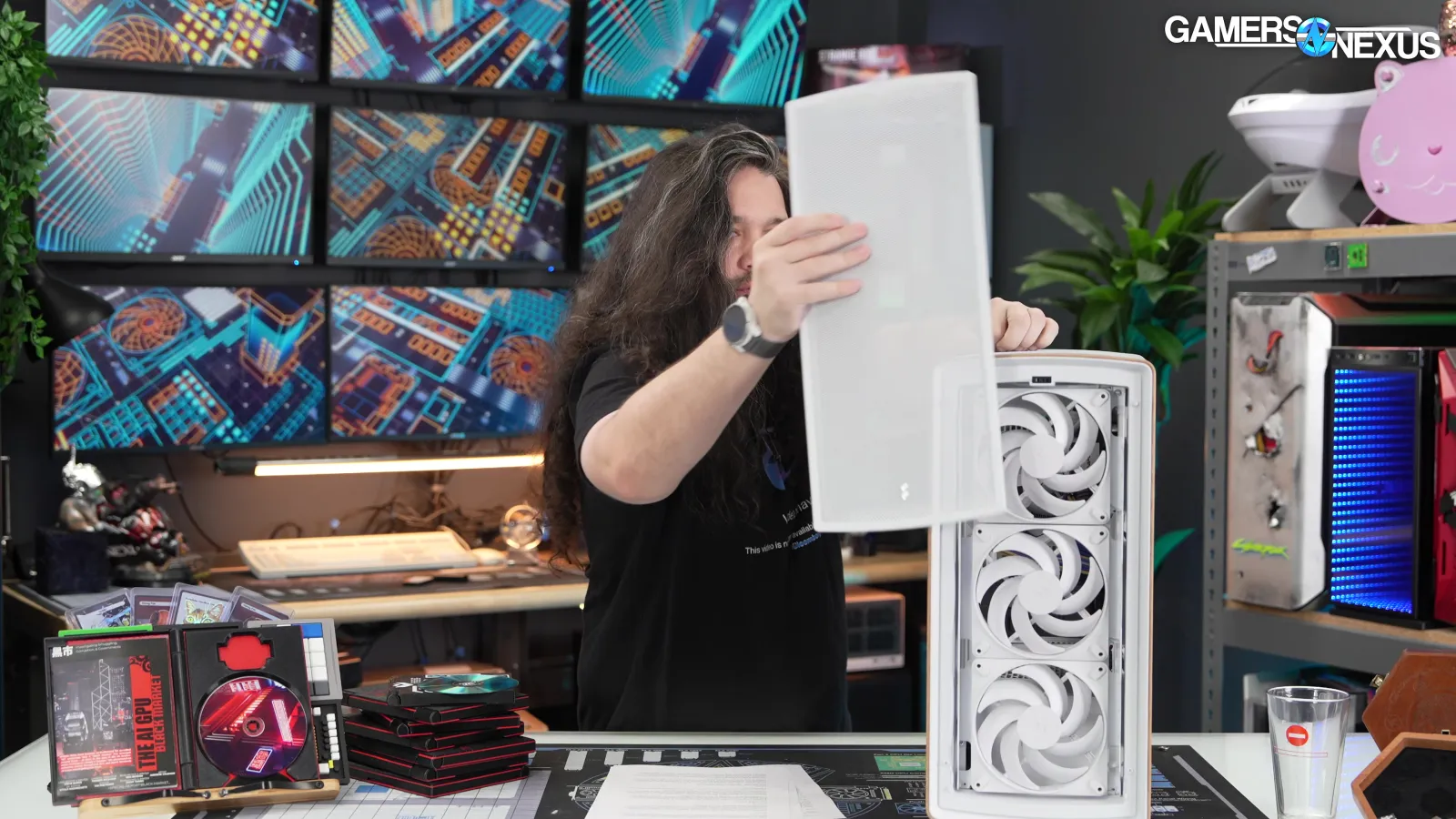
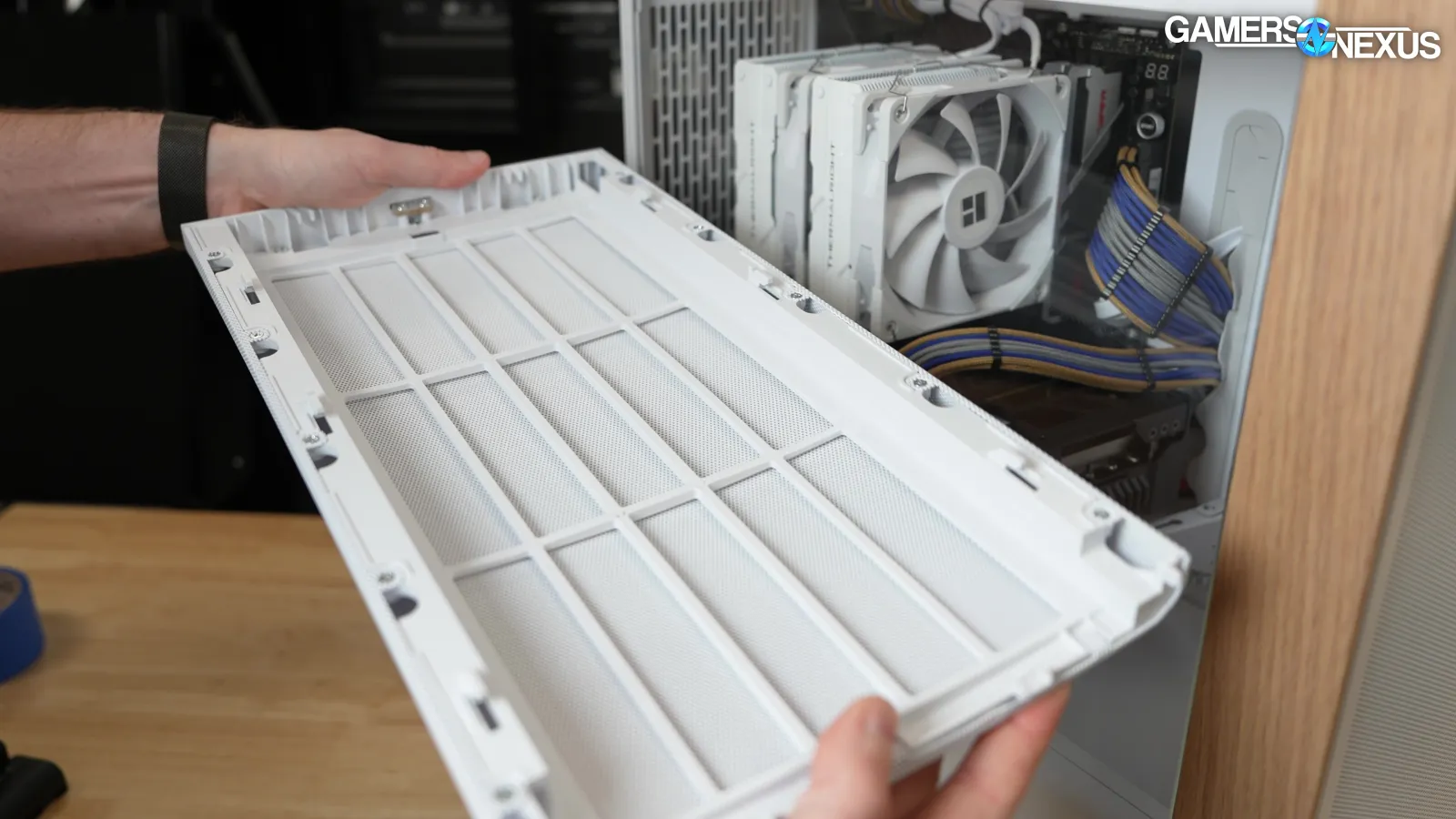
We also ran a test with the front panel removed, by which we mean the removable metal plate in front of the fans.
CPU Full Load Thermals - Noise-Normalized
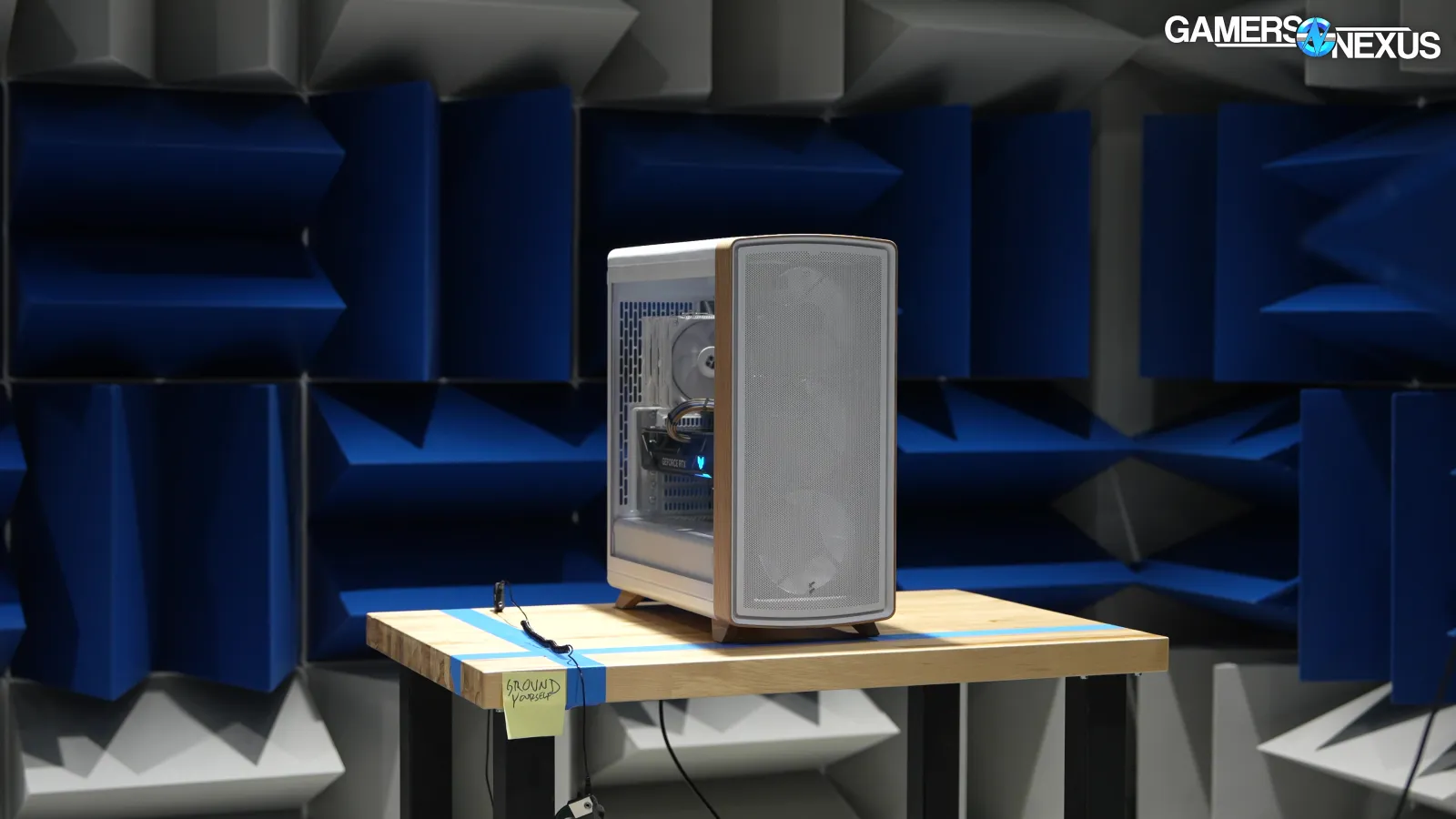
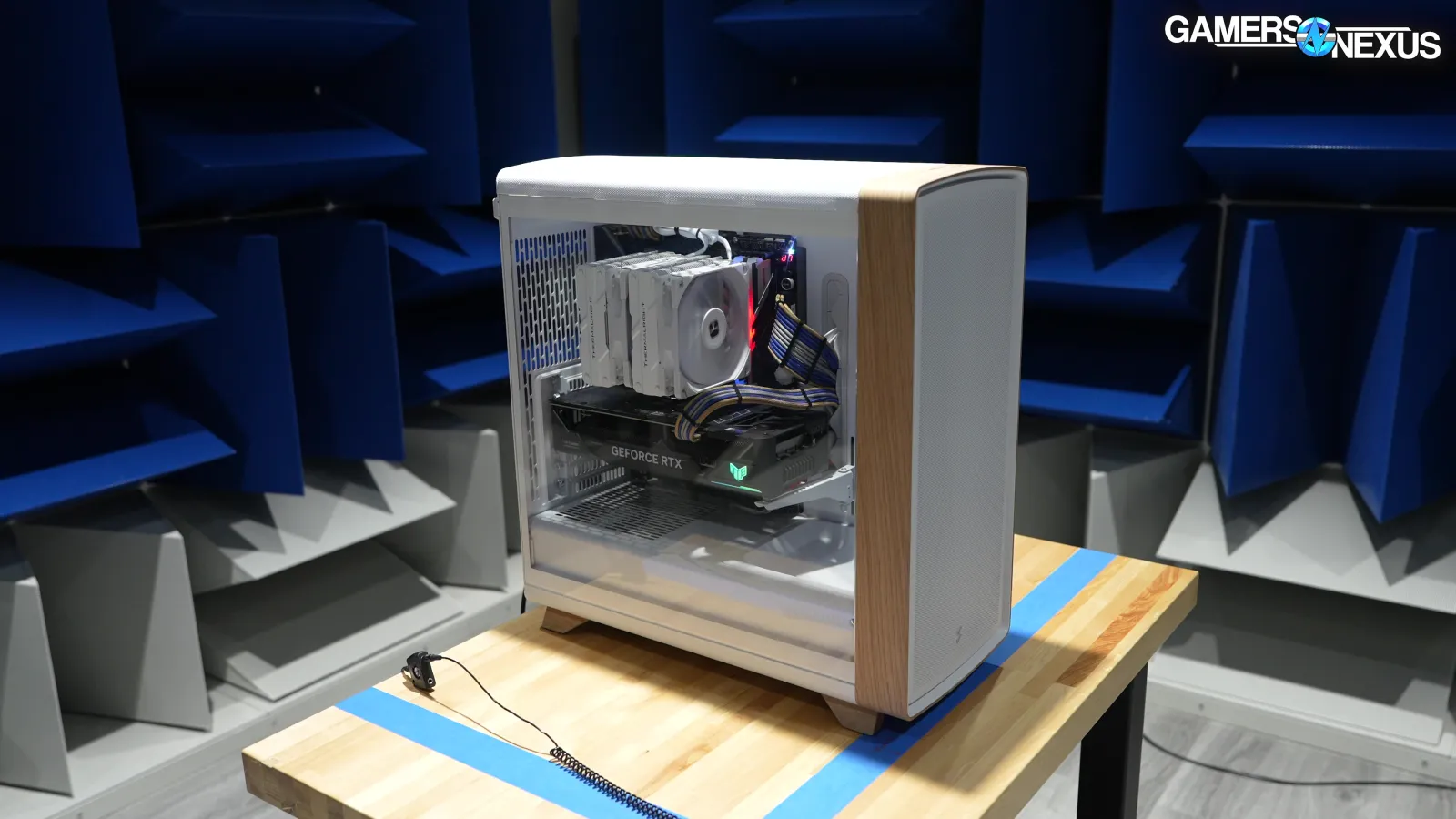
The foundation of our case testing is the noise-normalized thermal test, where we use our hemi-anechoic chamber to lower fan speeds until we hit our desired 27 dBA SPL threshold as measured one meter from the front of the case. This gives us a way to put all cases on equal footing, as long as they include stock fans.
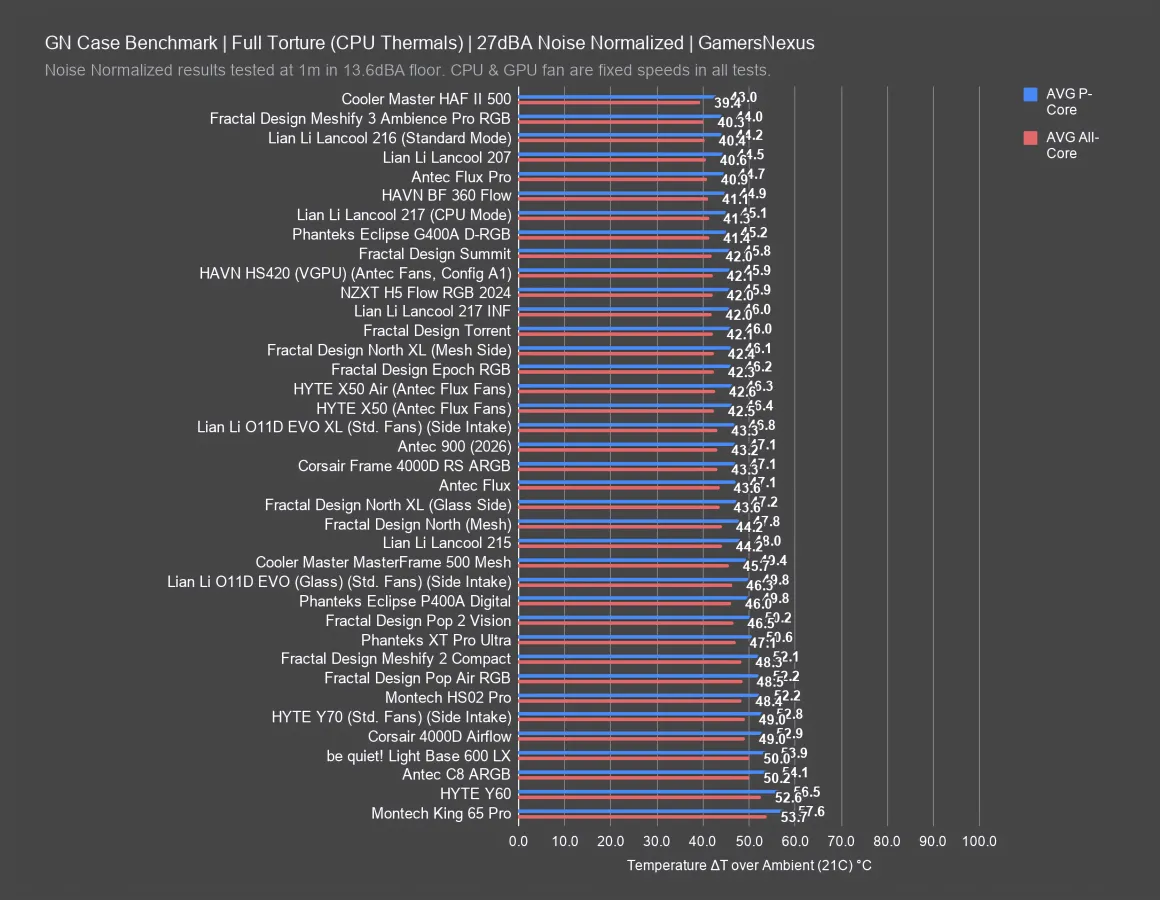
The Summit started out fairly strong here, with an average of 46 degrees Celsius above ambient on the CPU P-cores to tie the mesh-sided North XL. The Summit's competitors are extremely strong performers, though: the Lian Li 217 (read our review) and Antec Flux Pro (read our review) both averaged 45 degrees, and the Meshify 3 averaged 44 using basically the same fans (the RGB variant has slightly different specs on paper). The Meshify 3 is a smaller case, so the cooling power of those same fans is distributed over a smaller area.
The Summit does OK overall. It’s one of the better cases on this particular chart.
Other competition might include the X50 (read our review), but you’d need to buy fans. We have a test with Antec Flux non-Pro fans installed, where the X50 Air ran just behind the Summit. The HAF II 500 (read our review) leads the Summit in a big way, up at 43 degrees over ambient, but the case is ginormous and styled completely differently.
GPU Full Load Thermals - Noise-Normalized
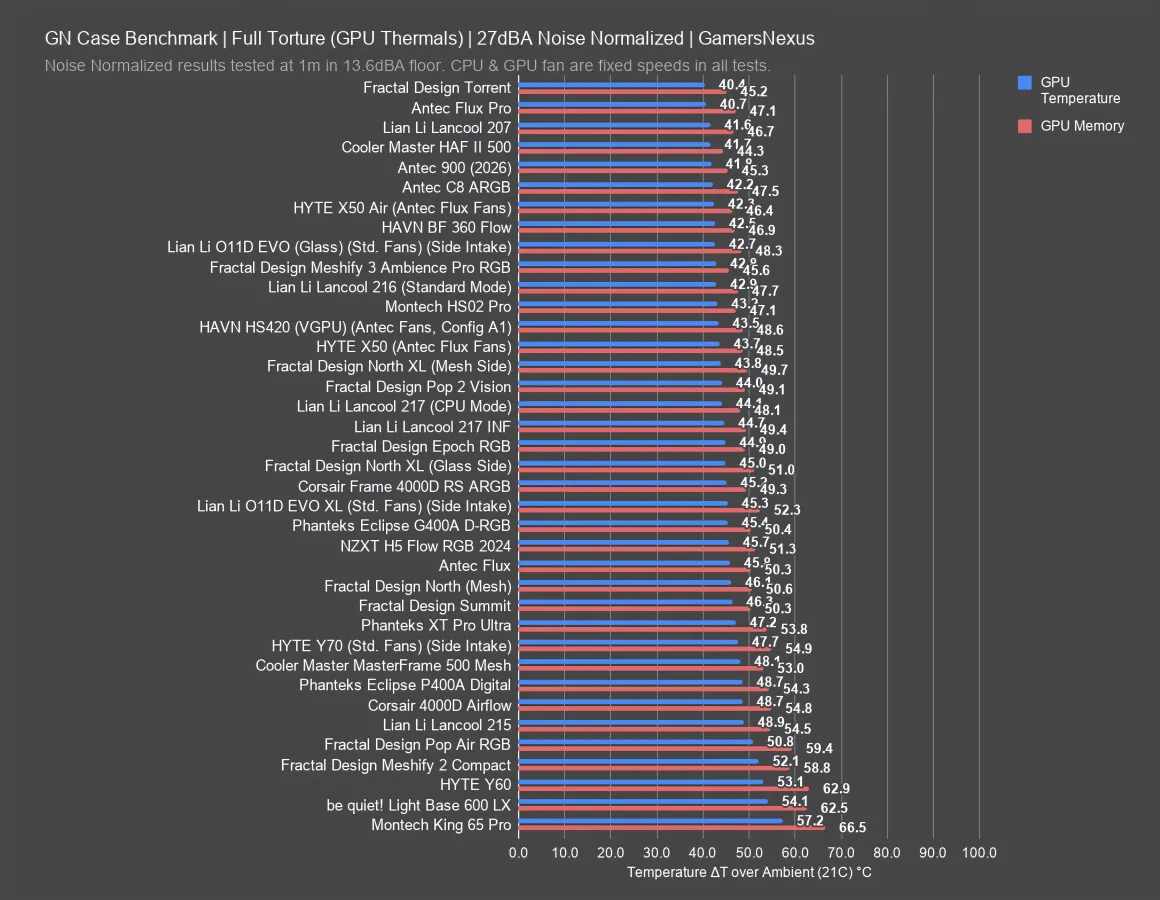
The Summit's GPU thermals didn't place as competitively on the chart, at 46 degrees above ambient and 50 on the VRAM. The Meshify 3 again significantly outperformed its larger sibling at 43 degrees and 46 on the VRAM, possibly because the extended length of the Summit keeps the airflow scoop from directing air straight into the GPU fans. The 217 and North XL (read our review) tied at 44 and the Flux Pro performed best at 41.
The HAF II 500 is just behind the 207 (read our review). This provides you two glimpses at opposites. The HAF is huge, but cools well; the 207 is small and cools very well. Likewise, the HAF II 500 is $200 against the 207’s sub-$100 price. Both are ahead of the Summit.
CPU Full Load Thermals - Full Speed
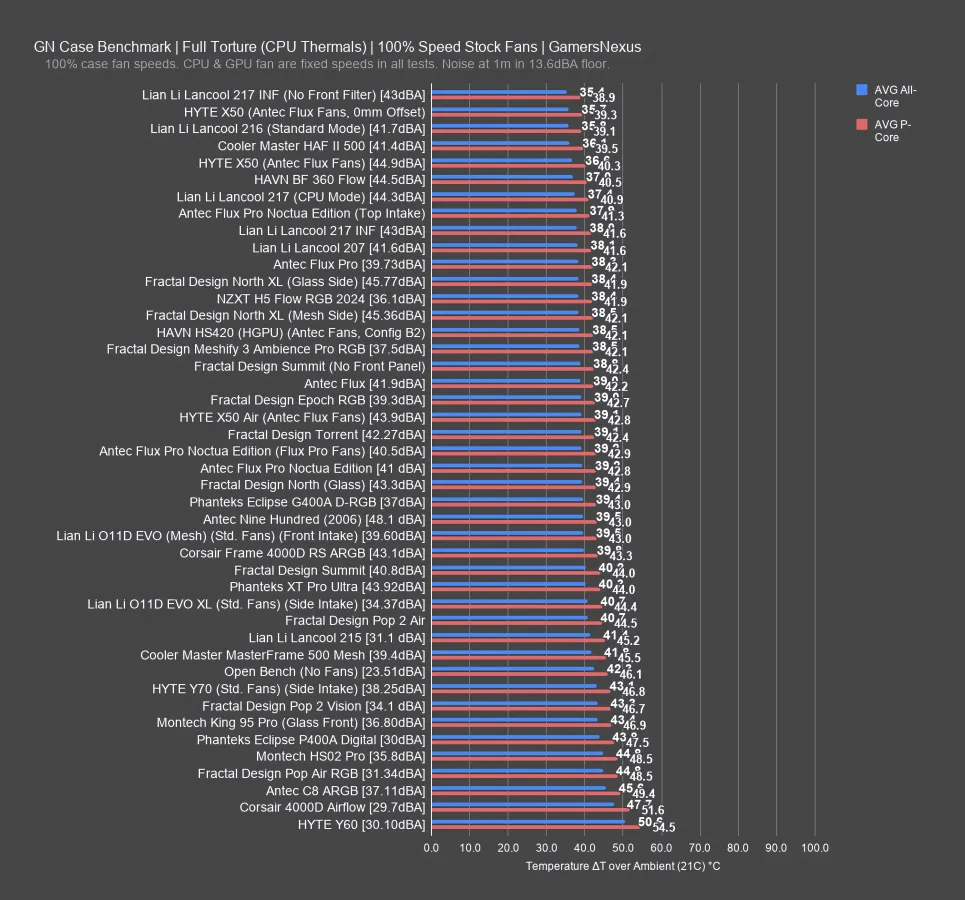
With the case fans running at full speed, the Summit averaged 44 degrees on the P-cores, with a fairly small drop down to 42 degrees with the front panel removed.
This is a good sign, since it means the front panel isn't a major obstacle to thermal performance. They’ve designed an unobtrusive panel to airflow.
Although we verified that the fans all run at the same ~1800RPM speed that we saw in the Meshify 3, the Summit is noticeably louder at 40.8 dBA versus 37.5 dBA due to differences in the front panel mesh design. The Meshify 3 still managed to be cooler on top of that, with a 42 degree average on the P-cores.
We've been using the mesh-sided numbers for the North XL so far, so we'll continue doing that even though it was a little worse for some components in the full speed test. It was tied with the Meshify 3 and Flux Pro at 42 on the P-cores, while the 217 was ahead at 41. The North XL runs notably louder with this setup, at 45 dBA using the mesh panel, so the Summit has an advantage there.
GPU Full Load Thermals - Full Speed
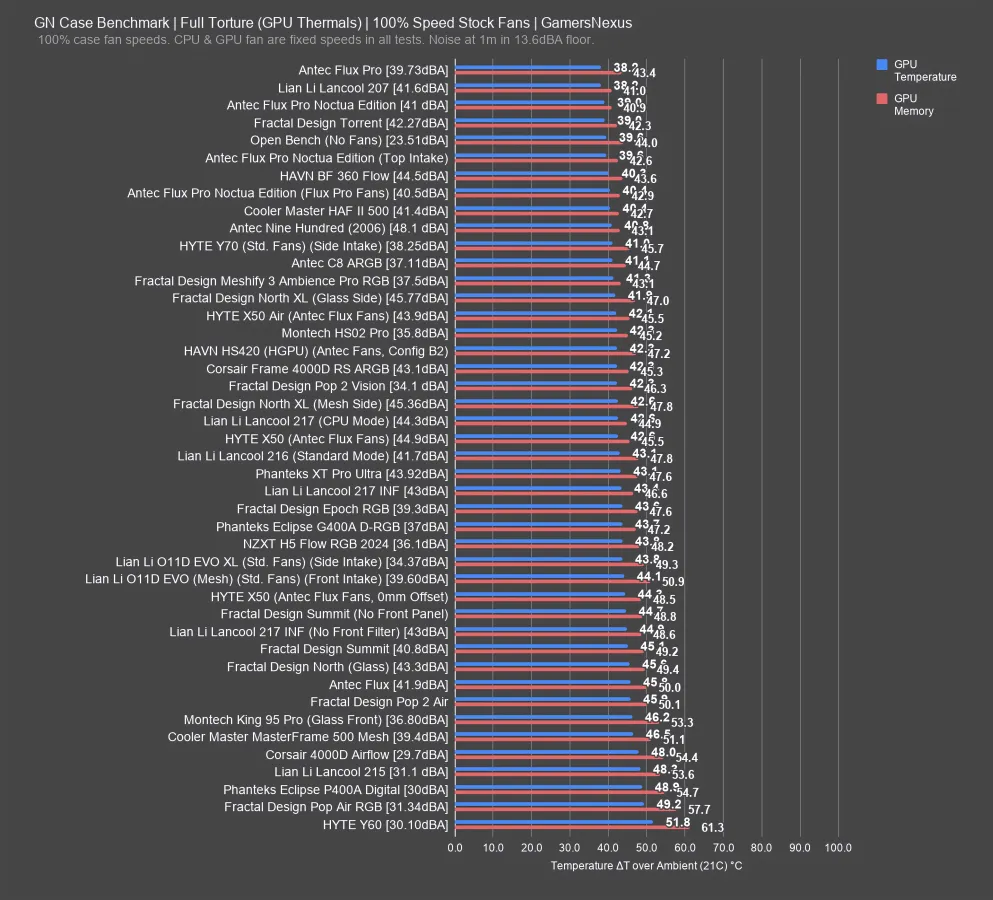
The difference in GPU temperatures between front panel on and off was negligible, with both results rounding to 45 degrees above ambient, and VRAM rounding to 49. As with the noise normalized GPU thermals, this is a relatively poor result: the strongest of our chosen competitors is the Flux Pro with a 38 degree average, while the Meshify 3 managed a respectable 41 degrees above ambient on the GPU.
Fractal Summit Conclusion

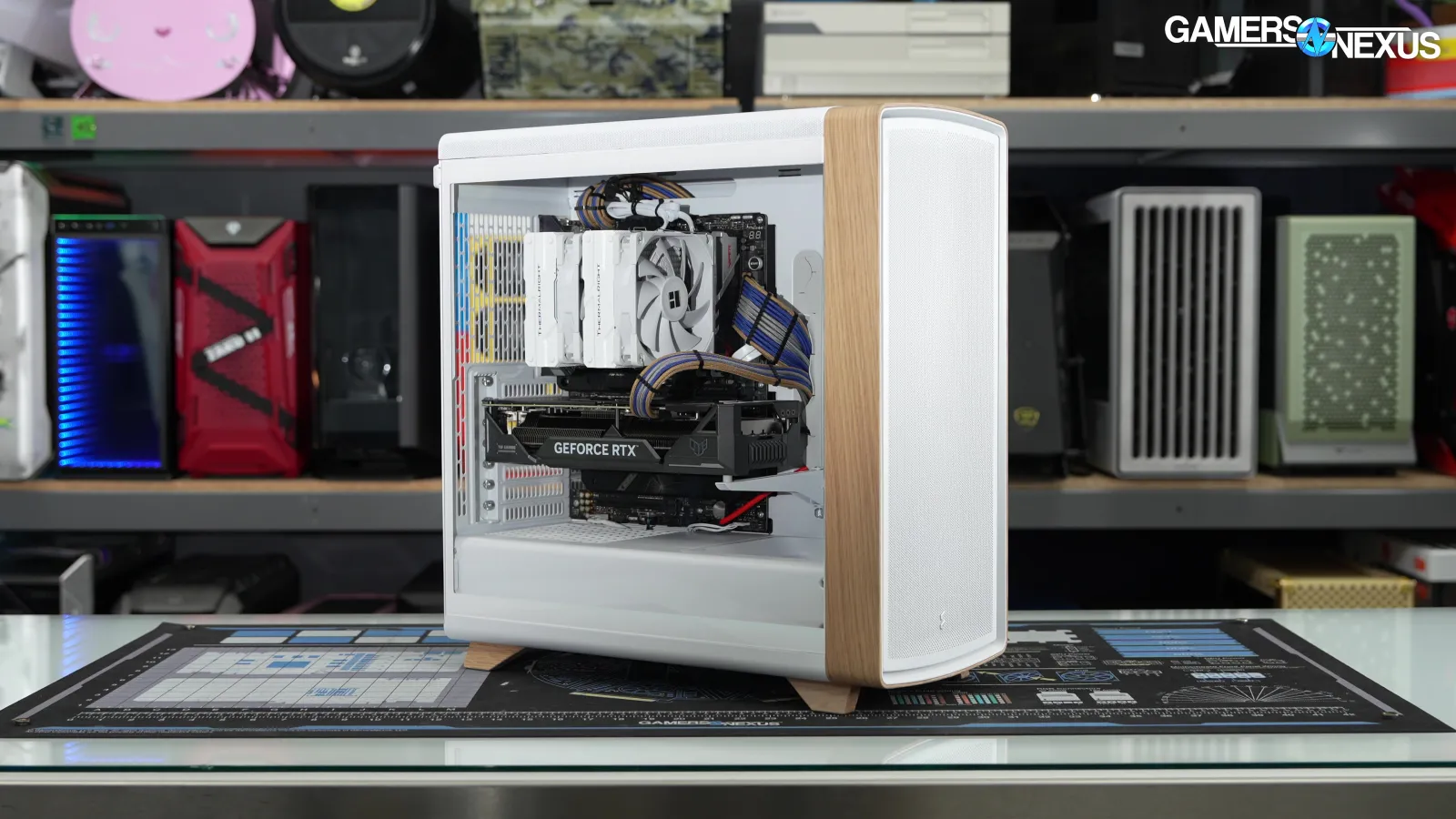
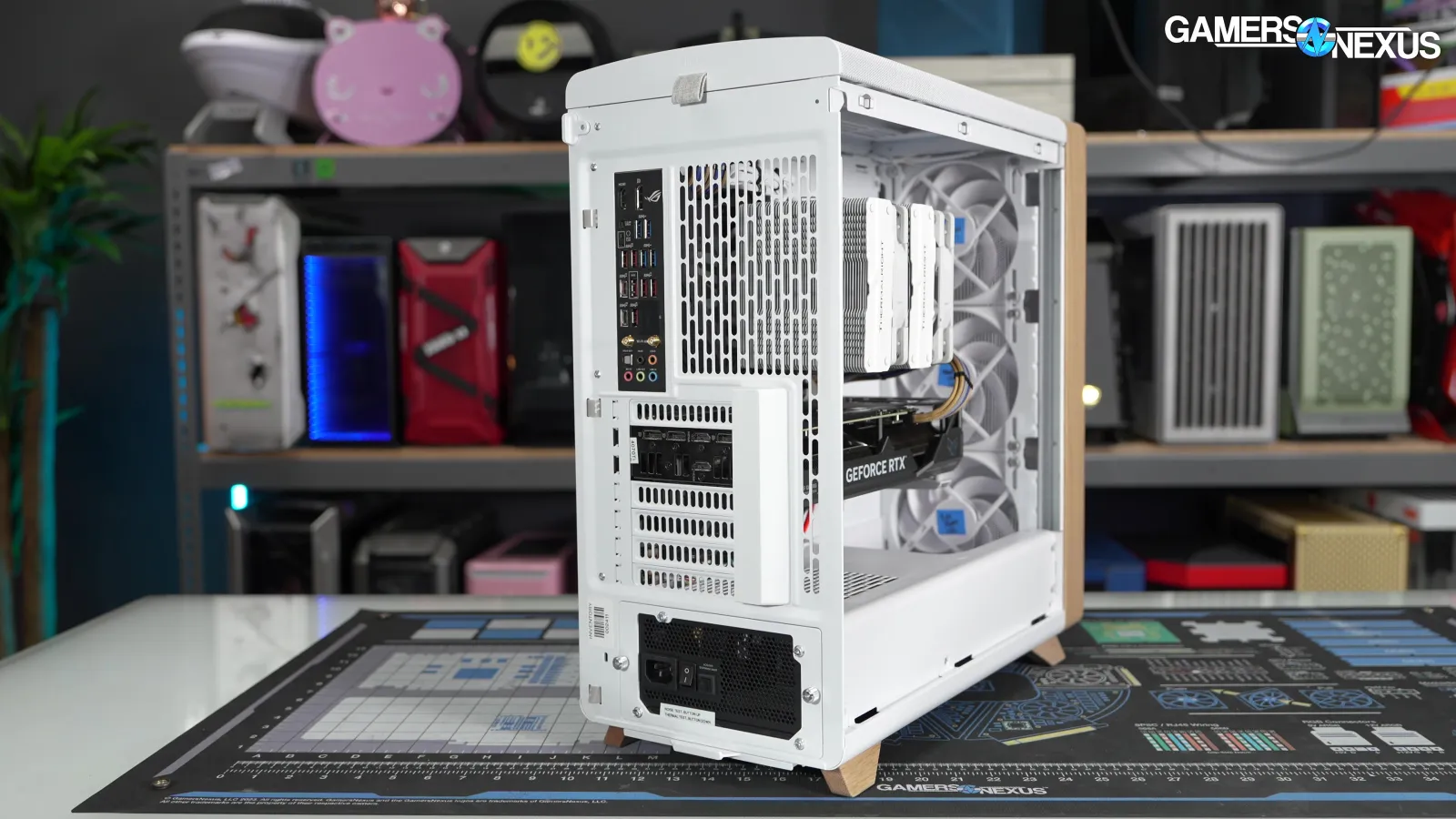
We're getting deja vu with another Fractal review where we say we understand the price, we sympathize with the difficulties of the current market, but we can't recommend the case over its competitors for anything other than its appearance. If this exterior isn’t it for you, there’s really not a lot of reason to buy the case. The case doesn’t do anything phenomenal internally and doesn’t exceed Fractal’s previous bests.
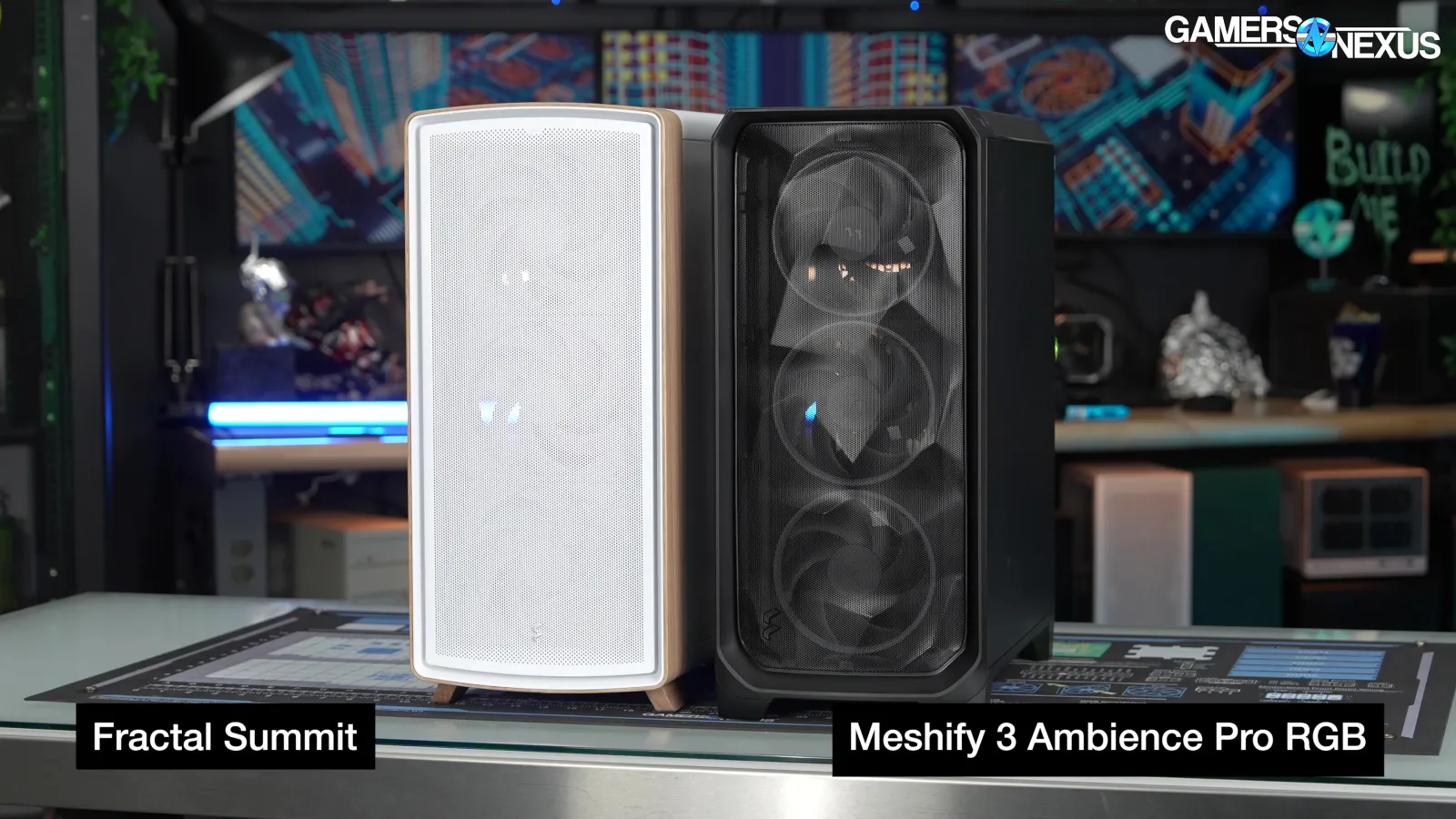
The Ambience Pro RGB variant is still more expensive than the Summit, but it's on sale for $192 as of this writing, which is less than the top-tier $200 Summit. The Meshify 3 has its own unique look and does some great things with lighting on the high-end models, if you like that, both of which help it feel like a more fully-formed thought versus the Summit.
Some Meshify 3 SKUs are as low as $155.
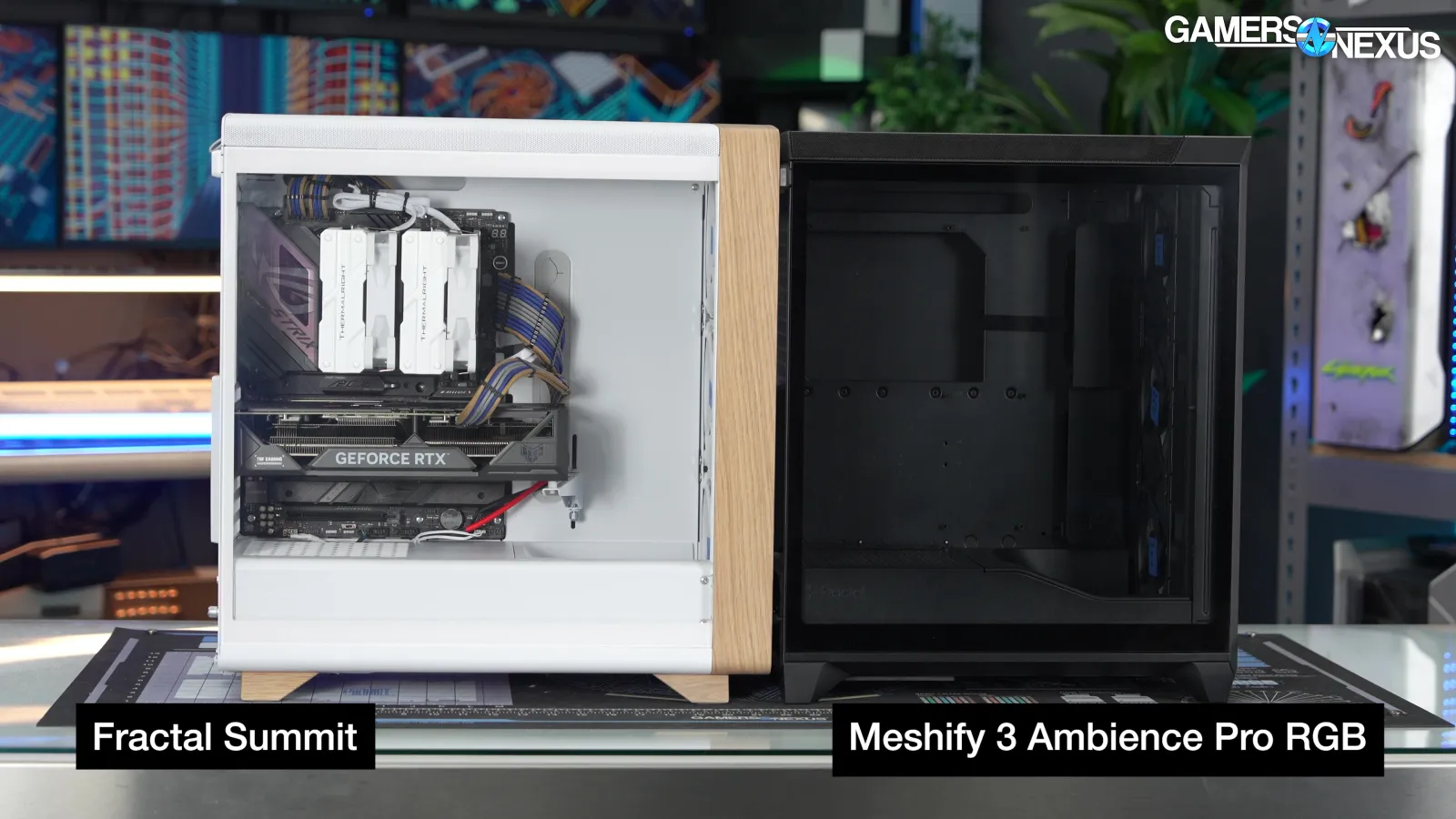
We're not even saying that the Meshify 3 is the best option on the market, but it has the same fans, better thermals, and a similar look, with the downside of having slightly less space which the Summit doesn't do much with anyway. If wood is a requirement, the North XL is on sale for $156 right now, and probably will be again in the future.
As for non-Fractal options, the wood-trimmed $125 Lian Li Lancool 217 and $150 Antec Flux Pro both include a ton of stock fans (5 for Lian Li, 6 for Antec). Even in this market, there are a world of alternatives to the Summit. If you’re going up to the $200 Summit model, then the Cooler Master HAF II 500 is also worth a look, though it’s way different. Hyte’s X50 is $150 and worth considering too, but you’d need to spend some money on fans.